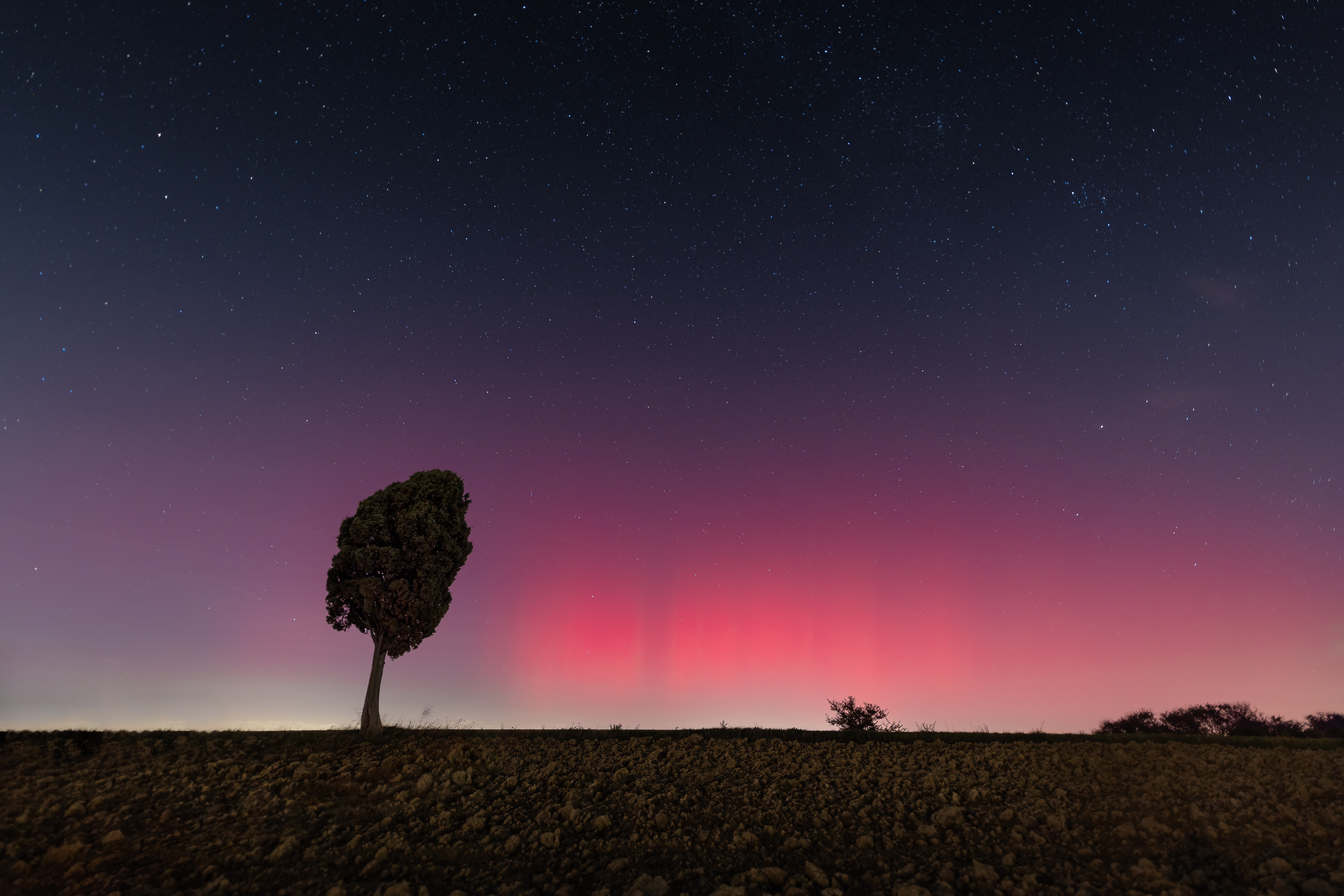




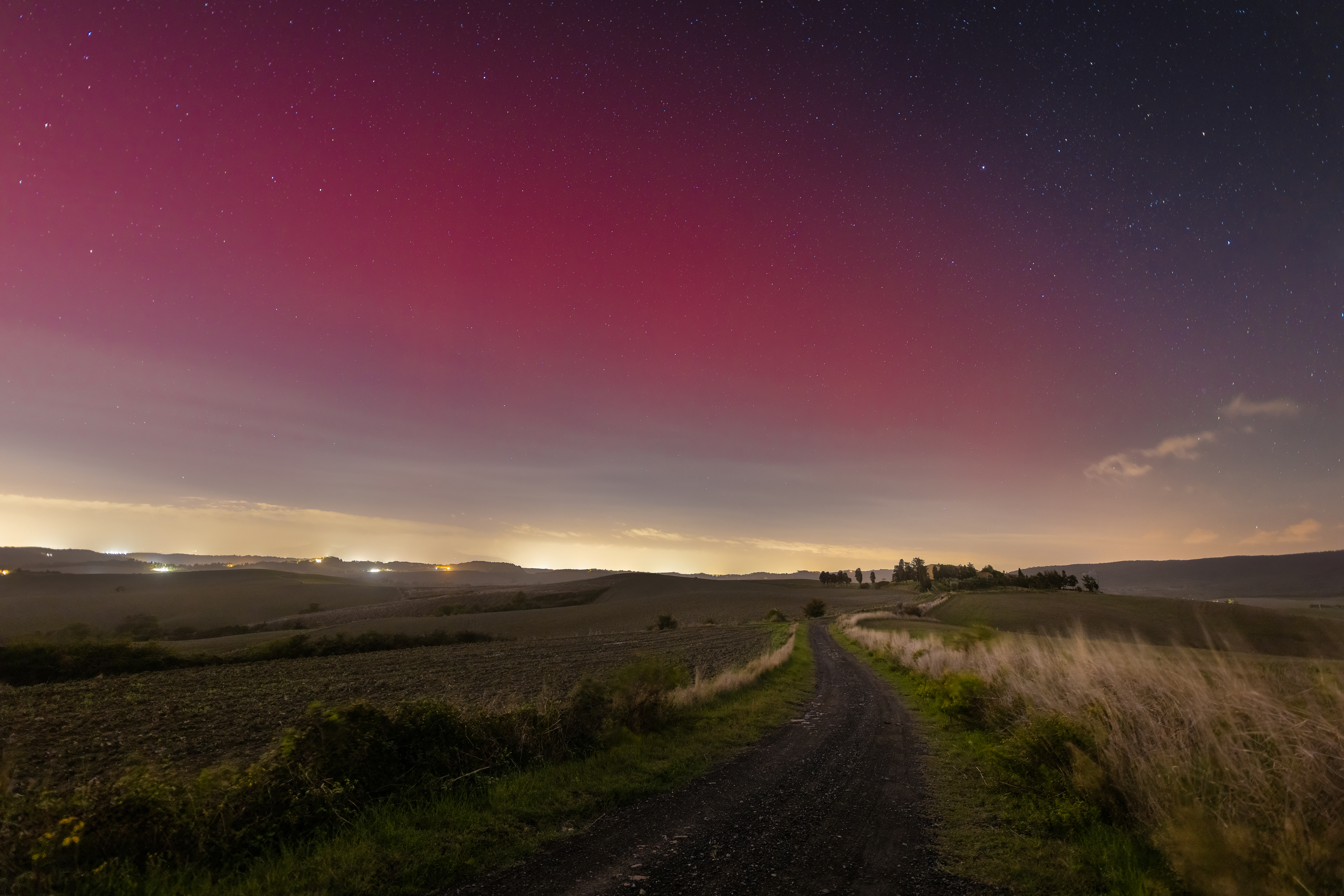
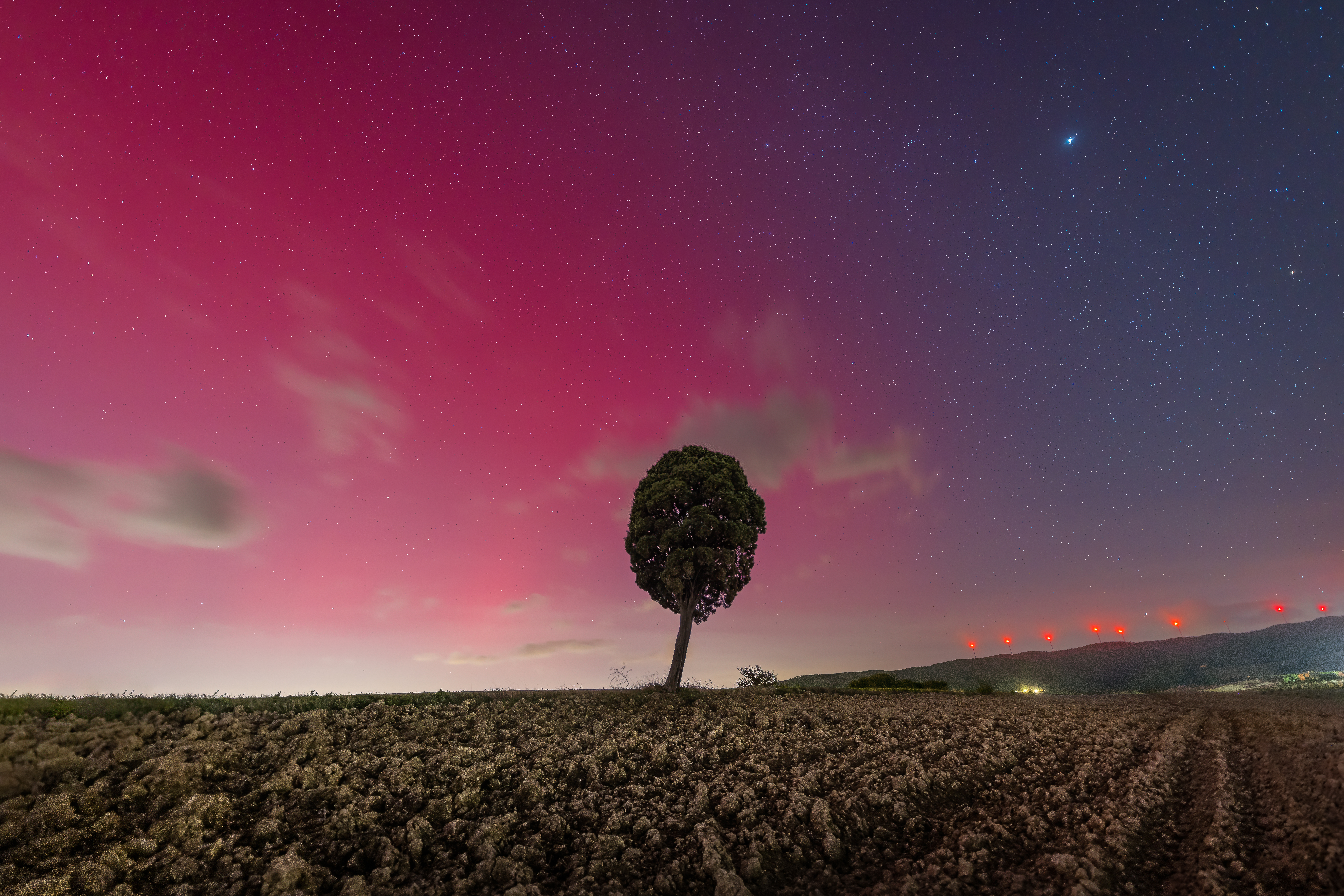
Giovedì 10 ottobre rimarrà una data indimenticabile. Nonostante fosse difficile immaginare che lo spettacolo dell’Aurora Boreale potesse manifestarsi così a sud, l’eccezionalità del fenomeno ha trasformato la nostra avventura ad fotografica in un’esperienza unica. Il cielo toscano, solitamente sereno e familiare, si è acceso di una luce straordinaria e surreale. Insieme a Cristiano e Nicholas, ci siamo lanciati in questa impresa per immortalare un evento rarissimo.
La serata era iniziata in maniera piuttosto tranquilla, anche se stavo ben attento alle notizie in tempo reale dell’evento, dato che era stato previsto e pubblicizzato già nelle prime ore del pomeriggio. Dopo le primissime immagini postate sui social da qualche fotografo che aveva colto le prime avvisaglie dell’aurora già nelle prime ore serali, siamo partiti in cerca di immortalare l’evento. Abbiamo optato per uno dei posti a me più familiari, con un ridotto inquinamento luminoso: Orciano Pisano. Siamo, quindi, partiti in fretta e furia senza alcuna certezza, ma con tanta speranza nel cuore. La campagna toscana, con la sua bellezza semplice e avvolgente, sembrava attendere il grande spettacolo che ci aspettava.
Appena giunti a destinazione, abbiamo subito iniziato a preparare l’attrezzatura. Le condizioni sembravano perfette: un cielo limpido e privo di inquinamento luminoso. Dopo aver montato treppiedi e regolato le impostazioni delle nostre fotocamere, è iniziata l’attesa. Un’attesa che, anche se non si è fatta attendere più di tanto, era piena di eccitazione. Gia alle 22:00, il cielo ha iniziato a dare segni del fenomeno che stavamo cercando: deboli bagliori all’orizzonte che si trasformavano pian piano in onde di luce rosa e viola.
Chi lo avrebbe mai detto? L’Aurora Boreale, fenomeno tipico dei cieli del Nord, ha raggiunto il nostro piccolo angolo di Toscana. In realtà, per essere corretti, il fenomeno si chiama SAR. L’Aurora Boreale e il SAR (Stable Auroral Red Arc) sono entrambi fenomeni luminosi nell’atmosfera terrestre, ma differiscono per origine e aspetto: l’aurora è più spettacolare e dinamica, dalle tante sfumature danzanti verdi e rosa. Il SAR è un fenomeno più raro, più stabile nel cielo, che si manifesta con un arco luminoso rosso/rosa. Questo raro evento è stato il risultato di una tempesta solare particolarmente intensa, che ha permesso a questo fenomeno di manifestarsi molto più a sud del solito.
Fotografare l’Aurora non è semplice, ma è un’arte che ripaga con scatti di una bellezza mozzafiato. La tecnica richiede pazienza e precisione. Abbiamo impostato le nostre fotocamere con tempi di esposizione lunghi, per catturare al meglio i movimenti della luce, con ISO alti per dare sensibilità alla macchina, senza però perdere troppi dettagli. Abbiamo fatto attenzione anche all’apertura del diaframma, cercando di mantenere il giusto equilibrio tra luce e nitidezza.
Ogni scatto era un esperimento: a volte troppo chiaro, a volte troppo scuro, ma alla fine la perseveranza ci ha premiati. L’aurora si è intensificata e ci ha regalato forme e colori incredibili. Non c’è nulla di paragonabile a rivedere un cielo dipinto di quel colore rosa e rosso, con le sue mille sfumature catturate in una fotografia.
Non si trattava solo della vista. Mentre scattavamo, l’atmosfera era magica. Il silenzio della notte, interrotto solo da qualche lieve fruscio del vento tra gli alberi, accentuava la sensazione di trovarci in un luogo fuori dal tempo. La temperatura si era abbassata, ma il freddo non era abbastanza da distogliere la nostra attenzione. Eravamo immersi in un’esperienza quasi mistica.
Quella notte a Orciano Pisano è stata molto più di una semplice uscita fotografica. È stato un viaggio nella bellezza della natura, nella rarità del fenomeno e nella passione per la fotografia. Tornare a casa con le nostre foto è stato un trionfo, ma ancor di più lo è stato vivere un’esperienza che difficilmente si ripeterà. Le foto sono state la testimonianza di una notte magica, e ogni volta che le riguardo, mi tornano in mente il silenzio, il freddo e la meraviglia di quell’Aurora Boreale che ha illuminato la nostra serata.
Thursday 10 October will remain an unforgettable date. Although it was difficult to imagine that the spectacle of the Northern Lights could appear so far south, the exceptional nature of the phenomenon transformed our photographic adventure into a unique experience. The Tuscan sky, usually serene and familiar, lit up with an extraordinary and surreal light. Together with Cristiano and Nicholas, we embarked on this undertaking to immortalize a very rare event.
The evening had started rather calmly, although I was paying close attention to the real-time news of the event, given that it had been predicted and publicized already in the early hours of the afternoon. After the very first images posted on social media by some photographers who had caught the first signs of the aurora already in the early evening hours, we set off in search of immortalizing the event. We opted for one of the places most familiar to me, with reduced light pollution: Orciano Pisano. We therefore left in a hurry without any certainty, but with a lot of hope in our hearts. The Tuscan countryside, with its simple and enveloping beauty, seemed to await the great spectacle that awaited us.
As soon as we arrived at our destination, we immediately started preparing the equipment. The conditions seemed perfect: clear skies and no light pollution. After setting up tripods and adjusting our camera settings, the waiting began. A wait that, even if it didn’t take long, was full of excitement. Already at 10pm, the sky began to show signs of the phenomenon we were looking for: faint glows on the horizon that slowly transformed into waves of pink and purple light.
Who would have thought? The Aurora Borealis, a typical phenomenon of the Northern skies, has reached our little corner of Tuscany. Actually, to be correct, the phenomenon is called SAR. The Aurora Borealis and the SAR (Stable Auroral Red Arc) are both luminous phenomena in the Earth’s atmosphere, but they differ in origin and appearance: the aurora is more spectacular and dynamic, with many dancing green and pink shades. The SAR is a rarer, more stable phenomenon in the sky, which manifests itself as a bright red/pink arc. This rare event was the result of a particularly intense solar storm, which allowed this phenomenon to occur much further south than usual.
Photographing the Aurora is not easy, but it is an art that pays off with shots of breathtaking beauty. The technique requires patience and precision. We set our cameras with long exposure times, to best capture the movements of light, with high ISO to give sensitivity to the camera, without losing too much detail. We also paid attention to the opening of the diaphragm, trying to maintain the right balance between light and sharpness.
Each shot was an experiment: sometimes too light, sometimes too dark, but in the end perseverance rewarded us. The aurora intensified and gave us incredible shapes and colors. There is nothing comparable to seeing a sky painted in that pink and red color again, with its thousand shades captured in a photograph.
It wasn’t just about the view. While we were shooting, the atmosphere was magical. The silence of the night, interrupted only by some slight rustling of the wind in the trees, accentuated the sensation of being in a place out of time. The temperature had dropped, but it wasn’t cold enough to distract us. We were immersed in an almost mystical experience.
That night in Orciano Pisano was much more than a simple photographic outing. It was a journey into the beauty of nature, the rarity of the phenomenon and the passion for photography. Coming home with our photos was a triumph, but even more so was living an experience that is unlikely to be repeated. The photos were testimony to a magical night, and every time I look at them, I am reminded of the silence, the cold and the wonder of that Aurora Borealis that illuminated our evening.

 NICO ANGELI Photography