Sospiri d’autunno

Ottobre è un mese cruciale per il fotografo paesaggista. I colori della natura mutano, e gli alberi, prima di spogliarsi del tutto, regalano emozioni veramente intense, che vale la pena immortalare.

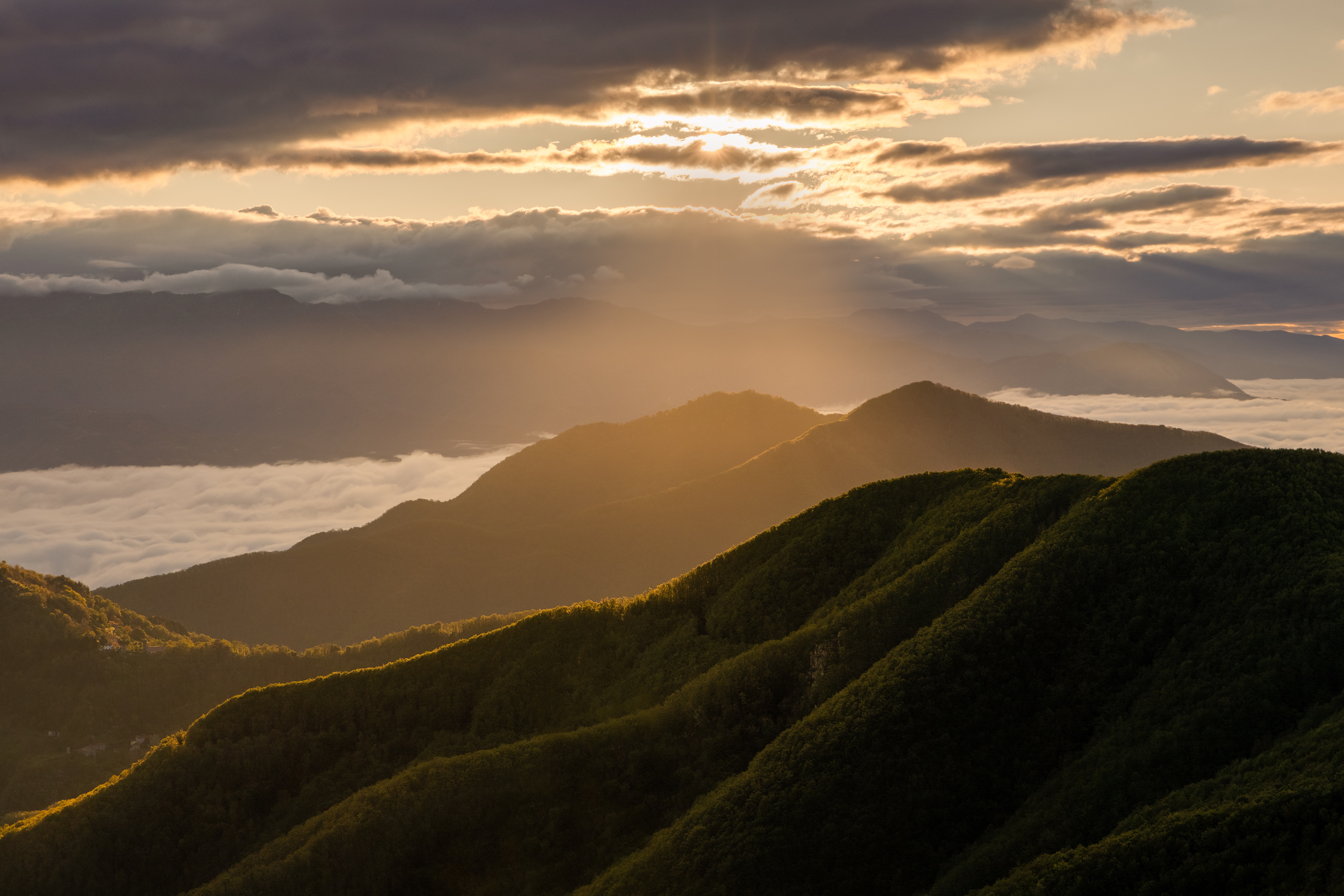
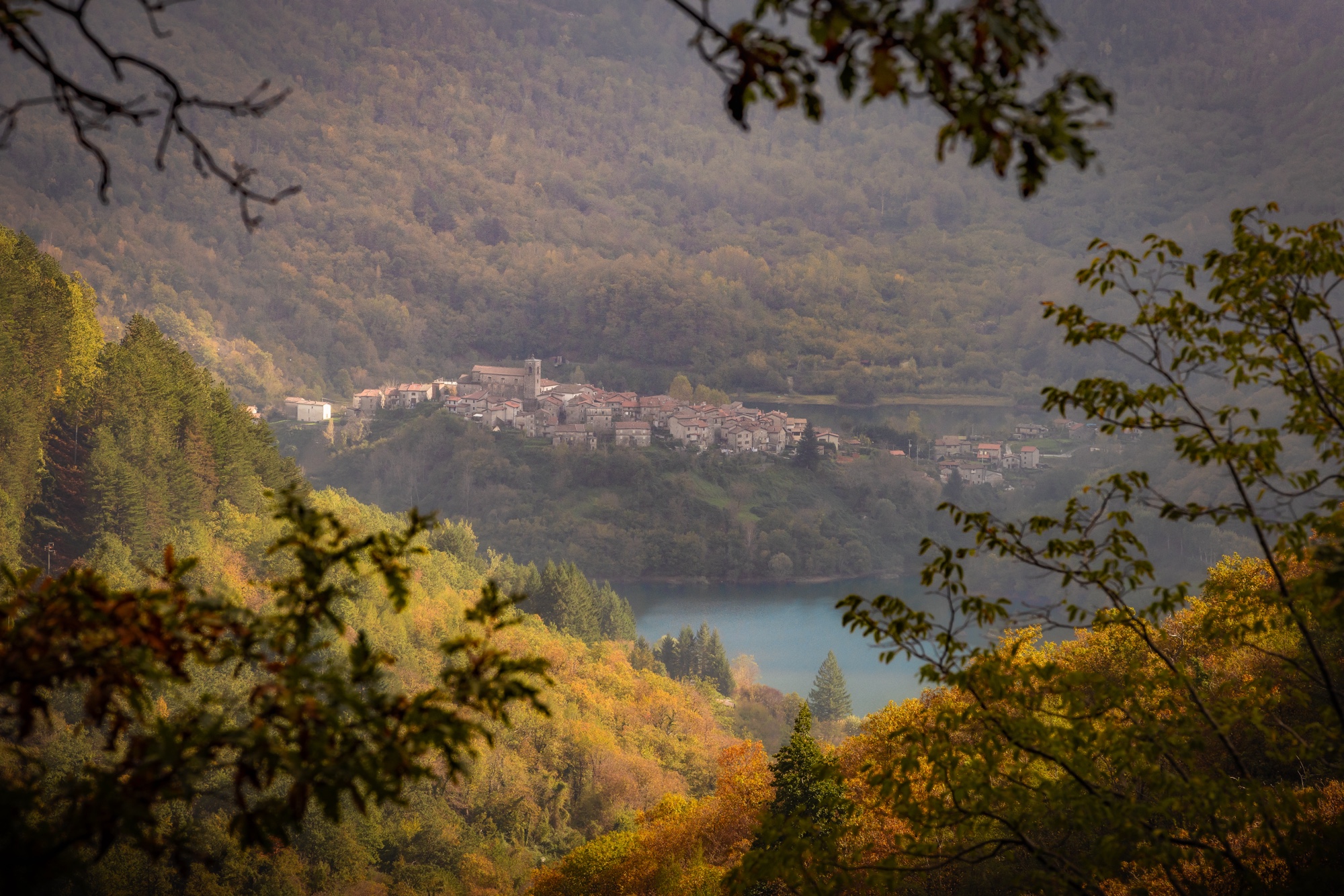
Una lieve foschia avvolge le colline della Garfagnana mentre la mattina si apre lentamente, pennellando il paesaggio di un grigio etereo. L’aria è fresca, quasi pungente, e ha il profumo terroso tipico dell’autunno. Gli alberi, vestiti dei colori caldi e cangianti del foliage autunnale, si riflettono sulle acque tranquille del lago di Vagli, mentre le prime luci dell’alba iniziano a filtrare tra i rami, accendendo di rosso, arancio e giallo i castagni e i faggi.

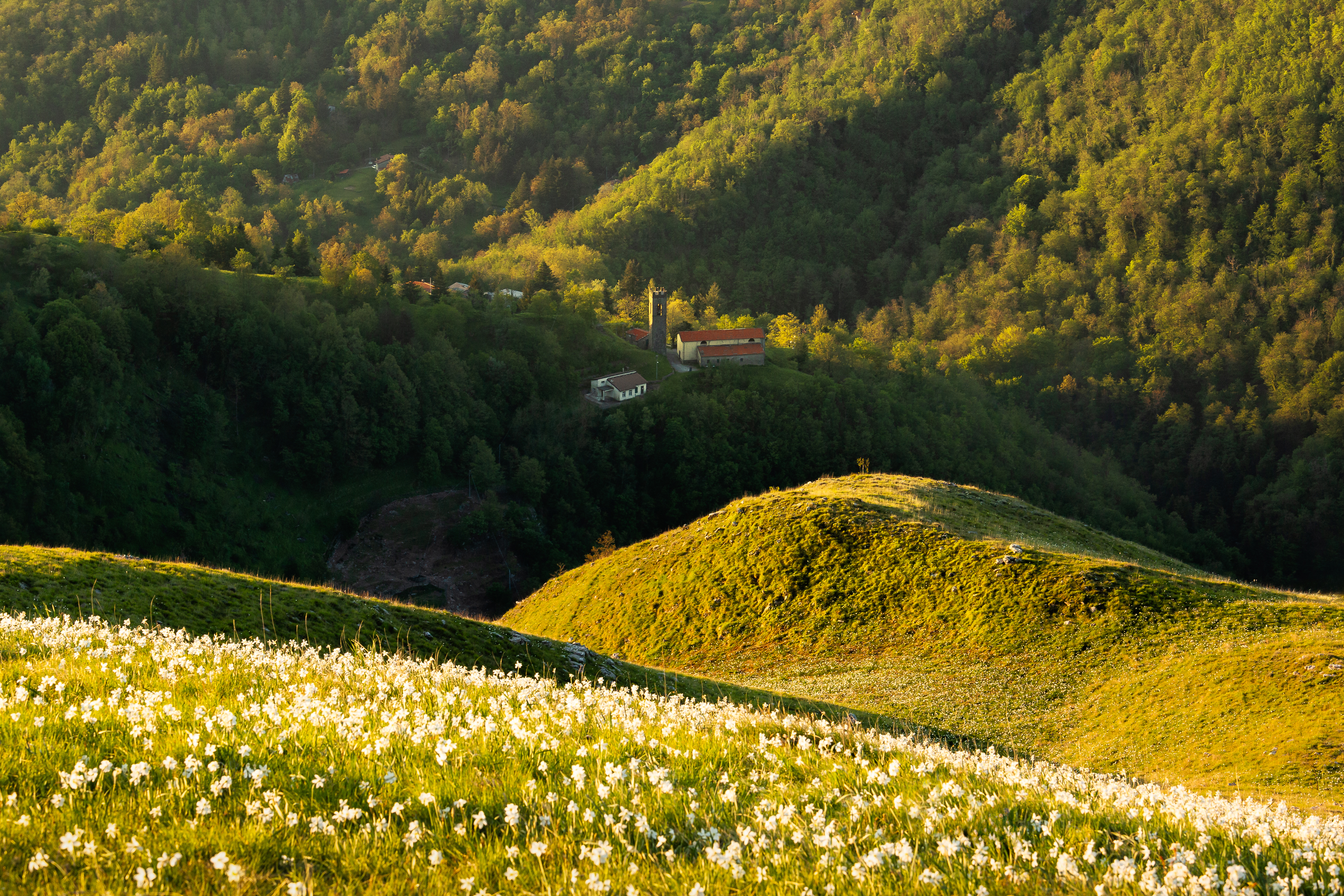
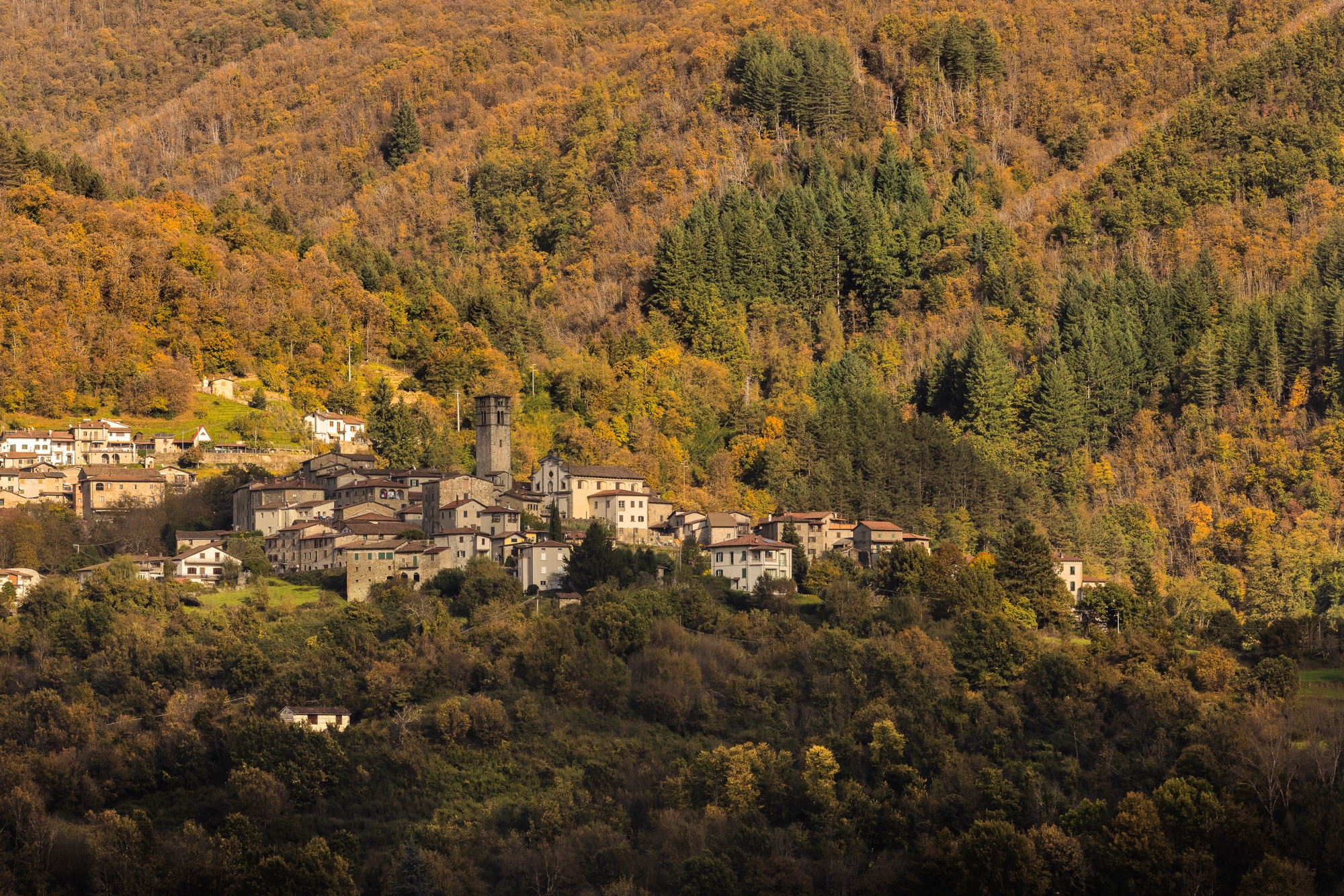
Stamani sono a spasso per queste terre fantastiche. Arrivo a Isola Santa, un borgo sospeso nel tempo, quasi avvolto in un silenzio che sembra trattenere il respiro. La luce dorata del mattino gioca con le case in pietra e i tetti di ardesia, donando al villaggio un’aura quasi magica. Mentre scendo verso il lago, le sfumature del fogliame sembrano diventare ancora più intense: ogni albero racconta una storia, ogni foglia è una pennellata viva su una tela naturale.

La macchina fotografica scatta quasi da sola, seguendo l’ispirazione del momento. Catturo le sfumature intense delle foglie, che oscillano tra il fuoco dei rossi e l’oro dei gialli, creando contrasti perfetti con il verde intenso dei prati e il blu calmo dell’acqua. Al centro del lago, l’immagine riflessa degli alberi e delle montagne circostanti crea un doppio perfetto, tanto che è difficile distinguere tra il reale e il riflesso.

Proseguo poi verso il lago di Vagli. Qui, l’atmosfera è diversa ma altrettanto suggestiva. La luce è diventata più intensa, e le cime degli alberi brillano di colori saturi contro il cielo limpido. Un velo di nebbia leggera aleggia sull’acqua, rendendo il paesaggio quasi fiabesco. In lontananza, le Alpi Apuane si stagliano con le loro cime appuntite, creando un contrasto netto con la dolcezza del paesaggio autunnale.

Il lago di Vagli, con il suo paesino sommerso visibile solo in certi momenti, aggiunge un tocco di mistero a questo luogo già incantevole. Immagino le storie che questo specchio d’acqua potrebbe raccontare, di vite e di memorie sommerse. E mentre il sole inizia a salire, colorando il paesaggio di toni sempre più caldi, il mio obiettivo continua a catturare la magia di questa mattina d’autunno in Garfagnana, un’esperienza che resterà impressa, non solo nella memoria della mia macchina fotografica, ma anche nei miei ricordi.

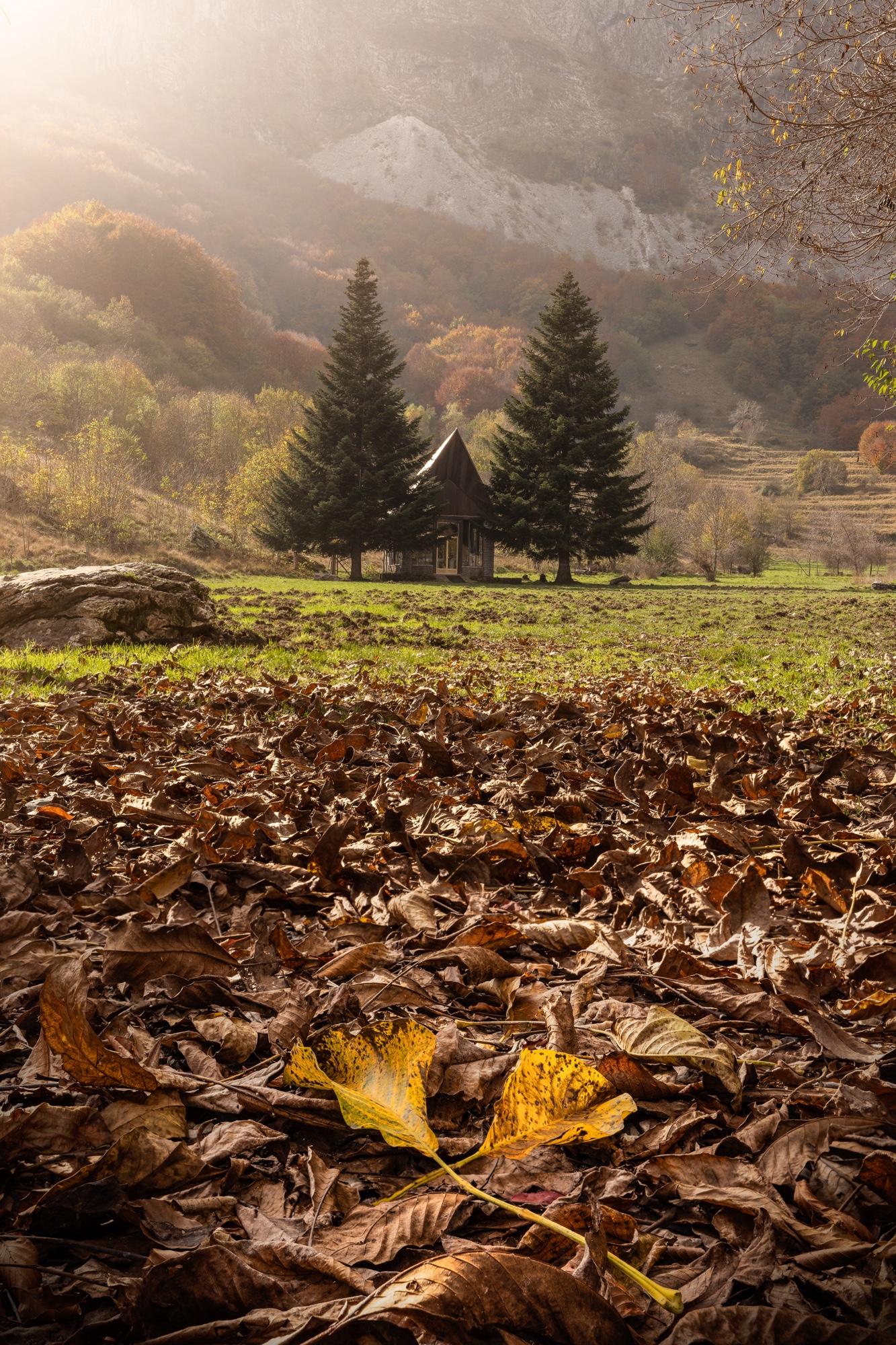
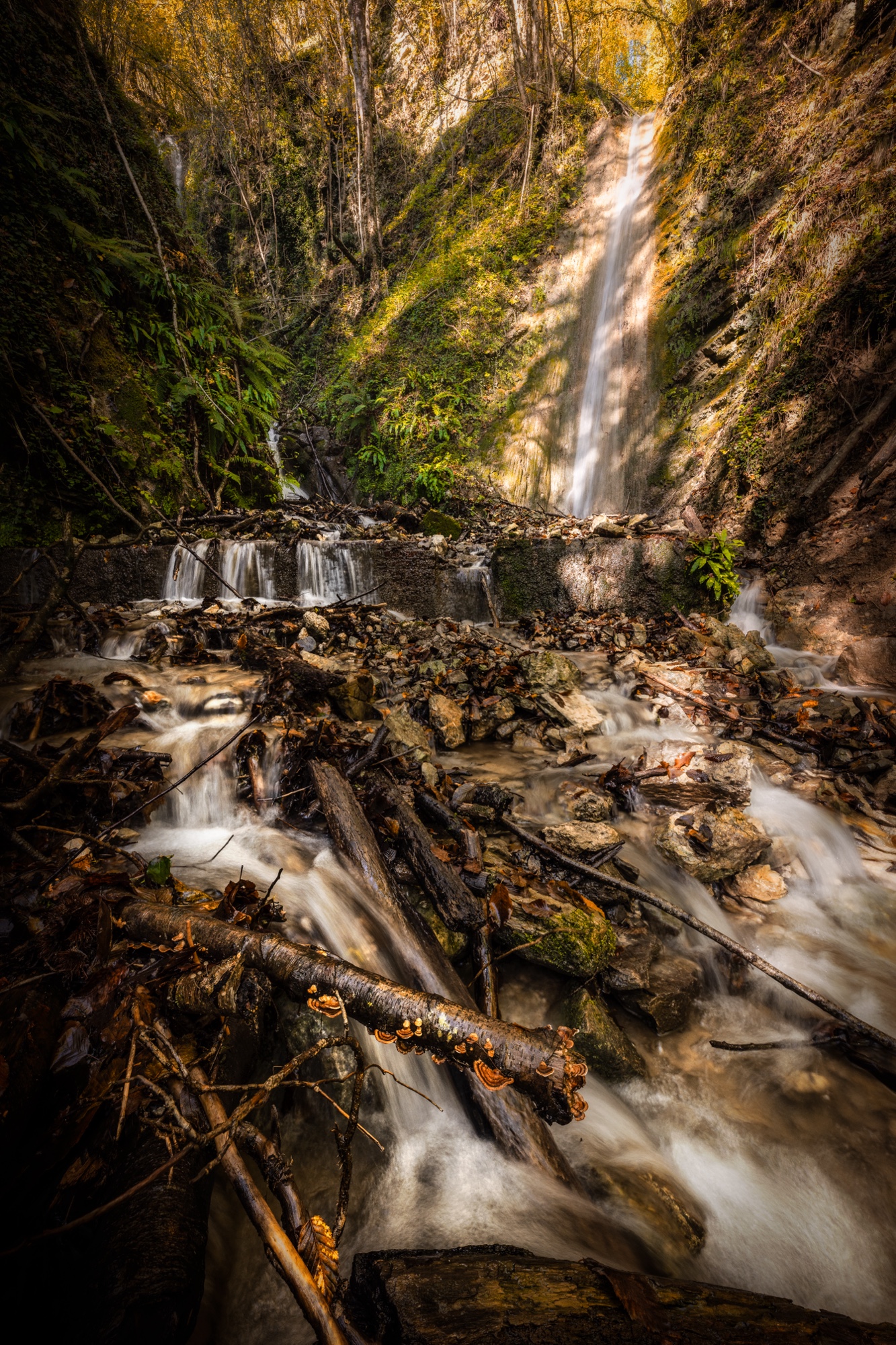
Proseguo verso destinazione ignota, esplorando scorci segreti e nascosti, cascate e ruscelli che fanno capolino tra gli alberi. Arrivo fino a Campocatino, paese di pastori, che stamani sembra praticamente abbandonato. Non si muove anima viva. I colori cangiano dal rosso al giallo intenso. Qualche scatto veloce anche qui e continuo il mio giro spensierato, fino a riprendere il cammino verso il rientro.

Anche oggi la Garfagnana è stata generosa, coi suoi scorci incredibilmente belli e pieni di fascino, nelle sue vesti autunnali. Una terra meravigliosa.

October is a crucial month for the landscape photographer. Nature’s colors change, and the trees, before shedding all their leaves, offer truly intense emotions worth capturing.

A light mist wraps around the hills of Garfagnana as the morning slowly unfolds, brushing the landscape with an ethereal gray. The air is fresh, almost sharp, carrying the earthy scent typical of autumn. Trees, dressed in the warm, shifting colors of autumn foliage, reflect on the calm waters of Lake Vagli, while the first light of dawn begins to filter through the branches, illuminating the chestnuts and beeches in shades of red, orange, and yellow.

This morning, I’m wandering through these fantastic hills. I reach Isola Santa, a village suspended in time, almost wrapped in a silence that seems to hold its breath. The golden morning light plays on the stone houses and slate roofs, giving the village an almost magical aura. As I descend toward the lake, the hues of the foliage grow even more intense: each tree tells a story, each leaf is a living brushstroke on a natural canvas.

The camera almost clicks on its own, following the inspiration of the moment. I capture the intense shades of the leaves, shifting between fiery reds and golden yellows, creating perfect contrasts with the deep green of the meadows and the calm blue of the water. At the center of the lake, the reflected image of the trees and surrounding mountains forms a perfect double, making it hard to distinguish between reality and reflection.

I then continue toward Lake Vagli. Here, the atmosphere is different but equally captivating. The light has grown more intense, and the treetops shine with saturated colors against the clear sky. A thin layer of mist hovers over the water, giving the landscape an almost fairytale-like quality. In the distance, the sharp peaks of the Apuan Alps stand out, creating a striking contrast with the gentle beauty of the autumn landscape.

Lake Vagli, with its submerged village visible only at certain times, adds a touch of mystery to this already enchanting place. I imagine the stories this body of water might tell, of lives and memories hidden below. As the sun begins to rise, casting warmer tones across the landscape, my lens continues to capture the magic of this autumn morning in Garfagnana, an experience that will remain etched not only in my camera’s memory but also in my own.

I continue toward an unknown destination, exploring hidden views, waterfalls, and streams peeking out between the trees. I reach Campocatino, a shepherds’ village, which this morning seems practically deserted. Not a soul in sight. Colors shift from deep red to bright yellow. I take a few quick shots here as well and carry on with my carefree wanderings until eventually heading back.

Once again, Garfagnana has been generous, with its incredibly beautiful and charming views, dressed in its autumn colors. A truly wonderful land.
Una nuova fioritura

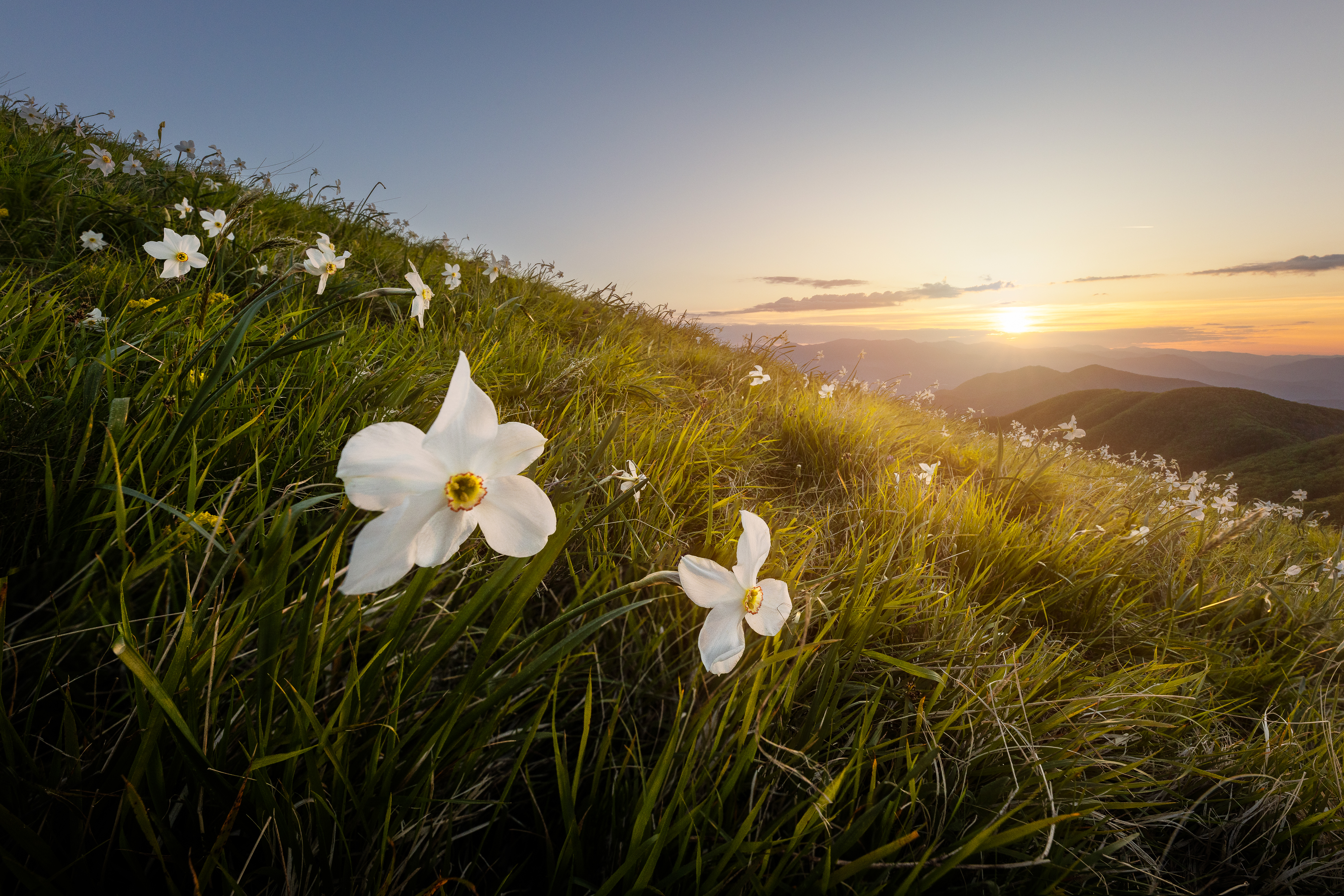
Arrivati a maggio, l’appuntamento con la fioritura delle giunchiglie risuona puntuale, come la sveglia che ti dice di alzarsi per andare a lavoro. Quest’anno, questo evento è stato incredibilmente seguito da una moltitudine di persone inaspettata. Complice anche il fenomeno della tempesta geomagnetica del 10 maggio, che ha smosso un numero di fotografi spropositato, per fotografare l’aurora, che è stata visibile dopo tantissimi anni anche alle nostre latitudini. Molti fotografi hanno provato a fotografarla nei posti più bui, e, anche io, pur non essendo riuscito a vederla la notte del 10 maggio, ci ho provato la notte successiva, salendo proprio sul Monte Croce.

Ovviamente ero molto più ansioso per la fatidica alba la mattina successiva, in quanto ero sicuro che l’aurora non si sarebbe sicuramente fatta vedere una seconda volta. Ma ci ho provato lo stesso, e, nonostante non sia accaduto niente, sia la notturna che l’alba, ci hanno regalato qualche scatto e qualche momento indimenticabile.

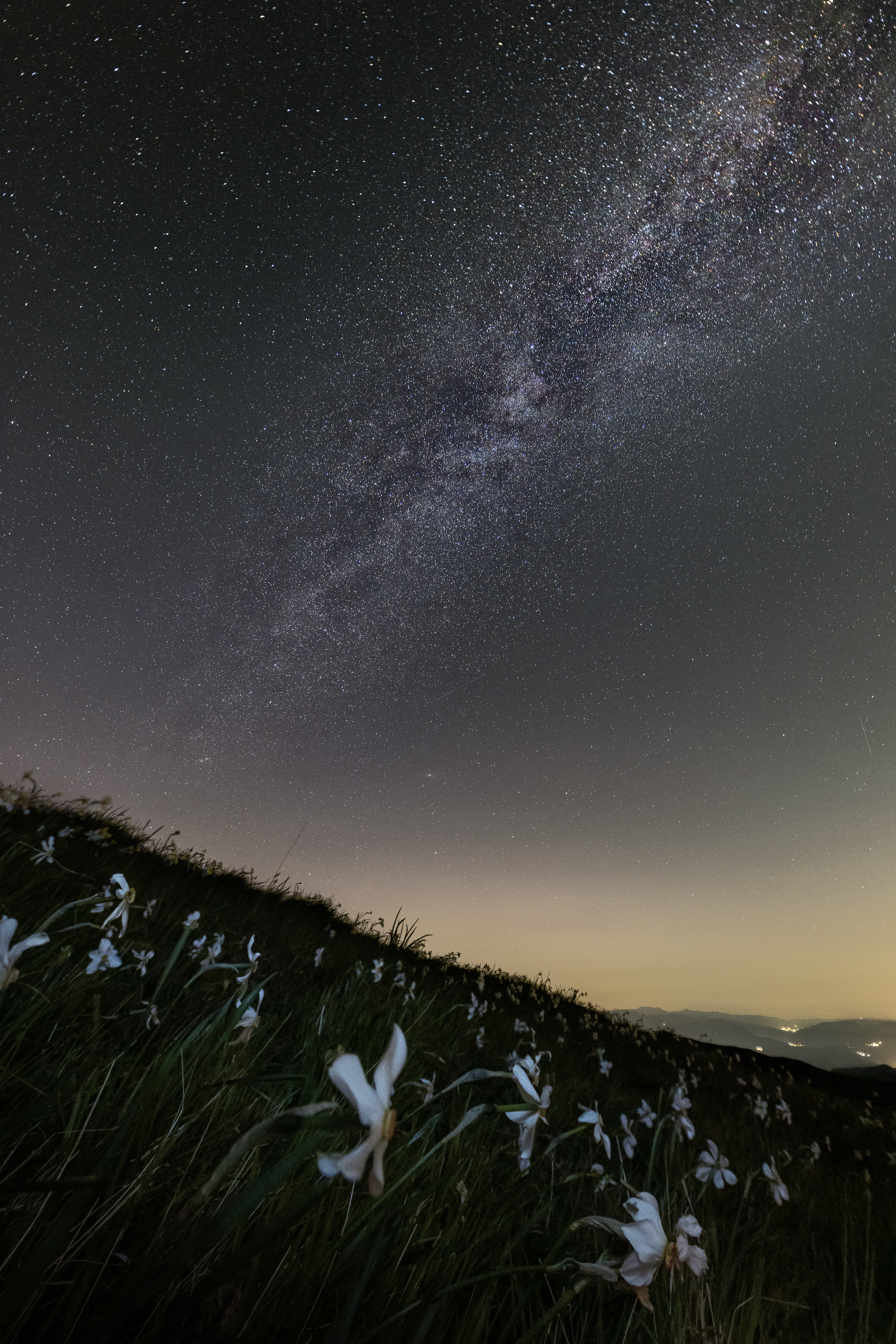
Questa eras la seconda volta che andavo a vedere la fioritura dei narcisi sul Monte Croce. Anche questa volta mi ha lasciato letteralmente senta fiato. Siamo partiti sabato sera a mezzanotte, Il tragitto impiega circa 45 minuti di passeggiata, tutta rigorosamente in salita. Una bella fatica, al buio, con uno zaino da 15kg alle spalle. Ma la determinazione e la passione non sono riuscite a fermarci. Saliamo a passo spedito, per essere in vetta alle 2:30 circa di notte. Questo ci ha permesso di scattare alle stelle, che, con poco inquinamento luminoso, erano davvero ben visibili.

Via Lattea e Star-Trail sono stati gli scatti più ricercarti. Il lieve alito di vento che era presente sul crinale ci ha dato un bel filo da torcere. Con i tempi di scatto lunghi, un primo piano in movimento rappresenta davvero una difficoltà allucinante. Purtroppo, nessuna traccia dell’aurora. Ma nessun problema. Le nostre forze si sono concentrate per lo più per l’alba. Il pendio avvolto dalla fioritura, infatti, con lo spuntare del sole, ha preso letteralmente vita.

Quest’anno, di vita ce n’era anche troppa invece. Gruppi di persone arrivavano a flotte, man mano che il sole cominciava ad illuminare tutta la scena. Anche scattare non era affatto facile, senza inquadrare involontariamente qualcuno. Ogni volta che trovavo una composizione, qualcuno appariva sempre di fronte al mio obbiettivo, costringendomi a cambiare spesso inquadratura.

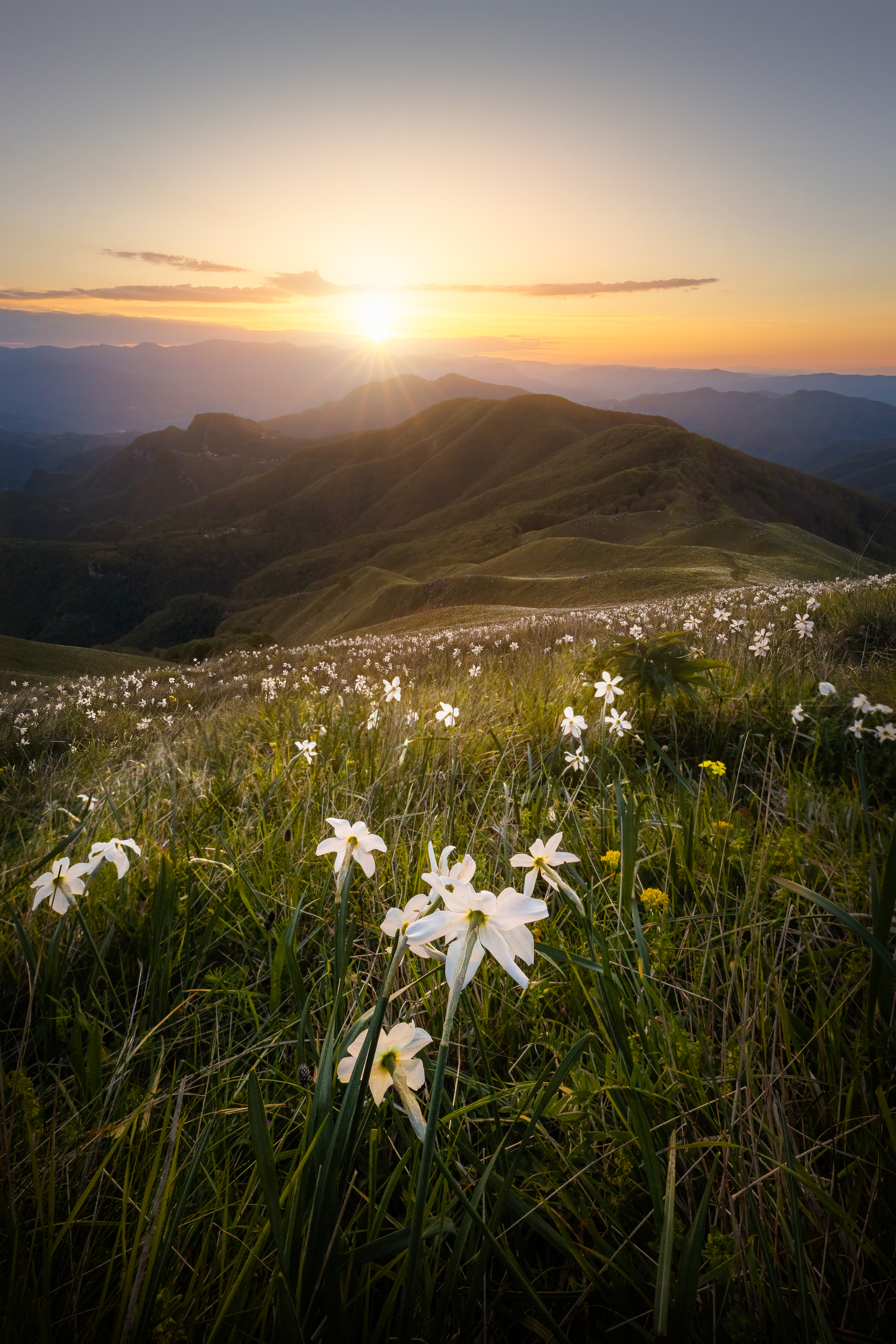
Una volta apparso il sole, ci siamo dedicati a scattare il più possibile a composizioni con i fiori in primissimo piano, Gli spot erano innumerevoli, e, nonostante la folla, abbiamo portato a casa diverse immagini veramente fantastiche. Ecco a voi gli scatti di questa bella uscita. Intensa e molto faticosa, ma anche quest’anno ci ha regalato forti emozioni. Buona visione a tutti voi.

Once we arrive in May, the appointment with the flowering of the daffodils rings punctually, like the alarm clock telling you to get up to go to work. This year, this event was incredibly followed by an unexpected multitude of people. Also thanks to the phenomenon of the geomagnetic storm of May 10th, which moved a disproportionate number of photographers to photograph the aurora, which was visible after many years even at our latitudes. Many photographers have tried to photograph it in the darkest places, and even I, despite not being able to see it on the night of May 10th, tried the following night, climbing up Monte Croce itself.

Obviously I was much more anxious for the fateful sunrise the next morning, as I was sure that the aurora would definitely not show up a second time. But I tried anyway, and, although nothing happened, both the night and the dawn gave us some shots and some unforgettable moments.

This was the second time I went to see the daffodils blooming on Monte Croce. This time too it literally left me breathless. We left on Saturday evening at midnight. The journey takes about 45 minutes of walking, all strictly uphill. A lot of effort, in the dark, with a 15kg backpack behind me. But determination and passion couldn’t stop us. We climb at a brisk pace, to be at the summit at around 2.30 am. This allowed us to shoot at the stars, which, with little light pollution, were really clearly visible.

Milky Way and Star-Trail were the most sought after shots. The light breath of wind that was present on the ridge gave us a hard time. With slow shutter speeds, a moving close-up really represents an incredible difficulty. Unfortunately, no sign of the aurora. But no problem. Our forces were mostly concentrated for dawn. The slope surrounded by flowers, in fact, literally came to life with the rising of the sun.

This year, there was too much life instead. Groups of people arrived in droves as the sun began to illuminate the entire scene. Even shooting wasn’t easy at all, without accidentally framing someone. Every time I found a composition, someone always appeared in front of my lens, forcing me to change shots often.

Once the sun appeared, we dedicated ourselves to shooting as many compositions as possible with flowers in the foreground. The spots were countless, and, despite the crowd, we took home several truly fantastic images. Here are the shots of this beautiful outing. Intense and very tiring, but this year too it has given us strong emotions. Good vision to all of you.

Un altro giorno sorge al sacrario

Stamani un’uscita senza pretese. Questa è la seconda volta che vado al Sacrario ai Caduti della Garfagnana. L’ultima uscita fu lo scorso anno, da solo, in una mattina freddissima e con un cielo nuvolosissimo. Stavolta il meteo è molto più sereno, e le aspettative per una buona luce sono molto alte.

Arrivato il mio caro amico Cristiano, fedele compagno delle mie avventure fotografiche, partiamo in direzione di Castelnuovo. Saliamo ancora in direzione della piccola località di Piola, dove sorge il Sacrario.

Il progetto della costruzione del Sacrario venne approvato alla fine degli anni 50. Doveva essere una costruzione semplice, che ricordasse alle generazioni future il tributo di vite che la gente della Garfagnana aveva pagato durante le guerre combattute nel Novecento.

Fu deciso di erigerlo su un picco nella frazione di Croce di Stazzana, a circa 885 metri sul livello del mare, capace di mozzare il fiato al visitatore: salendo la scalinata in pietra che conduce alla chiesa, è come affacciarsi su una terrazza che si apre sulle vallate della Garfagnana e delle sue Alpi, che circondano come in un abbraccio chi diede la vita venendo strappato alla sua terra. Progettato da due architetti fiorentini, Giorgio Merlini e Luigi De Filla, il Sacrario venne inaugurato il 3 luglio 1966, alla presenza delle più alte cariche civili, militari e religiose della Garfagnana e del Governo.

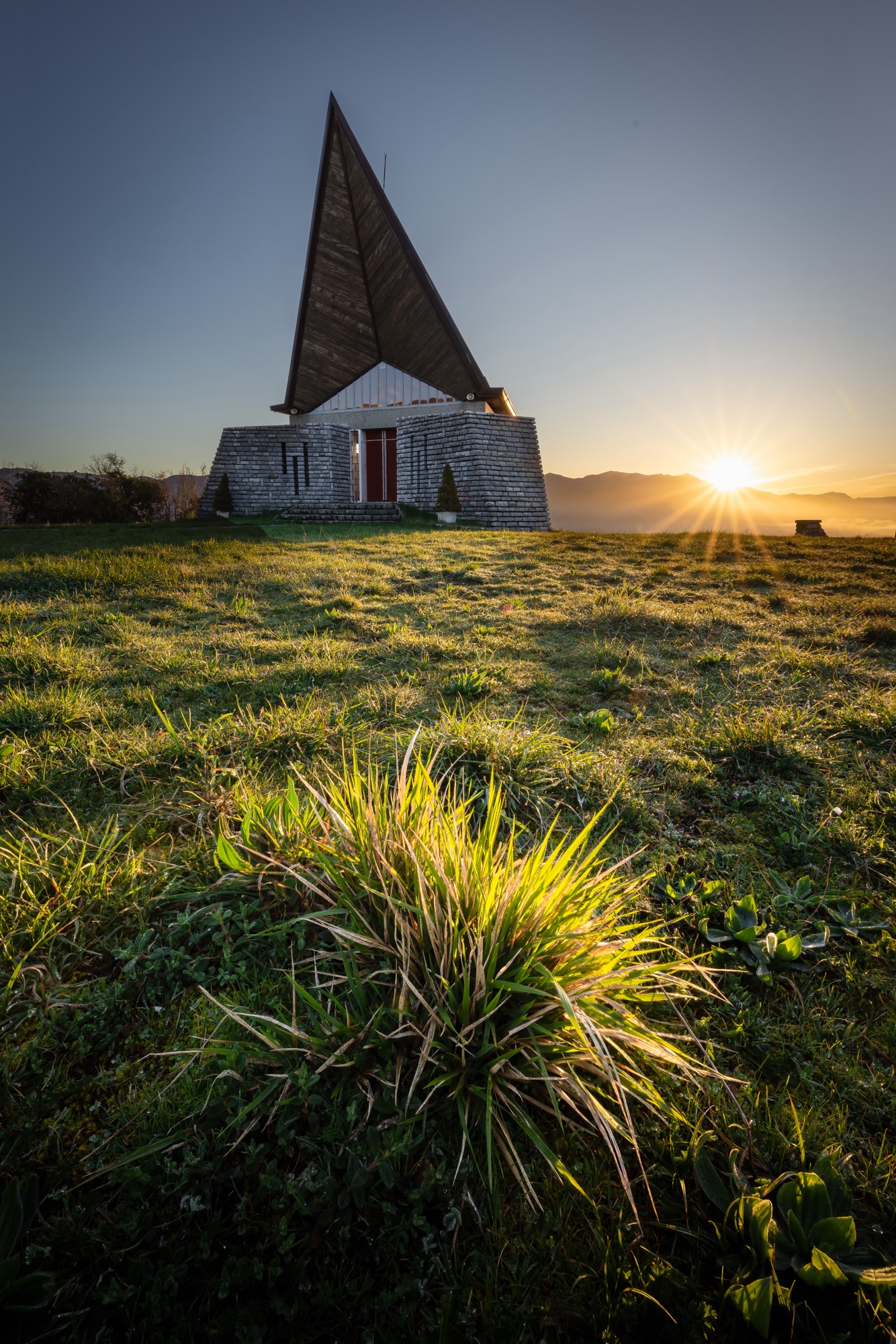
Arrivati, scendiamo e scarichiamo l’attrezzatura. Il cielo promette veramente bene. Nuvole basse aspettano la luce per colorarsi e prendere vita. Cerchiamo i punti migliori per posizionare la fotocamera, in attesa che sorga il sole proprio dietro il monumento.

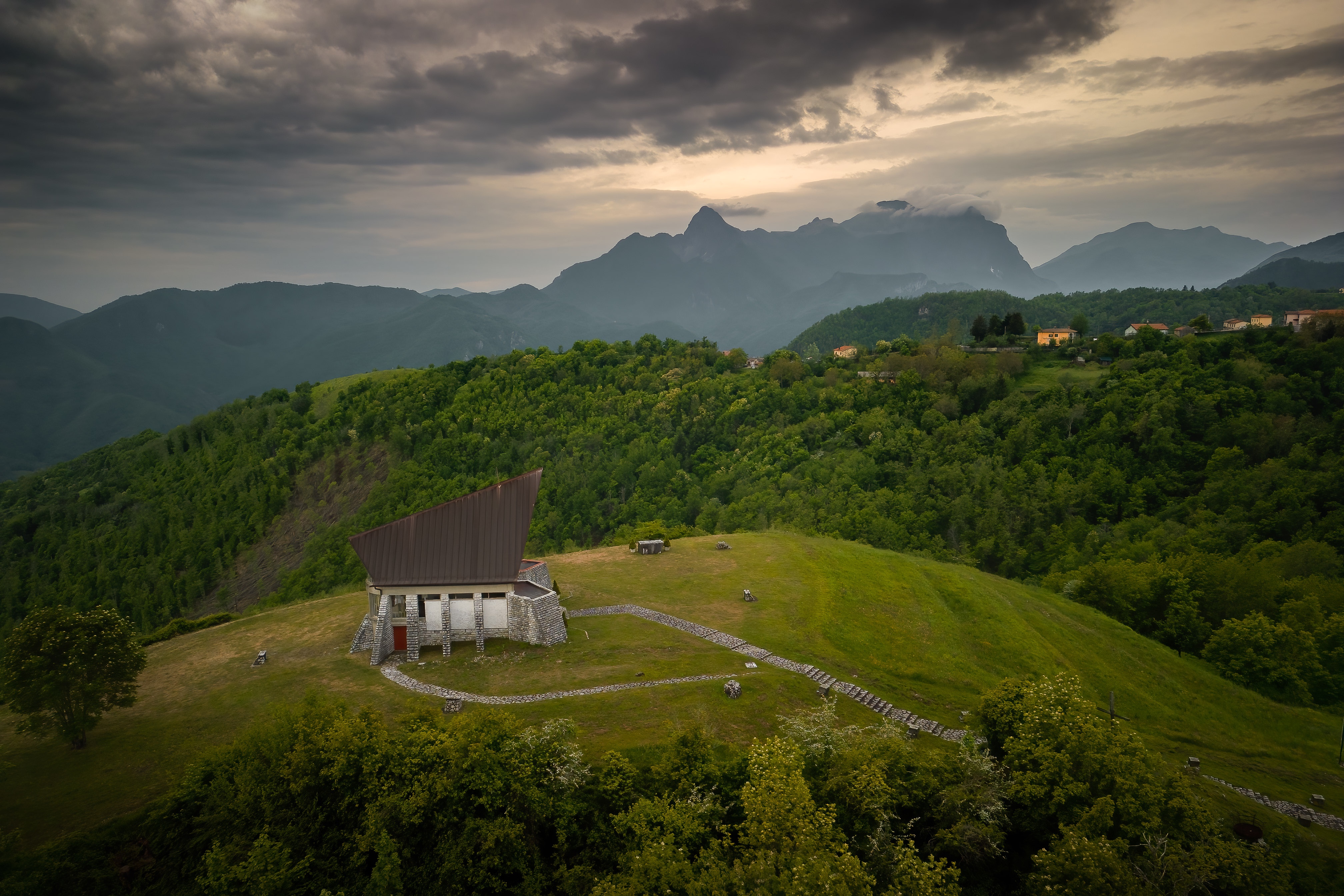
Alzo il drone. Dall’alto è semplicemente tutto un altro vedere. Incredibile quanto ci si senta piccoli e inermi, di fronte ad un paesaggio così vasto e silenzioso. Il sole comincia a dipingere la sua magia intorno noi. Illumina lateralmente la chiesa e gli alberi, creando delle ombre lunghe che danzano attorno a noi. Spettacolo puro.

Trascorriamo praticamente tre ore in questo posto meraviglioso. Anche Cristiano, che è la prima volta che visita questo luogo, cambia angolatura alla ricerca della foto perfetta. Ci siamo veramente rilassati e goduti a pieno questa uscita. Ecco gli scatti che abbiamo portato a casa, ed il video di questo affascinante scorcio di Garfagnana. Buona visione.

An unpretentious outing this morning. This is the second time I go to the Garfagnana War Memorial. The last outing was last year, alone, on a very cold morning and with a very cloudy sky. This time the weather is much clearer, and the expectations for good light are very high.

Once my dear friend Cristiano arrived, faithful companion of my photographic adventures, we set off in the direction of Castelnuovo. We go up again in the direction of the small town of Piola, where the Shrine stands.

The project for the construction of the Shrine was approved at the end of the 1950s. It had to be a simple construction, which would remind future generations of the tribute of lives that the people of Garfagnana had paid during the wars fought in the twentieth century.

It was decided to build it on a peak in the hamlet of Croce di Stazzana, about 885 meters above sea level, capable of taking the visitor’s breath away: climbing the stone staircase that leads to the church, it is like looking out onto a terrace that opens up on the valleys of Garfagnana and its Alps, which surround as if in an embrace those who gave their lives by being torn from their land. Designed by two Florentine architects, Giorgio Merlini and Luigi De Filla, the Shrine was inaugurated on 3 July 1966, in the presence of the highest civil, military and religious officials of Garfagnana and the Government.
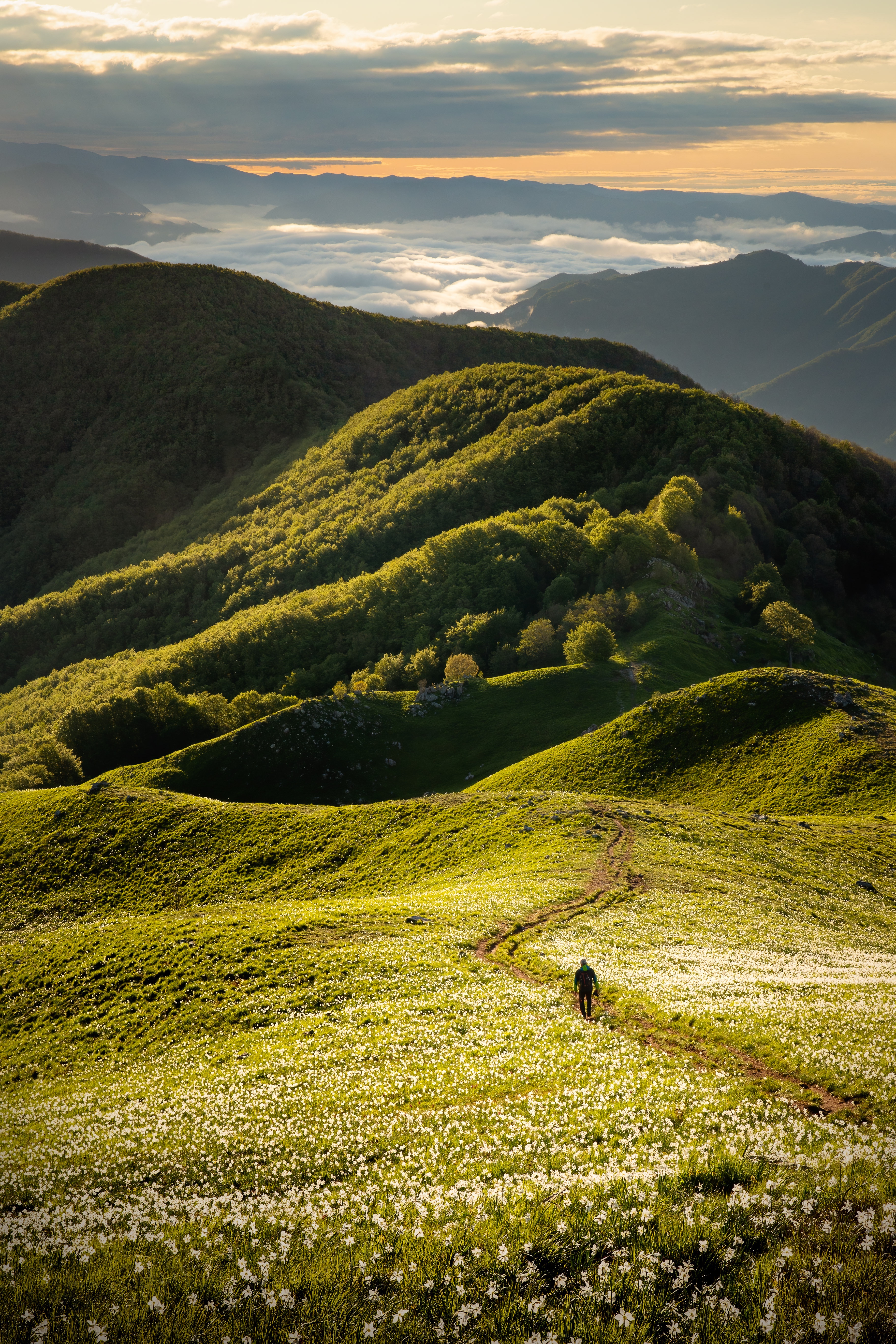
Once we arrive, we go down and unload the equipment. The sky promises really well. Low clouds wait for the light to color and come to life. We look for the best points to position the camera, waiting for the sun to rise just behind the monument.

I raise the drone. From above it is simply a completely different view. Incredible how small and helpless one feels, faced with such a vast and silent landscape. The sun begins to paint its magic around us. It illuminates the church and trees from the side, creating long shadows that dance around us. Pure entertainment.

We spend practically three hours in this wonderful place. Even Cristiano, who is visiting this place for the first time, changes angles in search of the perfect photo. We really relaxed and thoroughly enjoyed this outing. Here are the shots we took home, and the video of this fascinating glimpse of Garfagnana. Good vision.

Il sacrario ai caduti della garfagnana

L’uscita di stamani è stata un po’ improvvisata, o meglio, decisa all’ultimo, poche ore prima di partire. Tutto è nato scorrendo le foto sul profilo di un gruppo della Garfagnana. E’ bastato vedere uno scatto per decidere di andare. Non sapevo nemmeno dell’esistenza di questo monumento. E pensare che è distante appena un’ora da casa.

Il progetto della costruzione del Sacrario venne approvato alla fine degli anni 50. Doveva essere una costruzione semplice, che ricordasse alle generazioni future il tributo di vite che la gente della Garfagnana aveva pagato durante le guerre combattute nel Novecento.

Fu deciso di erigerlo su un picco nella frazione di Croce di Stazzana, a circa 885 metri sul livello del mare, capace di mozzare il fiato al visitatore: salendo la scalinata in pietra che conduce alla chiesa, è come affacciarsi su una terrazza che si apre sulle vallate della Garfagnana e delle sue Alpi, che circondano come in un abbraccio chi diede la vita venendo strappato alla sua terra. Progettato da due architetti fiorentini, Giorgio Merlini e Luigi De Filla, il Sacrario venne inaugurato il 3 luglio 1966, alla presenza delle più alte cariche civili, militari e religiose della Garfagnana e del Governo.

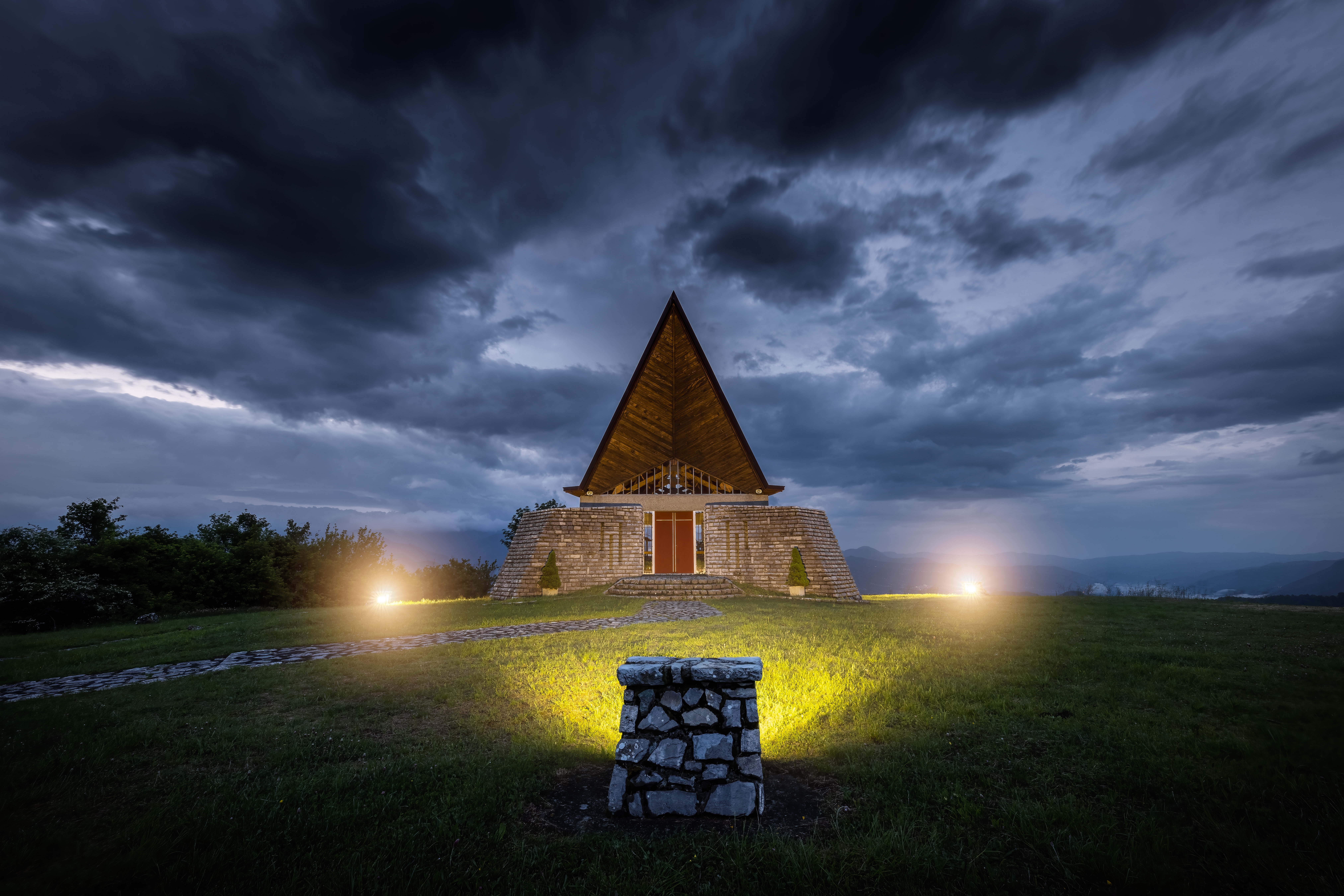
Stamani parto da solo. Il tempo nuvoloso, a tratti piovoso, e l’orario di partenza praticamente in nottata, ha scoraggiato tutti i miei compagni di fotografia. Non importa. Essendo la prima volta che vado, non ho grandi pretese. E’ importante prima capire il potenziale del posto. Esplorare e conoscere. Partenza alle 4:30 anche stamani. La strada è semplicissima. Basta arrivare a Castelnuovo Garfagnana e proseguire poi su per Cerretoli. Arrivato a destinazione, il Sacrario si vede già dalla strada. Svetta su una terrazza proprio davanti a me, ed inoltre, col cielo nuvoloso e blu notte, è illuminato da una calda luce radente, come se fosse un faro in mezzo ad un mare in tempesta.

Parcheggio e scendo di macchina. Una bella scalinata in pietra ti accompagna su questa bella radura rialzata, dove svetta solitario e silenzioso il Sagrario. La vista è incredibile. Sono nel cuore della Garfagnana, circondato dalle Apuane. Sulla mia destra si vede benissimo l’Omo Morto e il massiccio della Pania. Il tempo non promette molto bene. Il cielo è completamente coperto. Tira un vento cane. Speriamo di poter alzare almeno il drone per qualche ripresa, perché merita veramente. Una cosa è certa: il blu scuro del cielo e queste luci gialle arancio che illuminano il monumento è un contrasto pazzesco, che merita subito qualche scatto.

Faccio un time laps. Le nuvole corrono velocissime a causa del forte vento. A tratti qualche nuvola si sposta, e apre uno spiraglio nel cielo, dove una debole luce fatica quasi ad uscire. Non importa. Essere qua, da solo, in silenzio, aspettare il giorno ascoltando i rumori della valle: solo questo è valso il viaggio. Finalmente il vento si placa lievemente. Alzo il drone per avere una nuova prospettiva. Wow… che posto. Dall’alto è ancora più incredibile.

Trascorro praticamente tre ore in questo posto meraviglioso. Pochi scatti, qualche ripresa veloce, ma tanto entusiasmo. Mi sono veramente rilassato e goduto a pieno questa uscita. Ecco gli scatti che sono riuscito a portare a casa, ed il video di questo affascinante scorcio di Garfagnana. Buona visione.

This morning’s outing was a bit improvised, or rather, decided at the last minute, a few hours before leaving. It all started by scrolling through the photos on the profile of a group from Garfagnana. It was enough to see a shot to decide to go. I didn’t even know about the existence of this monument. And to think it’s just an hour away from home.

The project for the construction of the Shrine was approved at the end of the 1950s. It had to be a simple construction, which would remind future generations of the tribute of lives that the people of Garfagnana had paid during the wars fought in the twentieth century.

It was decided to erect it on a peak in the hamlet of Croce di Stazzana, about 885 meters above sea level, capable of taking the visitor’s breath away: climbing the stone staircase that leads to the church, it is like looking out onto a terrace that opens on the valleys of the Garfagnana and its Alps, which surround as if in an embrace those who gave their lives by being snatched from their land. Designed by two Florentine architects, Giorgio Merlini and Luigi De Filla, the Shrine was inaugurated on 3 July 1966, in the presence of the highest civil, military and religious officials of the Garfagnana and of the Government.

I’m leaving alone this morning. The cloudy weather, sometimes rainy, and the departure time practically at night, discouraged all my photography companions. It does not matter. Being my first time going, I don’t have great expectations. It is important to first understand the potential of the place. Explore and know. Departure at 4:30 this morning too. The road is very simple. Just get to Castelnuovo Garfagnana and then continue up to Cerretoli. When you arrive at your destination, the Shrine can already be seen from the road. It stands on a terrace right in front of me, and furthermore, with the cloudy and blue night sky, it is illuminated by a warm grazing light, as if it were a lighthouse in the middle of a stormy sea.

I park and get out of the car. A beautiful stone staircase accompanies you to this beautiful raised clearing, where the Sagrario stands alone and silent. The view is amazing. I am in the heart of Garfagnana, surrounded by the Apuan Alps. On my right you can see very well the Omo Morto and the Pania massif. The weather doesn’t bode well. The sky is completely overcast. A strong wind is blowing. Let’s hope we can at least raise the drone for a few shots, because it really deserves it. One thing is certain: the dark blue of the sky and these yellow-orange lights that illuminate the monument is a crazy contrast, which immediately deserves a few shots.

I take a time lapse. The clouds move very fast due to the strong wind. At times some clouds move, and open a crack in the sky, where a weak light almost struggles to get out. It does not matter. Being here, alone, in silence, waiting for the day listening to the sounds of the valley: this alone was worth the trip. Finally the wind subsides slightly. I raise the drone to get a new perspective. Wow… what a place. From above it is even more incredible.
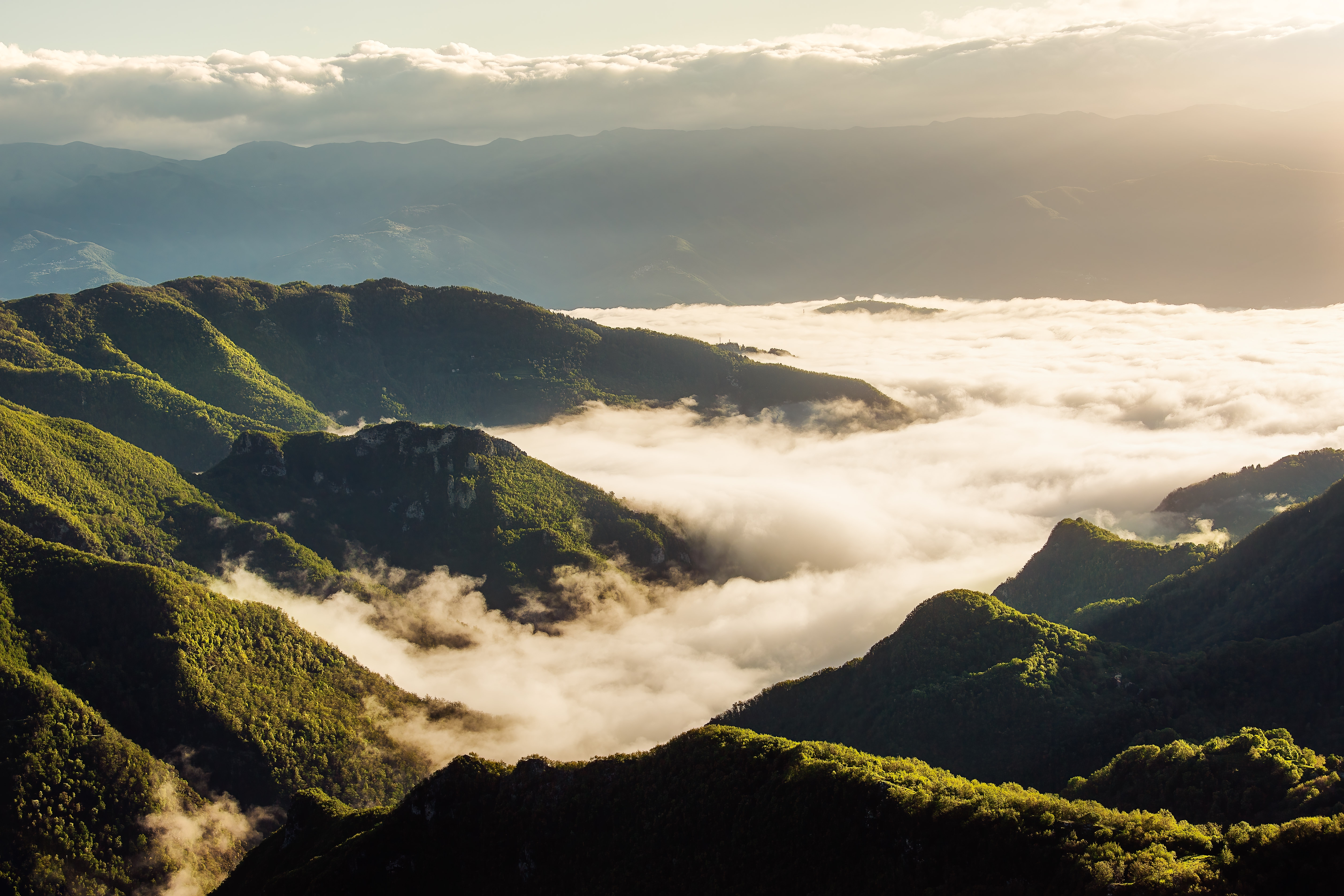
I basically spend three hours in this wonderful place. A few shots, some quick shots, but a lot of enthusiasm. I really relaxed and thoroughly enjoyed this outing. Here are the shots I managed to bring home, and the video of this fascinating glimpse of Garfagnana. Good vision.

L’alba del Monte Croce

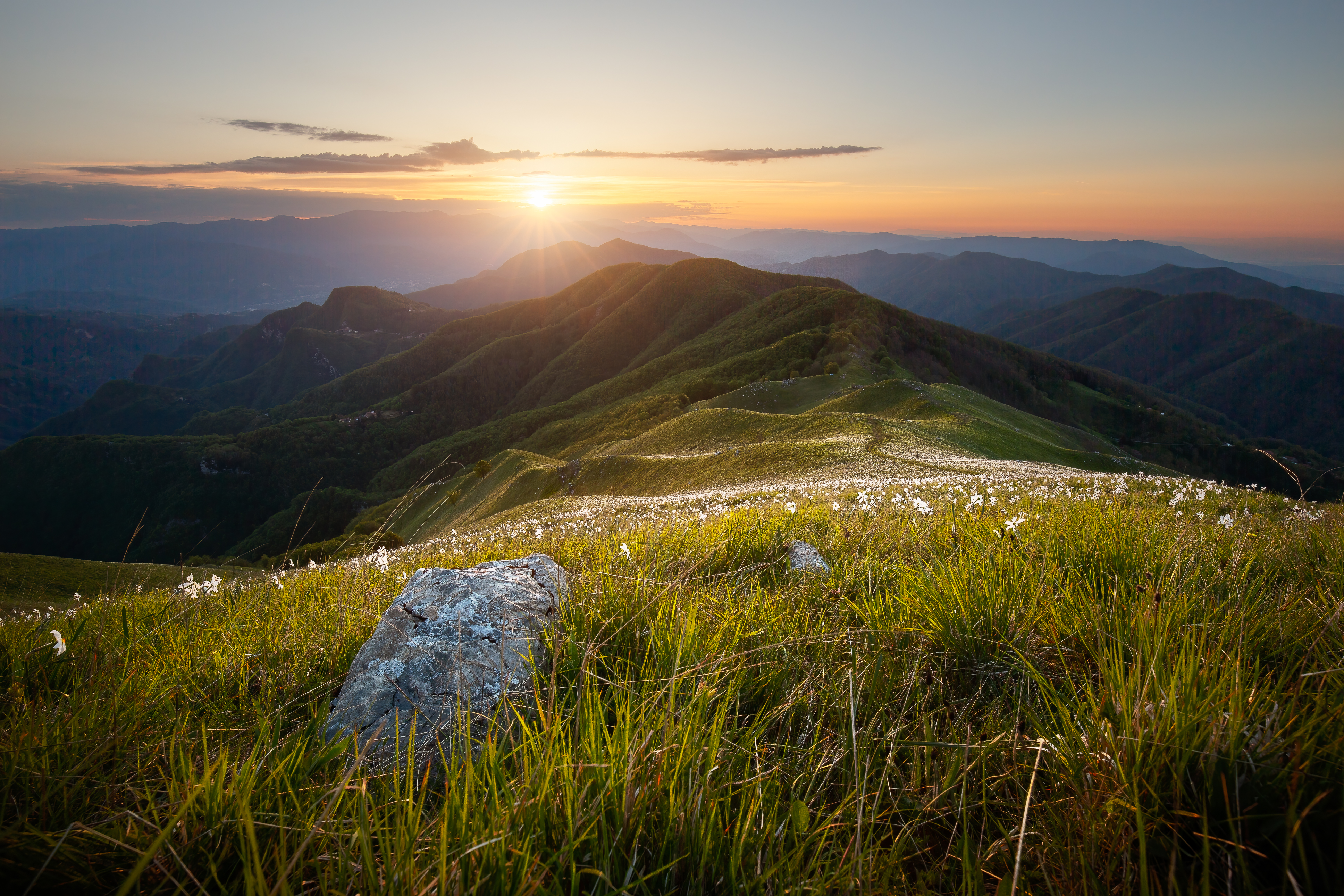
Era tanto tempo che sentivo parlare della fioritura dei narcisi sul Monte Croce, ma ancora non mi ero deciso ad andare. Un buon posto, per carità, ma lo reputavo una delle solite, classiche, mete forzate di ogni fotografo che si rispetti. Sinceramente non mi attraeva più di tanto, e l’idea di andare su per fare solo una foto ai fiori mi ha sempre spinto a rimandare. Quest’anno ho trovato un ritaglio di tempo e, con il mio amico Claudio, abbiamo deciso di andare. Se mi sono ricreduto sull’idea iniziale che mi ero fatto? Altro che… credo che questa sia stata, senza dubbio, una delle uscite più belle ed interessanti che abbia mai fatto.

Il Monte Croce fa parte delle Apuane Meridionali, si trova nel comune di Stazzema e la sua vetta raggiunge i 1314 metri. È così chiamato poiché i quattro crinali principali che lo formano si intersecano più o meno perpendicolarmente a formare una croce. Visto da lontano il monte è decisamente una enorme collina di colore mutevole secondo la stagione: dal verde intenso primaverile, al giallo rossastro autunnale, al bianco invernale quando è coperto dalla neve.

Da sempre è rinomato per la bella fioritura dei narcisi nella primavera avanzata tanto è vero che è conosciuto anche come il monte delle giunchiglie. In vetta c’è una croce molto semplice e si gode di bella vista specialmente sul gruppo delle Panie, e dalla parte opposta del versante, si affaccia la Versilia e tutto il litorale tirrenico fino alla Liguria.

La partenza è la nostra, consueta, alzata mattutina, o meglio, notturna. Ore 3:30 suona la sveglia. A Maggio, il sole sorge molto presto, quindi è uno sforzo obbligato. Mi ritrovo con Claudio e si parte in direzione Palagnana. La strada è stretta ma ben percorribile. Arriviamo in cima al paese, fino a che la strada non termina. Parcheggiamo. Borsone in spalla e torcia accesa in testa. Comincia la salita per raggiungere la vetta. Sono le 5:03. L’aria è fredda, umida. Il cielo ancora buio. Solo in lontananza si nota un bagliore più chiaro nel cielo. Ci incamminiamo lungo il sentiero, ormai ben visibile anche di notte, data l’affluenza di persone che in questo periodo viene quassù.

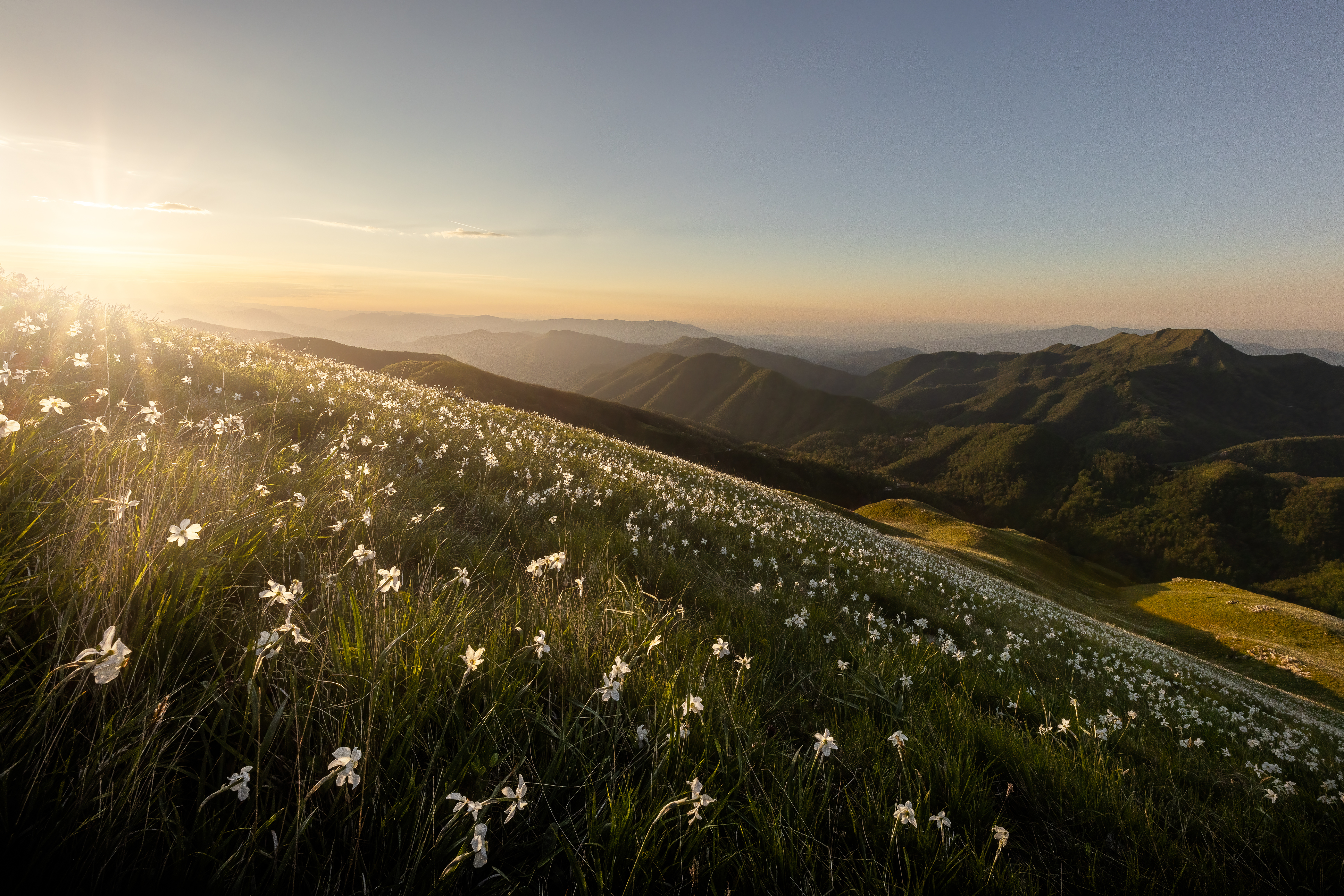
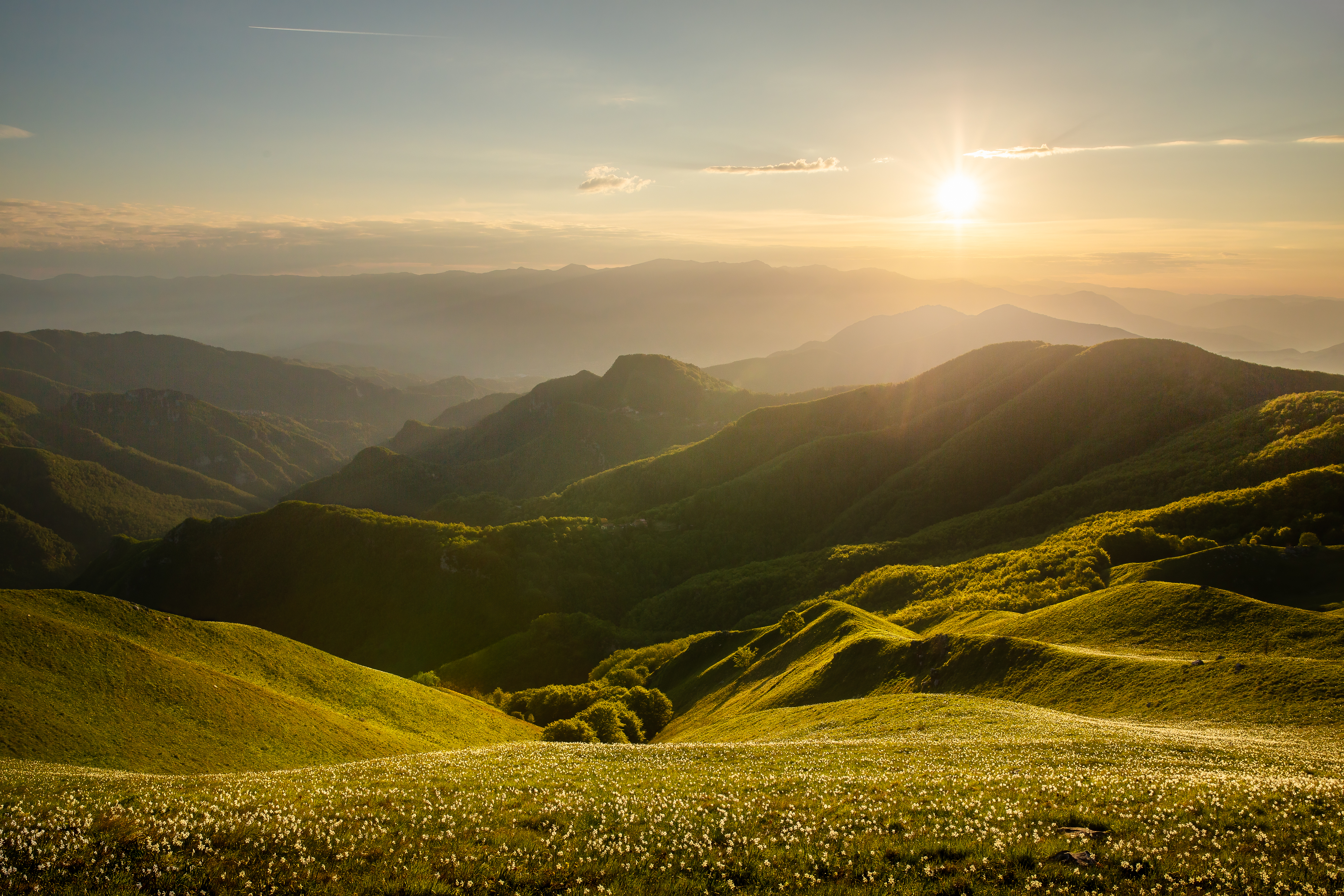
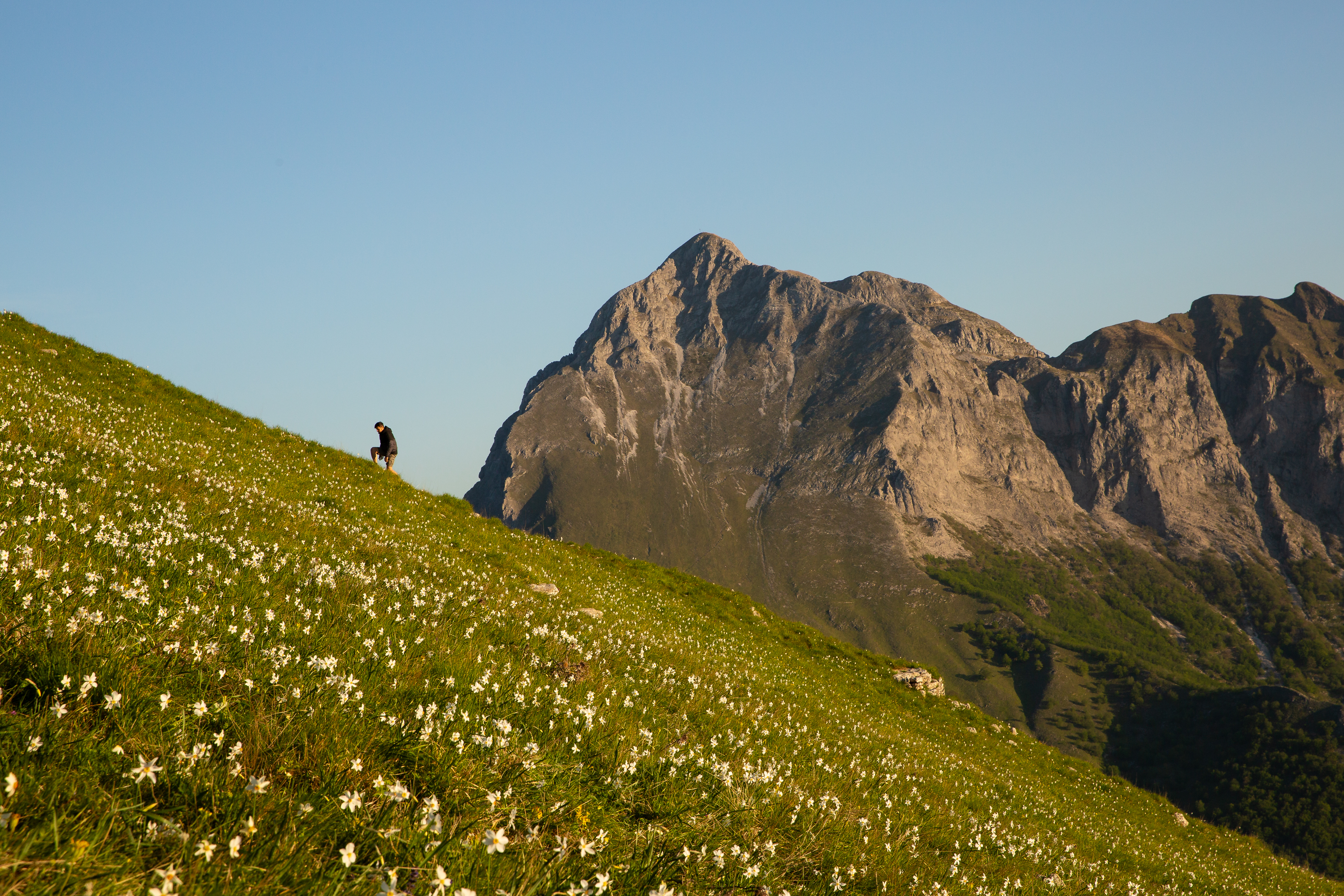
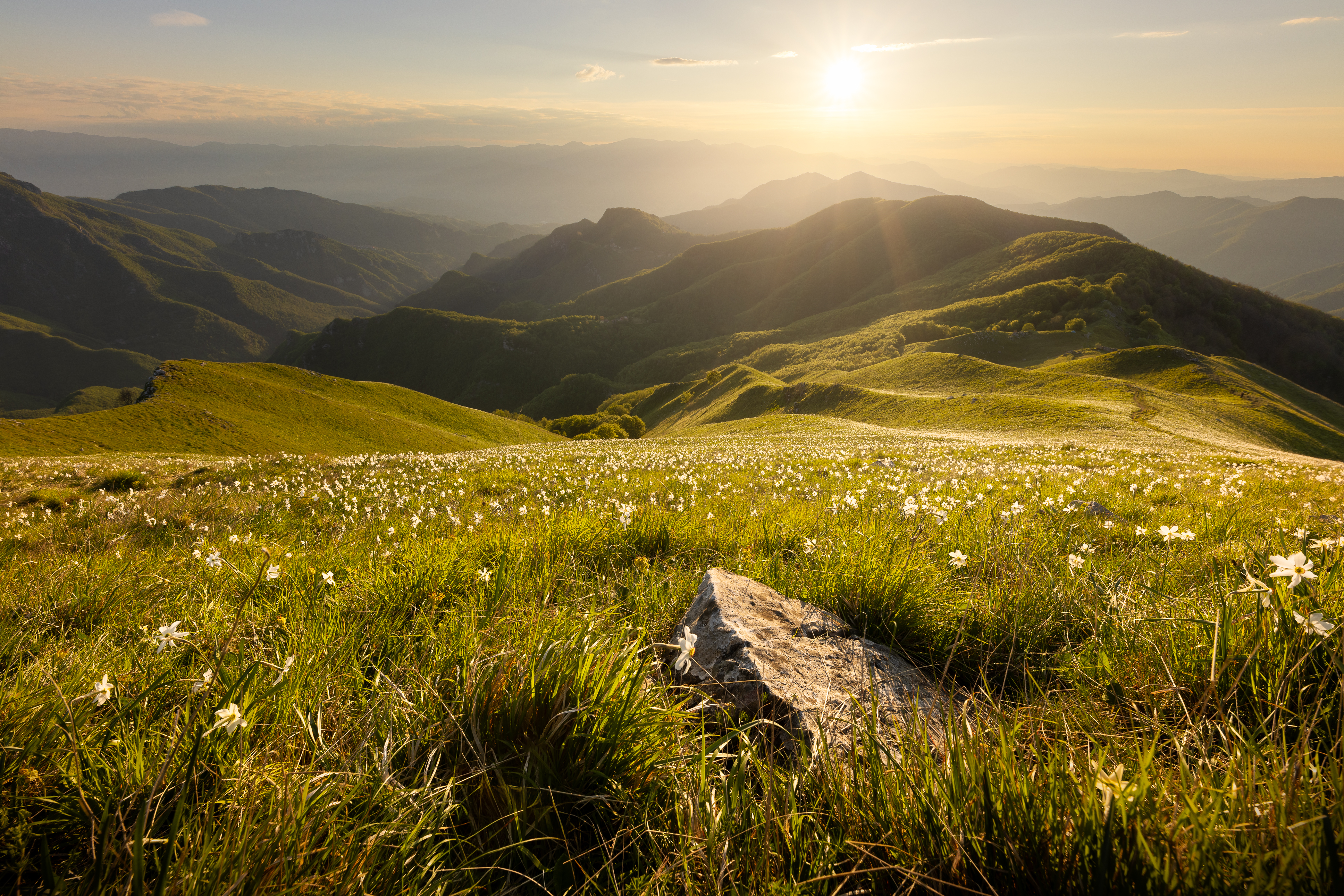
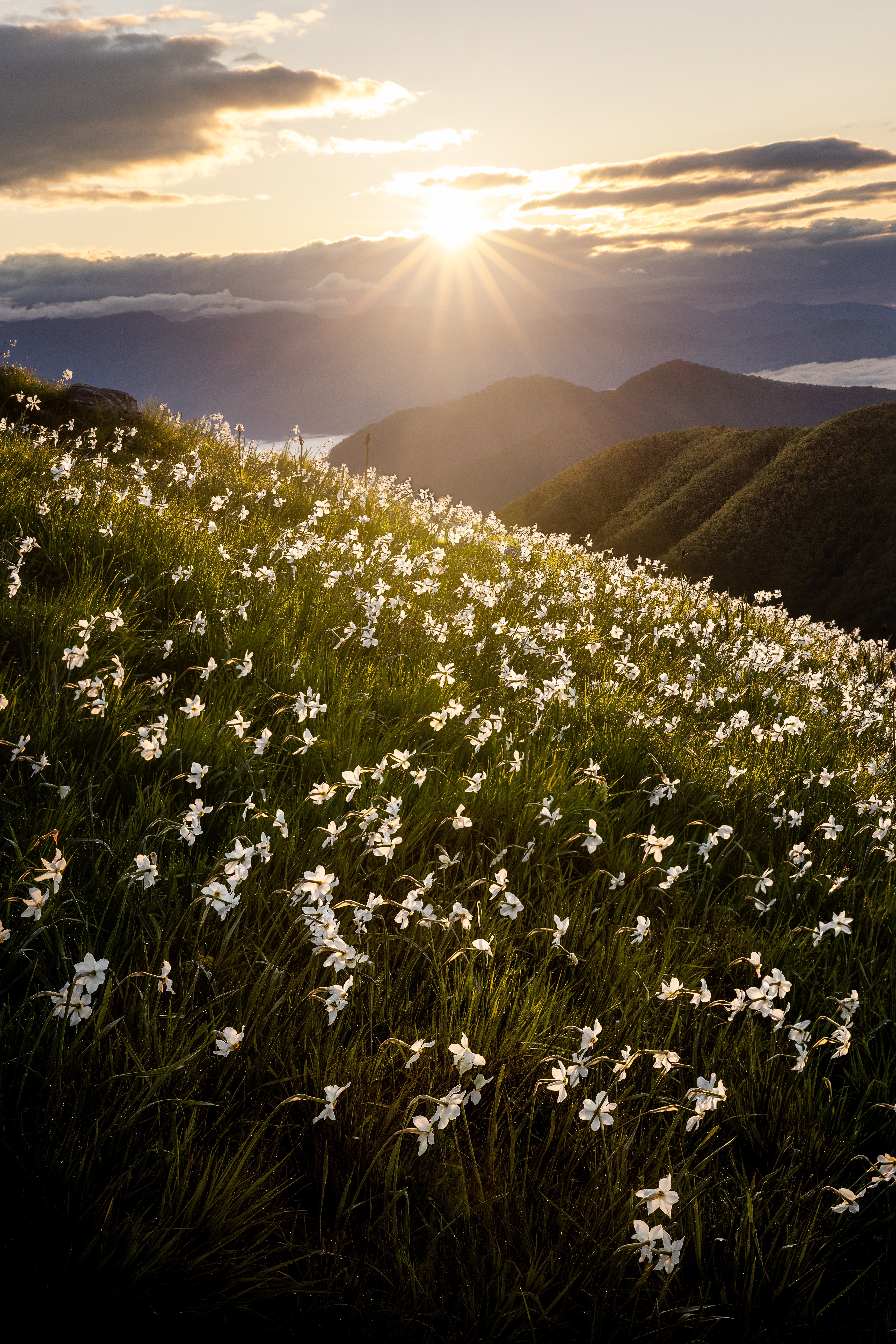
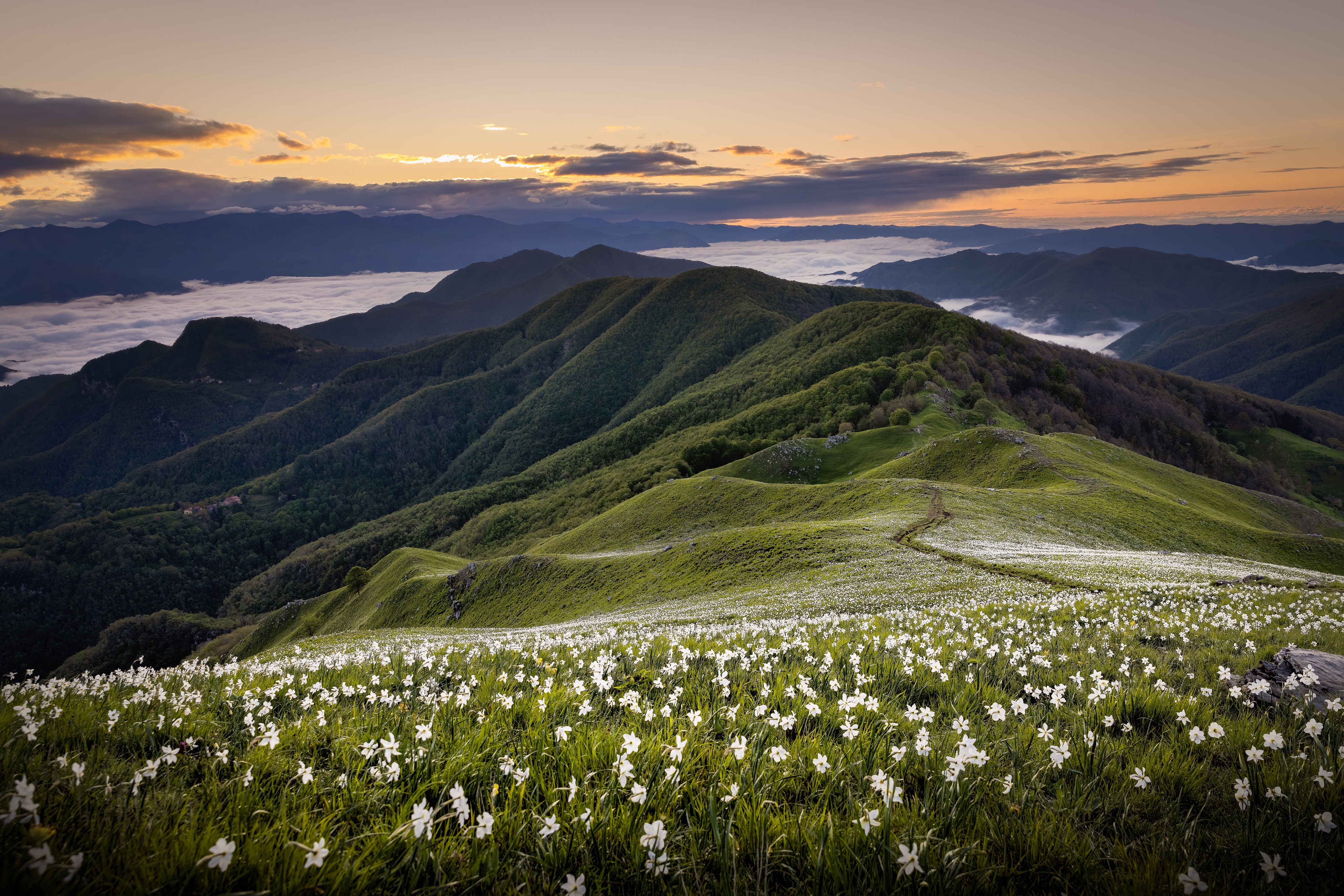
Man mano che si sale, la fatica si fa sentire. L’aria pungente strozza la gola, si respira a fatica. Ogni tanto ci fermiamo per fare qualche video e per riprendere fiato. Il paesaggio è mozzafiato già a metà percorso. Si comincia ad intravedere ciò che ci circonda, dato che il cielo sta pian piano schiarendo. È una piccola grande terrazza sulla Garfagnana. Continuiamo a salire più in alto ed incontriamo i primi narcisi fioriti. Alzando lo sguardo, si intravede il pendio coperto da un enorme tappeto bianco, che con la flebile luce del mattino comincia a svelare tutta la sua bellezza.

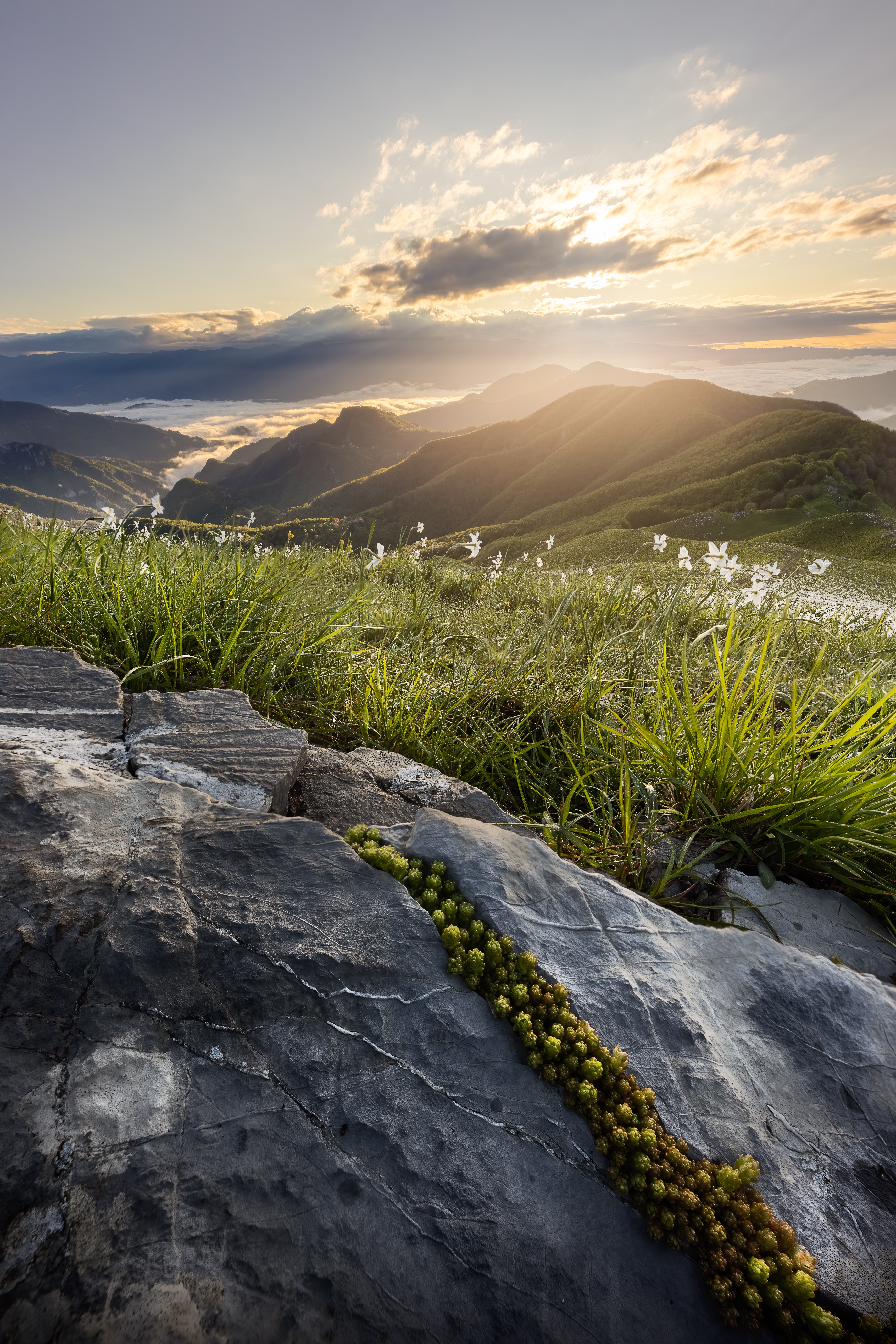
Siamo quasi in vetta. Ai lati del sentiero è praticamente tutto bianco. Bellissimo. Non vediamo l’ora che venga fuori il sole. Intanto piazziamo il cavalletto e scattiamo le prime fotografie. Saliamo fino in cima, alla croce. Una nuda e semplice croce di ferro, che domina questo immenso paradiso. Da quassù si vedono le cime più importanti delle Alpi Apuane: la Pania, Il Procinto, il Prana e il Matanna. Sull’altro versante si intravede addirittura Portovenere e la Palmaria. Sembra di affacciarsi ad una finestra sull’infinito.

Posizioniamo le fotocamere scegliendo con cura la scena, in quanto il sole stare spuntare. La luce arriva di colpo, uscendo dalle nuvole basse sotto di noi. Il tappeto dei narcisi prende finalmente vita. Il bianco etereo dei fiori si scalda e si illumina. Il verde intenso dei prati vira repentinamente ad un giallastro intenso, come se, tutt’ad un tratto, qualcuno avesse cambiato il colore del mondo. Bellissimo. Sembra di essere su un altro pianeta. I primi scatti sono quelli più euforici. Cerco di spostarmi velocemente e cambiare inquadratura, per poter sfruttare questi attimi brevi e preziosi. Alterno le foto alle riprese video. Sono ubriaco di emozioni e stupore.

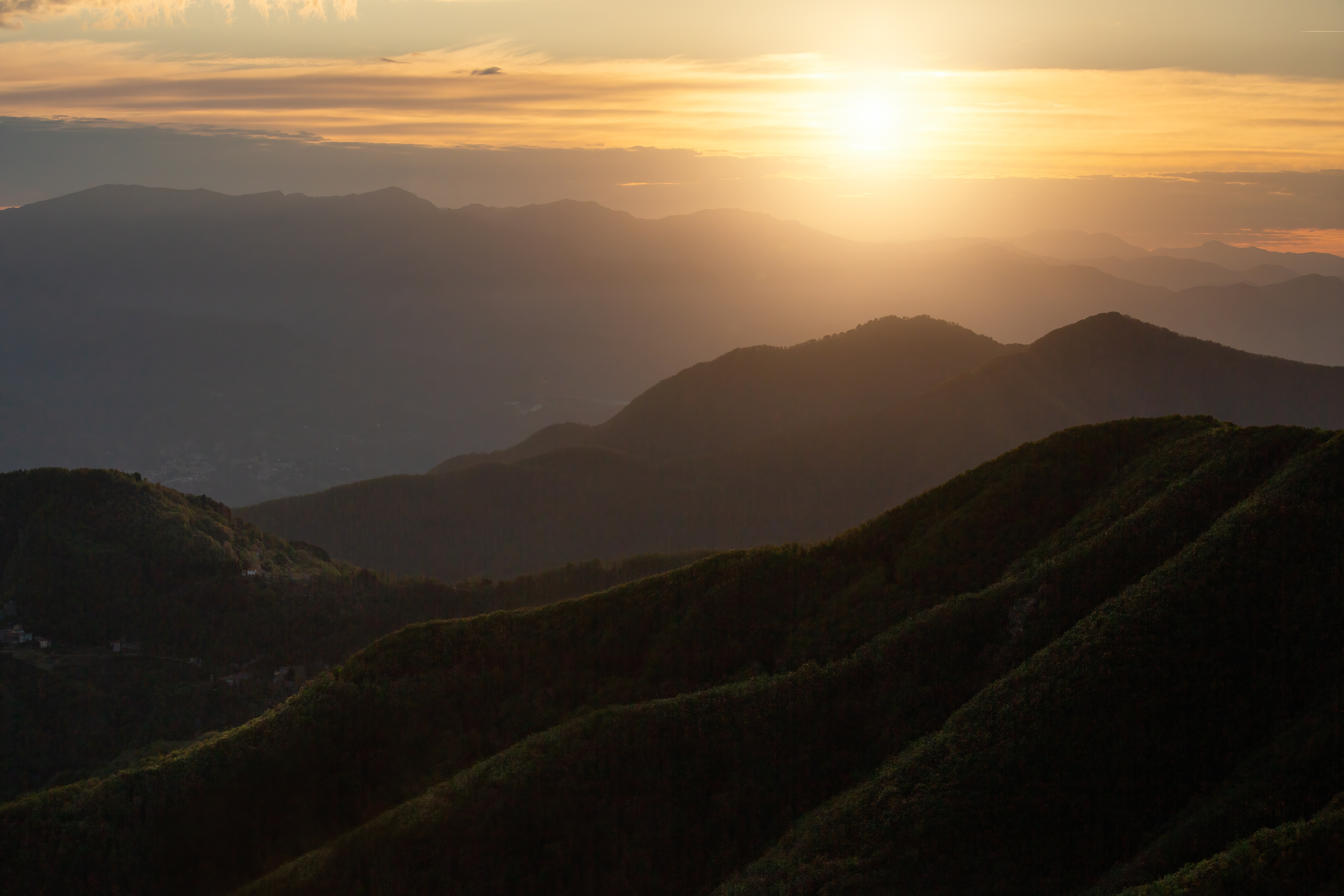
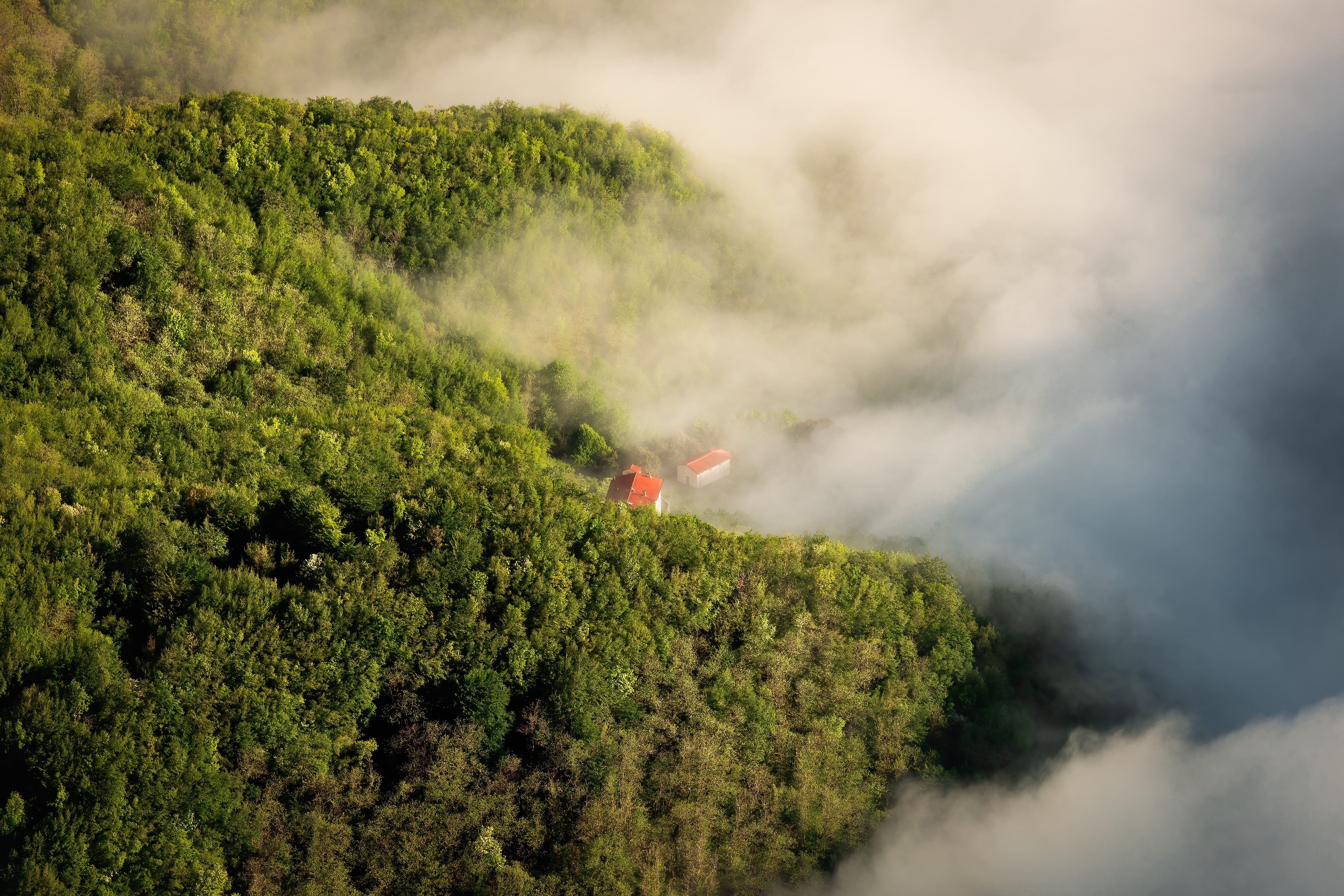
Passati i minuti più belli di luce, torniamo in vetta. Dopo le classiche foto aperte e panoramiche, monto il teleobiettivo, che mi permette di immortalare pezzi di paesaggio più ristretti. Sotto di noi, un mare di nuvole sta pian piano salendo. E’ incredibile vedere come, lentamente, le case spariscano nella nebbia, come se venissero mangiate inesorabilmente dal nulla. Facciamo qualche foto e qualche time-laps.

La luce pian piano si fa sempre più dura. Il sole è alto, sopra di noi ormai. L’alba esala il suo ultimo respiro della giornata. Io e Claudio ci guardiamo. Non vorremmo, ma è ora di scendere. La mattinata ci ha regalato forti sensazioni. Oggi portiamo a casa molti scatti e ricordi. Sicuramente il prossimo anno non mi lascerò scappare un’altra occasione per tornare quassù. Spero che qualche pezzettino di emozione riesca a comunicarlo anche a voi, guardando questi scatti. Buona visione.

I had been hearing about the flowering of daffodils on Monte Croce for a long time, but I still hadn’t decided to go. A good place, for heaven’s sake, but I considered it one of the usual, classic, forced destinations of every self-respecting photographer. Honestly, it didn’t attract me that much, and the idea of ​​going up just to take a picture of the flowers has always made me put it off. This year I found a scrap of time and, with my friend Claudio, we decided to go. If I changed my mind on the initial idea that I had? Other than… I think this was, without a doubt, one of the most beautiful and interesting outings I’ve ever done.

Monte Croce is part of the Southern Apuan Alps, is located in the municipality of Stazzema and its peak reaches 1314 meters. It is so called because the four main ridges that form it intersect more or less perpendicularly to form a cross. Seen from afar, the mountain is definitely a huge hill of changing color according to the season: from the intense green in spring, to the reddish yellow in autumn, to the white in winter when it is covered by snow.

It has always been renowned for the beautiful flowering of daffodils in late spring, so much so that it is also known as the mountain of daffodils. At the top there is a very simple cross and you can enjoy a beautiful view especially of the Panie group, and on the opposite side of the slope, Versilia and the entire Tyrrhenian coast up to Liguria overlooks.

The departure is our usual morning, or better, night rise. 3:30 am the alarm rings. In May, the sun rises very early, so it’s a forced effort. I meet up with Claudio and we leave towards Palagnana. The road is narrow but well passable. We arrive at the top of the village, until the road ends. We park. Bag on the shoulder and torch lit on the head. Start the climb to reach the summit. It’s 5:03. The air is cold, humid. The sky still dark. Only in the distance is a clearer glow seen in the sky. We walk along the path, now clearly visible even at night, given the influx of people who come up here in this period.
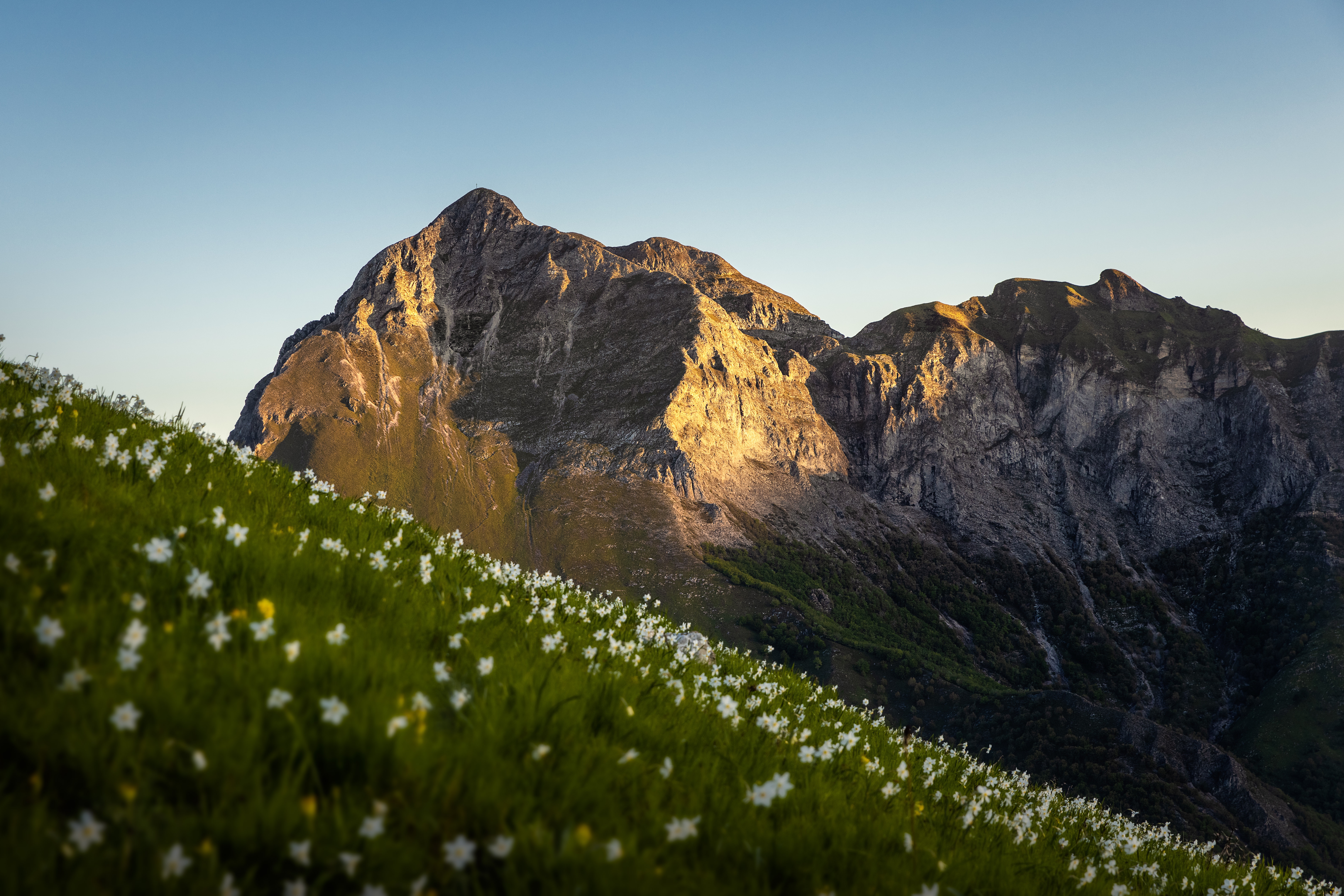
As you go up, fatigue makes itself felt. The pungent air chokes the throat, it is difficult to breathe. Every now and then we stop to make some videos and to catch our breath. The landscape is breathtaking already halfway through. We begin to glimpse what surrounds us, since the sky is slowly clearing. It is a great little terrace on the Garfagnana. We continue to climb higher and meet the first flowering daffodils. Looking up, you can see the slope covered by a huge white carpet, which begins to reveal all its beauty with the faint morning light.

We are almost at the top. On the sides of the path it is practically all white. Beautiful. We can’t wait for the sun to come out. In the meantime, let’s set up the tripod and take the first photographs. We climb to the top, to the cross. A bare and simple iron cross, which dominates this immense paradise. From up here you can see the most important peaks of the Apuan Alps: the Pania, the Procinto, the Prana and the Matanna. On the other side you can even see Portovenere and Palmaria. It seems to look out a window on the infinite.

We position the cameras by carefully choosing the scene, as the sun is rising. The light comes suddenly, coming out of the low clouds below us. The carpet of daffodils finally comes to life. The ethereal white of the flowers warms up and lights up. The intense green of the meadows suddenly turns to an intense yellowish, as if, all of a sudden, someone had changed the color of the world. Beautiful. It seems to be on another planet. The first shots are the most euphoric ones. I try to move quickly and change shot, in order to take advantage of these short and precious moments. I alternate photos with video footage. I am drunk with emotion and amazement.

After the most beautiful minutes of light, we return to the summit. After the classic open and panoramic photos, I mount the telephoto lens, which allows me to capture smaller pieces of landscape. Below us, a sea of ​​clouds is slowly rising. It is incredible to see how houses slowly disappear into the fog, as if they were inexorably eaten up by nothing. Let’s take some photos and some time-lapses.

The light slowly gets harder and harder. The sun is high above us now. Dawn breathes its last breath of the day. Claudio and I look at each other. We don’t want to, but it’s time to get off. The morning gave us strong sensations. Today we bring home many shots and memories. Surely next year I will not miss another opportunity to come back up here. I hope that some little bit of emotion will be able to communicate it to you too, by looking at these shots. Good vision.