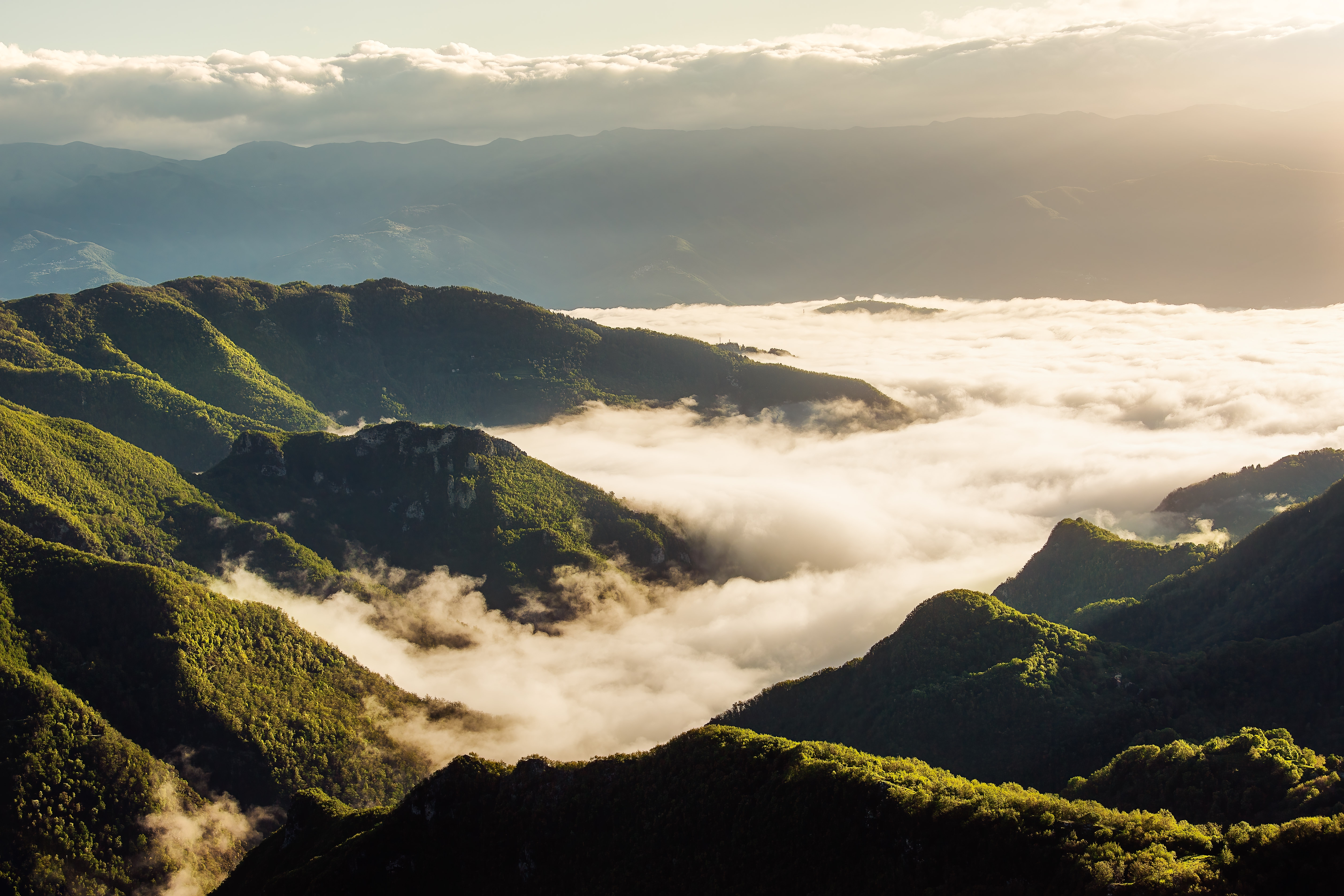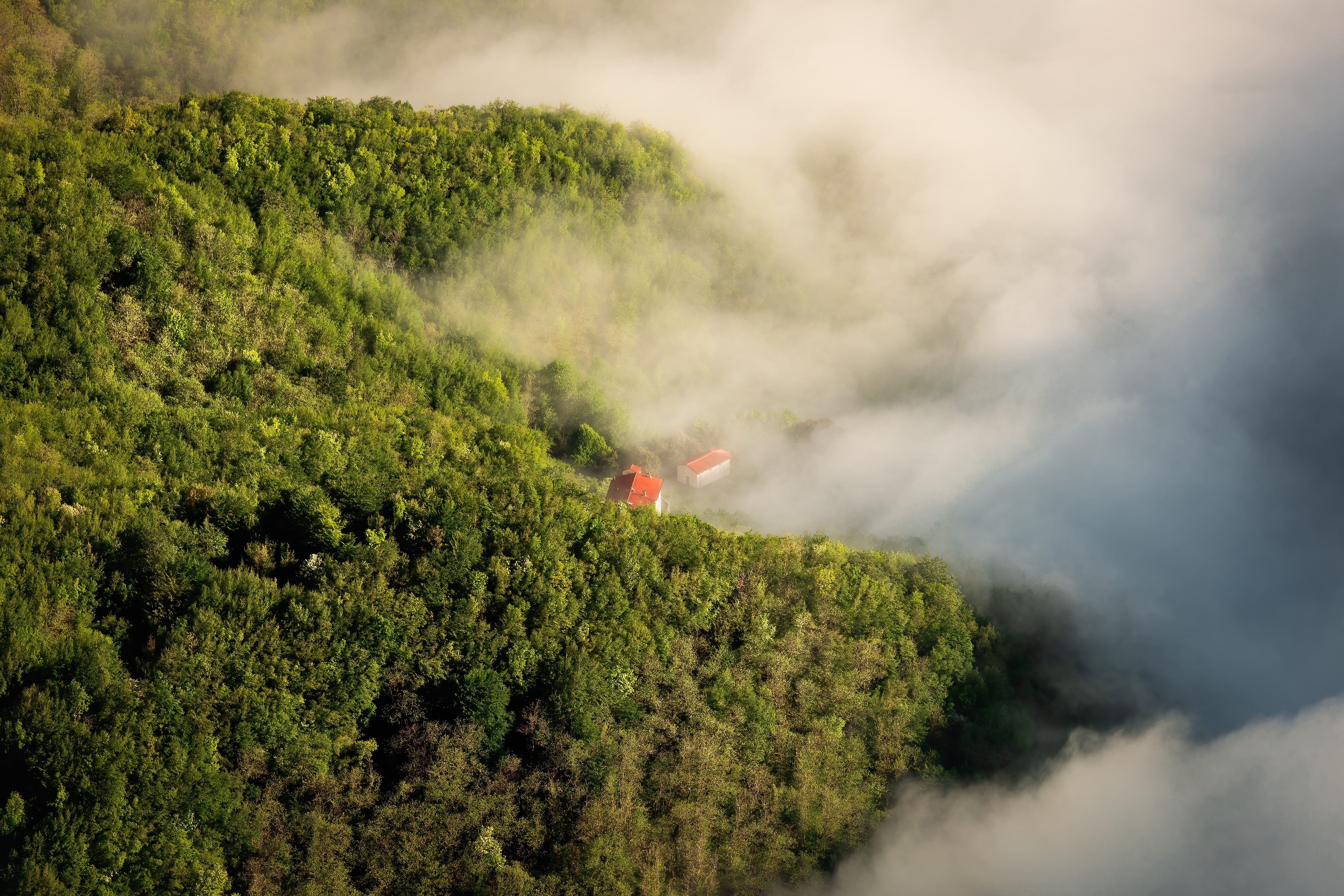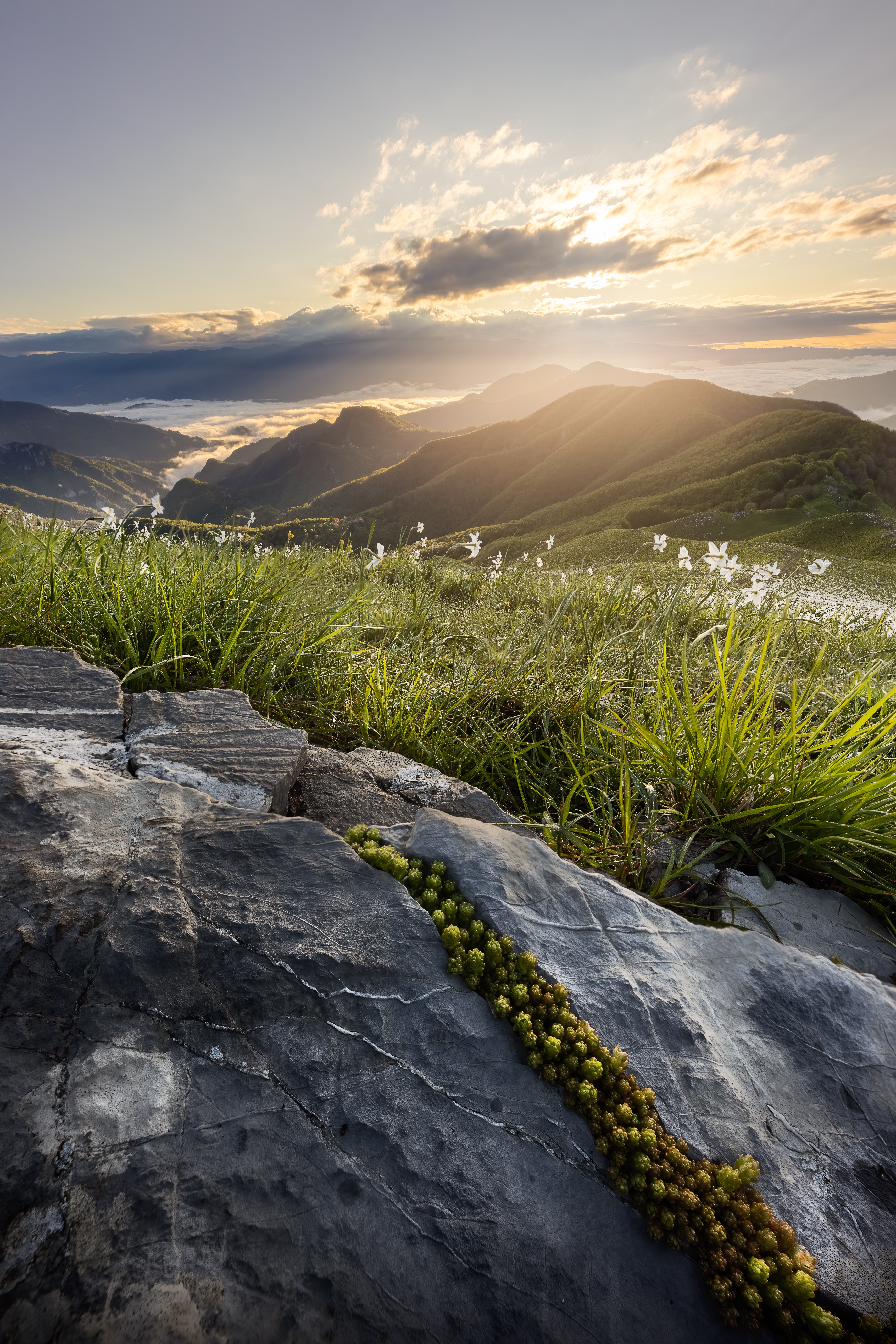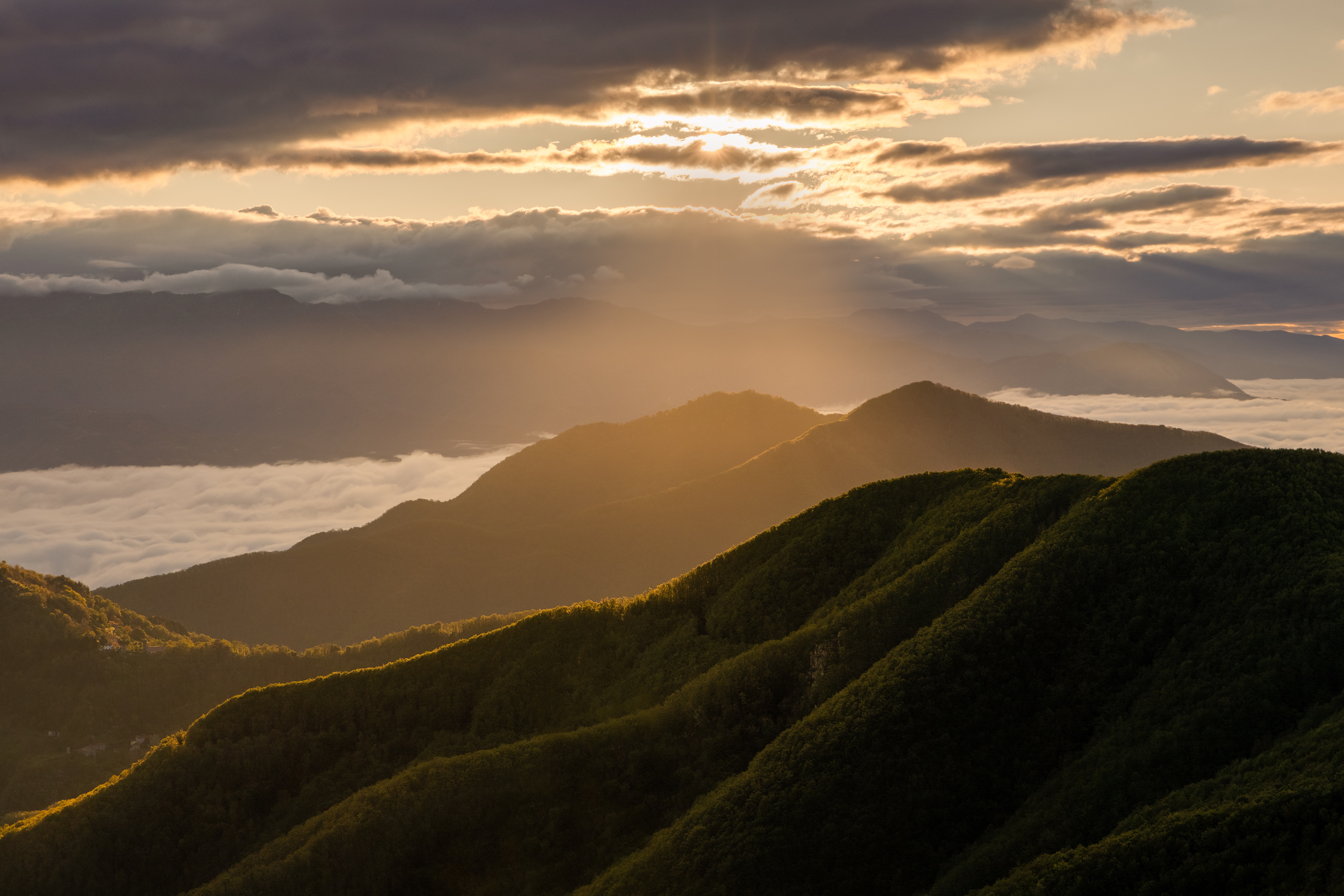
La chiesa di santa maria assunta

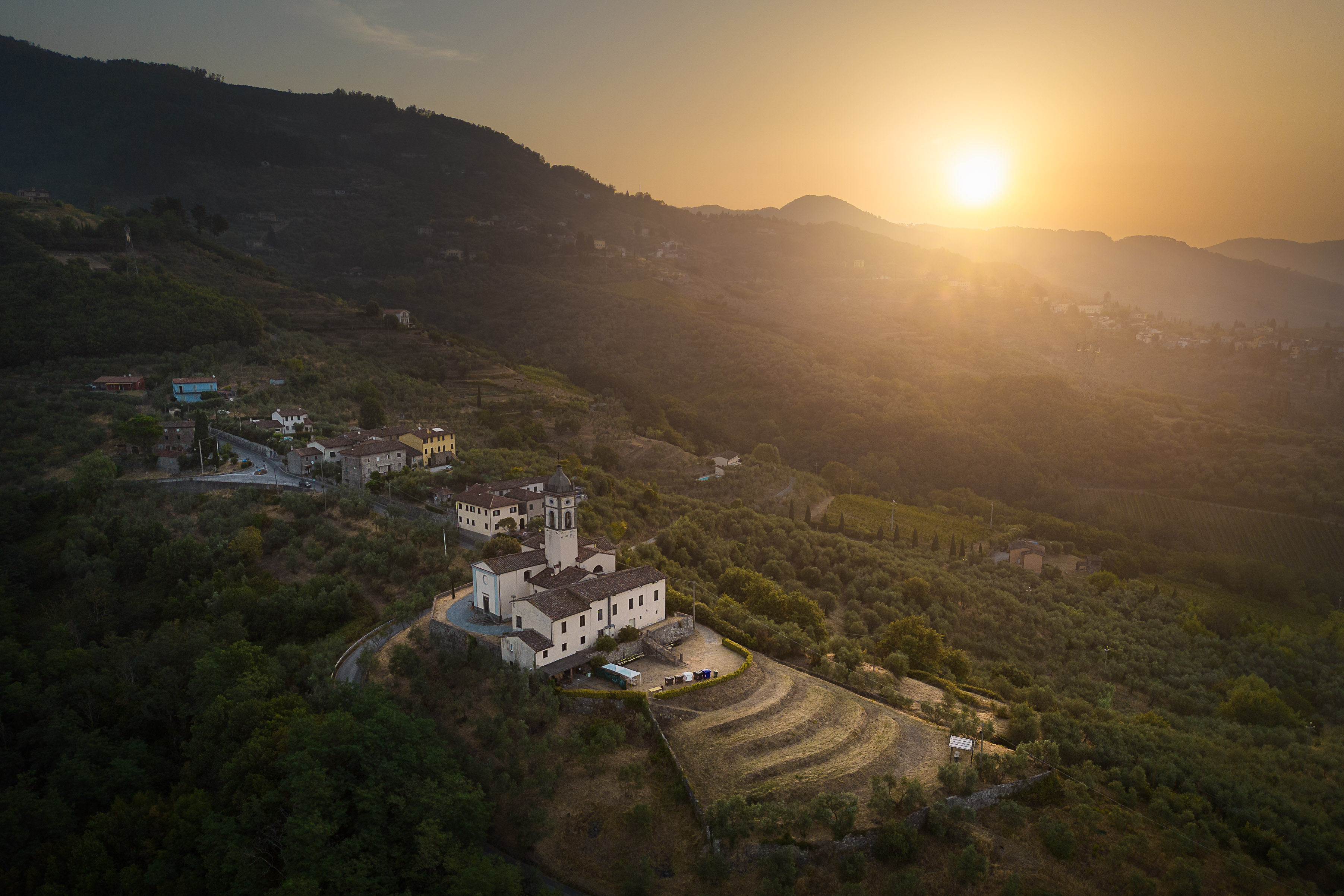
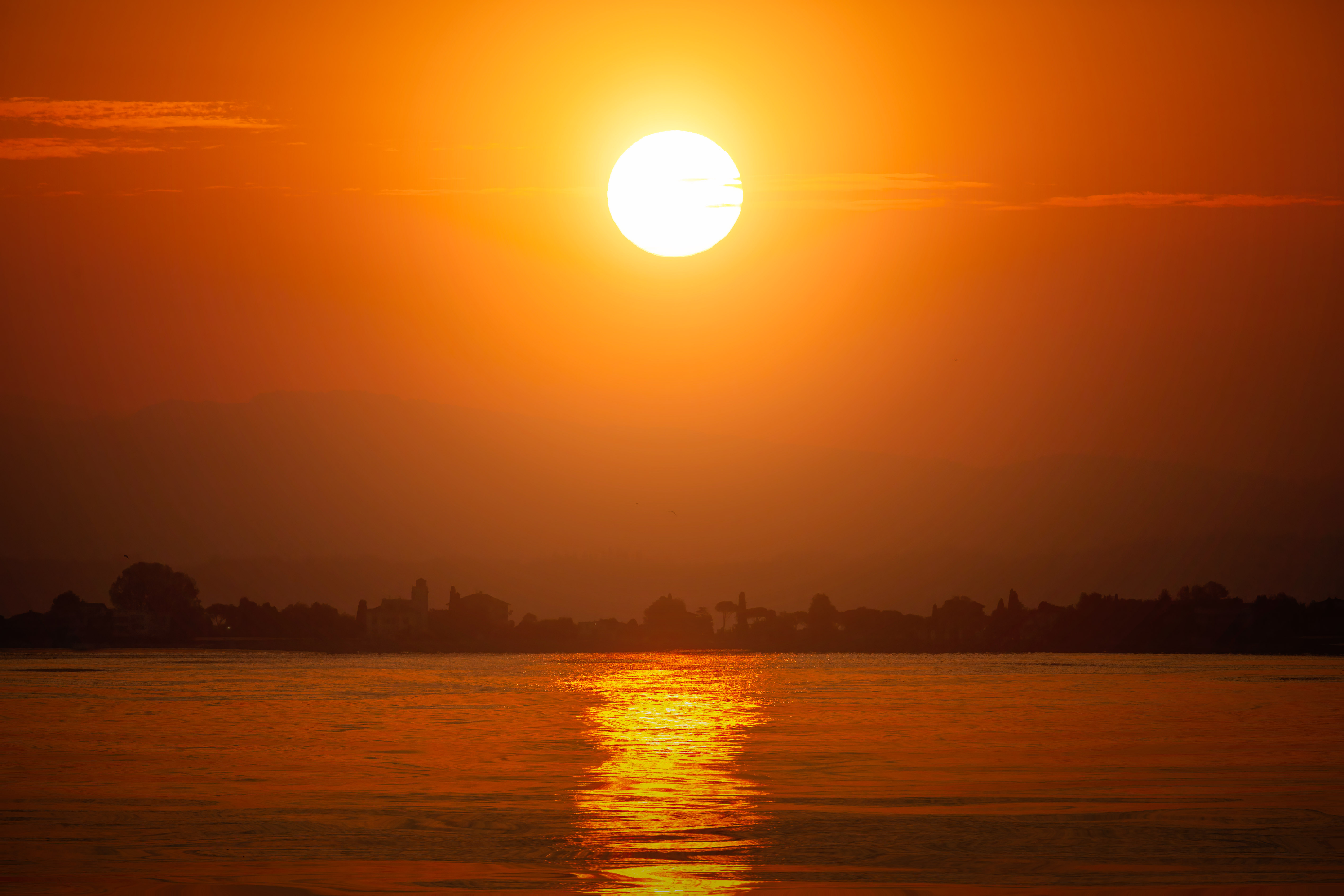
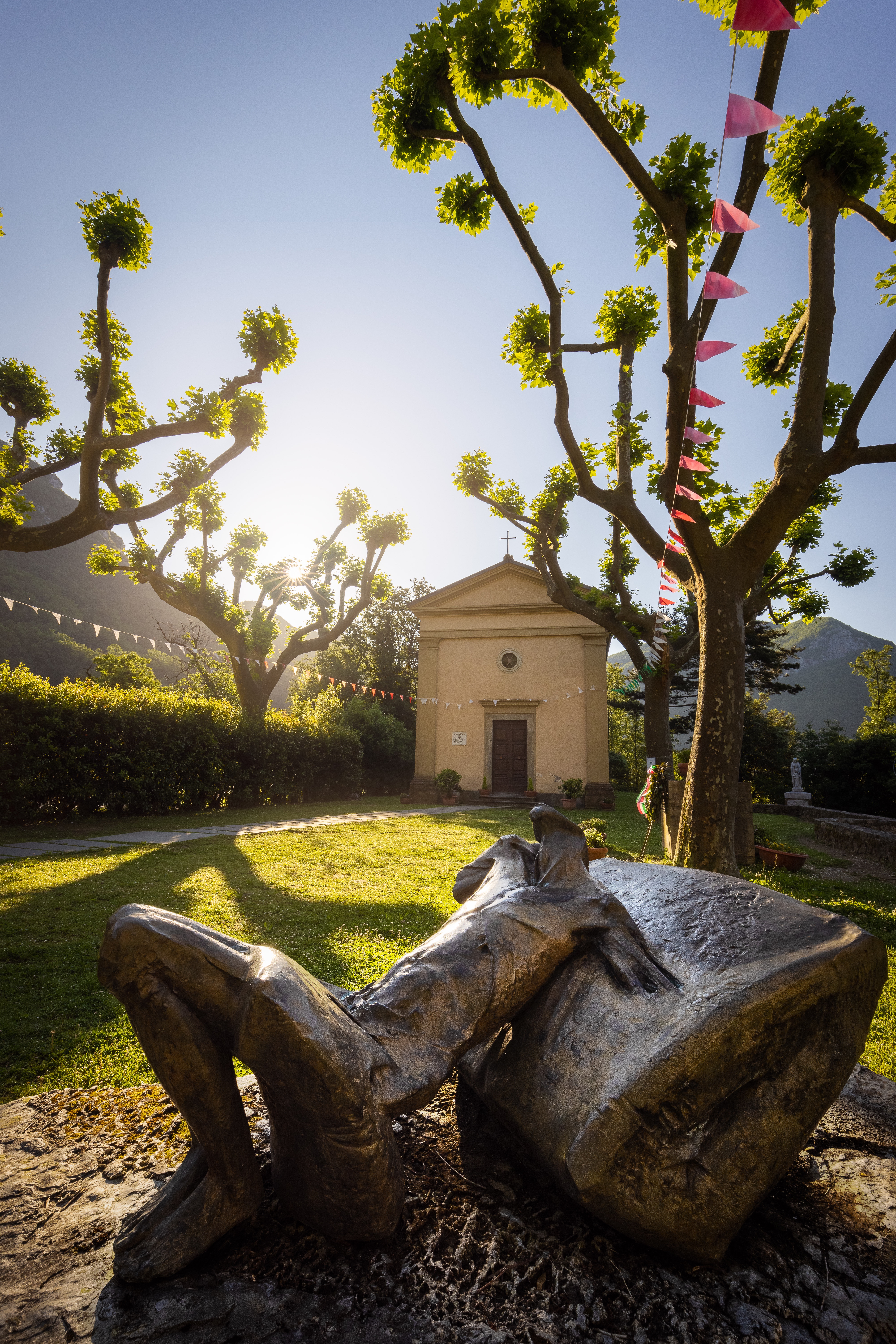
Oggi parliamo di una location a me cara, vicinissima a dove abito, e dove, ogni qualvolta che posso, torno sempre volentieri. Ogni volta mi regala scatti veramente interessanti e suggestivi. Siamo a Tofori, alla Chiesa di Santa Maria Assunta.

La Chiesa sorge sulla sommità di un piccolo colle che domina tutta la piana di Capannori. Sembra che i primi documenti riguardanti questa costruzione siano del 980, anche se informazioni più certe e dettagliate risalgono al XV secolo. Nel 1581 diventa parrocchia, e nel corso del 1800 subisce diverse ristrutturazioni ed opere, come la sostituzione delle nuove campane e di un nuovo organo, realizzato da Evaristo Santarlasci. Dopo il restauro, la chiesa assunse l’attuale pianta a forma di croce latina.

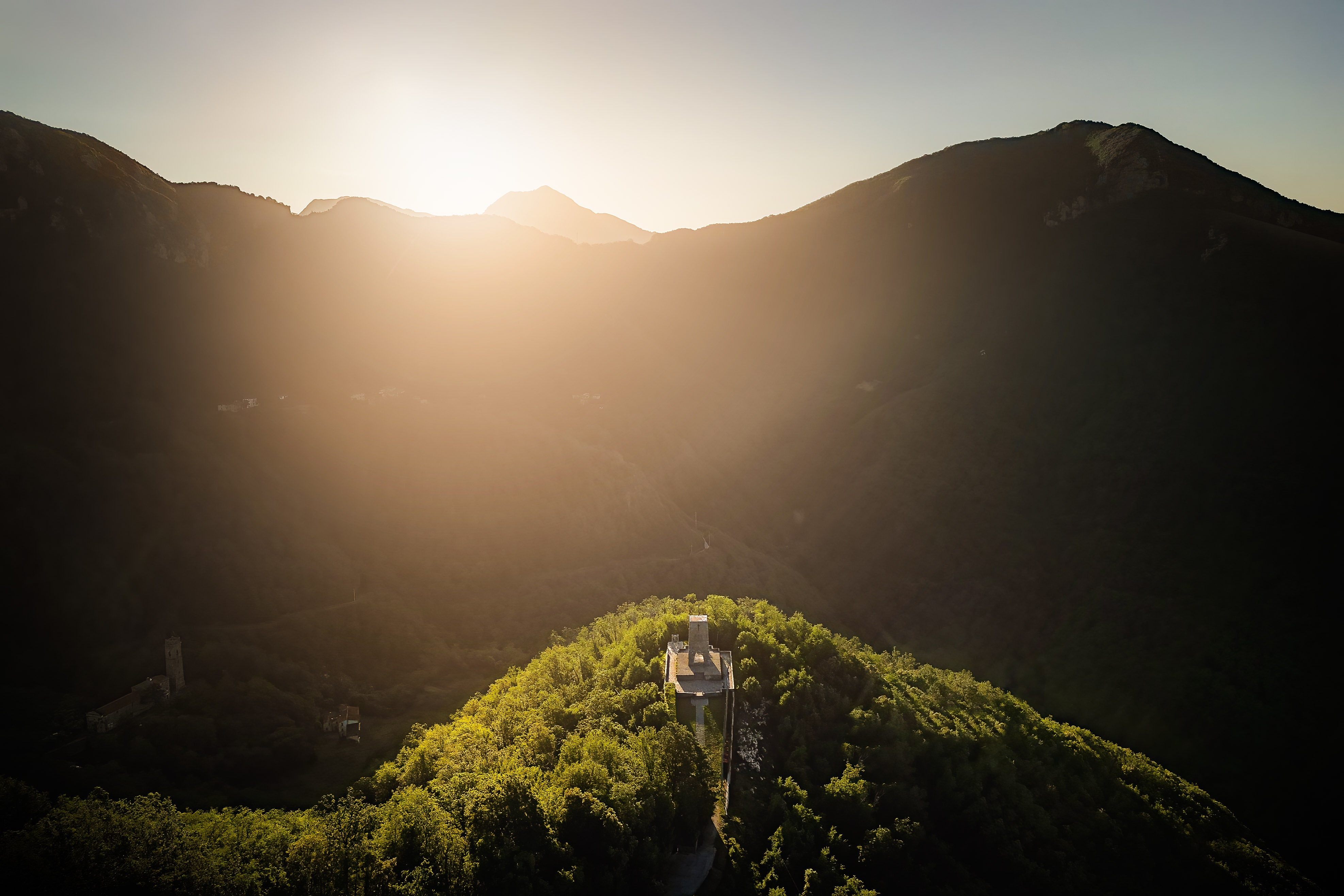
Si tratta di una delle location che, a livello fotografico, riesce ad offrire innumerevoli spunti. All’alba, il mio momento preferito, è meraviglioso, specie in inverno, perché il sole sorge sulla sinistra e, se il cielo è interessante, si possono fare scatti molto colorati e saturi. In primavera, spesso si trovano piante ed arbusti che offrono ottimi spunti per scatti più profondi, con interessanti primissimi piani. Con la tecnica del “focus-stacking” regalano immagini mozzafiato. Anche muoversi col drone per scattare dall’alto, consente di girare attorno alla chiesa e di scattare contro sole, altra tecnica che, a me, piace tantissimo.

Al tramonto, invece, è uno scenario ancora diverso. Il sole tramonta ad ovest, sulla città di Lucca, e quando gli ultimi raggi di sole accarezzano la piana, la chiesa resta ben illuminata dalla luce calda, che successivamente pian piano si allontana.

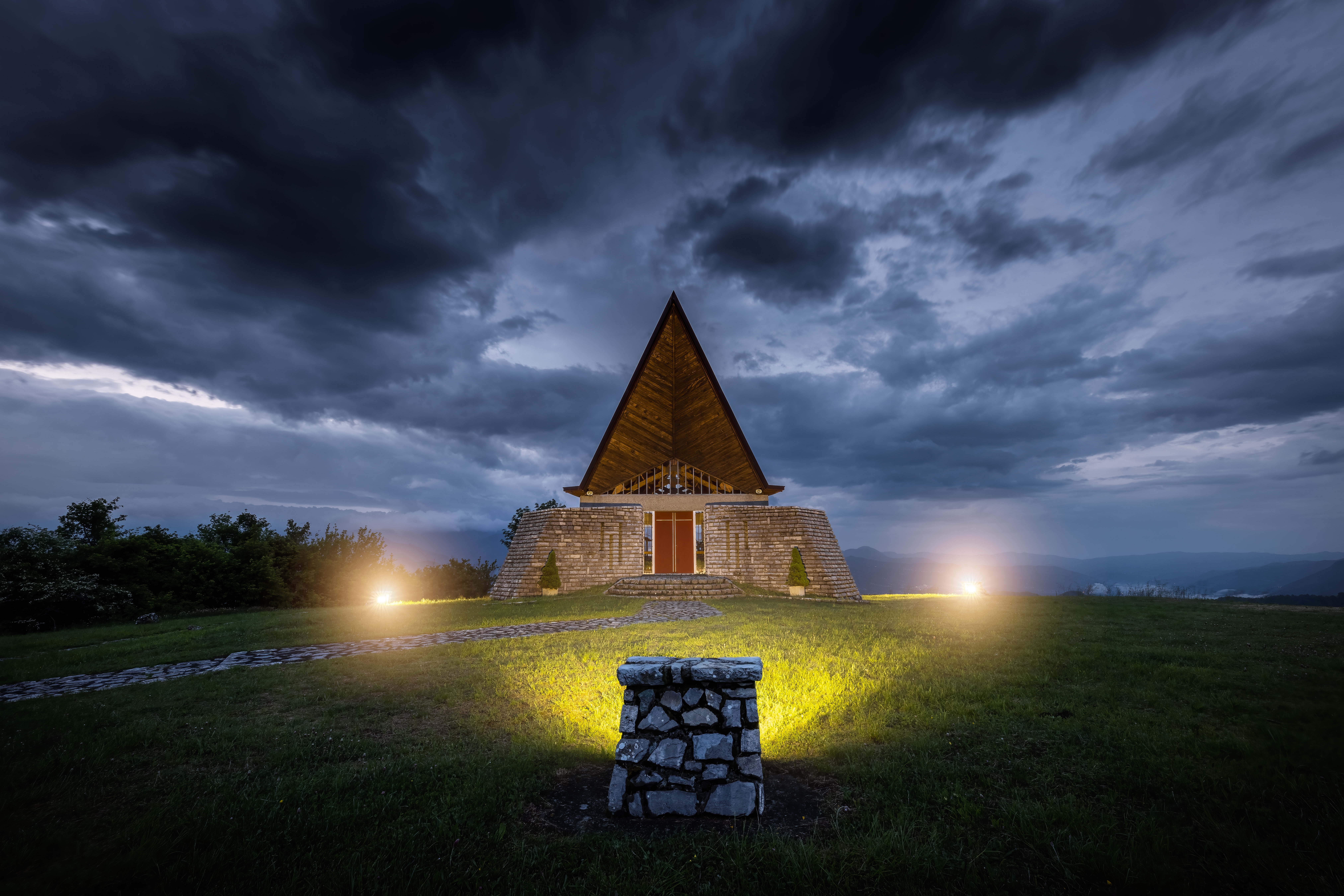
Di notte, o durante la cosiddetta “ora blu”, il paesaggio cambia nuovamente. La chiesa è illuminata con dei lampioni caldi, che contrastano con il contesto bluastro tutt’attorno. Insomma, in qualsiasi momento della giornata, in qualsiasi stagione dell’anno, anche se il soggetto resta sempre lo stesso, dona emozioni diverse ogni qual volta si scatta una fotografia.

Questa è una piccola raccolta di alcuni degli scatti che mi hanno emozionato di più. Spero che vi piacciano.

Today we’re talking about a location dear to me, very close to where I live, and where, whenever I can, I always gladly return. Every time he gives me truly interesting and evocative shots. We are in Tofori, at the Church of Santa Maria Assunta.

The Church stands on the top of a small hill that dominates the entire Capannori plain. It seems that the first documents regarding this construction date back to 980, although more certain and detailed information dates back to the 15th century. In 1581 it became a parish, and during the 1800s it underwent various renovations and works, such as the replacement of new bells and a new organ, created by Evaristo Santarlasci. After the restoration, the church took on its current Latin cross-shaped plan.

It is one of the locations that, on a photographic level, manages to offer countless ideas. At dawn, my favorite moment, it is wonderful, especially in winter, because the sun rises on the left and, if the sky is interesting, you can take very colorful and saturated shots. In spring, you can often find plants and shrubs that offer excellent ideas for deeper shots, with interesting close-ups. With the “focus-stacking” technique they give breathtaking images. Even moving with the drone to shoot from above allows you to go around the church and shoot against the sun, another technique that I really like.

At sunset, however, it is an even different scenario. The sun sets in the west, over the city of Lucca, and when the last rays of the sun caress the plain, the church remains well lit by the warm light, which then slowly fades away.

At night, or during the so-called “blue hour”, the landscape changes again. The church is illuminated with warm street lamps, which contrast with the bluish context all around. In short, at any time of the day, in any season of the year, even if the subject always remains the same, it gives different emotions every time a photograph is taken.

This is a small collection of some of the shots that moved me the most. I hope you like them.

l’alba sul lago di garda

I laghi, a mio avviso, rappresentano uno degli scenari più belli da fotografare e da vivere. In genere, offrono notevoli opportunità, in quanto, grandi o piccoli che siano, è possibile scegliere di visitare la location migliore in base alla posizione del sole. Essendo un grande amante delle albe e degli scatti in controluce, quando mi capita di visitare un lago, scelgo sempre il lato ad ovest, in quanto mi permette di veder sorgere il sole sull’acqua la mattina presto. Lo ammetto, è un mio chiodo fisso. Adoro questo genere di scatti.

Quando la location, poi, è meravigliosa ed offre spunti di notevole interesse, allora il tutto è un mix veramente esplosivo. In questo caso, il Lago di Garda, grazie alla sua enorme estensione, offre una miriade di spunti incredibili, di paesini turistici, di kilometri e kilometri di costa, pontili, scogliere, e tanto altro, dove annoiarsi, o non riuscire a trovare punti di interesse da fotografare, è praticamente impossibile,

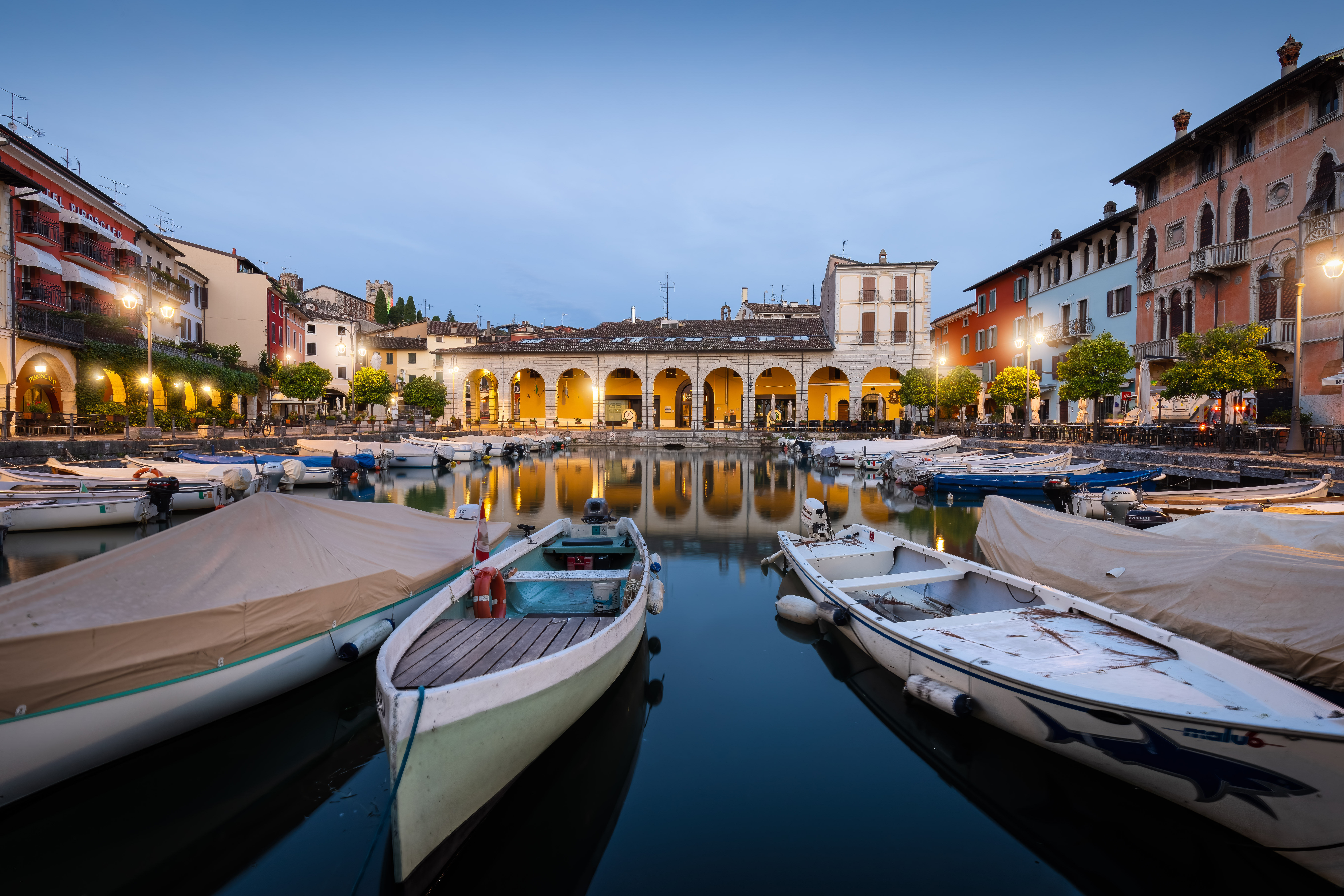
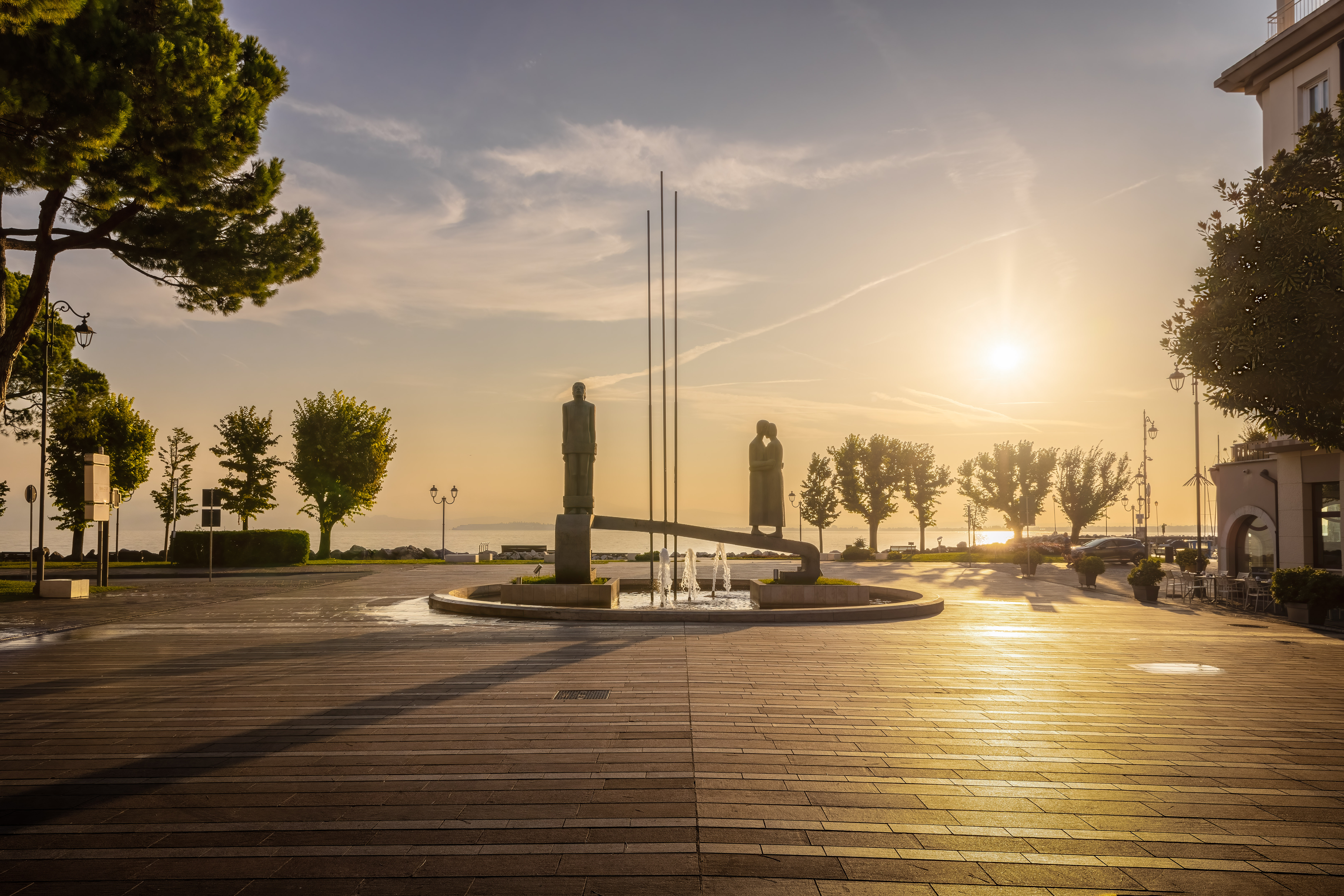
Quest’anno ho deciso di passare tre giorni a Desenzano sul Garda. La location è veramente suggestiva, offre molte prospettive fotografiche ed ottime soluzioni turistiche, per trascorrere al meglio un buon weekend con la propria famiglia, all’insegna del relax e del divertimento. Le vie del centro sono piene di locali, ristoranti, negozi. La sera c’è vita ovunque. L’atmosfera del lago ti accompagna già dalle prime ore dell’alba, con scorci mozzafiato ed una tranquillità incredibile. Si continua la giornata con passeggiate nel centro, tra i negozi, o rilassandoci su un lettino in spiaggia in riva al lago. L’acqua, oltretutto, è limpida e piatta. La sera si riparte con una bella movida nei locali del centro. Tutto accompagnato da luci, musica e ottimi aperitivi.

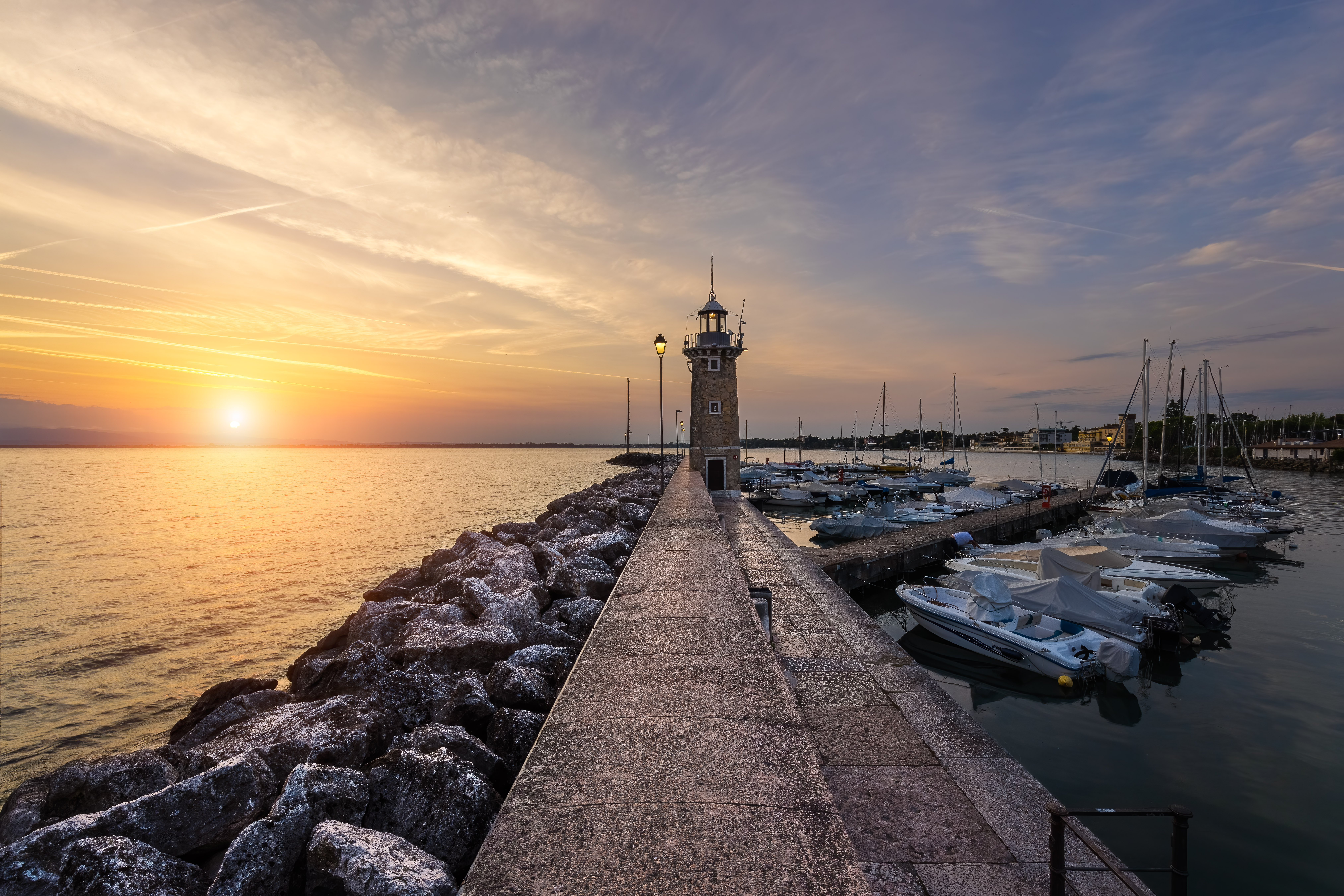
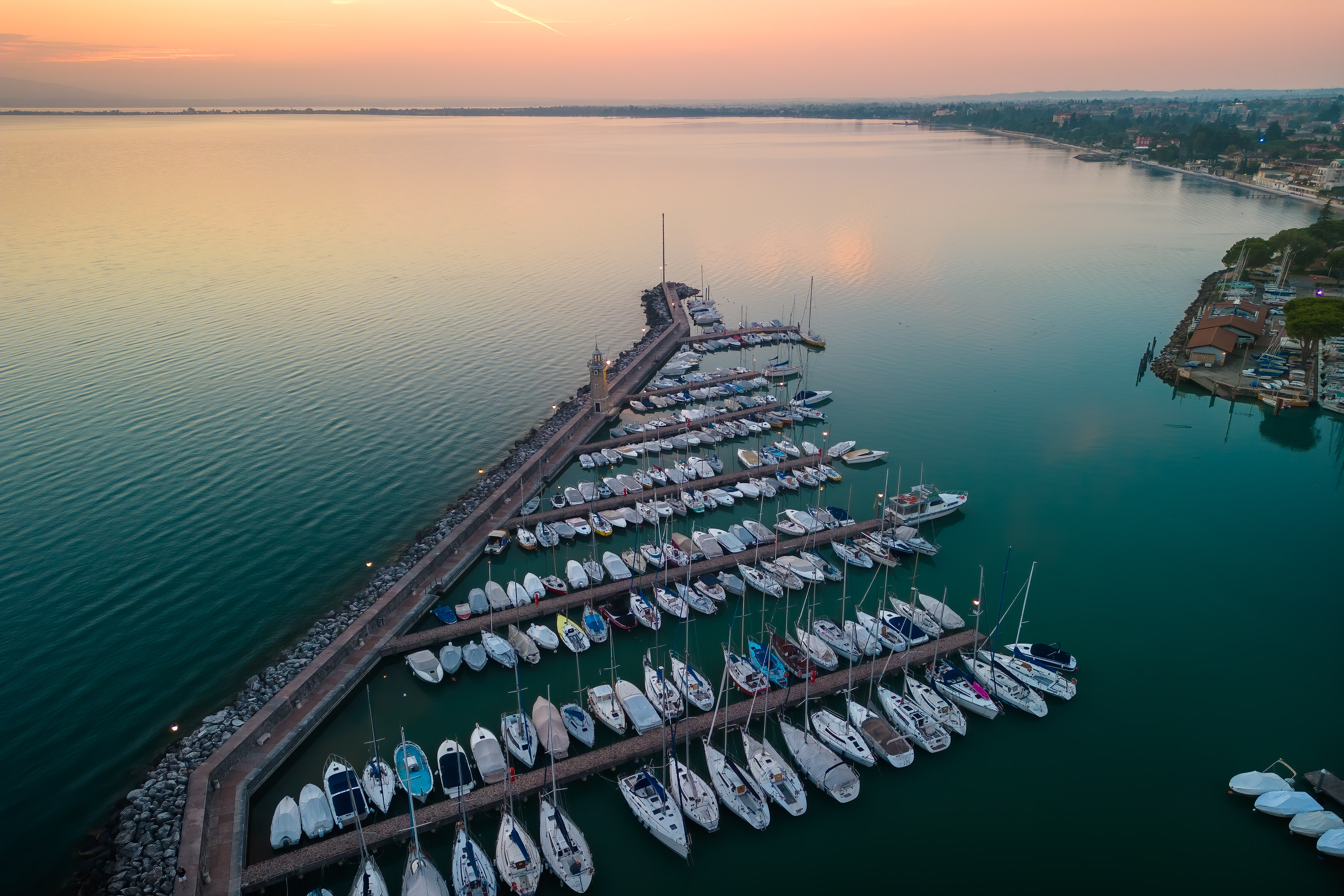
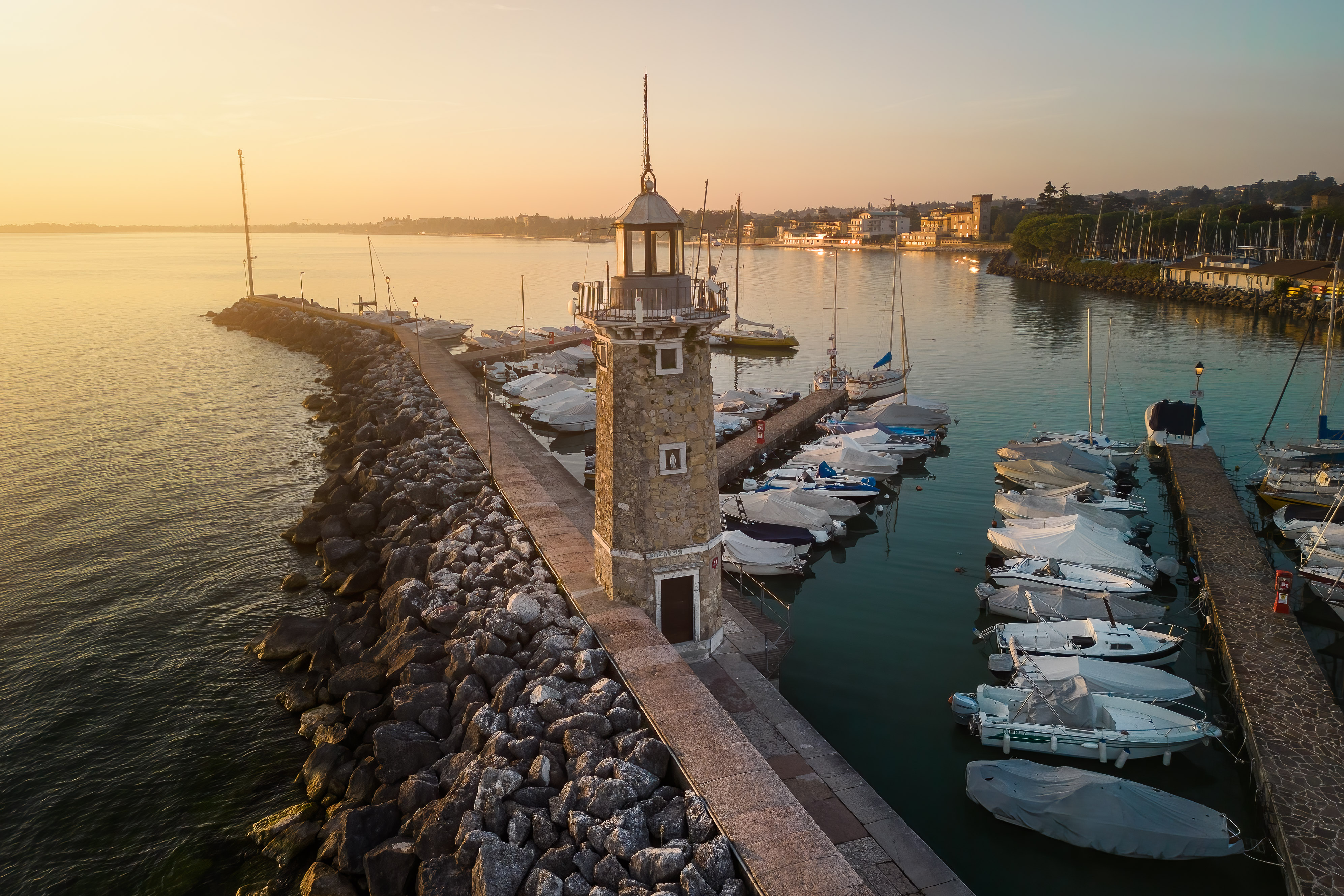
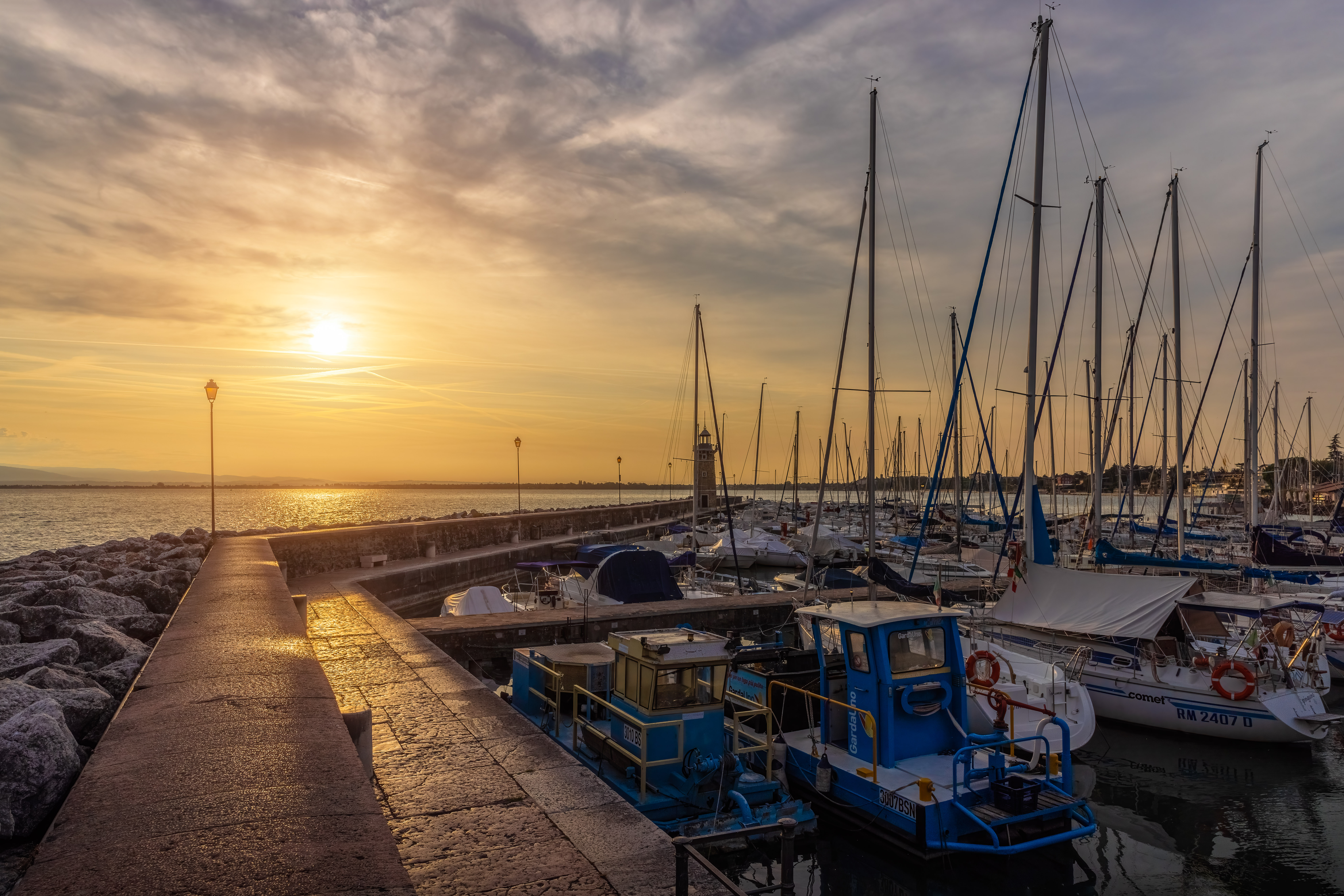
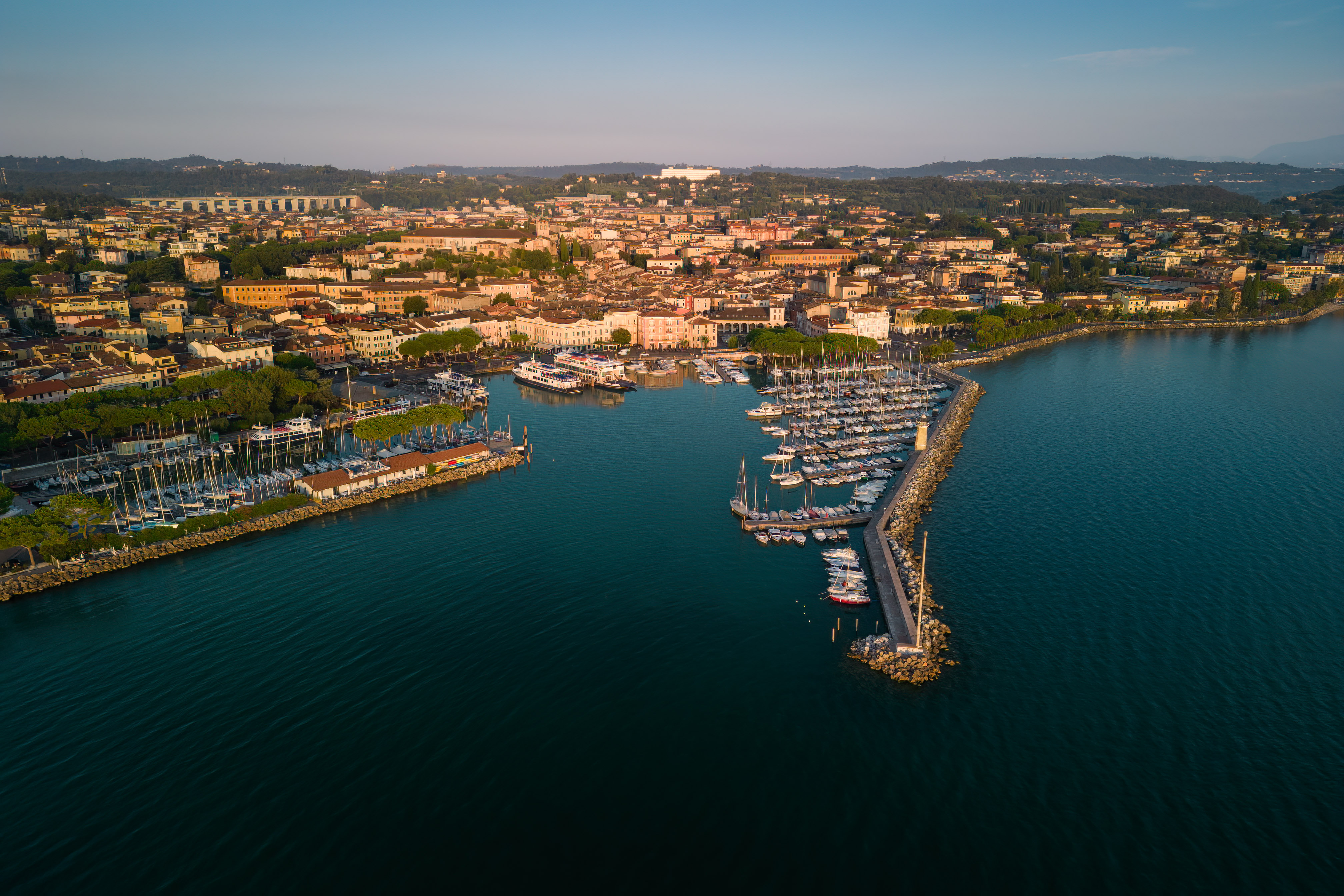
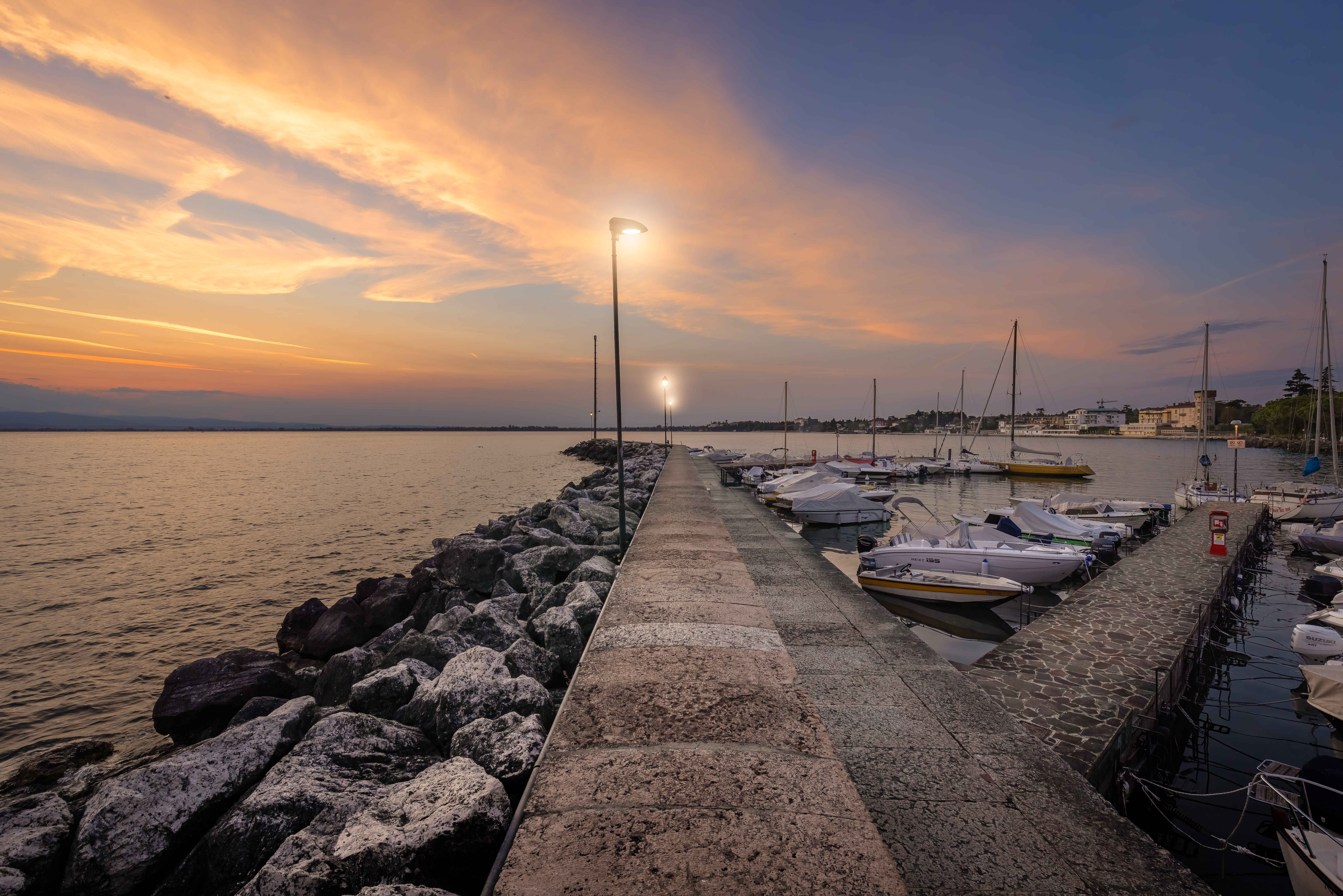
La parola “Lago” per me significa più che altro relax e silenzio. E questo posto, all’alba, regala vere e proprie perle. Momenti in cui sei soltanto tu e la macchina fotografica, soli lì davanti, a salutare il nuovo giorno che nasce. La zona del porto è meravigliosa, col suo bellissimo faro, la scogliera, le luci dei lampioni, l’acqua di un incredibile verde-azzurro, le barche silenziose tutte in fila. Merita veramente tanto. Ho aspettato il sole proprio sotto al faro, e le immagini sono fantastiche. Anche dall’alto col drone regala vere e proprie gioie.

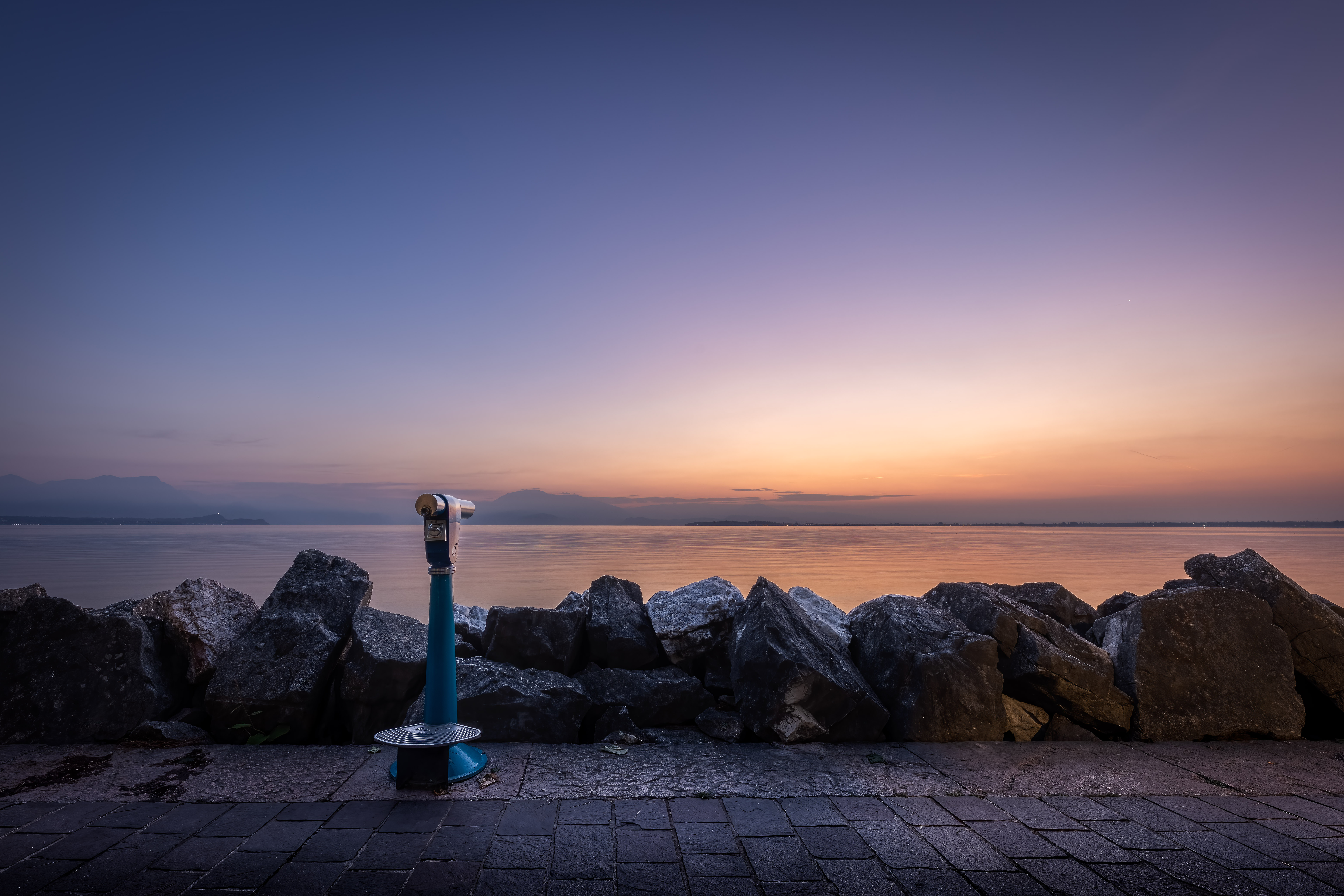
Vi mostro questi scatti, stavolta più del solito, per farvi assaporare un pizzico di questi attimi intimi trascorsi con queste acque. Alcuni sono stati scattati prima che il sole sorgesse, altri dopo. Alcuni dall’alto ed altri ad altezza del terreno. Alcuni con visuale grandangolare, altri con un tele-obbiettivo. Insomma, ce n’è per tutti i gusti. Buona visione.

Lakes, in my opinion, represent one of the most beautiful sceneries to photograph and experience. In general, they offer considerable opportunities, as, large or small, it is possible to choose to visit the best location based on the position of the sun. Being a great lover of sunrises and backlit shots, when I happen to visit a lake, I always choose the west side, as it allows me to see the sun rise over the water early in the morning. I admit it, it’s my obsession. I love this kind of shots.

When the location is wonderful and offers ideas of considerable interest, then the whole is a truly explosive mix. In this case, Lake Garda, thanks to its enormous extension, offers a myriad of incredible ideas, tourist villages, kilometers and kilometers of coastline, piers, cliffs, and much more, where you can get bored or not be able to find of interest to photograph, it is practically impossible,

This year I decided to spend three days in Desenzano sul Garda. The location is truly suggestive, it offers many photographic perspectives and excellent tourist solutions, to better spend a good weekend with your family, in the name of relaxation and fun. The streets in the center are full of bars, restaurants and shops. In the evening there is life everywhere. The atmosphere of the lake accompanies you from the early hours of dawn, with breathtaking views and incredible tranquility. We continue the day with walks in the center, among the shops, or relaxing on a sunbed on the beach by the lake. Furthermore, the water is clear and flat. In the evening we start again with a nice nightlife in the clubs in the center. All accompanied by lights, music and excellent aperitifs.

The word “Lake” for me means more relaxation and silence than anything else. And this place, at dawn, offers real pearls. Moments in which it’s just you and the camera, alone there in front, greeting the new day that is born. The port area is wonderful, with its beautiful lighthouse, the cliff, the lights of the street lamps, the water of an incredible blue-green, the silent boats all in a row. It truly deserves so much. I waited for the sun right under the lighthouse, and the images are fantastic. Even from above with the drone it offers real joys.

I show you these shots, this time more than usual, to let you savor a pinch of these intimate moments spent with these waters. Some were taken before the sun rose, others after. Some from above and others at ground level. Some with a wide angle view, some with a telephoto lens. In short, there is something for all tastes. Good vision.

scorci di pisa

Pisa non ha certo bisogno di presentazioni. A livello turistico, è una delle città più visitate e conosciute della Toscana e di tutta Italia. Ovviamente Piazza dei Miracoli è l’attrazione principale. La Torre pendente è conosciuta in tutto il mondo. Non per nulla è una delle sette meraviglie del mondo. Flotte di turisti si accalcano ai suoi piedi per scattare la classica foto dove fingono, in prospettiva, di tenere in equilibrio la torre. Non me ne vogliate se questo tipo di fotografia la odio profondamente. Non ce la posso proprio fare.

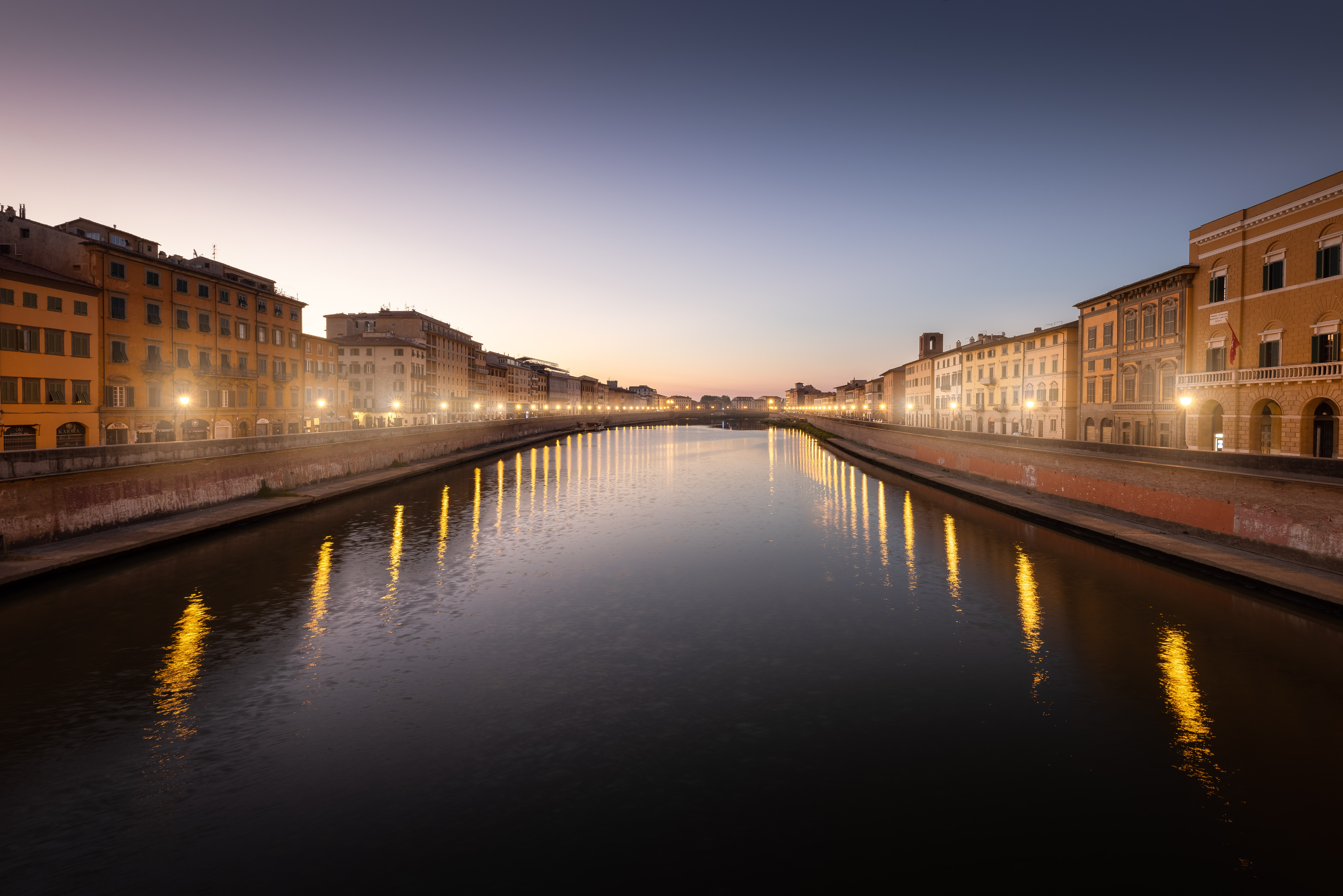
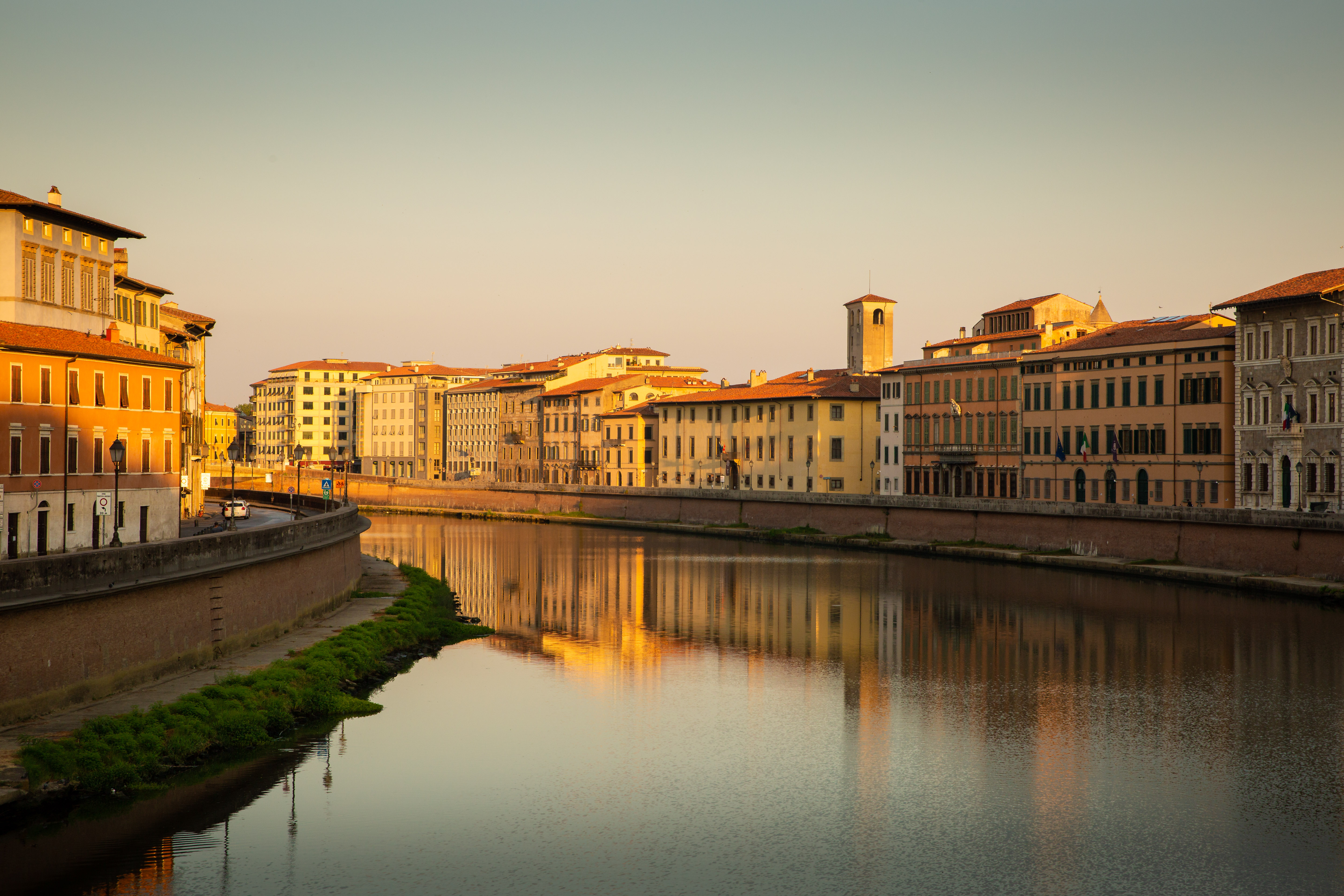
Andare in giro per le vie di Pisa è, senza dubbio, un grande piacere, Gli scorci da fotografare sono molti. Ce n’è uno, in particolar modo, che ogni volta che ci vado mi affascina davvero tanto. Sto parlando del Lungarno. Che tu ci vada all’alba o al tramonto, riesci sempre a portare a casa molte belle fotografie.

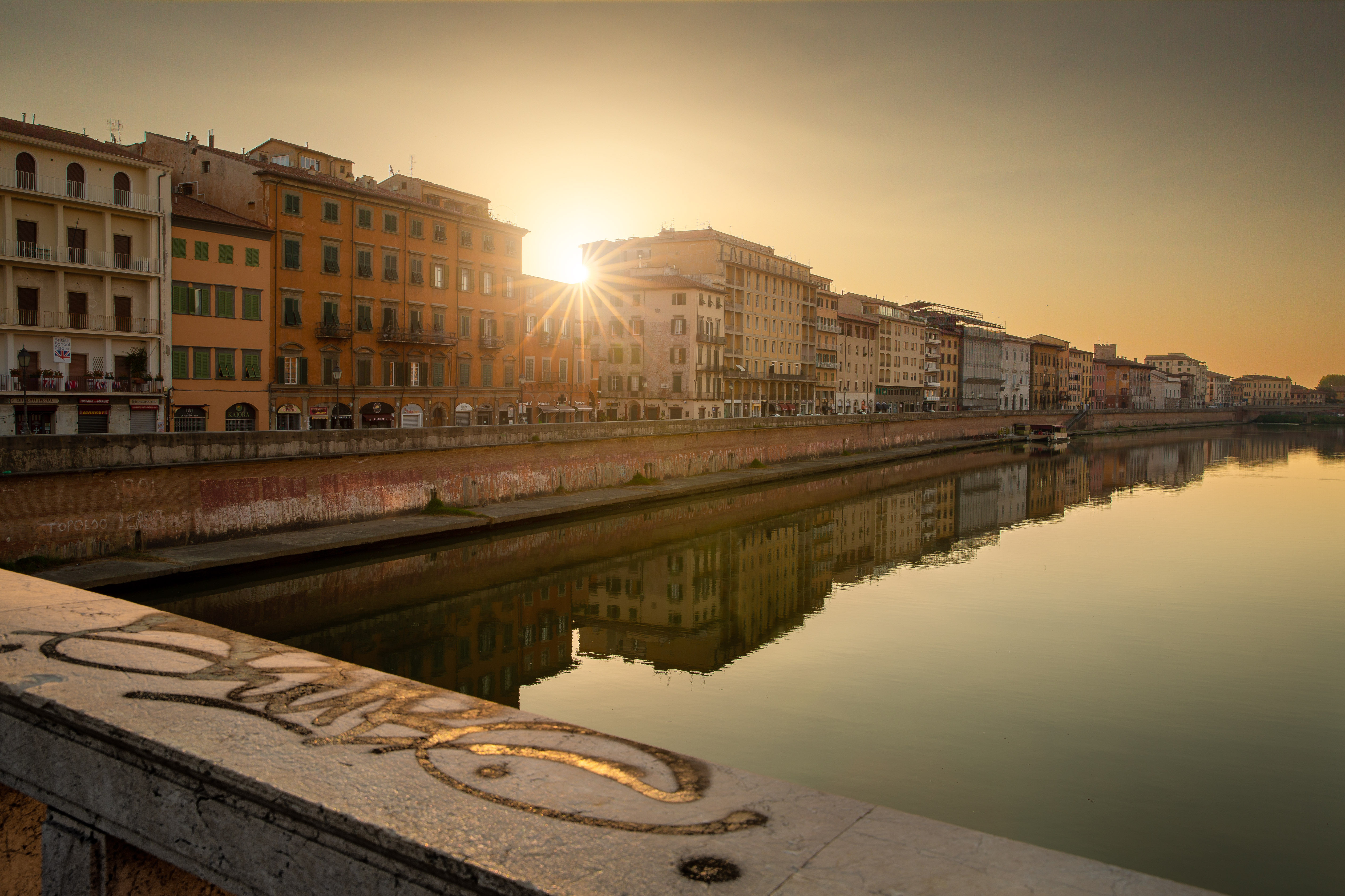
Il fiume Arno attraversa la città e la spacca in due. Con i suoi riflessi, offre scenari veramente suggestivi. Specialmente quando il sole sorge dai monti retrostanti, e la luce radente comincia ad accarezzare i tetti e le facciate delle case, l’atmosfera sul Lungarno diventa veramente magica. Quando il sole fa finalmente capolino dai tetti delle case, chiudendo un po’ il diaframma della fotocamera, si riesce a cogliere i raggi che filtrano attraverso l’obbiettivo. La luce diventa meravigliosamente calda e intensa. Scattando dal Ponte di Mezzo, i raggi, inoltre, filtrano dalle colonnine del ponte, e proiettano strisce luminose sull’asfalto scuro, che creano un magnifico contrasto.

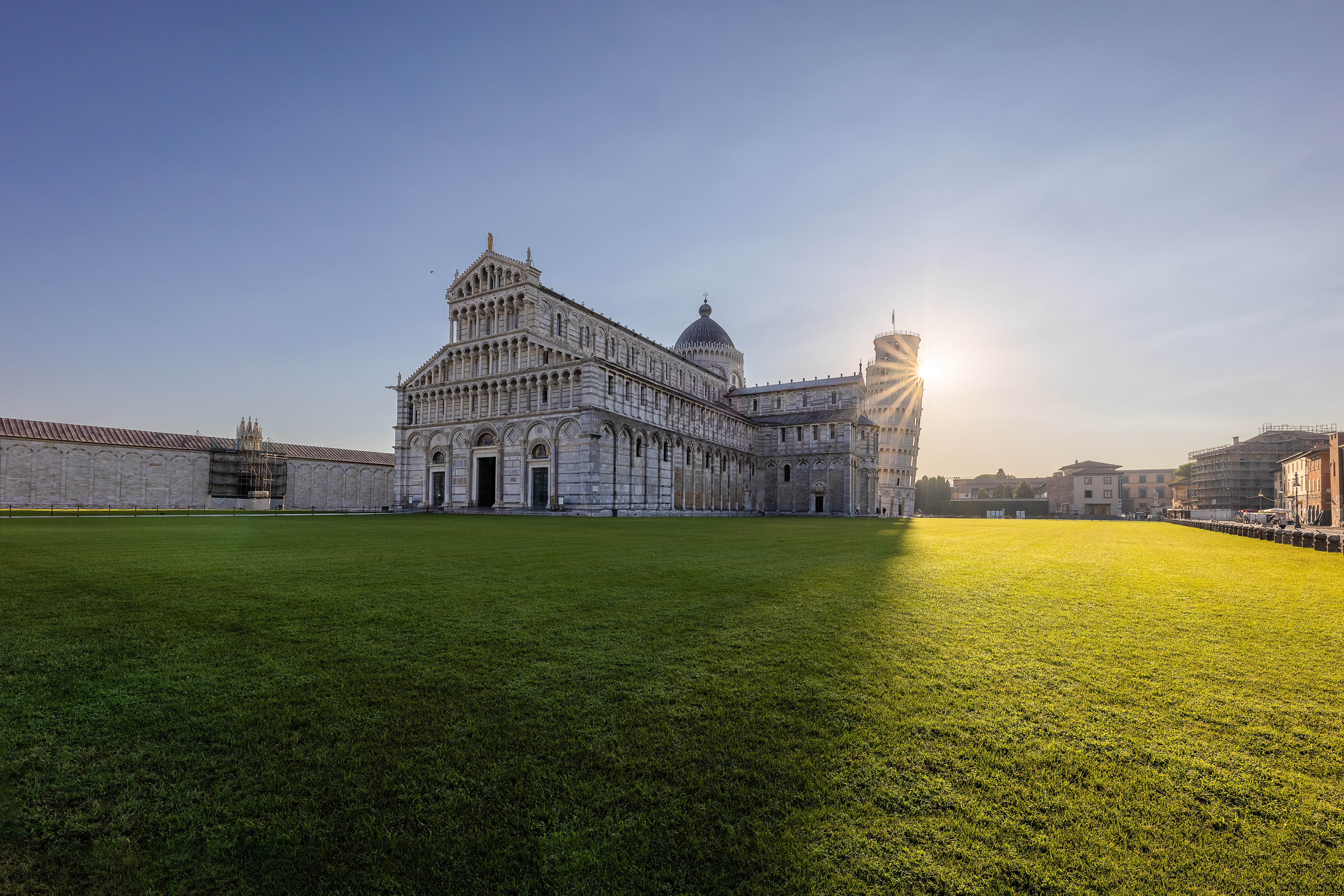
Mi sposto in Piazza dei Miracoli. Qui le foto sono un po’ più scontate. Ho provato a scattare sia di mattina che di notte. Ogni momento offre luci ed atmosfere differenti, ma egualmente belle. L’accuratezza dei dettagli di questo monumento è semplicemente incredibile. Geometrie, disegni, prospettive e contrasti si amalgamano tra loro, rendendo questo capolavoro marmoreo, un’incredibile opera di una ricercata ed ineguagliabile perfezione.

Queste sono alcune immagini che ho avuto il piacere di cogliere a Pisa. piccoli attimi che rimangono impressi nel tempo. Spero vi piacciano.

Pisa certainly needs no introduction. In terms of tourism, it is one of the most visited and well-known cities in Tuscany and throughout Italy. Obviously Piazza dei Miracoli is the main attraction. The Leaning Tower is known all over the world. Not for nothing is it one of the seven wonders of the world. Flocks of tourists crowd at its feet to take the classic photo where they pretend, in perspective, to keep the tower in balance. I do not mind if this type of photography hate it deeply. I just can’t do it.
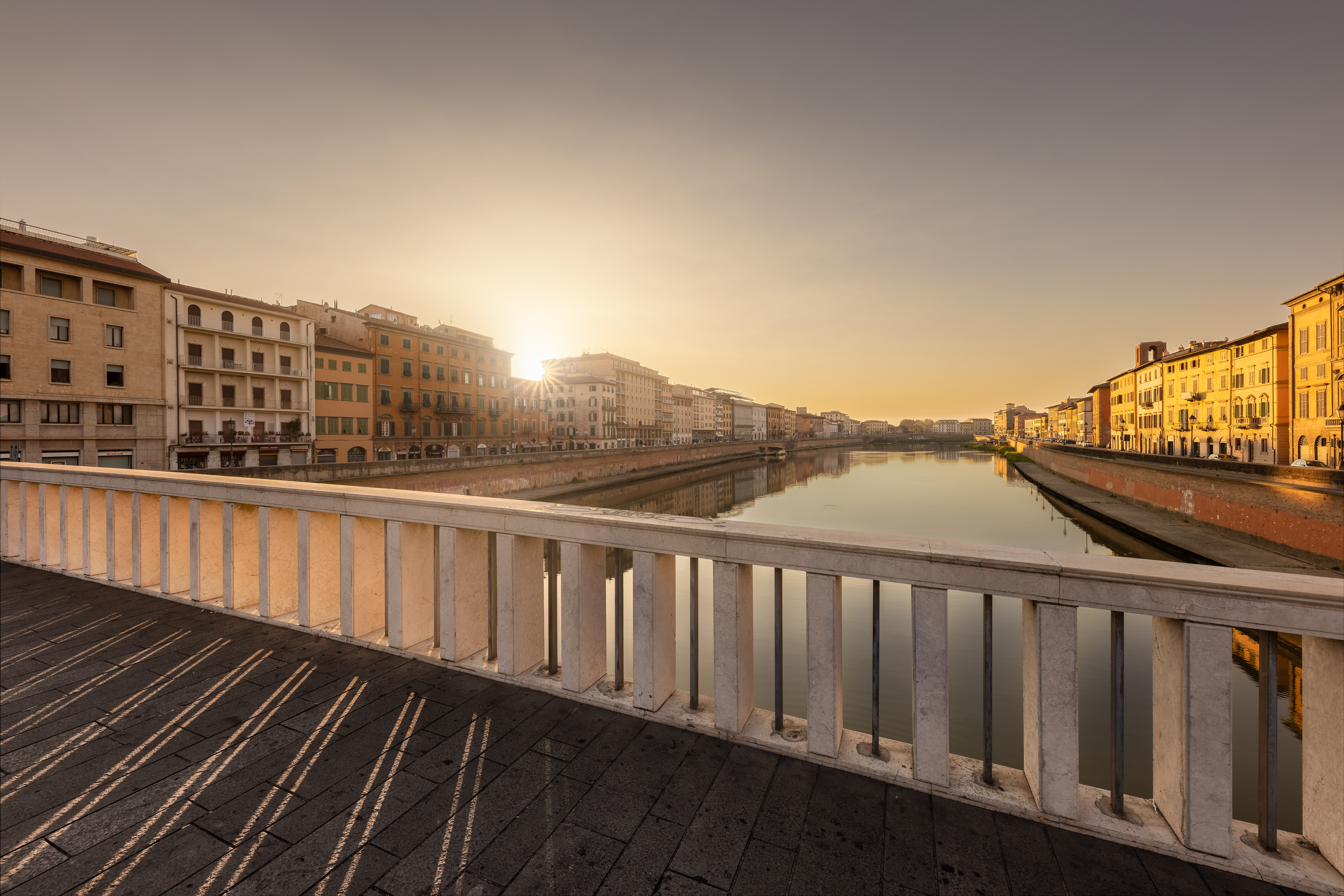
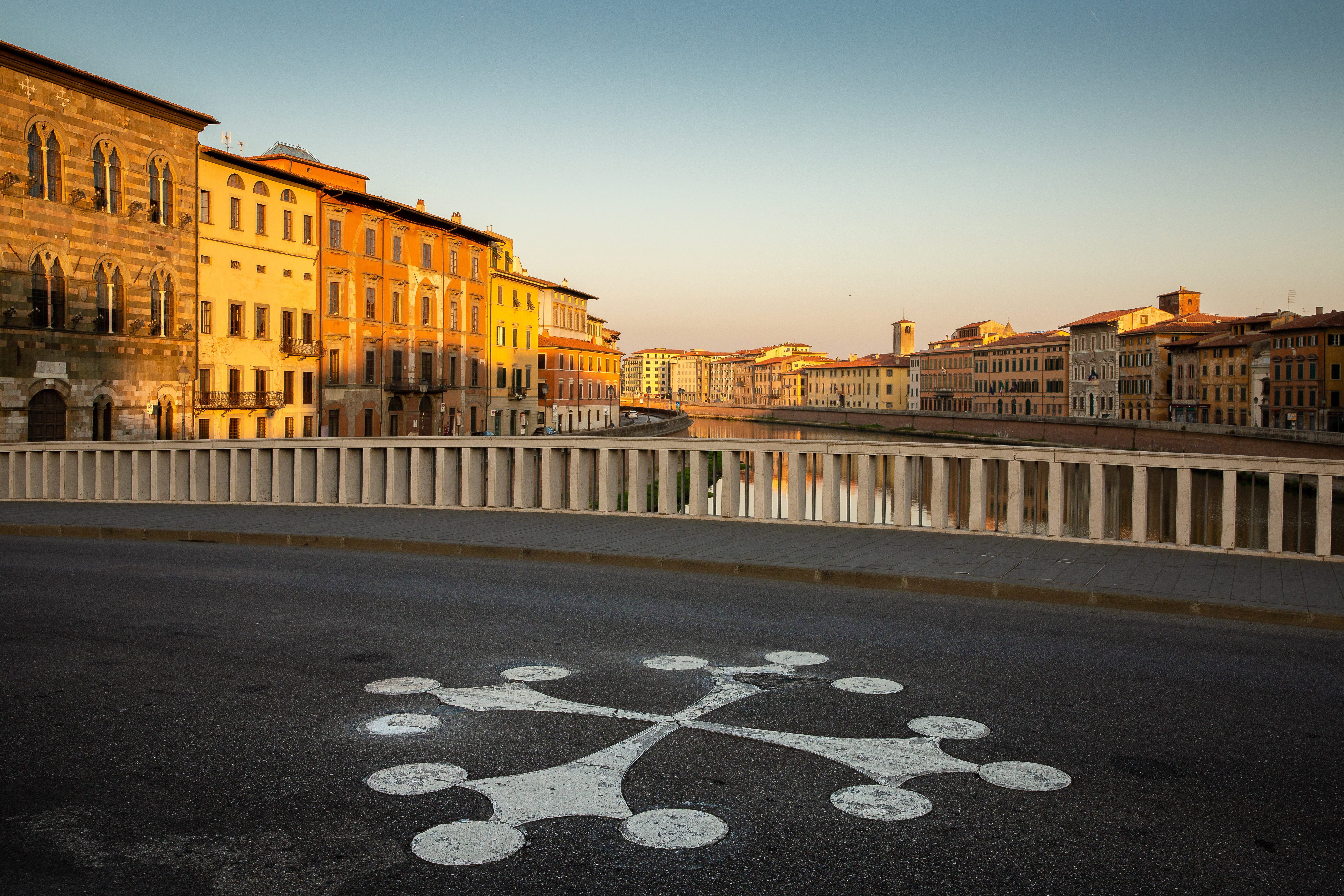
Going around the streets of Pisa is, without a doubt, a great pleasure. There are many glimpses to photograph. There is one, in particular, that fascinates me so much every time I go. I’m talking about the Lungarno. Whether you go at sunrise or sunset, you always manage to bring home many beautiful photographs.

The Arno River crosses the city and splits it in two. With its reflections, it offers truly suggestive scenarios. Especially when the sun rises from the mountains behind, and the grazing light begins to caress the roofs and facades of the houses, the atmosphere on the Lungarno becomes truly magical. When the sun finally peeks out from the roofs of the houses, by closing the diaphragm of the camera a little, it is possible to catch the rays that filter through the lens. The light becomes wonderfully warm and intense. Shooting from the Ponte di Mezzo, the rays also filter through the columns of the bridge, and project luminous streaks onto the dark asphalt, which create a magnificent contrast.

I move to Piazza dei Miracoli. Here the photos are a little more obvious. I tried to shoot both in the morning and at night. Every moment offers different but equally beautiful lights and atmospheres. The accuracy of the details of this monument is simply amazing. Geometries, designs, perspectives and contrasts blend together, making this marble masterpiece an incredible work of refined and unparalleled perfection.

These are some images that I had the pleasure of capturing in Pisa. small moments that remain imprinted in time. I hope you enjoy them.

Notti d’estate

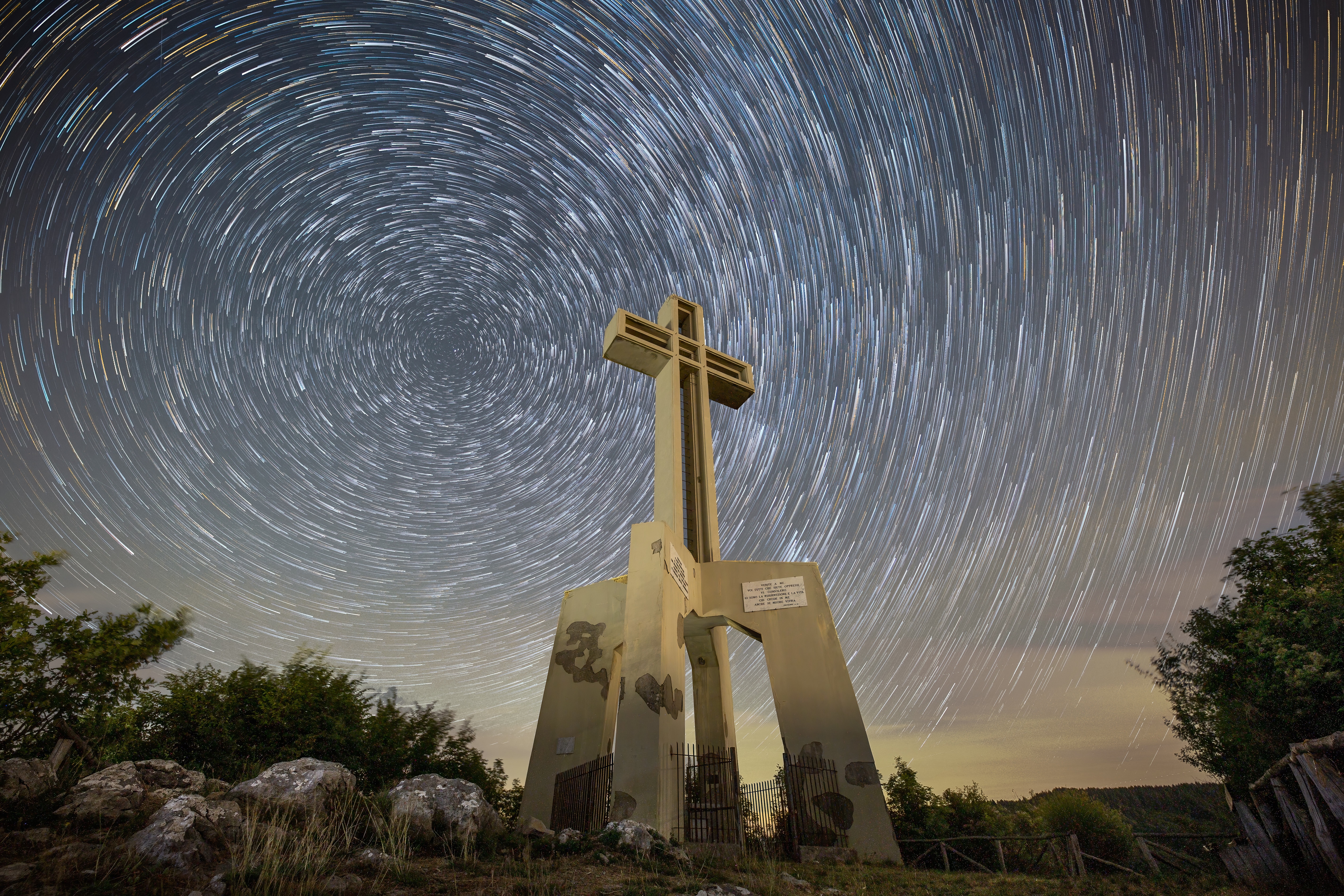
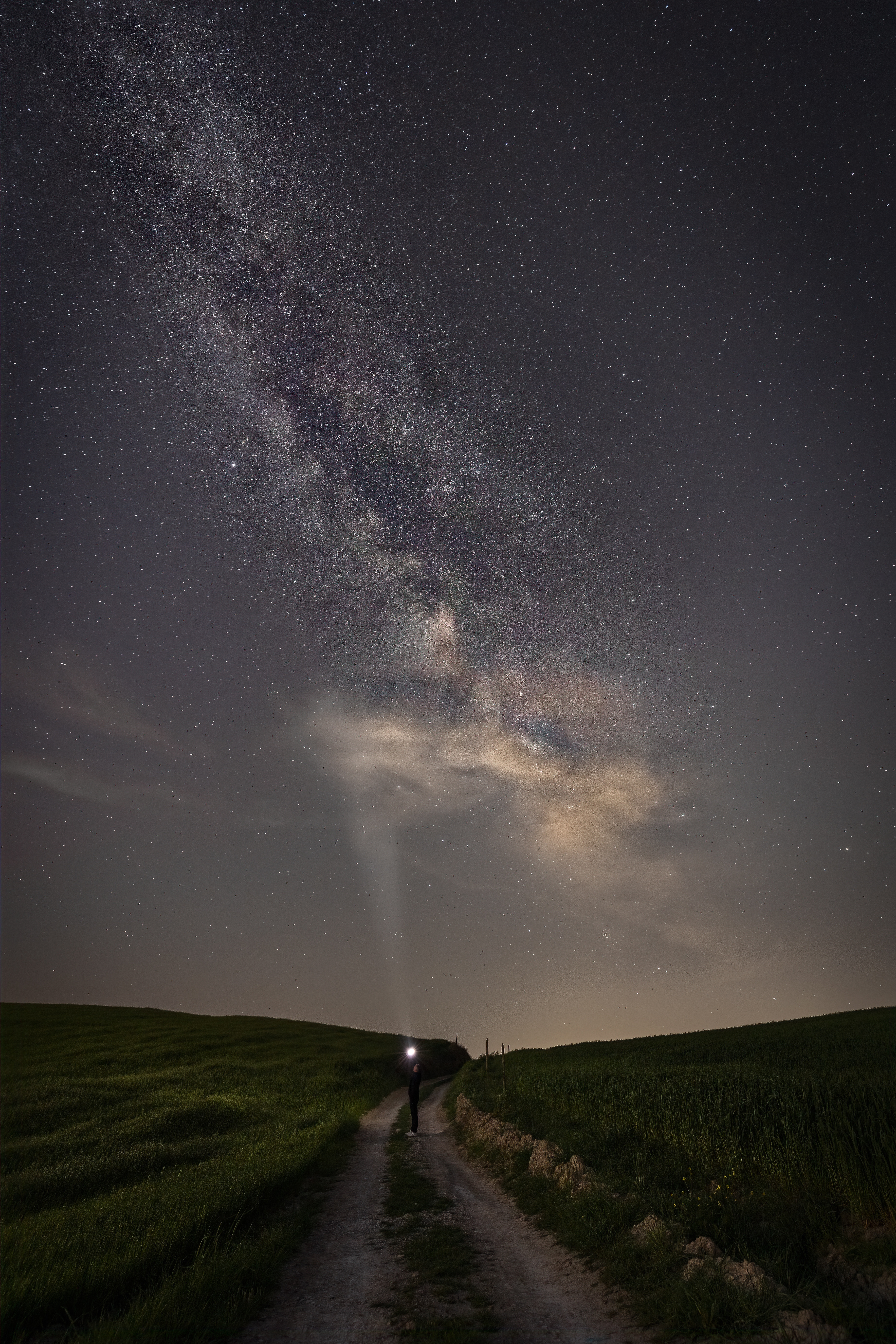
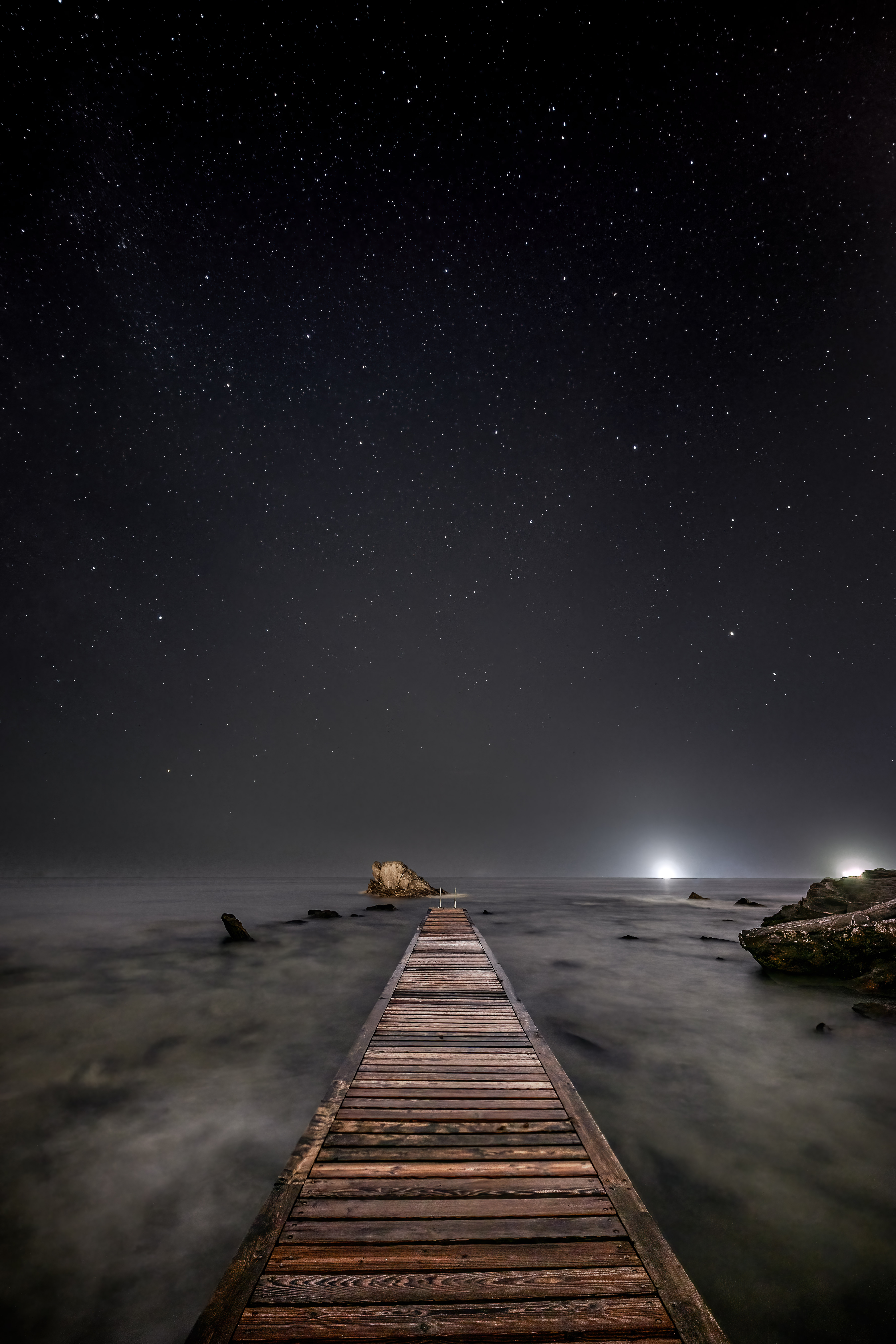
L’estate, ed in particolar modo, il mese di Agosto è la stagione delle stelle. Il cielo terso, l’aria fresca della sera e la quiete notturna sono gli ingredienti principali per una nottata all’aria aperta. Specialmente la notte del 10 agosto, quella di San Lorenzo, ha sempre un certo fascino, e, in quel giorno, un’occhiata al cielo notturno ce la dà chiunque. Chi in cerca di esprimere un desiderio, chi in cerca di un minuto di relax, chi prova a trascorrere una serata romantica, Poi c’è chi, come me prova a scattare al cielo stellato per catturare qualche immagine creativa.

Ho deciso di dedicare questo piccolo articolo ad alcuni scatti fatti nel tempo, alcuni recenti, altri fatti nel corso degli anni, per rendere giustizia alla bellezza della fotografia notturna, della astrofotografia, dove i soggetti principali siano le stelle, la via Lattea, gli star-trail o più semplicemente, il paesaggio visto sotto il cielo stellato.

Che questi scatti, seppur tecnicamente impegnativi, possano trasmettervi la quiete e la tranquillità che hanno trasmesso a me, quel giorno, in fase di scatto.

Summer, and especially the month of August, is the season of the stars. The clear sky, the fresh evening air and the quiet at night are the main ingredients for a night out in the open air. Especially the night of August 10, that of San Lorenzo, always has a certain charm, and, on that day, anyone can give us a look at the night sky. Those looking to make a wish, those looking for a minute of relaxation, those trying to spend a romantic evening, then there are those, like me, who try to shoot at the starry sky to capture some creative images.

I decided to dedicate this little article to some shots taken over time, some recent, others taken over the years, to do justice to the beauty of night photography, of astrophotography, where the main subjects are the stars, the Milky Way, the stars -trail or more simply, the landscape seen under the starry sky.

May these shots, albeit technically demanding, be able to convey the peace and tranquility they conveyed to me that day while shooting.

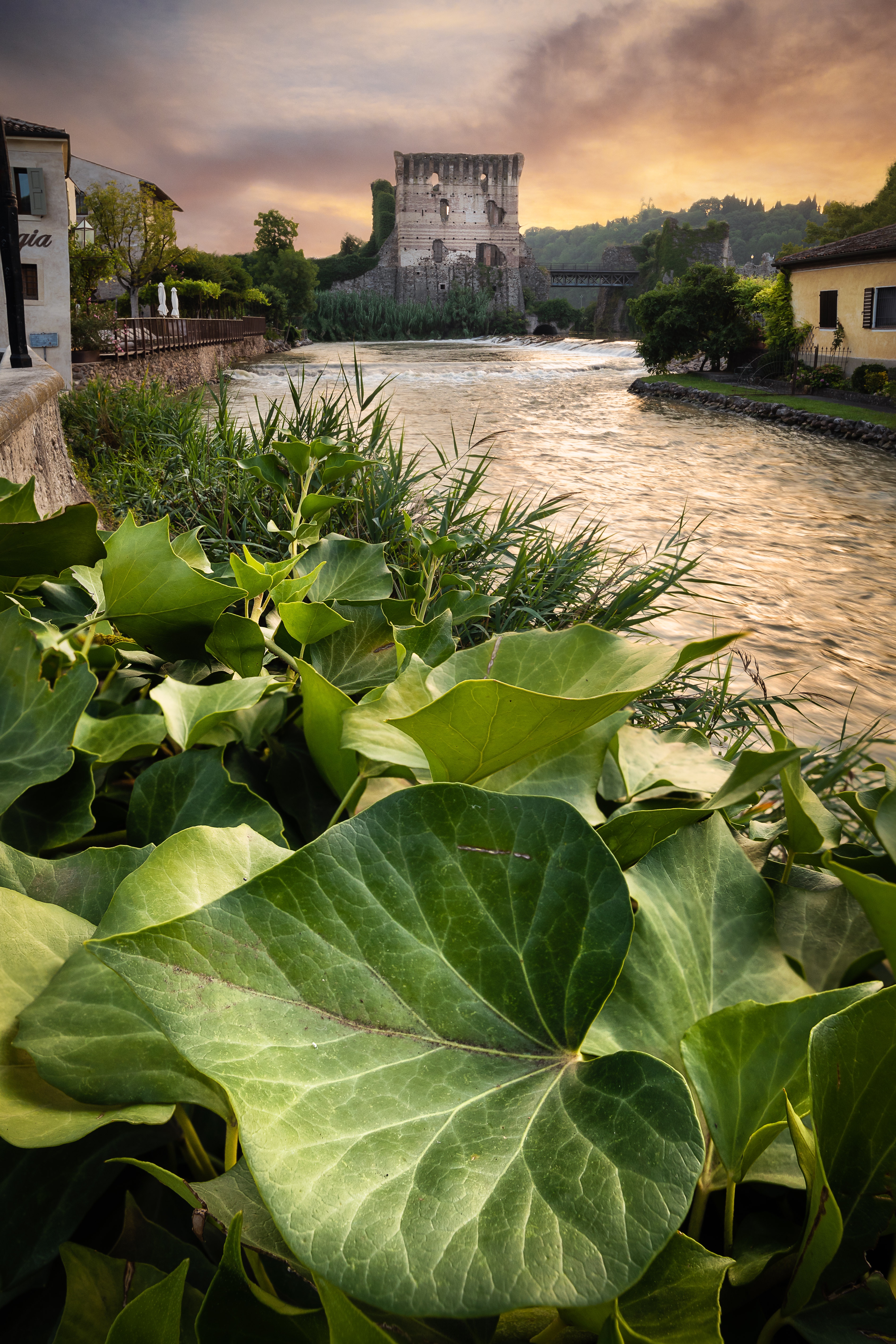
Un giorno a borghetto

Un’uscita un po’ rocambolesca. Questa credo sia la definizione più adeguata per questo viaggio. Era già da tempo che volevo visitare Borghetto. Ho programmato ben tre giorni interi per visitare tutta la zona circostante, anche se, ahimè, il meteo, stavolta, ha messo i bastoni tra le ruote. La grandinata della scorsa settimana ha compromesso metà viaggio, causando danni ingenti a tutta la zona, alle strutture e agli abitanti stessi (nonché ai vacanzieri come me). Quindi, la visita si è semplicemente limitata a questo piccolo paesello, senza poter visitare il Parco del Sigurtà come da programma.

Meteo a parte, questo piccolo gioiello di villaggio mi ha regalato forti emozioni ed un gran relax.

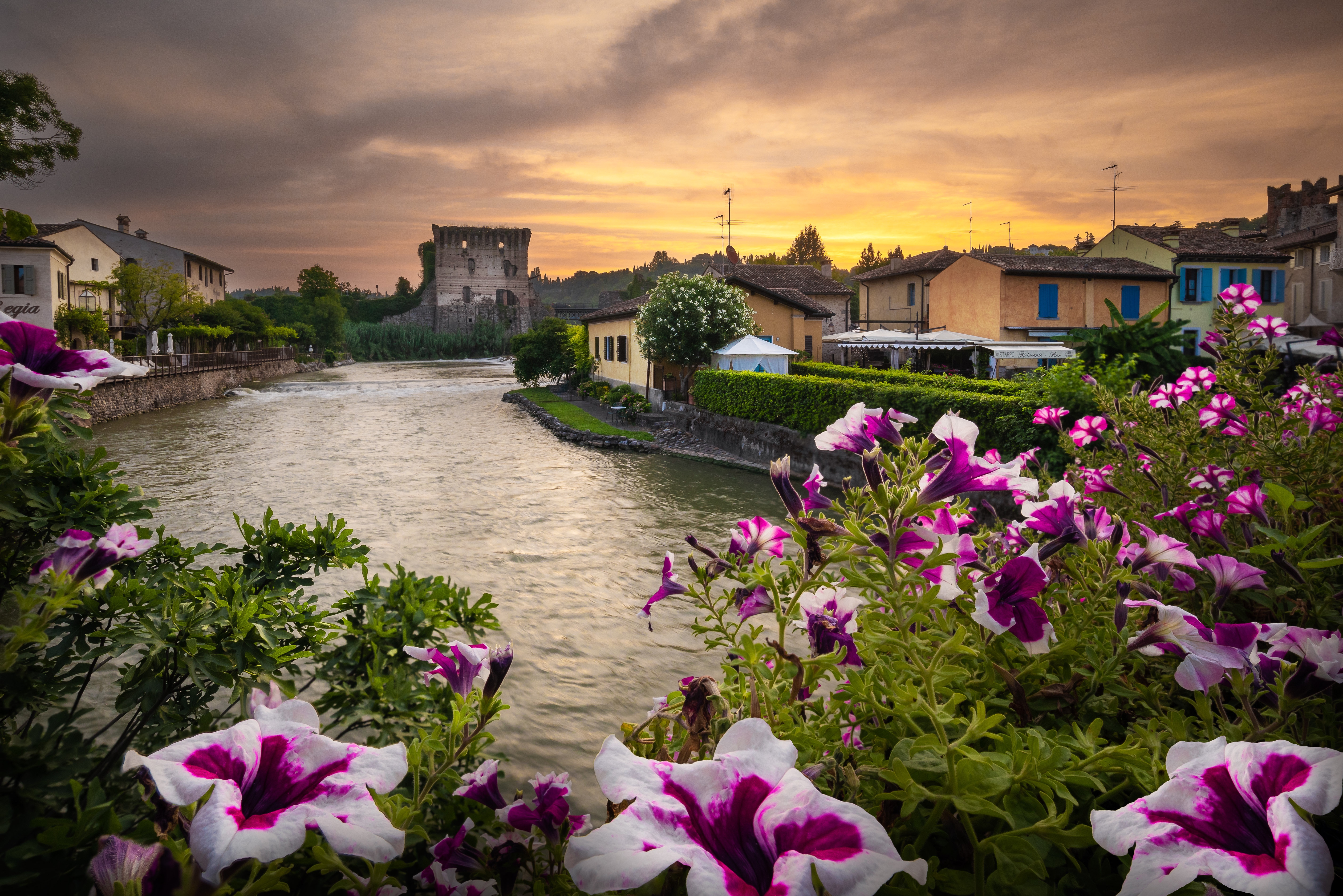
Borghetto è la frazione più conosciuta di Valeggio sul Mincio. Storia, paesaggio, monumenti, graziosi locali e strutture rendono questo luogo così interessante da vantarne il recente inserimento nel Club dei Borghi più belli d’Italia .

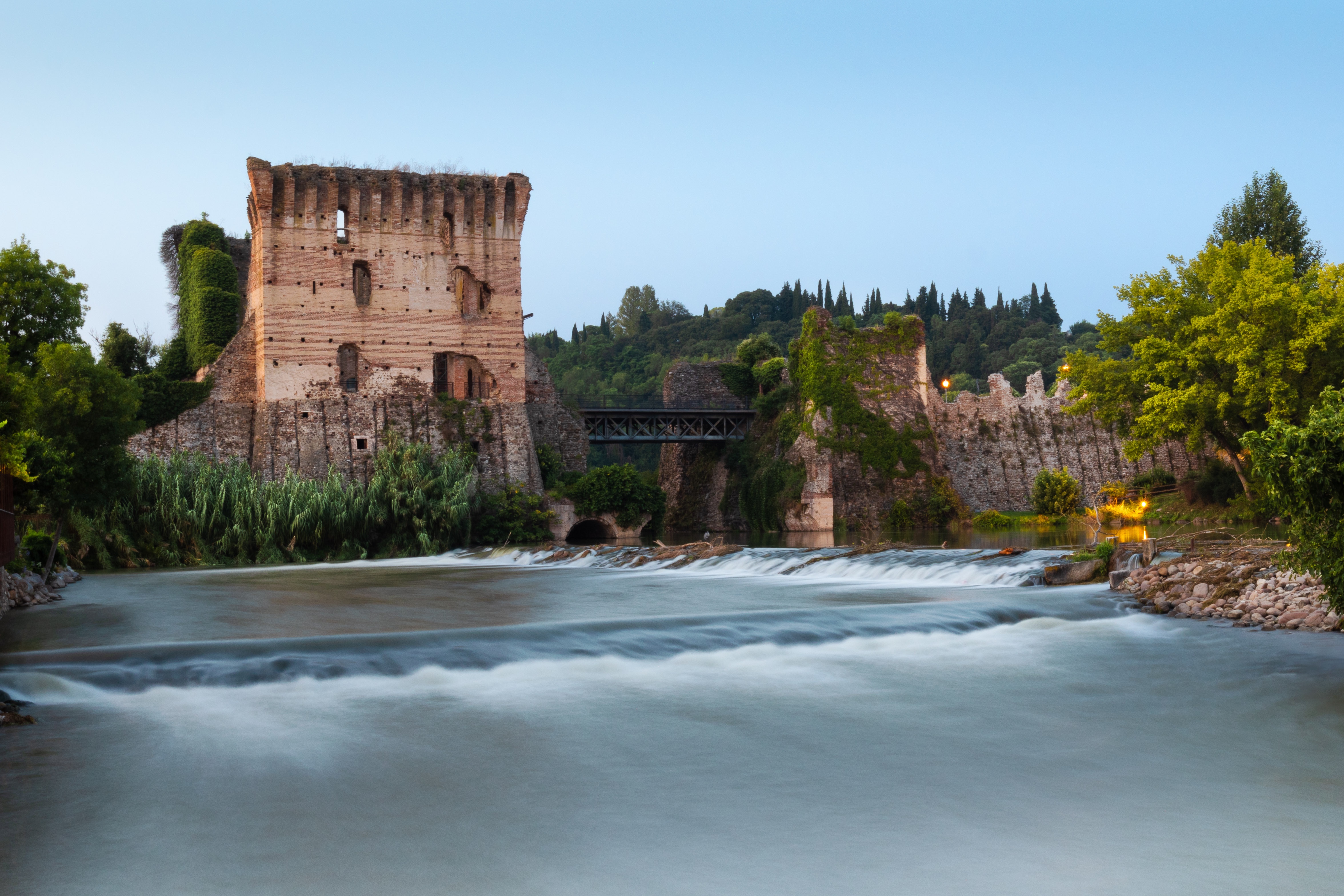
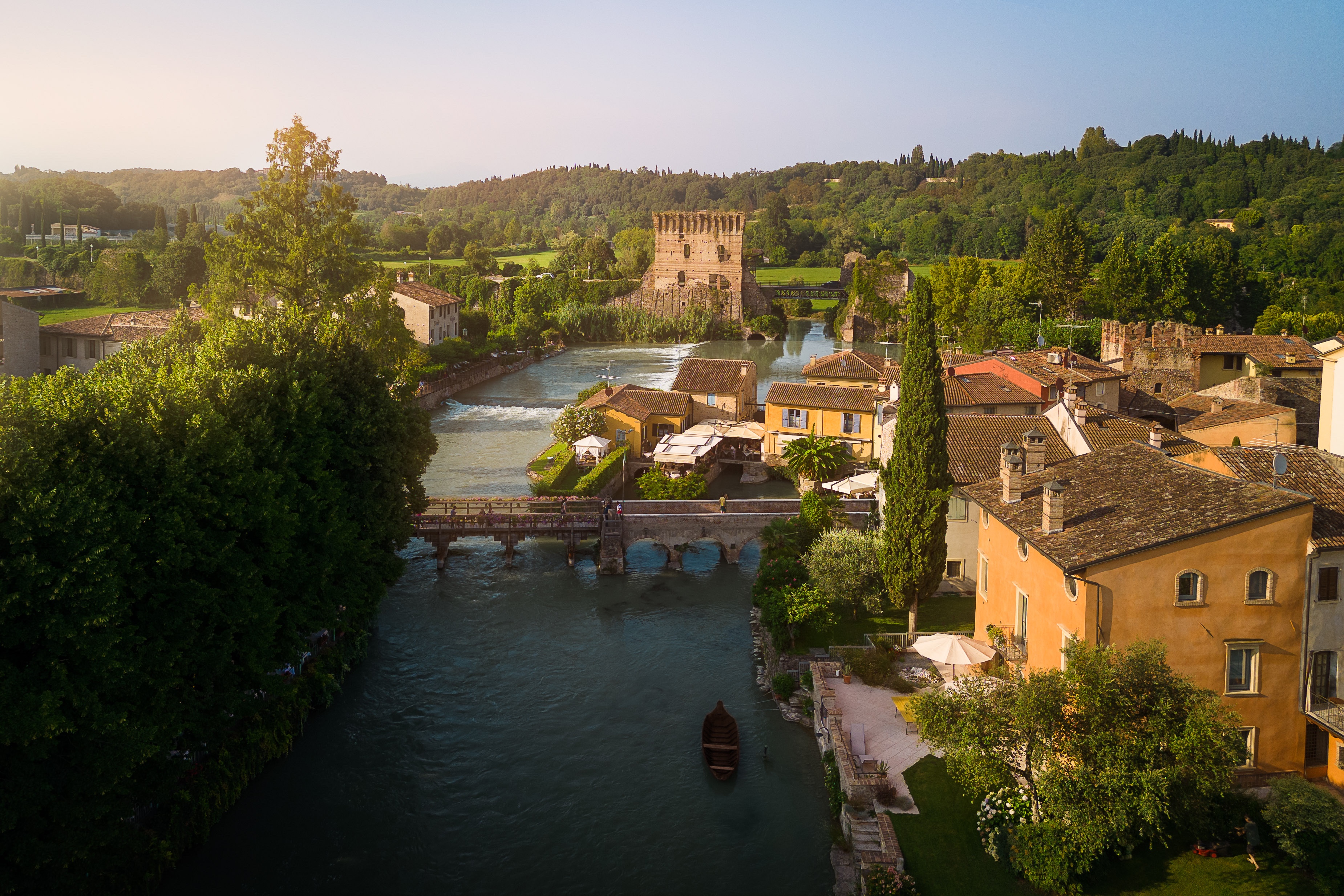
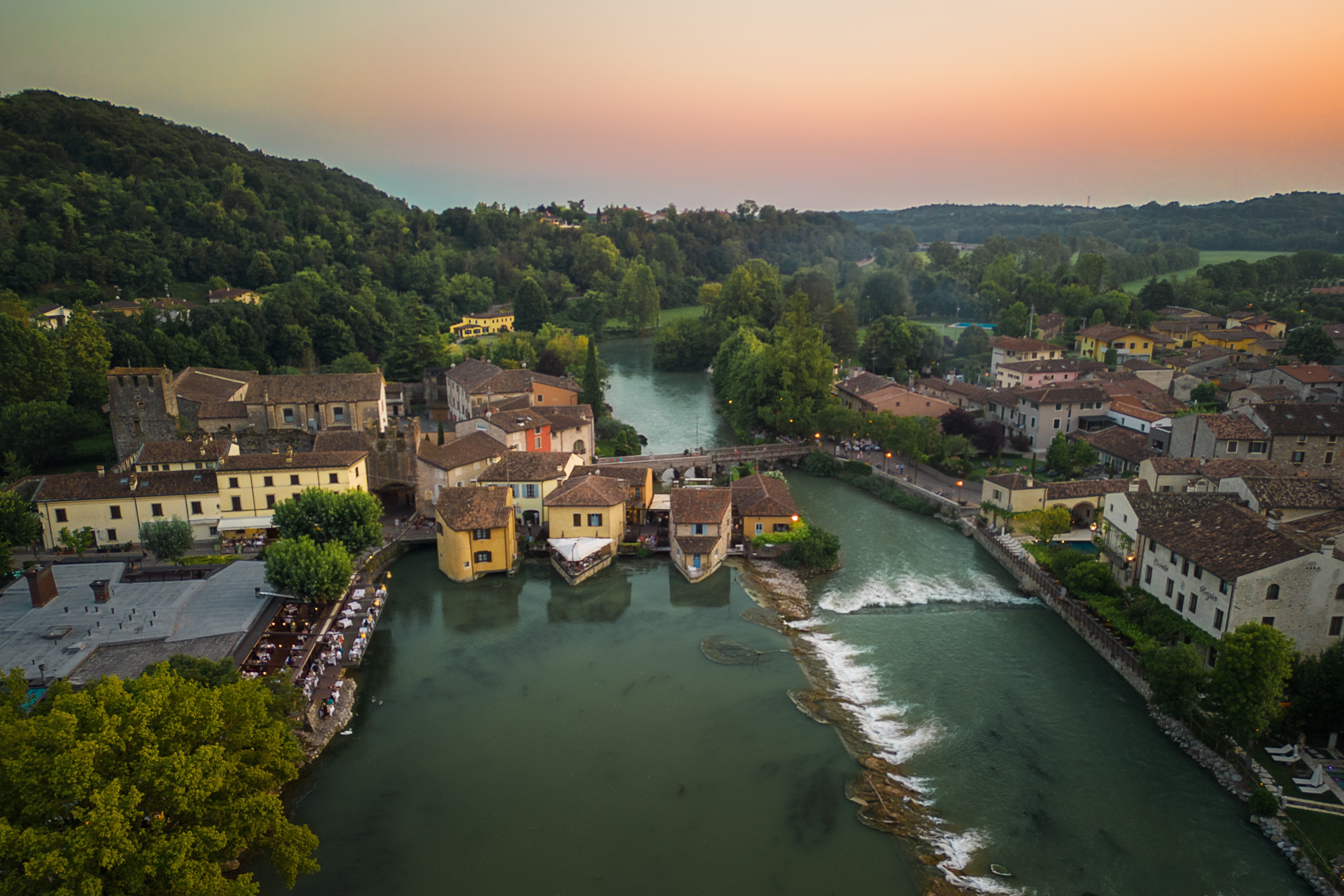
Si tratta di un piccolo villaggio, nato in simbiosi con il fiume Mincio e caratterizzato da antiche fortificazioni risalenti al periodo medievale. Oltre al borgo, il ponte Visconteo, Il castello Scaligero e i vari mulini ad acqua si fondono con incredibile fascino, sprigionando un’armonia incredibile, che storia e natura hanno conservato quasi intatto nei secoli. Oggi rappresenta un “unicum” urbanistico da visitare almeno una volta nella vita.

Ho parcheggiato l’auto molto vicino al borgo. Una soluzione molto comoda, dato che a piedi sei in 5 minuti subito in centro. Passeggiare per i vicoli, osservare l’architettura medioevale del posto, rilassarsi con delle bella camminate lungo il fiume Mincio, non ha veramente eguali. Tutto è curato fin nei minimi dettagli. Essendo un posto turistico, le strutture alberghiere, i negozi e i graziosi ristoranti invogliano a trascorrere almeno un weekend nel borgo.

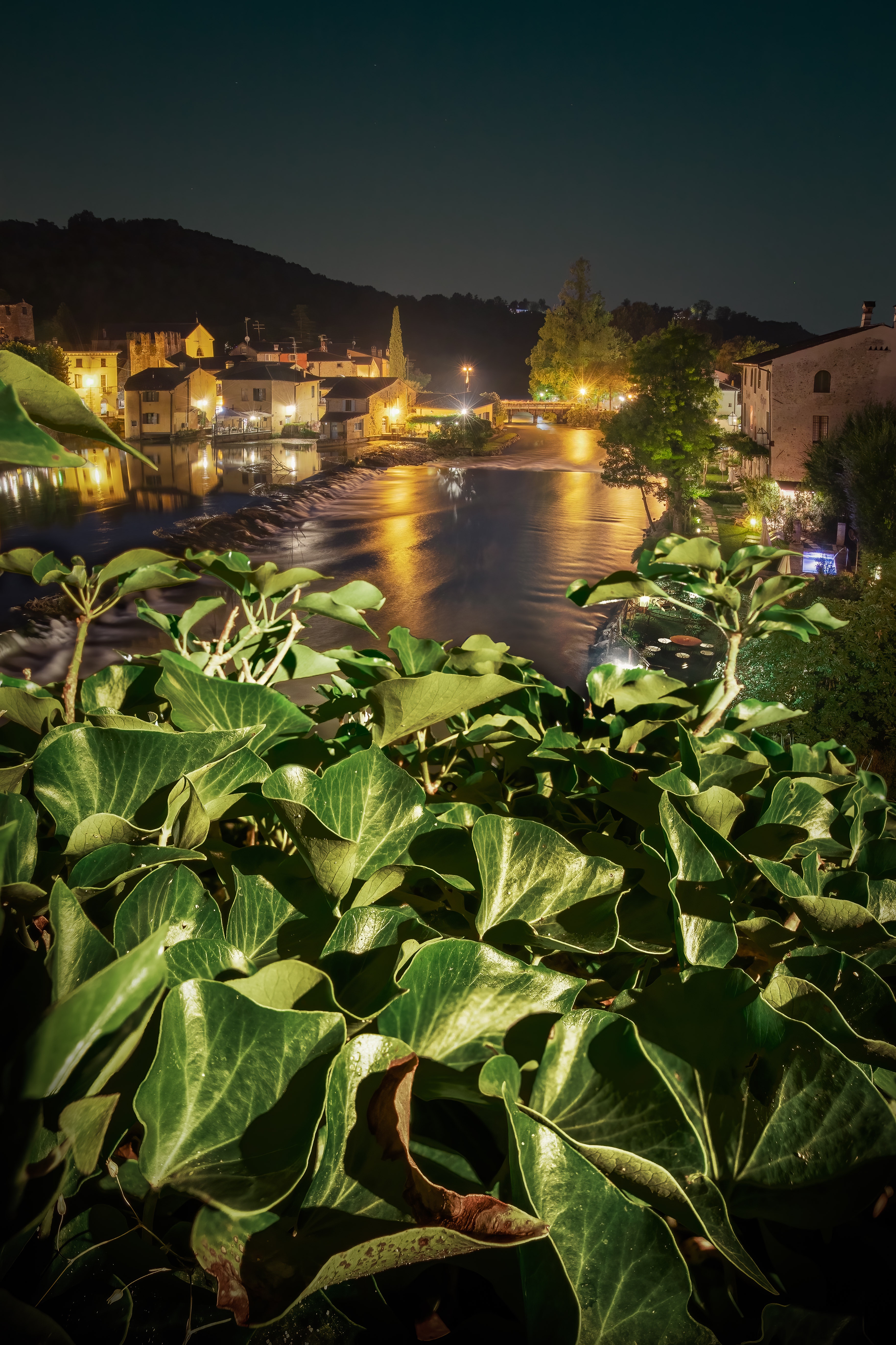
Ho assaporato questo posto a tutte le ore, All’alba puoi assistere al sole che nasce tra il ponte Visconteo e il Castello Scaligero. Di mattina il silenzio è incredibile, senti i rumori dell’acqua che scorre, il cinguettio degli uccelli e il vento che fruscia tra le piante. L’aria è fresca e frizzante. Nel pomeriggio, invece, il borgo si riempie di vita. Turisti girano su e giù per le vie in cerca di una bella fotografia da scattare, un aperitivo per dissetarsi, o, semplicemente, qualche minuto di relax in riva al Mincio. La sera è ancora più suggestivo. All’ora del tramonto si accendono le prime luci, i ristoranti si popolano di avventori per una cena romantica in riva al fiume, degustando le prelibatezze locali, o godendosi il delicato fresco della sera.

Insomma, almeno un giorno merita viverlo intensamente, specie se una buona parte della giornata si dedica alla visita del Parco del Sigurtà, anche se non ho avuto, purtroppo, la possibilità di farlo. Ma a breve tornerò su proprio per questa meta. Intanto potete godervi questi scatti e guardare la storia in questo breve video.

A bit daring outing. I think this is the most adequate definition for this trip. I’ve been wanting to visit Borghetto for a long time. I planned three whole days to visit all the surrounding area, even if, alas, the weather, this time, got in the way. Last week’s hailstorm compromised half of the trip, causing extensive damage to the whole area, to the structures and to the inhabitants themselves (as well as to holidaymakers like me). Therefore, the visit was simply limited to this small village, without being able to visit the Sigurtà Park as planned.

Weather aside, this little gem of a village gave me strong emotions and great relaxation.

Borghetto is the best-known fraction of Valeggio sul Mincio. History, landscape, monuments, charming clubs and structures make this place so interesting that it boasts its recent inclusion in the Club of the most beautiful villages in Italy.

It is a small village, born in symbiosis with the Mincio river and characterized by ancient fortifications dating back to the medieval period. In addition to the village, the Visconteo bridge, the Scaliger castle and the various water mills merge with incredible charm, releasing an incredible harmony, which history and nature have preserved almost intact over the centuries. Today it represents a urban “unique” to be visited at least once in a lifetime.

I parked the car very close to the village. A very convenient solution, given that you are in the center in 5 minutes on foot. Strolling through the alleys, observing the medieval architecture of the place, relaxing with beautiful walks along the Mincio river, has no equal. Everything is taken care of down to the smallest detail. Being a tourist place, the hotels, shops and charming restaurants invite you to spend at least a weekend in the village.

I savored this place at all hours. At dawn you can watch the sun rise between the Visconteo bridge and the Scaliger Castle. In the morning the silence is incredible, you hear the sounds of flowing water, the chirping of birds and the wind rustling through the plants. The air is fresh and crisp. In the afternoon, however, the village fills with life. Tourists wander up and down the streets looking for a nice photograph to take, an aperitif to quench their thirst, or simply a few minutes of relaxation on the banks of the Mincio. In the evening it is even more impressive. At sunset, the first lights come on, the restaurants fill up with patrons for a romantic dinner by the river, tasting the local delicacies, or enjoying the delicate cool of the evening.

In short, at least one day deserves to be lived intensely, especially if a good part of the day is dedicated to visiting the Sigurtà Park, even if, unfortunately, I didn’t have the opportunity to do so. But I will come back to this goal shortly. In the meantime, you can enjoy these shots and watch the story in this short video.

Una mattinata a marina di pisa

L’alba sul mare, per chi, come noi toscani, abita sul lato ovest della penisola, è sempre una bella scommessa. Fotografare il sole che nasce sul mare, non è una cosa per niente facile.

Sulla costa toscana, ad oggi, sono riuscito a farlo soltanto in due posti. Il primo è a Baratti lo scorso anno. Essendo un golfo, si riesce a veder nascere il sole ad est, posizionandosi all’estremità del golfo. L’altro punto è quello in cui sono stato stamani.

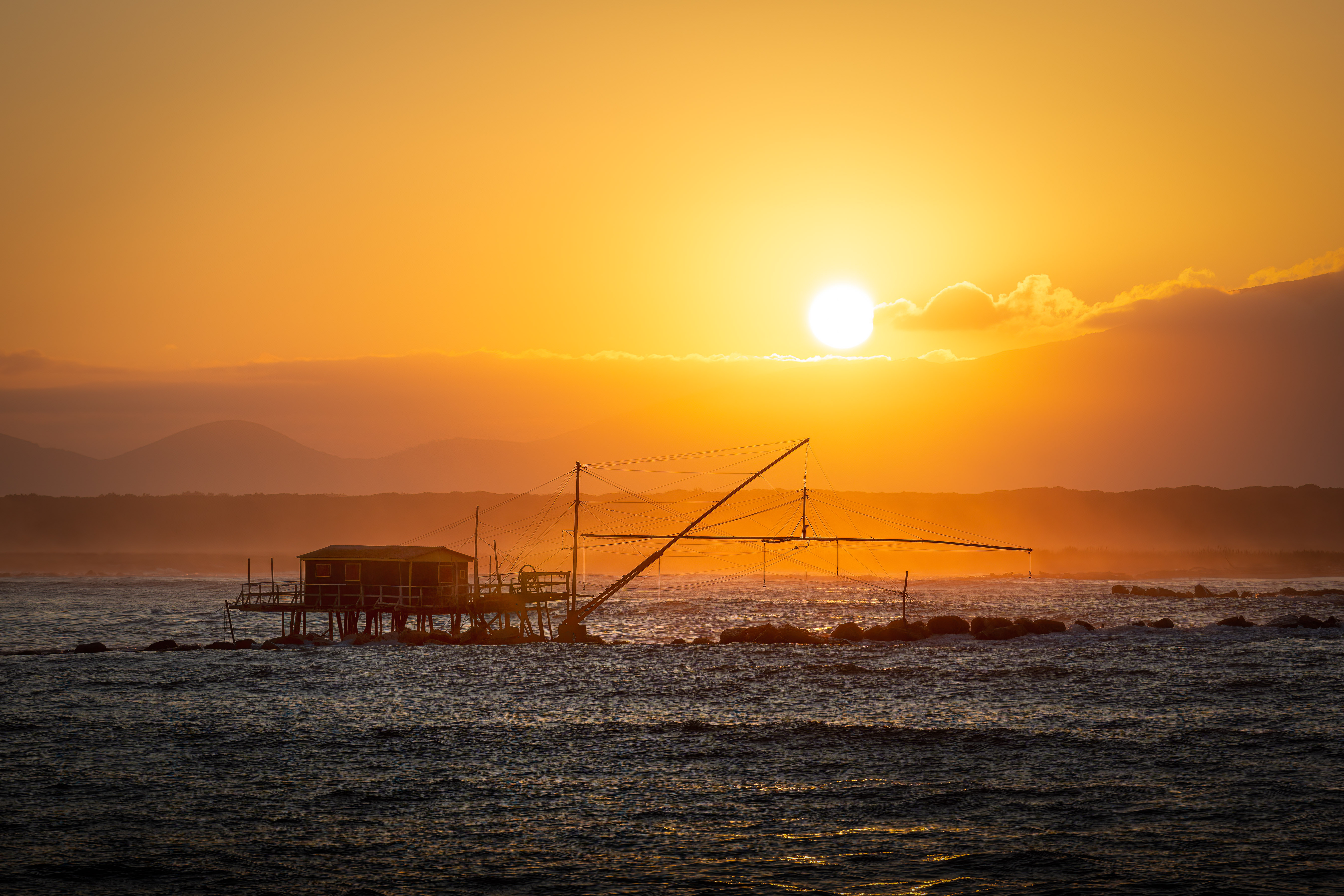
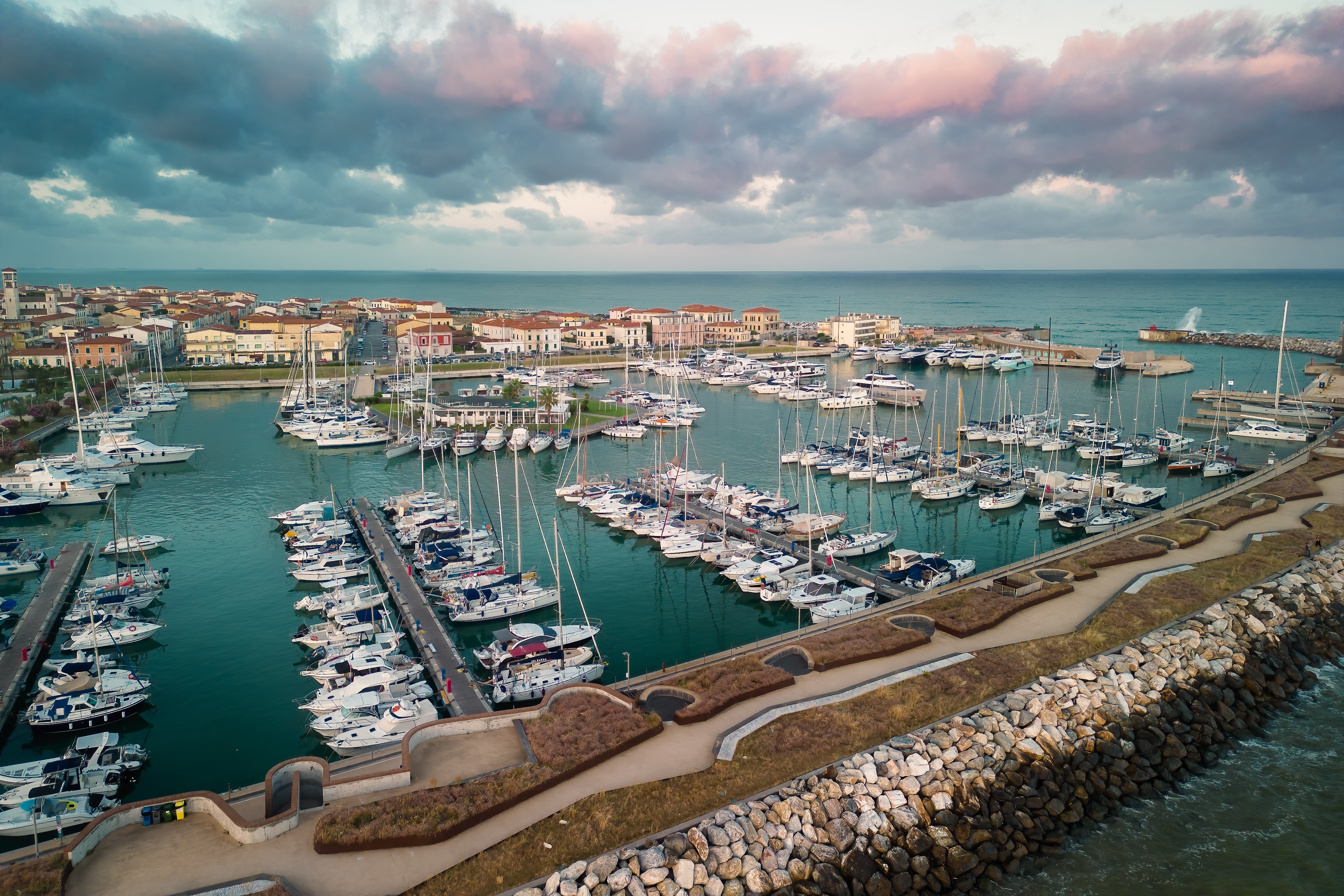
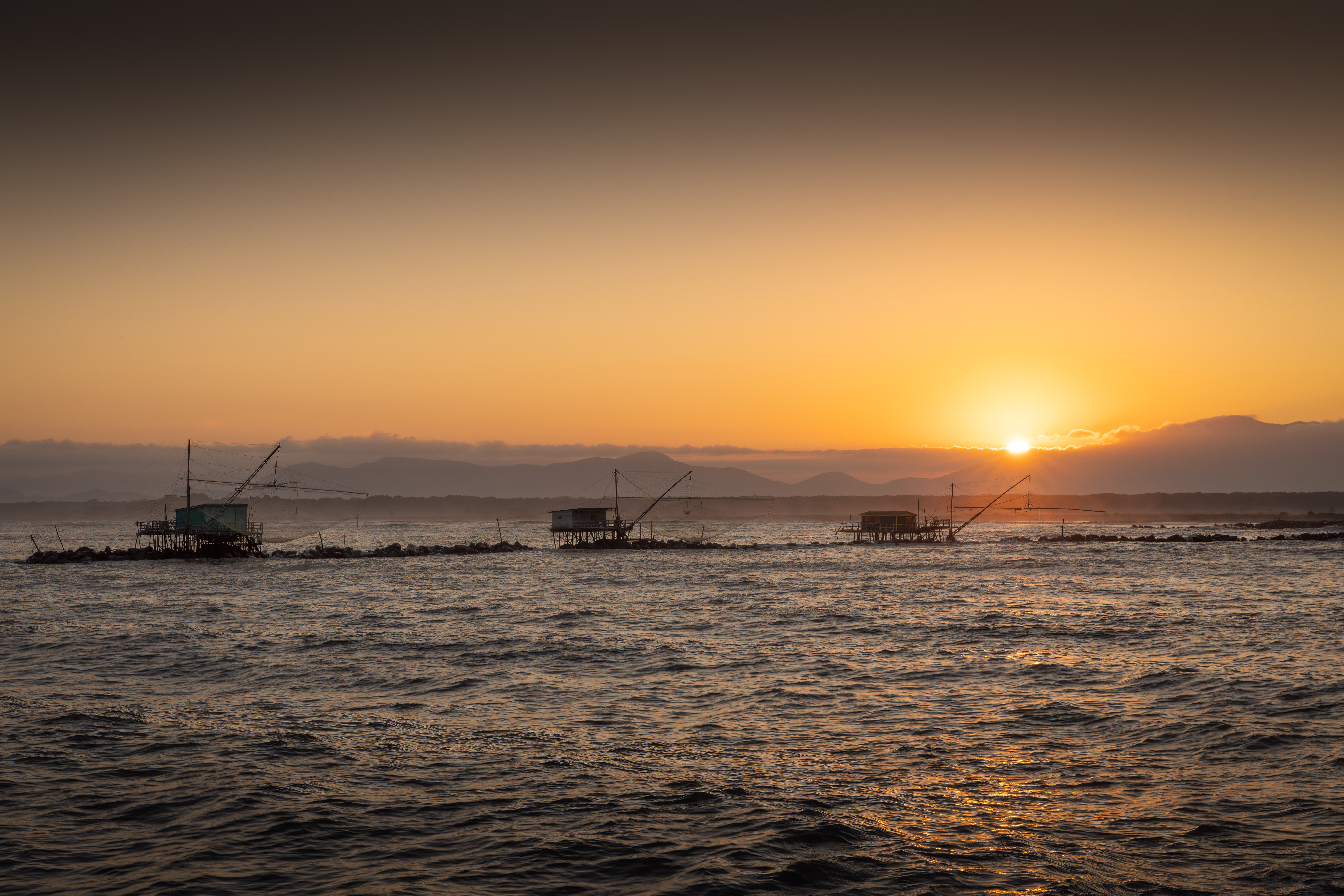
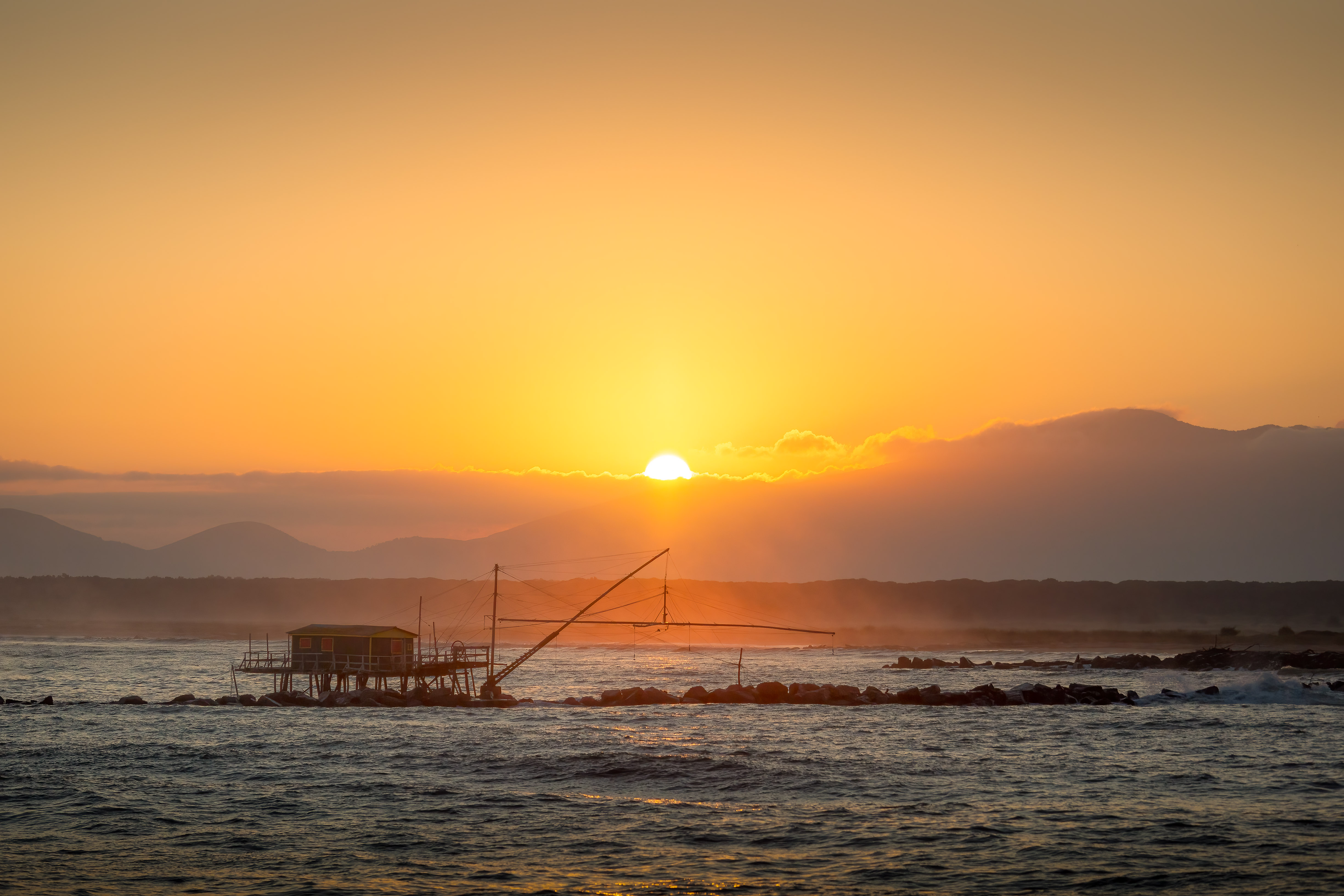
Oggi sono a Marina di Pisa. Il porto, bellissimo e di recente costruzione, offre una stupenda passeggiata lungo il muraglione, costeggiando la foce dell’Arno. Da qui, è possibile scattare fotografie rivolti verso l’entroterra, e d’estate, quando il sole sorge molto presto la mattina, è possibile vedere quest’ultimo che si alza e si specchia sull’acqua. A far da cornice a questa bella situazione, ci sono i trabucchi dei pescatori, che sono un soggetto incredibilmente perfetto per un paesaggio mozzafiato.

Stamani sono col mio caro amico Claudio. E’ la prima volta che viene a fotografare qui, mentre io sono già stato diverse volte, ma una luce come quella che ho trovato stamattina, non mi è mai capitata. La location è facile da raggiungere ed è molto conosciuta, ma gli unici che si godono la potenzialità della “golden hour” sono i fotografi e i pescatori, che si alzano così presto per dare il primo saluto al sole.

Appena arrivati, capiamo subito che il meteo è a nostro favore. E’ una bella mattina estiva, poche nuvole ad est nascondono inizialmente il sole, rivelandolo poi tutt’ad un tratto nella sua piena esplosione di luce. Una leggera foschia si colora di giallo-arancio, creando un’atmosfera veramente magica. I trabucchi dei pescatori sono davanti a noi, con le loro silhouette sinuose e silenziose. Il mare è agitato stamani. Il brontolio del mare si fa sentire. Le onde si infrangono sugli scogli sotto di noi, e respiriamo volentieri questa aria frizzante a pieni polmoni.

Accendiamo il drone. Dall’alto, la visuale sul porto è spettacolare. Le barche ormeggiate creano bellissime geometrie bianche sullo sfondo bluastro dell’acqua. Il sole che sta sorgendo dona colore a queste scene, scaldandole e dando nuova vita anche oggi a questi paesaggi meravigliosi.

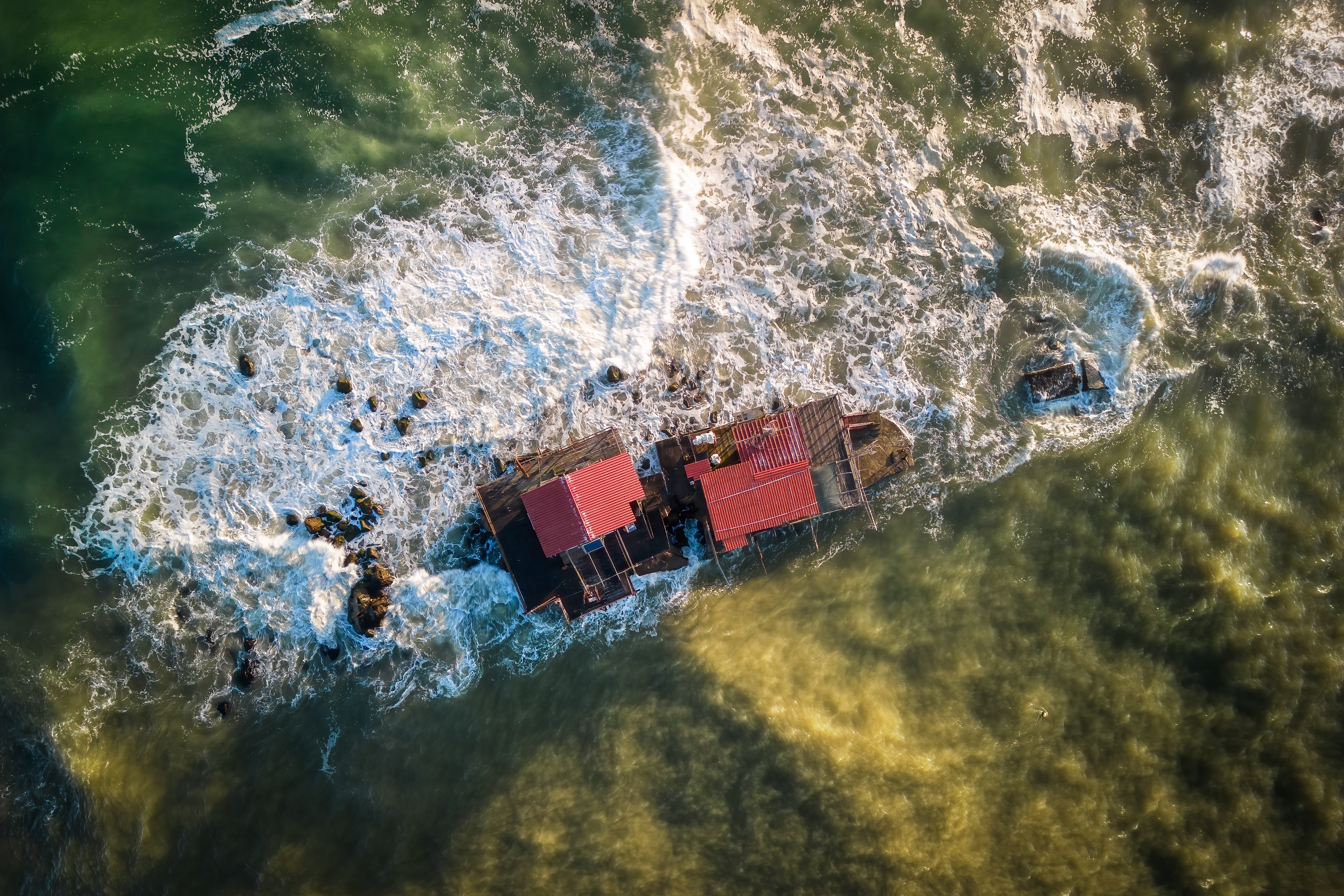
Volando sui trubucchi, l’acqua che si infrange sugli scogli sottostanti crea increspature e giochi di schiuma bianca molto interessanti. I colori dell’acqua con la luce radente sono intensi e limpidi.

Ci incamminiamo verso l’auto per rientrare. La mattinata è stata meravigliosa, con questa luce calda che ci ha accompagnato. Adesso è su alta nel cielo, e noi ci ritiriamo progettando la prossima uscita. Intanto, ecco a voi gli scatti ed il video di questa uscita,

Sunrise over the sea, for those who, like us Tuscans, live on the west side of the peninsula, is always a good bet. Photographing the sun rising over the sea is not an easy thing at all.

On the Tuscan coast, to date, I’ve only managed to do it in two places. The first is in Baratti last year. Being a gulf, you can see the sun rise in the east, positioning yourself at the end of the gulf. The other spot is where I was this morning.

Today I am in Marina di Pisa. The port, beautiful and recently built, offers a wonderful walk along the wall, along the mouth of the Arno. From here, it is possible to take photographs facing inland, and in summer, when the sun rises very early in the morning, it is possible to see it rise and reflect on the water. To frame this beautiful situation, there are the fishermen’s trebuchets, which are an incredibly perfect subject for a breathtaking landscape.

This morning I am with my dear friend Claudio. It’s the first time he’s come to take pictures here, while I’ve already been several times, but a light like the one I found this morning has never happened to me. The location is easy to reach and is well known, but the only ones who enjoy the potential of the “golden hour” are the photographers and fishermen, who get up so early to greet the sun.

As soon as we arrive, we immediately understand that the weather is in our favour. It’s a beautiful summer morning, a few clouds in the east initially hiding the sun, then revealing it all of a sudden in its full explosion of light. A light mist turns yellow-orange, creating a truly magical atmosphere. The fishermen’s trebuchets are in front of us, with their sinuous and silent silhouettes. The sea is rough this morning. The rumbling of the sea is heard. The waves crash on the rocks below us, and we gladly breathe this crisp air deeply.

We turn on the drone. From above, the view over the harbor is spectacular. The moored boats create beautiful white geometries against the bluish background of the water. The rising sun gives color to these scenes, warming them and giving new life to these wonderful landscapes even today.

Flying over the trubucchi, the water crashing on the rocks below creates ripples and very interesting white foam games. The colors of the water with grazing light are intense and clear.

We walk towards the car to return. The morning was wonderful, with this warm light that accompanied us. Now it’s up high in the sky, and we retreat planning the next exit. Meanwhile, here are the shots and the video of this release,

Un nuovo giorno – Sant’anna di stazzema

Descriverò poco questa uscita. Le parole fanno fatica ad uscire stamani.

Sant’Anna di Stazzema è un posto che non ha certo bisogno di presentazioni. In questo piccolissimo paese si è consumato uno degli eventi più tragici della nostra storia. Il 12 agosto 1944, tre compagnie delle SS dell’esercito nazista sterminarono a sangue freddo 560 persone, uomini, donne e bambini, in solo poche ore.

Sono le 5 del mattino. Sono già a Sant’Anna, perché il sole sorge molto presto in questo periodo. Appena sceso di macchina, il silenzio mi avvolge. Ogni rumore, ogni passo che faccio, ogni respiro, sembra affogare nel vuoto. I pensieri mi incatenano le parole, che si annodano in gola. Vedere questo posto così deserto, così taciturno, mi catapulta indietro nel tempo, come se fossi appena tornato a casa, il giorno dopo la strage. E’ una sensazione veramente strana ed intensa.

Salgo il sentiero sassoso che porta al Sacrario. Sculture in bronzo raffiguranti l’eccidio, si alternano in una sorta di Via Crucis, fino al monumento. Arrivato in cima, ancora silenzio. L’altare è illuminato da fari arancioni che lo isolano dal contesto della vallata verde scuro. Il contrato dei colori è notevole. Il sole è sempre dietro ai monti, ma sta lentamente salendo. Si vedono i primi raggi che colorano il litorale della Versilia. Faccio un po’ di foto e qualche ripresa video. Mi sento abbastanza turbato ed inquieto.

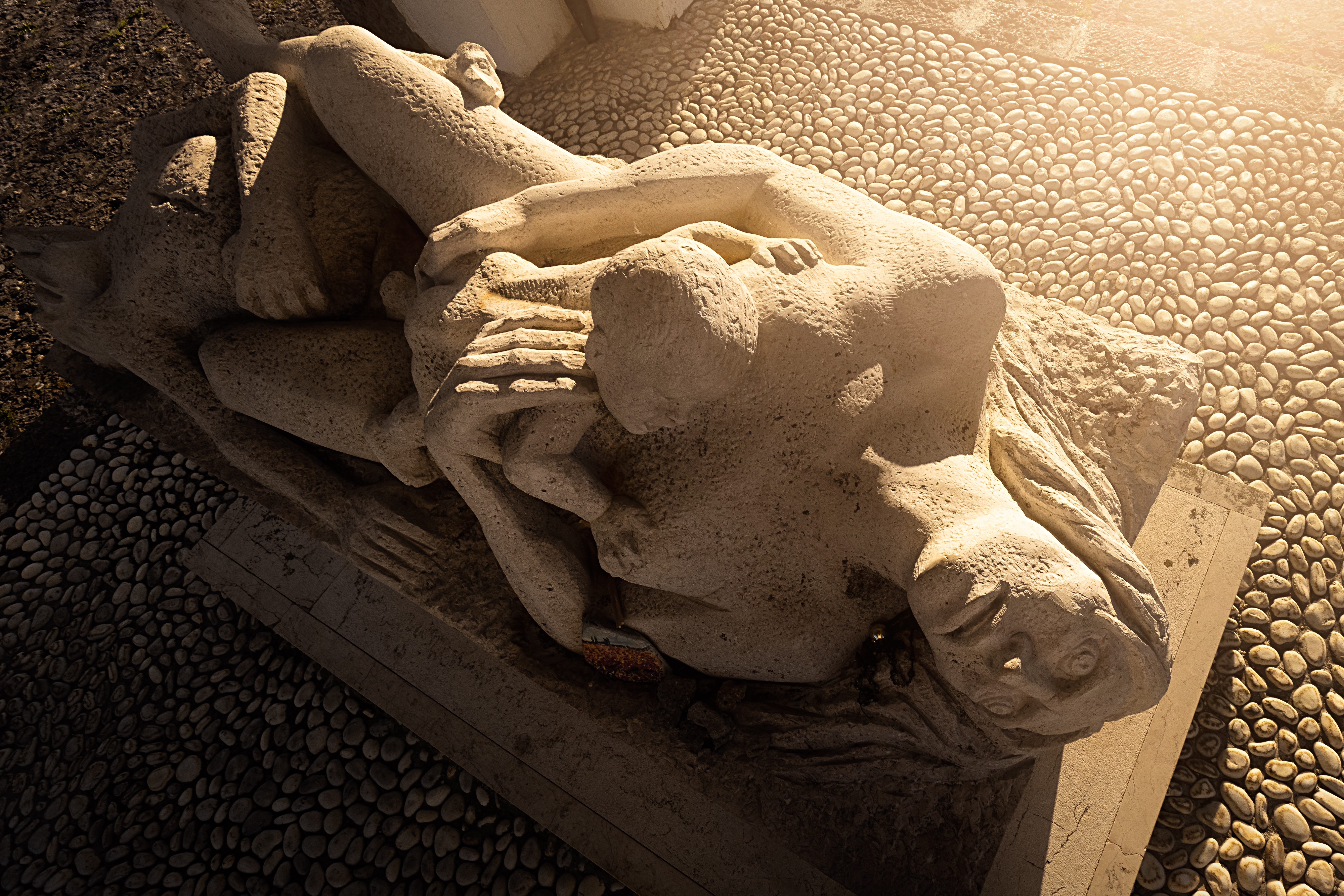
Quando il sole fa capolino dai monti, tutta la potenza e la forza di questo luogo si manifesta. E’ possente, allo tempo tempo fragile. Mi sento piccolo e solo. Una lacrima scende piano lungo la guancia destra, e cade a terra. Faccio a fatica gli ultimi scatti, e torno giù alla piazzetta di fronte alla Chiesa. Un Cristo in bronzo giace a terra, in un luogo che ha visto fin troppo dolore.

Osservo un’ultima volta, prima di tornare a casa. Non esiste una risposta al perché l’essere umano sia capace di odiare sé stesso fino a questo punto. Distruggerci è probabilmente parte della nostra natura.

Possa la luce del sole, che sorge ogni mattina, tenere acceso il ricordo e la speranza di questo posto, di questa gente, e di tutta questa follia.

I’ll be quick to describe this day. Words struggle to get out this morning.

Sant’Anna di Stazzema is a place that certainly needs no introduction. In this tiny town one of the most tragic events in our history took place. On August 12, 1944, three SS companies of the Nazi army slaughtered 560 men, women and children in just a few hours.

It’s 5 in the morning. I’m already in Sant’Anna, because the sun rises very early today. As soon as I get out of the car, silence envelops me. Every noise, every step I take, every breath, seems to drown in emptiness. Thoughts chain my words, I’ve a knot in my throat. Seeing this place so deserted, so taciturn, catapults me back in time, as if I had just returned home, the day after the massacre. It’s a really strange and intense feeling.

I climb the stony path that leads to the Shrine. Bronze sculptures depicting the massacre alternate in a sort of Via Crucis, up to the monument. Arrived at the top, still silence. The altar is illuminated by orange spotlights which isolate it from the context of the dark green valley. The color contrast is remarkable. The sun is always behind the mountains, but it is slowly rising. You can see the first rays that color the coast of Versilia. I take some photos and some video footage. I feel quite disturbed and restless.

When the sun peeks out from the mountains, all the power and strength of this place is manifested. It is powerful, yet fragile at the same time. I feel small and alone. A tear rolls down her right cheek and falls to the floor. I take the last shots with difficulty, and I go back down to the square in front of the Church. A bronze Christ lies on the ground, in a place he has seen far too much pain.

I look one last time, before returning home. There is no answer to why human beings are capable of hating themselves to this extent. To destroy ourselves is probably part of our nature.

May the light of the sun, which rises every morning, keep alive the memory and hope of this place, of these people, and of all this madness.

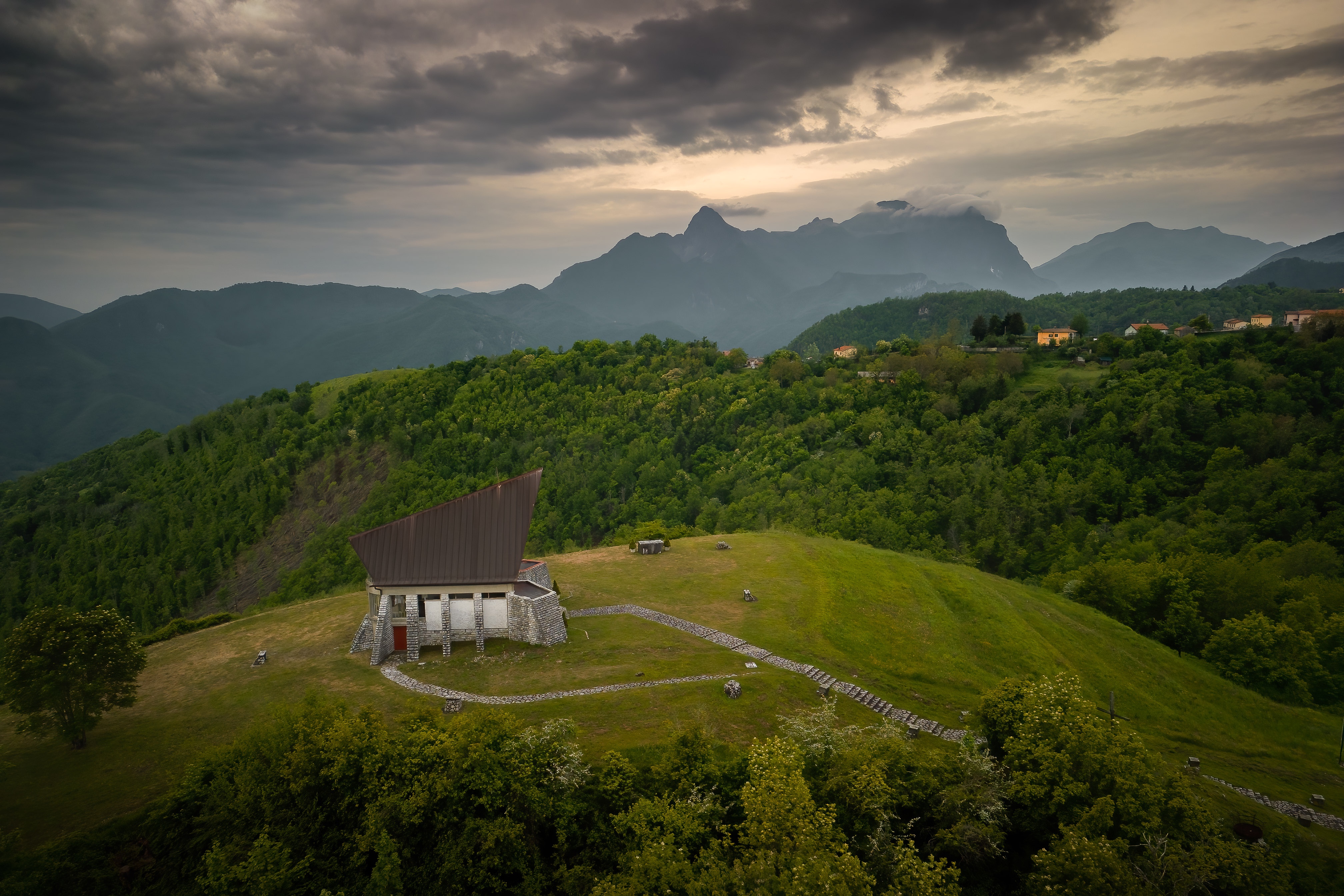
Il sacrario ai caduti della garfagnana

L’uscita di stamani è stata un po’ improvvisata, o meglio, decisa all’ultimo, poche ore prima di partire. Tutto è nato scorrendo le foto sul profilo di un gruppo della Garfagnana. E’ bastato vedere uno scatto per decidere di andare. Non sapevo nemmeno dell’esistenza di questo monumento. E pensare che è distante appena un’ora da casa.

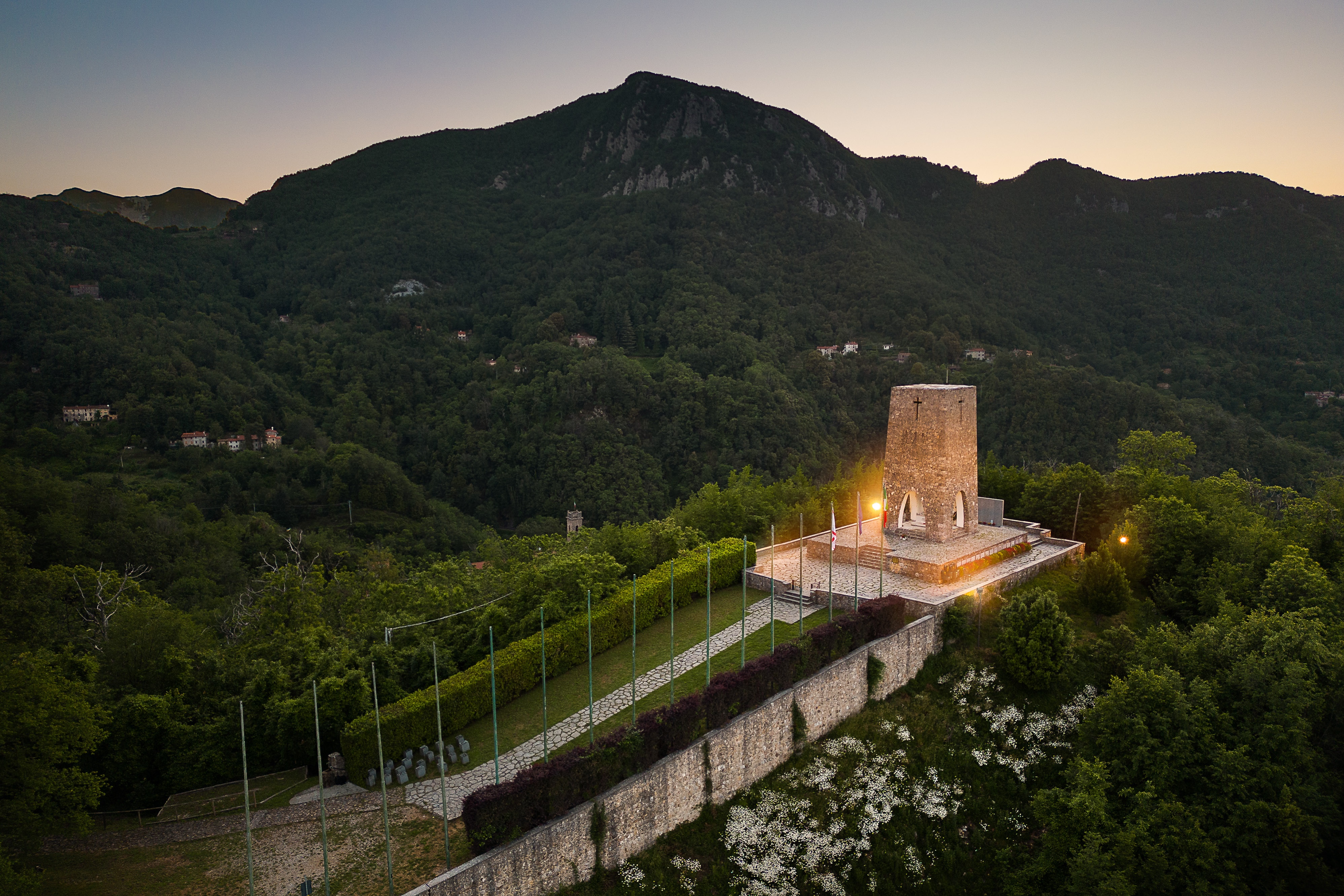
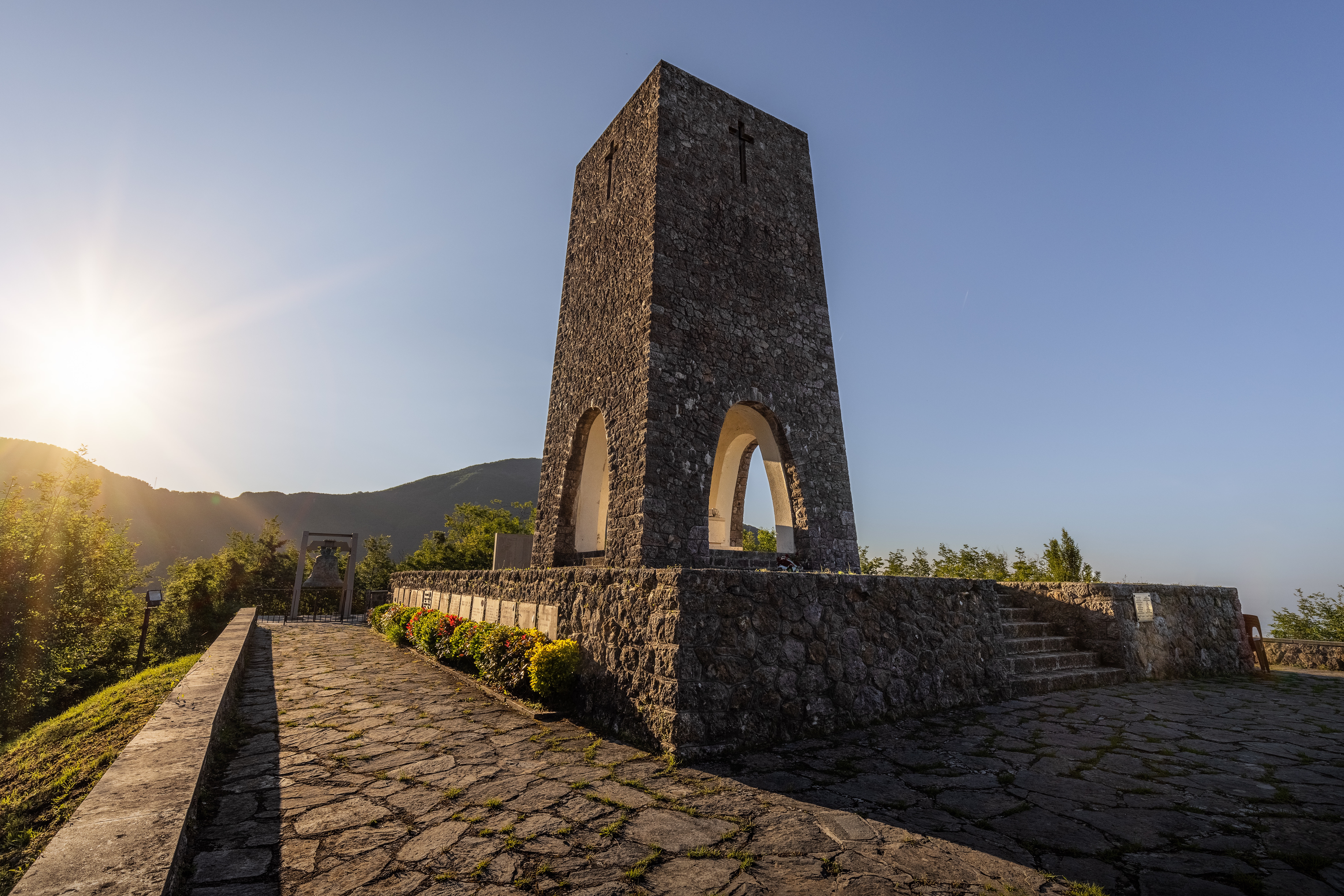
Il progetto della costruzione del Sacrario venne approvato alla fine degli anni 50. Doveva essere una costruzione semplice, che ricordasse alle generazioni future il tributo di vite che la gente della Garfagnana aveva pagato durante le guerre combattute nel Novecento.

Fu deciso di erigerlo su un picco nella frazione di Croce di Stazzana, a circa 885 metri sul livello del mare, capace di mozzare il fiato al visitatore: salendo la scalinata in pietra che conduce alla chiesa, è come affacciarsi su una terrazza che si apre sulle vallate della Garfagnana e delle sue Alpi, che circondano come in un abbraccio chi diede la vita venendo strappato alla sua terra. Progettato da due architetti fiorentini, Giorgio Merlini e Luigi De Filla, il Sacrario venne inaugurato il 3 luglio 1966, alla presenza delle più alte cariche civili, militari e religiose della Garfagnana e del Governo.

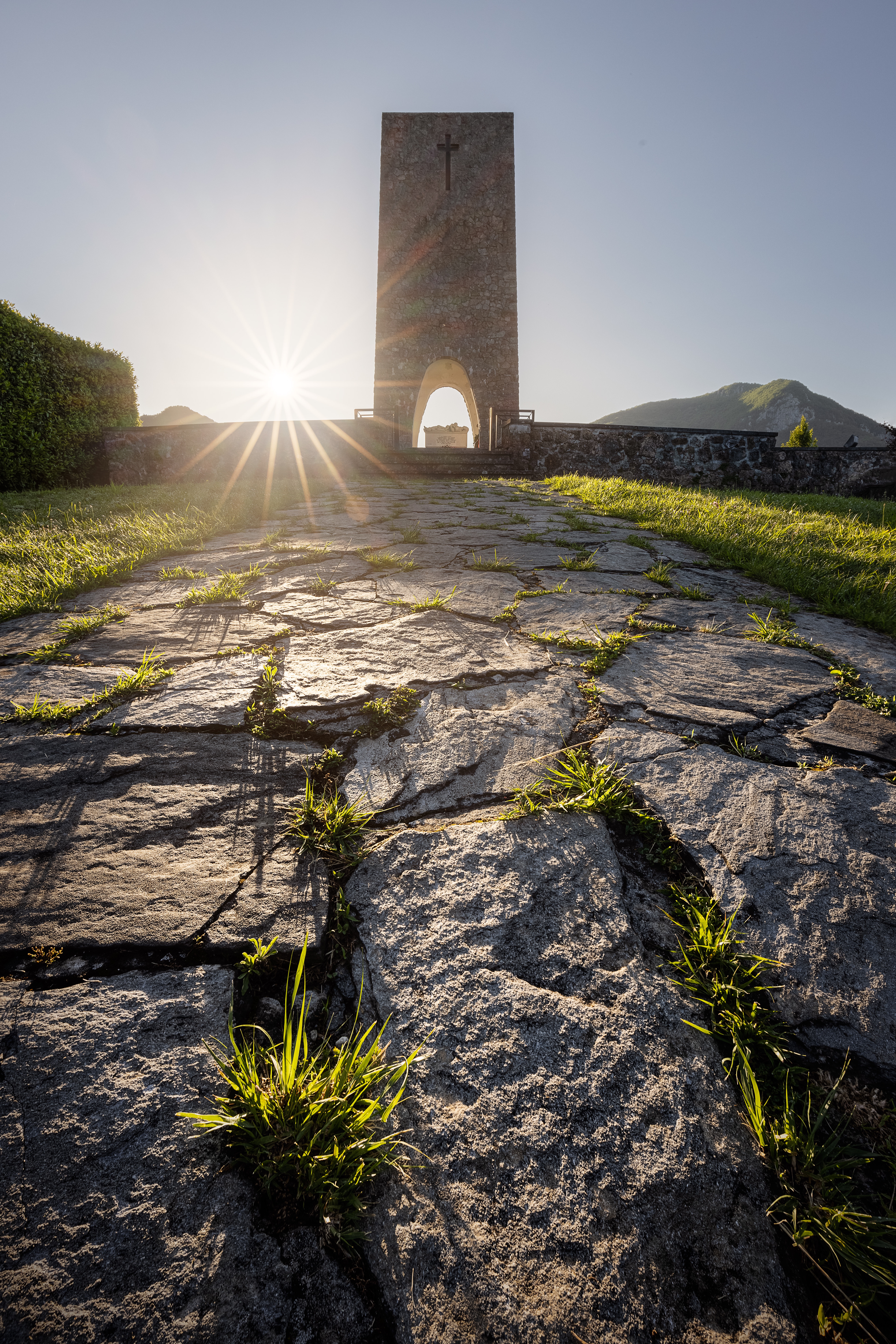
Stamani parto da solo. Il tempo nuvoloso, a tratti piovoso, e l’orario di partenza praticamente in nottata, ha scoraggiato tutti i miei compagni di fotografia. Non importa. Essendo la prima volta che vado, non ho grandi pretese. E’ importante prima capire il potenziale del posto. Esplorare e conoscere. Partenza alle 4:30 anche stamani. La strada è semplicissima. Basta arrivare a Castelnuovo Garfagnana e proseguire poi su per Cerretoli. Arrivato a destinazione, il Sacrario si vede già dalla strada. Svetta su una terrazza proprio davanti a me, ed inoltre, col cielo nuvoloso e blu notte, è illuminato da una calda luce radente, come se fosse un faro in mezzo ad un mare in tempesta.

Parcheggio e scendo di macchina. Una bella scalinata in pietra ti accompagna su questa bella radura rialzata, dove svetta solitario e silenzioso il Sagrario. La vista è incredibile. Sono nel cuore della Garfagnana, circondato dalle Apuane. Sulla mia destra si vede benissimo l’Omo Morto e il massiccio della Pania. Il tempo non promette molto bene. Il cielo è completamente coperto. Tira un vento cane. Speriamo di poter alzare almeno il drone per qualche ripresa, perché merita veramente. Una cosa è certa: il blu scuro del cielo e queste luci gialle arancio che illuminano il monumento è un contrasto pazzesco, che merita subito qualche scatto.

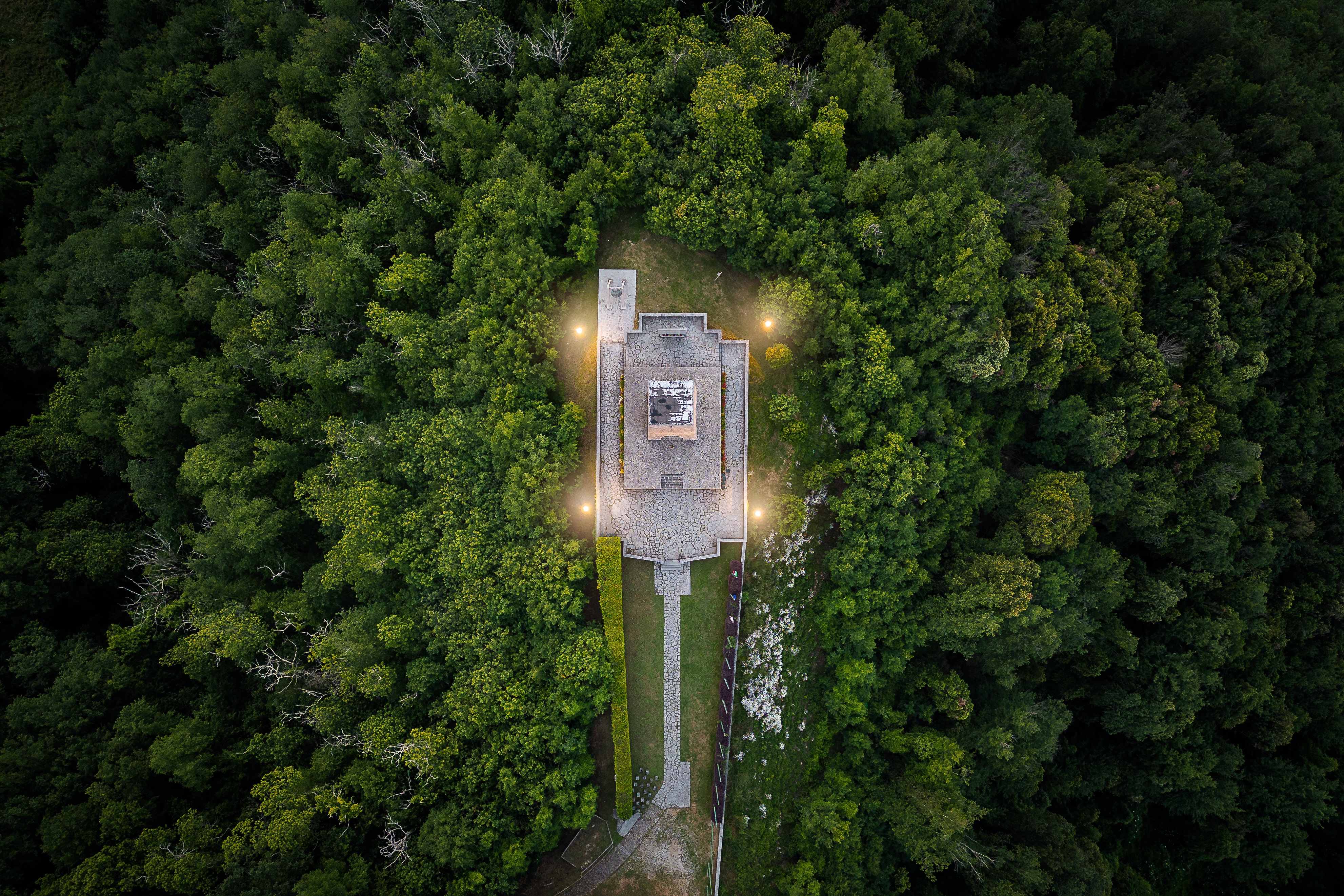
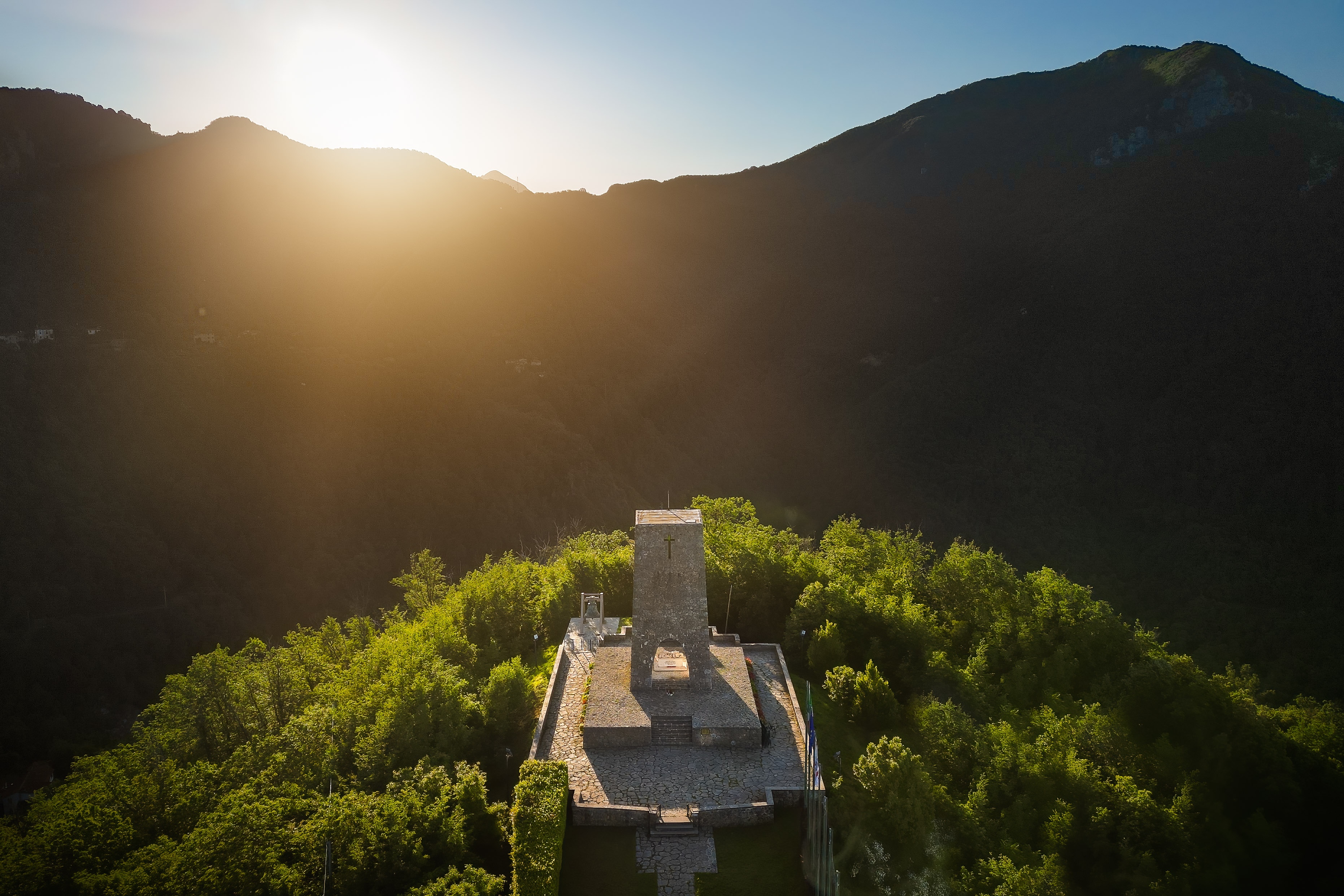
Faccio un time laps. Le nuvole corrono velocissime a causa del forte vento. A tratti qualche nuvola si sposta, e apre uno spiraglio nel cielo, dove una debole luce fatica quasi ad uscire. Non importa. Essere qua, da solo, in silenzio, aspettare il giorno ascoltando i rumori della valle: solo questo è valso il viaggio. Finalmente il vento si placa lievemente. Alzo il drone per avere una nuova prospettiva. Wow… che posto. Dall’alto è ancora più incredibile.

Trascorro praticamente tre ore in questo posto meraviglioso. Pochi scatti, qualche ripresa veloce, ma tanto entusiasmo. Mi sono veramente rilassato e goduto a pieno questa uscita. Ecco gli scatti che sono riuscito a portare a casa, ed il video di questo affascinante scorcio di Garfagnana. Buona visione.

This morning’s outing was a bit improvised, or rather, decided at the last minute, a few hours before leaving. It all started by scrolling through the photos on the profile of a group from Garfagnana. It was enough to see a shot to decide to go. I didn’t even know about the existence of this monument. And to think it’s just an hour away from home.

The project for the construction of the Shrine was approved at the end of the 1950s. It had to be a simple construction, which would remind future generations of the tribute of lives that the people of Garfagnana had paid during the wars fought in the twentieth century.

It was decided to erect it on a peak in the hamlet of Croce di Stazzana, about 885 meters above sea level, capable of taking the visitor’s breath away: climbing the stone staircase that leads to the church, it is like looking out onto a terrace that opens on the valleys of the Garfagnana and its Alps, which surround as if in an embrace those who gave their lives by being snatched from their land. Designed by two Florentine architects, Giorgio Merlini and Luigi De Filla, the Shrine was inaugurated on 3 July 1966, in the presence of the highest civil, military and religious officials of the Garfagnana and of the Government.

I’m leaving alone this morning. The cloudy weather, sometimes rainy, and the departure time practically at night, discouraged all my photography companions. It does not matter. Being my first time going, I don’t have great expectations. It is important to first understand the potential of the place. Explore and know. Departure at 4:30 this morning too. The road is very simple. Just get to Castelnuovo Garfagnana and then continue up to Cerretoli. When you arrive at your destination, the Shrine can already be seen from the road. It stands on a terrace right in front of me, and furthermore, with the cloudy and blue night sky, it is illuminated by a warm grazing light, as if it were a lighthouse in the middle of a stormy sea.

I park and get out of the car. A beautiful stone staircase accompanies you to this beautiful raised clearing, where the Sagrario stands alone and silent. The view is amazing. I am in the heart of Garfagnana, surrounded by the Apuan Alps. On my right you can see very well the Omo Morto and the Pania massif. The weather doesn’t bode well. The sky is completely overcast. A strong wind is blowing. Let’s hope we can at least raise the drone for a few shots, because it really deserves it. One thing is certain: the dark blue of the sky and these yellow-orange lights that illuminate the monument is a crazy contrast, which immediately deserves a few shots.

I take a time lapse. The clouds move very fast due to the strong wind. At times some clouds move, and open a crack in the sky, where a weak light almost struggles to get out. It does not matter. Being here, alone, in silence, waiting for the day listening to the sounds of the valley: this alone was worth the trip. Finally the wind subsides slightly. I raise the drone to get a new perspective. Wow… what a place. From above it is even more incredible.

I basically spend three hours in this wonderful place. A few shots, some quick shots, but a lot of enthusiasm. I really relaxed and thoroughly enjoyed this outing. Here are the shots I managed to bring home, and the video of this fascinating glimpse of Garfagnana. Good vision.

L’alba del Monte Croce

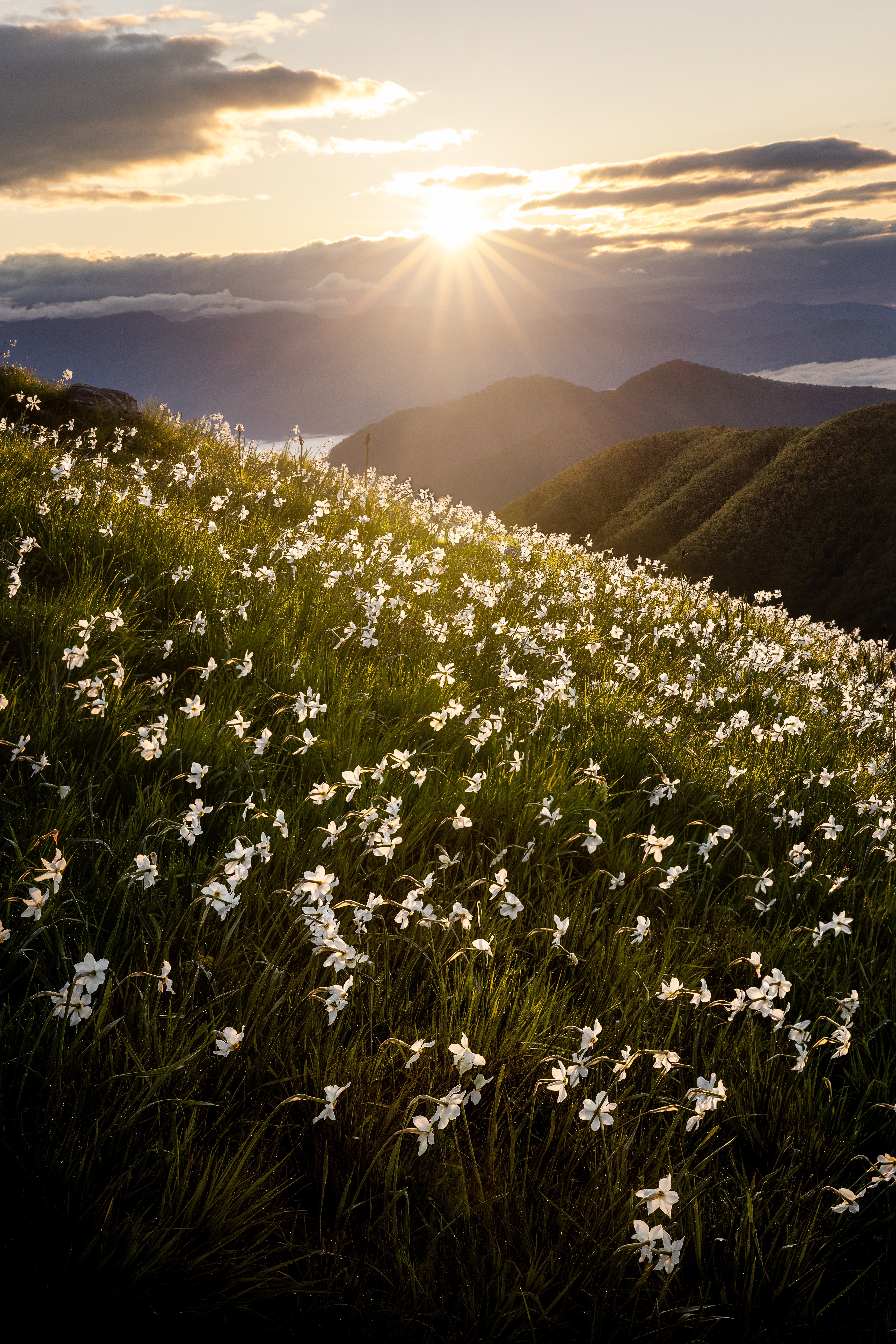
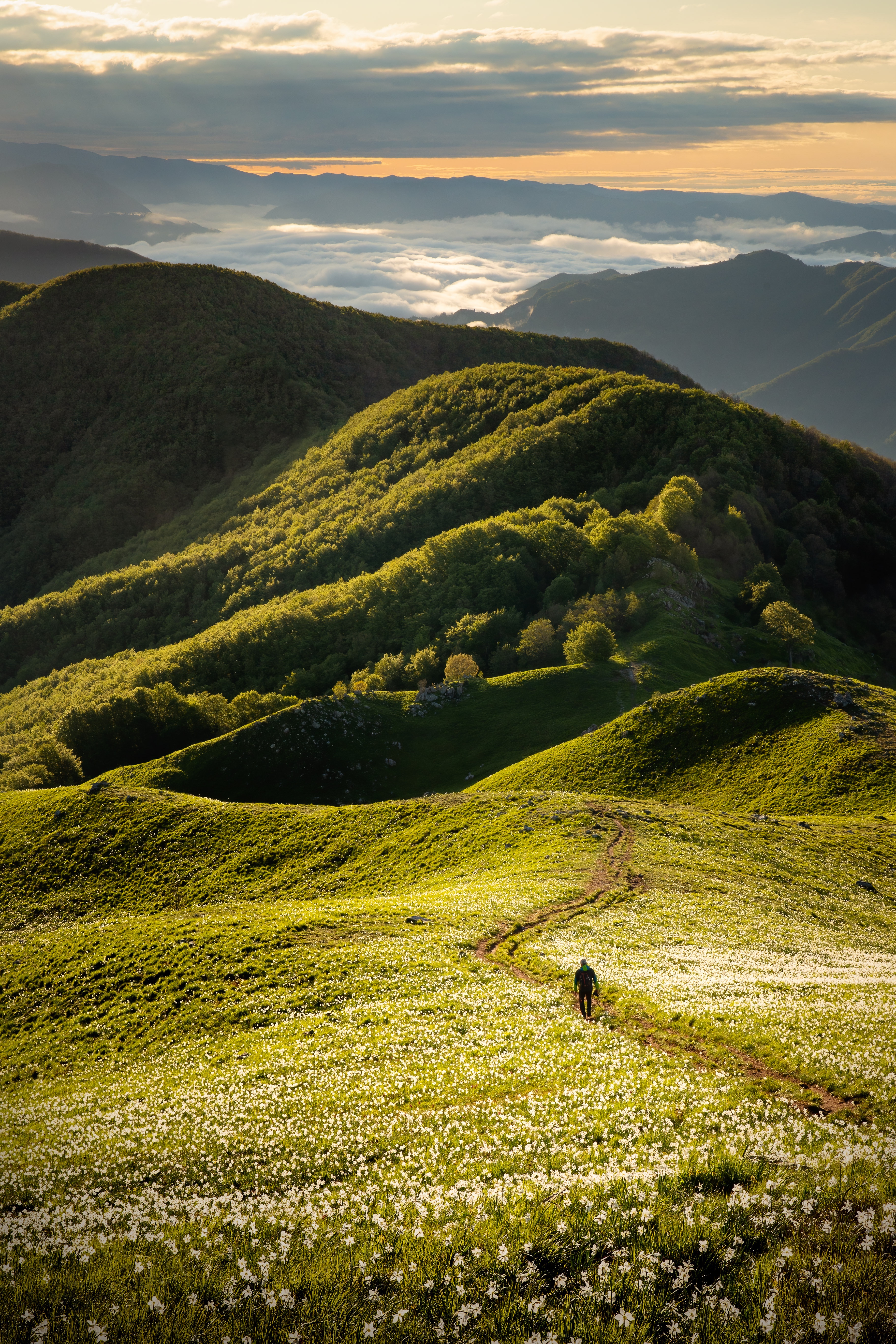
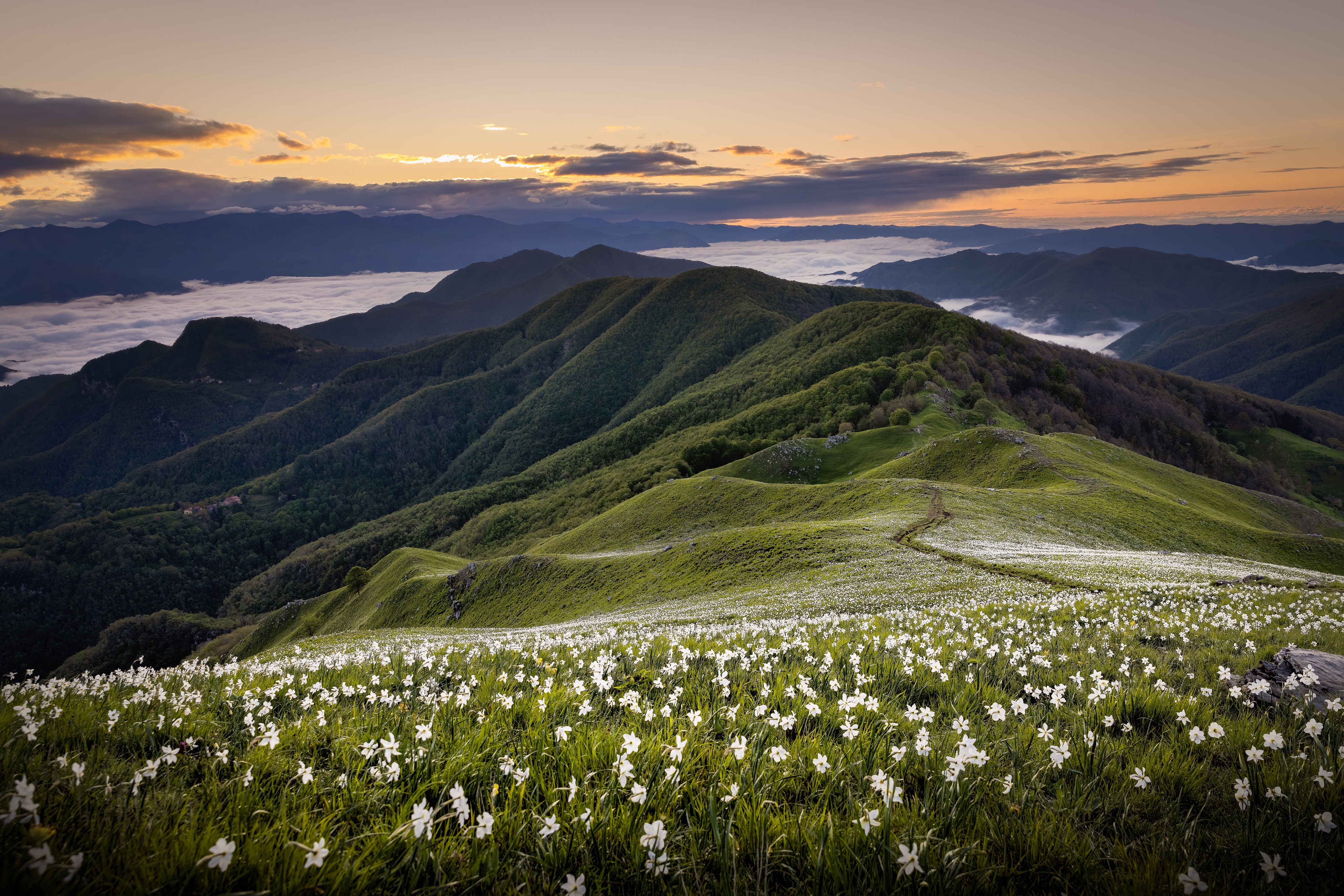
Era tanto tempo che sentivo parlare della fioritura dei narcisi sul Monte Croce, ma ancora non mi ero deciso ad andare. Un buon posto, per carità, ma lo reputavo una delle solite, classiche, mete forzate di ogni fotografo che si rispetti. Sinceramente non mi attraeva più di tanto, e l’idea di andare su per fare solo una foto ai fiori mi ha sempre spinto a rimandare. Quest’anno ho trovato un ritaglio di tempo e, con il mio amico Claudio, abbiamo deciso di andare. Se mi sono ricreduto sull’idea iniziale che mi ero fatto? Altro che… credo che questa sia stata, senza dubbio, una delle uscite più belle ed interessanti che abbia mai fatto.

Il Monte Croce fa parte delle Apuane Meridionali, si trova nel comune di Stazzema e la sua vetta raggiunge i 1314 metri. È così chiamato poiché i quattro crinali principali che lo formano si intersecano più o meno perpendicolarmente a formare una croce. Visto da lontano il monte è decisamente una enorme collina di colore mutevole secondo la stagione: dal verde intenso primaverile, al giallo rossastro autunnale, al bianco invernale quando è coperto dalla neve.

Da sempre è rinomato per la bella fioritura dei narcisi nella primavera avanzata tanto è vero che è conosciuto anche come il monte delle giunchiglie. In vetta c’è una croce molto semplice e si gode di bella vista specialmente sul gruppo delle Panie, e dalla parte opposta del versante, si affaccia la Versilia e tutto il litorale tirrenico fino alla Liguria.

La partenza è la nostra, consueta, alzata mattutina, o meglio, notturna. Ore 3:30 suona la sveglia. A Maggio, il sole sorge molto presto, quindi è uno sforzo obbligato. Mi ritrovo con Claudio e si parte in direzione Palagnana. La strada è stretta ma ben percorribile. Arriviamo in cima al paese, fino a che la strada non termina. Parcheggiamo. Borsone in spalla e torcia accesa in testa. Comincia la salita per raggiungere la vetta. Sono le 5:03. L’aria è fredda, umida. Il cielo ancora buio. Solo in lontananza si nota un bagliore più chiaro nel cielo. Ci incamminiamo lungo il sentiero, ormai ben visibile anche di notte, data l’affluenza di persone che in questo periodo viene quassù.

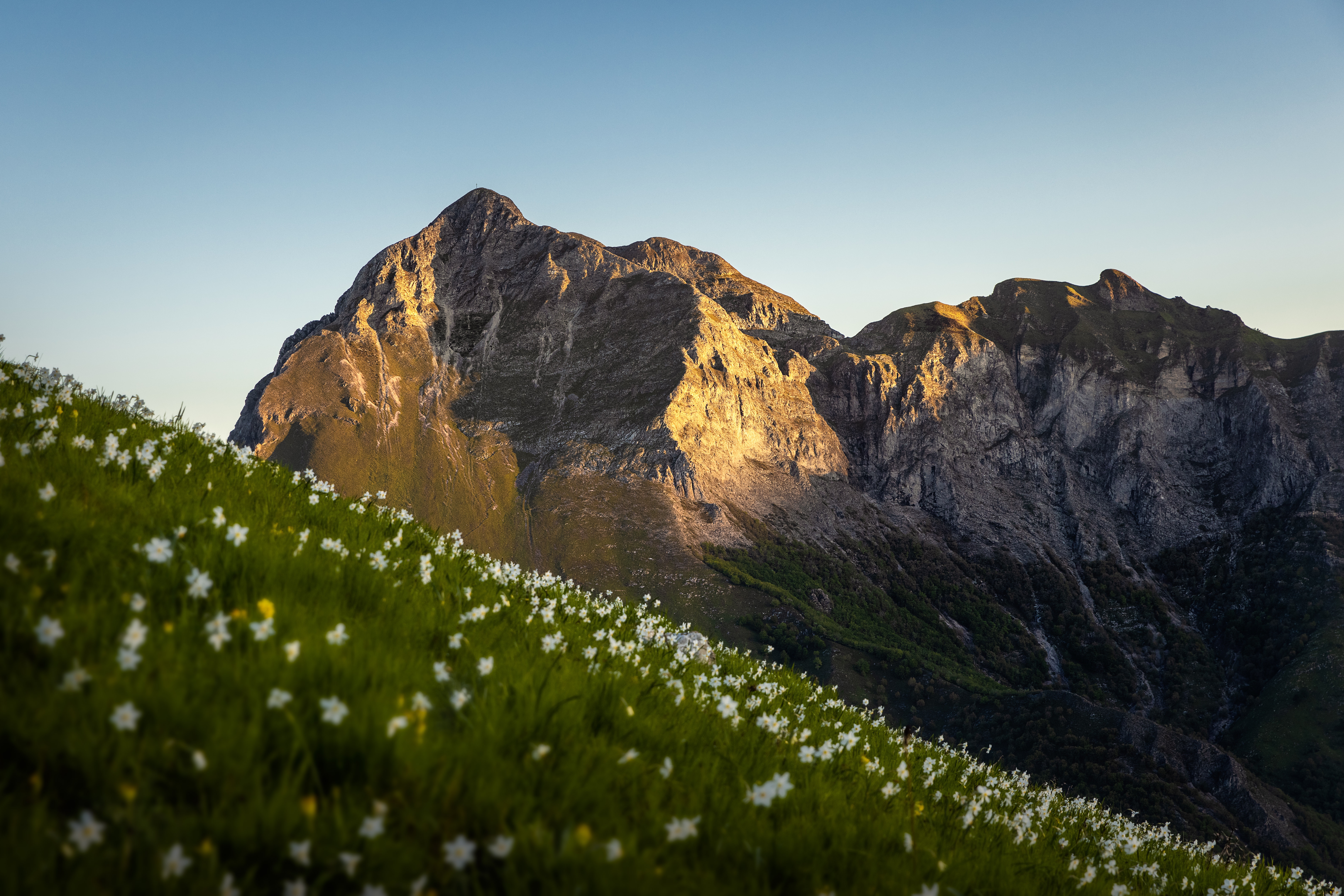
Man mano che si sale, la fatica si fa sentire. L’aria pungente strozza la gola, si respira a fatica. Ogni tanto ci fermiamo per fare qualche video e per riprendere fiato. Il paesaggio è mozzafiato già a metà percorso. Si comincia ad intravedere ciò che ci circonda, dato che il cielo sta pian piano schiarendo. È una piccola grande terrazza sulla Garfagnana. Continuiamo a salire più in alto ed incontriamo i primi narcisi fioriti. Alzando lo sguardo, si intravede il pendio coperto da un enorme tappeto bianco, che con la flebile luce del mattino comincia a svelare tutta la sua bellezza.

Siamo quasi in vetta. Ai lati del sentiero è praticamente tutto bianco. Bellissimo. Non vediamo l’ora che venga fuori il sole. Intanto piazziamo il cavalletto e scattiamo le prime fotografie. Saliamo fino in cima, alla croce. Una nuda e semplice croce di ferro, che domina questo immenso paradiso. Da quassù si vedono le cime più importanti delle Alpi Apuane: la Pania, Il Procinto, il Prana e il Matanna. Sull’altro versante si intravede addirittura Portovenere e la Palmaria. Sembra di affacciarsi ad una finestra sull’infinito.

Posizioniamo le fotocamere scegliendo con cura la scena, in quanto il sole stare spuntare. La luce arriva di colpo, uscendo dalle nuvole basse sotto di noi. Il tappeto dei narcisi prende finalmente vita. Il bianco etereo dei fiori si scalda e si illumina. Il verde intenso dei prati vira repentinamente ad un giallastro intenso, come se, tutt’ad un tratto, qualcuno avesse cambiato il colore del mondo. Bellissimo. Sembra di essere su un altro pianeta. I primi scatti sono quelli più euforici. Cerco di spostarmi velocemente e cambiare inquadratura, per poter sfruttare questi attimi brevi e preziosi. Alterno le foto alle riprese video. Sono ubriaco di emozioni e stupore.

Passati i minuti più belli di luce, torniamo in vetta. Dopo le classiche foto aperte e panoramiche, monto il teleobiettivo, che mi permette di immortalare pezzi di paesaggio più ristretti. Sotto di noi, un mare di nuvole sta pian piano salendo. E’ incredibile vedere come, lentamente, le case spariscano nella nebbia, come se venissero mangiate inesorabilmente dal nulla. Facciamo qualche foto e qualche time-laps.

La luce pian piano si fa sempre più dura. Il sole è alto, sopra di noi ormai. L’alba esala il suo ultimo respiro della giornata. Io e Claudio ci guardiamo. Non vorremmo, ma è ora di scendere. La mattinata ci ha regalato forti sensazioni. Oggi portiamo a casa molti scatti e ricordi. Sicuramente il prossimo anno non mi lascerò scappare un’altra occasione per tornare quassù. Spero che qualche pezzettino di emozione riesca a comunicarlo anche a voi, guardando questi scatti. Buona visione.

I had been hearing about the flowering of daffodils on Monte Croce for a long time, but I still hadn’t decided to go. A good place, for heaven’s sake, but I considered it one of the usual, classic, forced destinations of every self-respecting photographer. Honestly, it didn’t attract me that much, and the idea of ​​going up just to take a picture of the flowers has always made me put it off. This year I found a scrap of time and, with my friend Claudio, we decided to go. If I changed my mind on the initial idea that I had? Other than… I think this was, without a doubt, one of the most beautiful and interesting outings I’ve ever done.

Monte Croce is part of the Southern Apuan Alps, is located in the municipality of Stazzema and its peak reaches 1314 meters. It is so called because the four main ridges that form it intersect more or less perpendicularly to form a cross. Seen from afar, the mountain is definitely a huge hill of changing color according to the season: from the intense green in spring, to the reddish yellow in autumn, to the white in winter when it is covered by snow.

It has always been renowned for the beautiful flowering of daffodils in late spring, so much so that it is also known as the mountain of daffodils. At the top there is a very simple cross and you can enjoy a beautiful view especially of the Panie group, and on the opposite side of the slope, Versilia and the entire Tyrrhenian coast up to Liguria overlooks.

The departure is our usual morning, or better, night rise. 3:30 am the alarm rings. In May, the sun rises very early, so it’s a forced effort. I meet up with Claudio and we leave towards Palagnana. The road is narrow but well passable. We arrive at the top of the village, until the road ends. We park. Bag on the shoulder and torch lit on the head. Start the climb to reach the summit. It’s 5:03. The air is cold, humid. The sky still dark. Only in the distance is a clearer glow seen in the sky. We walk along the path, now clearly visible even at night, given the influx of people who come up here in this period.

As you go up, fatigue makes itself felt. The pungent air chokes the throat, it is difficult to breathe. Every now and then we stop to make some videos and to catch our breath. The landscape is breathtaking already halfway through. We begin to glimpse what surrounds us, since the sky is slowly clearing. It is a great little terrace on the Garfagnana. We continue to climb higher and meet the first flowering daffodils. Looking up, you can see the slope covered by a huge white carpet, which begins to reveal all its beauty with the faint morning light.

We are almost at the top. On the sides of the path it is practically all white. Beautiful. We can’t wait for the sun to come out. In the meantime, let’s set up the tripod and take the first photographs. We climb to the top, to the cross. A bare and simple iron cross, which dominates this immense paradise. From up here you can see the most important peaks of the Apuan Alps: the Pania, the Procinto, the Prana and the Matanna. On the other side you can even see Portovenere and Palmaria. It seems to look out a window on the infinite.

We position the cameras by carefully choosing the scene, as the sun is rising. The light comes suddenly, coming out of the low clouds below us. The carpet of daffodils finally comes to life. The ethereal white of the flowers warms up and lights up. The intense green of the meadows suddenly turns to an intense yellowish, as if, all of a sudden, someone had changed the color of the world. Beautiful. It seems to be on another planet. The first shots are the most euphoric ones. I try to move quickly and change shot, in order to take advantage of these short and precious moments. I alternate photos with video footage. I am drunk with emotion and amazement.
After the most beautiful minutes of light, we return to the summit. After the classic open and panoramic photos, I mount the telephoto lens, which allows me to capture smaller pieces of landscape. Below us, a sea of ​​clouds is slowly rising. It is incredible to see how houses slowly disappear into the fog, as if they were inexorably eaten up by nothing. Let’s take some photos and some time-lapses.

The light slowly gets harder and harder. The sun is high above us now. Dawn breathes its last breath of the day. Claudio and I look at each other. We don’t want to, but it’s time to get off. The morning gave us strong sensations. Today we bring home many shots and memories. Surely next year I will not miss another opportunity to come back up here. I hope that some little bit of emotion will be able to communicate it to you too, by looking at these shots. Good vision.

La primavera di Orciano Pisano

Ho già scritto diversi articoli riguardo questa fantastica location. Nonostante somigli molto alla Val d’Orcia, si trova molto più vicino a Lucca, dove abito, e non mancano anche qui spunti fotografici interessanti. Anzi… se hai la luce giusta a tuo favore, fai quasi fatica a scegliere il punto più bello dove puntare l’obbiettivo.

Stamani il mio amico Claudio si è unito per questa nuova uscita. Partenza ore 4:30. Un’ora di viaggio, percorriamo la nota strada bianca che ci immerge nella campagna, e ci posizioniamo nel primo spot, aspettando il sole che esca. Siamo ad Orciano Pisano, un piccolo comune nella provincia di Pisa. È una val d’Orcia in miniatura. Adoro fotografarla all’alba, in quanto io sole fa capolino da dietro i monti, illuminando man mano che passano i minuti, i contorni delle colline. Ed infatti, poco dopo, il sole esce, e comincia a dipingere il suo quadro. Si creano giochi di luci e ombre che ti tolgono il fiato. Spazi infiniti, colori e geometrie di ogni tipo si fondono insieme creando un’alchimia semplicemente perfetta. Ogni istante che trascorre, la luce cambia, le immagini si trasformano.

Proseguiamo il consueto giro. Lasciamo Orciano e ci spostiamo verso Santa Luce, il paesino accanto. Il paesaggio continua a sorprenderci, nonostante la luce adesso non sia delle migliori. Purtroppo il cielo si è leggermente velato di nuvole, che hanno ovattato la luce. Il lago è meraviglioso. un’invidia pazzesca mi prende osservando la casa sul lago. Che bellezza deve essere alzarsi la mattina ed aprire la finestra che si affaccia su questo paradiso.

La Toscana è senza dubbio una delle terre più belle da visitare. Specialmente in primavera, si veste di colori nuovi, sgargianti, dal verde smeraldo al rosso intenso, dal giallo luminoso fino all’arancio infuocato. Tutto sta perfettamente al proprio posto, come un opera di un rinomato artista.

Cambiamo di nuovo location. Una collinetta con un gruppo di cipressi in cima aveva attirato la nostra attenzione durante in viaggio di andata. Facciamo qualche volo con il drone, per riprendere il paesaggio da un’altra prospettiva. La luce non è affatto buona adesso. La mattinata è trascorsa veloce, ed il sole è ormai alto, le ombre sono dure e i contrasti troppo accentuati. Decidiamo, quindi, di rientrare. Abbiamo un sacco di foto.

Anche stamani, Orciano Pisano e le sue dolci colline ci hanno regalato una mattinata indimenticabile, Torneremo presto.

I have already written several articles about this fantastic location. Although it looks a lot like the Val d’Orcia, it is much closer to Lucca, where I live, and there is no shortage of interesting photographic ideas here too. On the contrary… if you have the right light in your favor, it’s almost hard to choose the most beautiful point where to point the lens.

This morning my friend Claudio joined for this new release. Departure at 4:30. An hour’s journey, we travel along the well-known white road that plunges us into the countryside, and we position ourselves in the first spot, waiting for the sun to come out. We are in Orciano Pisano, a small town in the province of Pisa. It is a Val d’Orcia in miniature. I love photographing it at dawn, as the sun peeks out from behind the mountains, illuminating the contours of the hills as the minutes go by. And in fact, shortly after, the sun comes out, and begins to paint his picture. Plays of light and shadow are created that take your breath away. Infinite spaces, colors and geometries of all kinds blend together creating a simply perfect alchemy. Every moment that passes, the light changes, the images are transformed.
We continue the usual tour. We leave Orciano and move towards Santa Luce, the village next door. The landscape continues to surprise us, despite the fact that the light is not the best now. Unfortunately the sky was slightly clouded with clouds, which muffled the light. The lake is wonderful. a crazy envy takes me looking at the house on the lake. What a beauty it must be to get up in the morning and open the window overlooking this paradise.

Tuscany is undoubtedly one of the most beautiful lands to visit. Especially in spring, it takes on new, bright colors, from emerald green to intense red, from bright yellow to fiery orange. Everything fits perfectly in its place, like a work of a renowned artist.

Let’s change location again. A small hill with a cluster of cypresses on top caught our eye on the outward journey. We do a few drone flights to film the landscape from another perspective. The light is not good at all now. The morning passed quickly, and the sun is now high, the shadows are hard and the contrasts are too accentuated. So we decide to go back. We have lots of photos.
Even this morning, Orciano Pisano and its rolling hills gave us an unforgettable morning, We’ll be back soon.