A spasso tra i Sassi

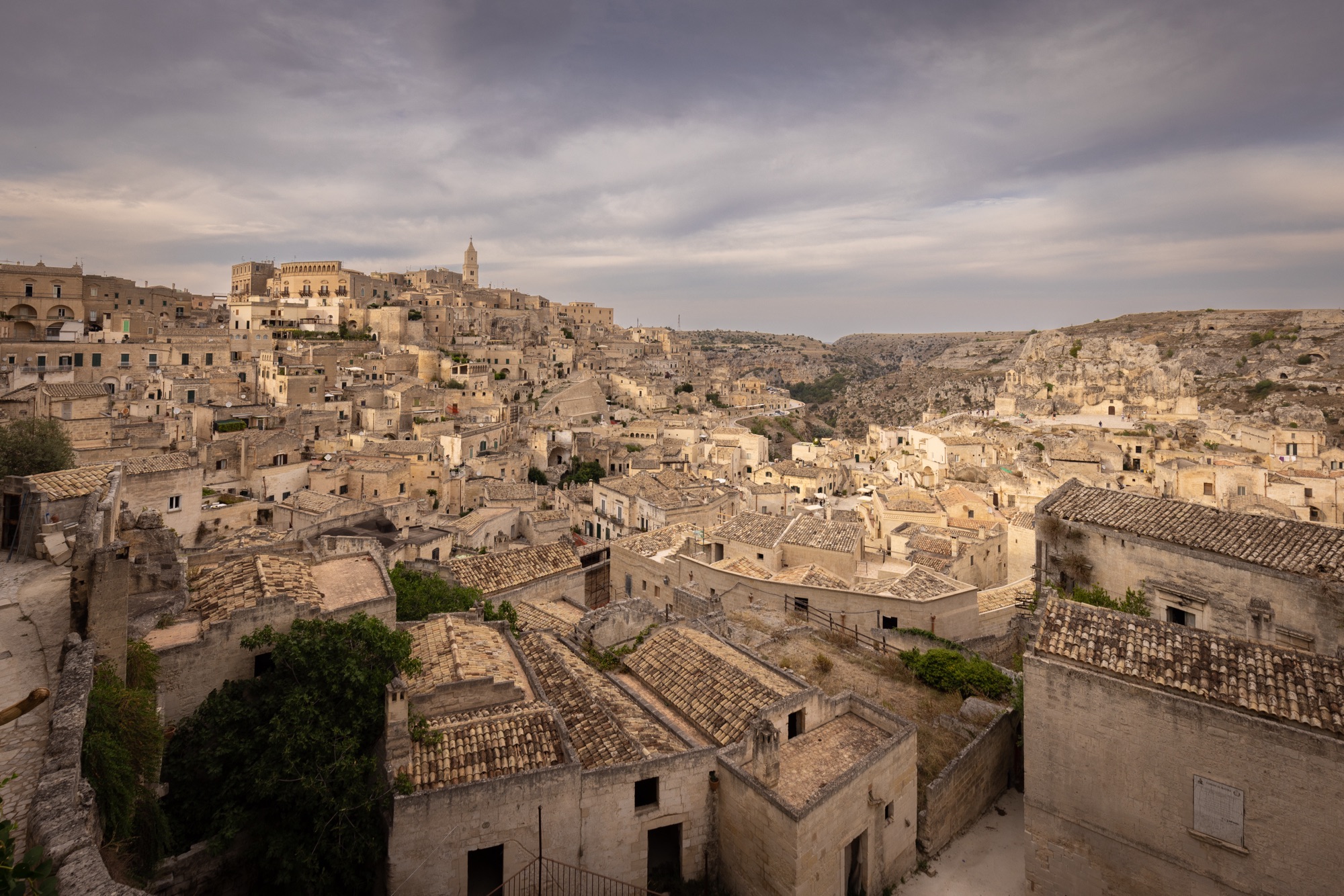
Se solo sapeste quanto ho desiderato vedere questa città… sono anni che ci penso. Troppo lontano. Troppo impegnativo. Ed invece eccomi qua… finalmente ho realizzato un piccolo sogno da tempo custodito nel mio cassetto del cuore: visitare e fotografare Matera.

Matera, la città dei sassi, non ha certo bisogno di presentazioni. Rappresenta una delle città ancora abitate più antiche al mondo. Dal 1993 fa parte del patrimonio dell’umanità dell’UNESCO.

Matera è la prima meta del viaggio/vacanze di questa estate. Partiamo di notte, per far riposare i bambini. Il viaggio è piuttosto impegnativo: sono 7 ore e mezza circa. Tutto sommato scorre comunque bene. Poco traffico. Buone condizioni meteo. Tutto come programmato. Arriviamo in centro a Matera alle 8:00 in punto la mattina. La città si è svegliata da poco. Parcheggiamo per raggiungere il centro e fare colazione. La prima cosa che cattura la mia attenzione, è il profumo del pane e dei dolci appena sfornati. Dalle panetterie, un forte aroma di pane appena cotto si propaga per le antiche viuzze della città.

Prima di fare colazione, entriamo in centro storico, affacciandoci dal belvedere di piazzetta Pascoli. La visuale di tutto il Sasso Caveoso si apre davanti ai nostri occhi con un fascino incredibile. Nonostante la luce sia piuttosto dura, è affascinante. Già prendo visione di alcuni scorci da fotografare nelle ore clou, all’alba e in notturna.

Prendiamo un caffè, per riprenderci dal lungo viaggio, e, sempre un po’ intontiti ci dirigiamo al nostro alloggio per rassettarci e riposare un poco, prima di esplorare a fondo la città.

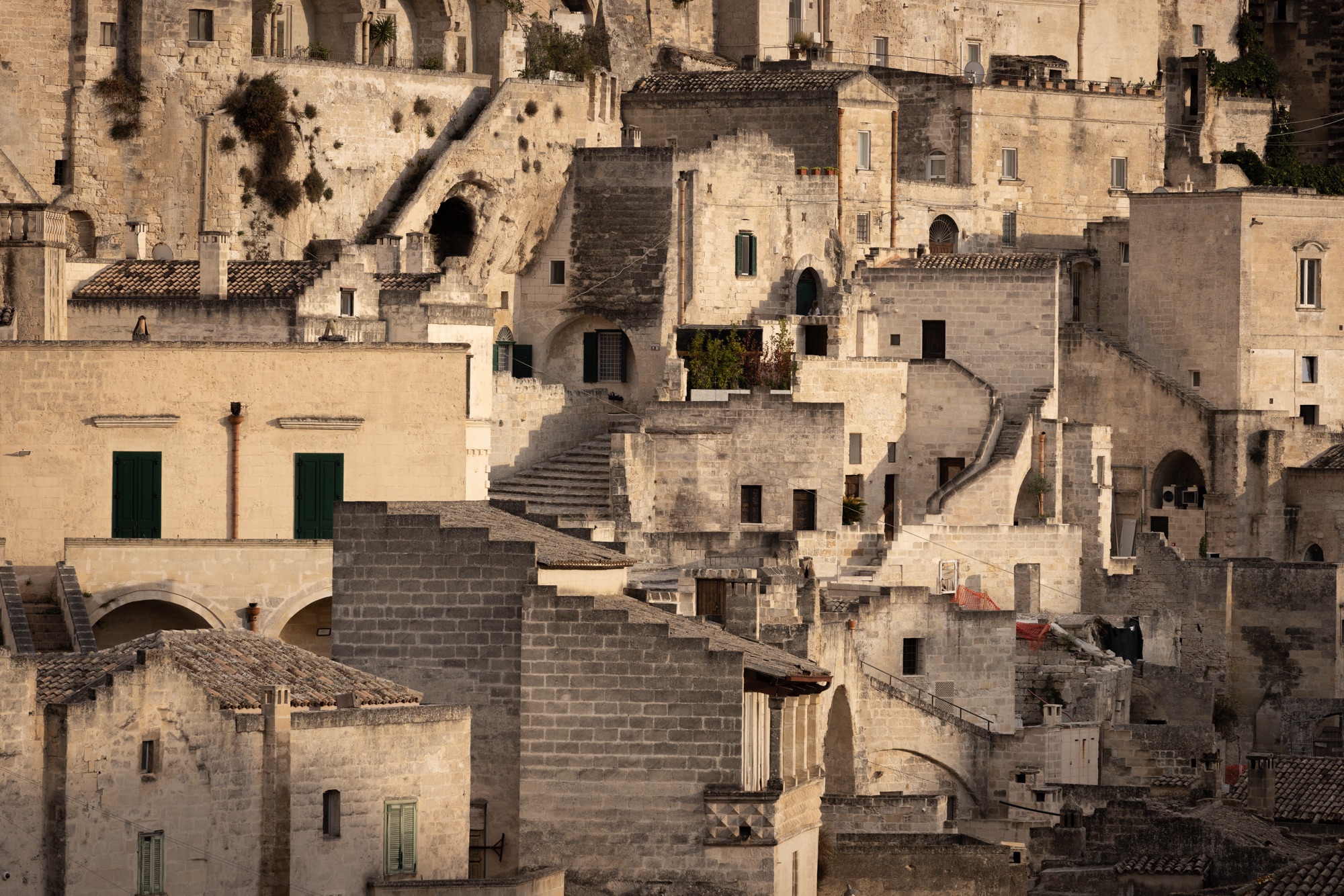
Nel pomeriggio ci addentriamo nelle viuzze del centro storico. Ci perdiamo letteralmente tra i vicoli del quartiere più antico: il Sasso Caveoso. Attraversiamo viuzze che si snodano tra le antichissime case/grotta, scavate nel tufo. L’atmosfera è incredibile. Pensare a quanti anni possa avere questa cittadina è da non credere. Saliamo e scendiamo scale e gradini. Ogni anfratto si collega ad una via che ci porta verso il centro. La città è composta da due rioni fatti a conca, il Sasso Caveoso ed il Sasso Barisano. Essi sono divisi l’uno dall’altro da uno sperone roccioso, la Civita, dove svetta la cattedrale ed i palazzi nobiliari.

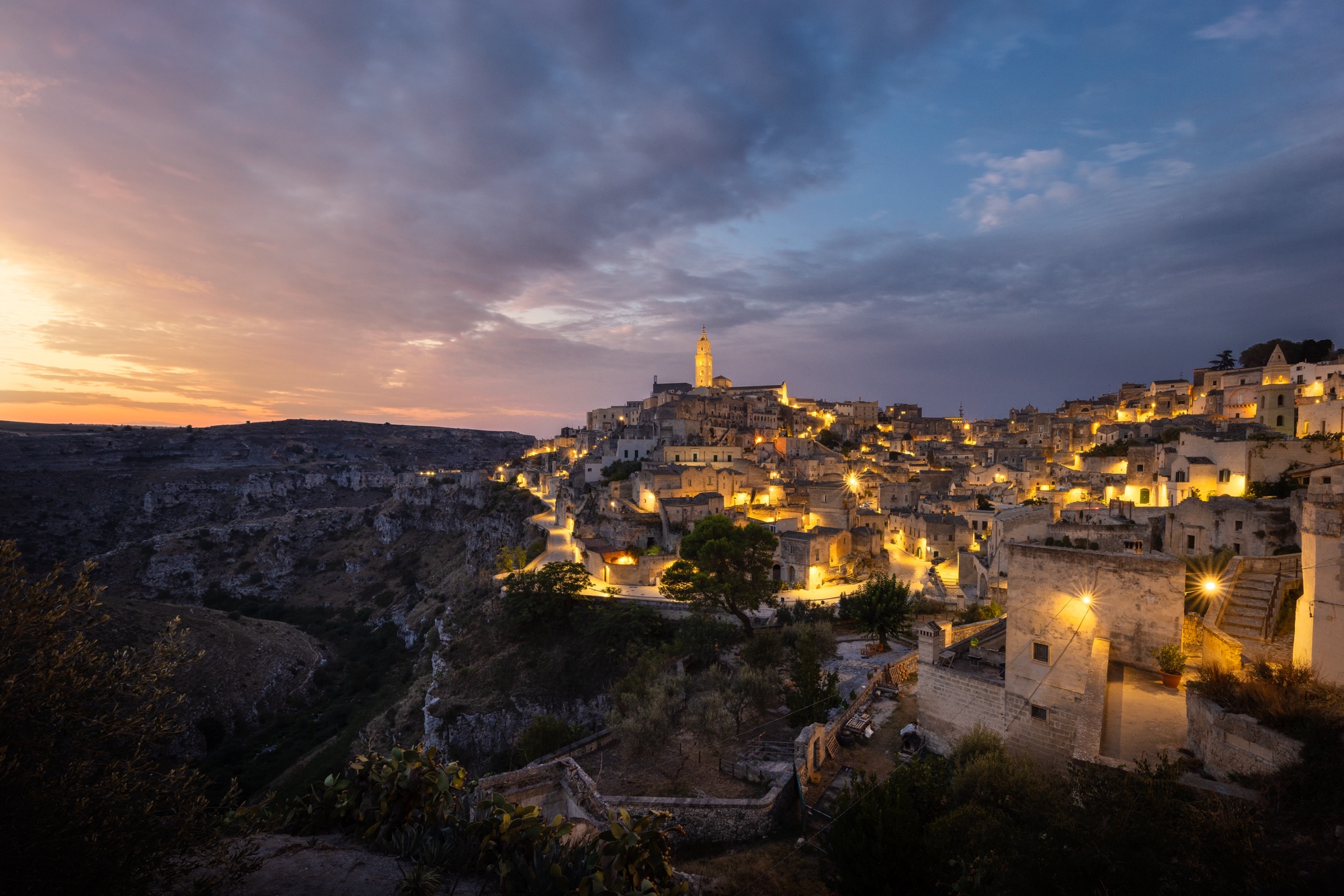
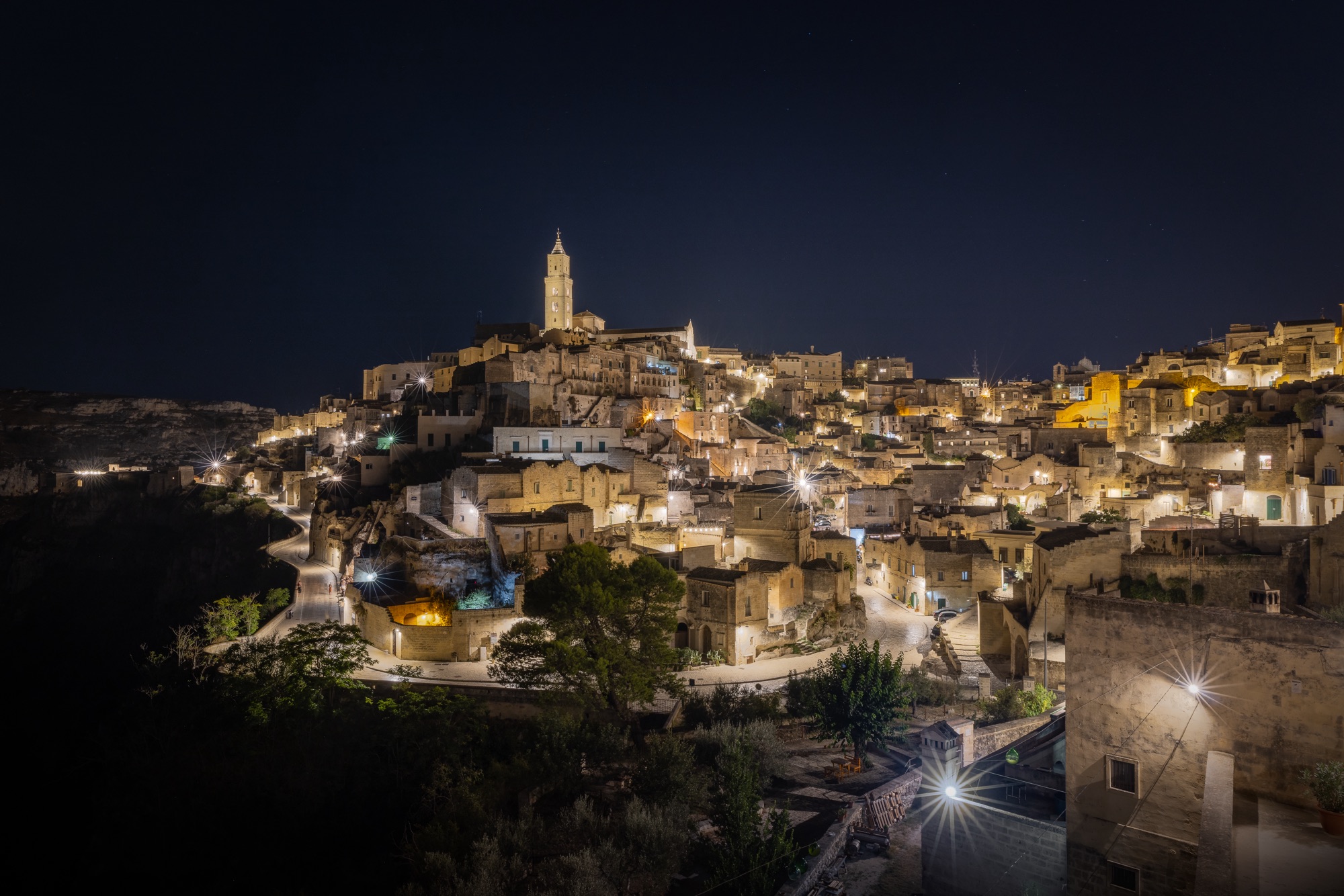
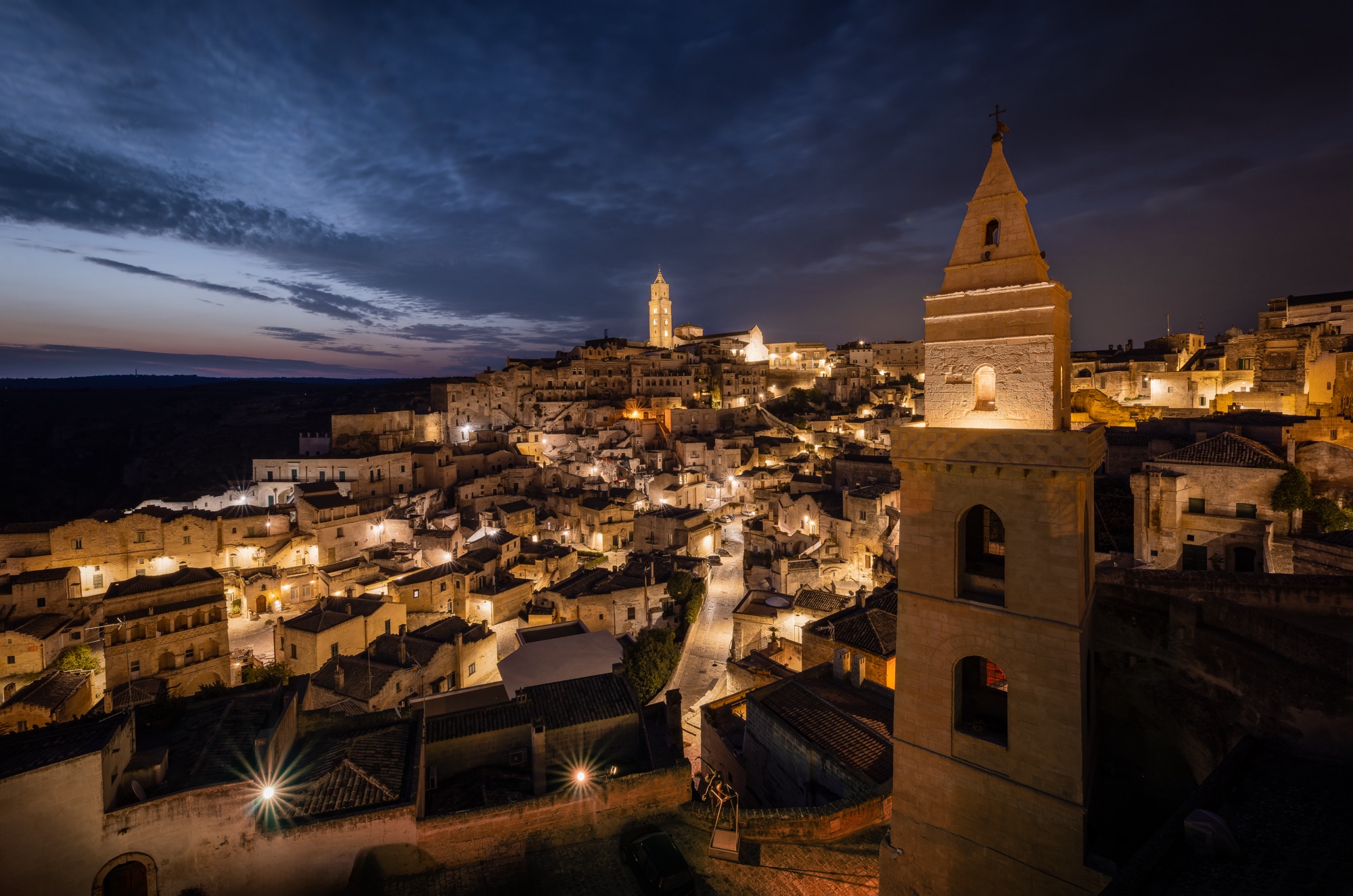
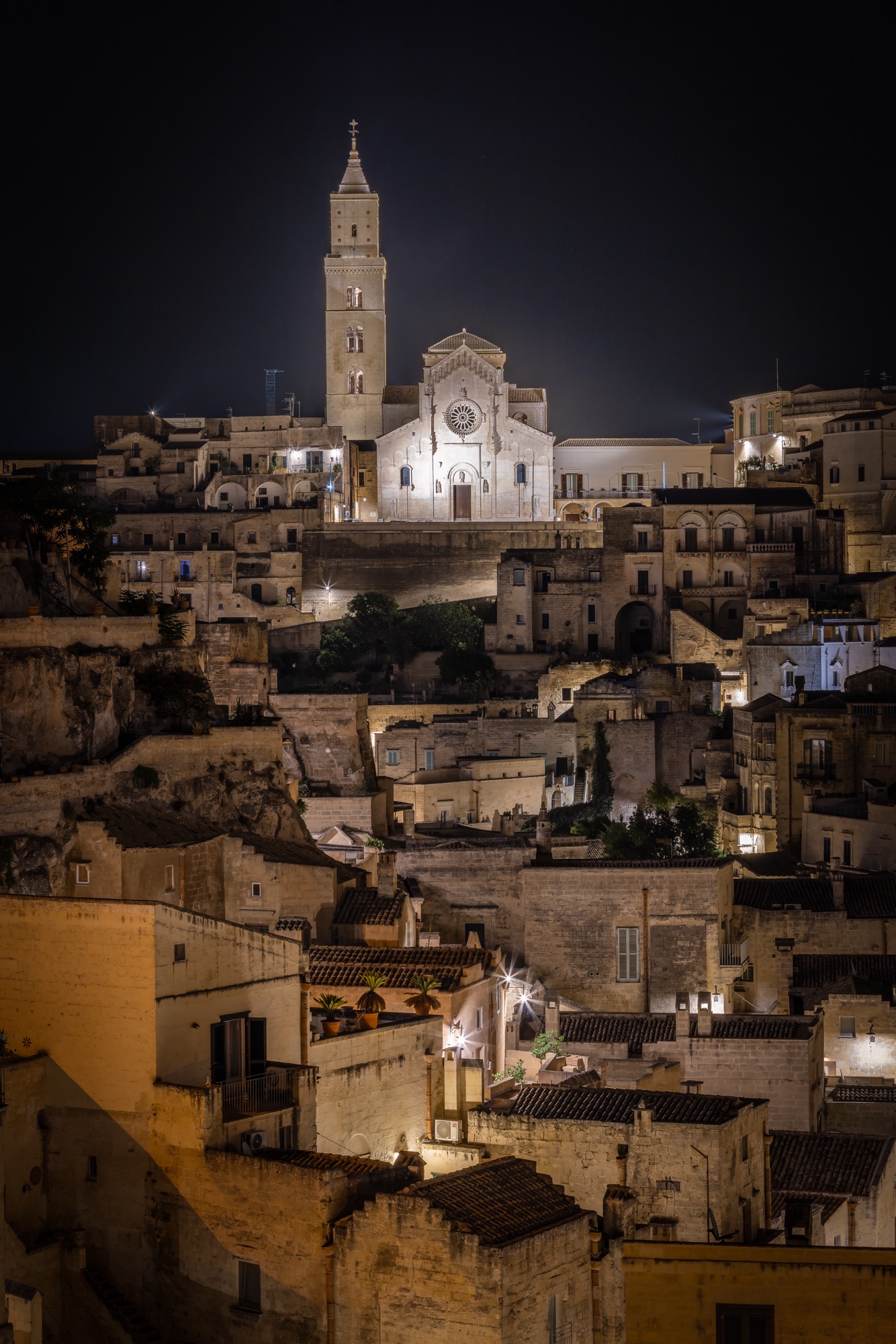
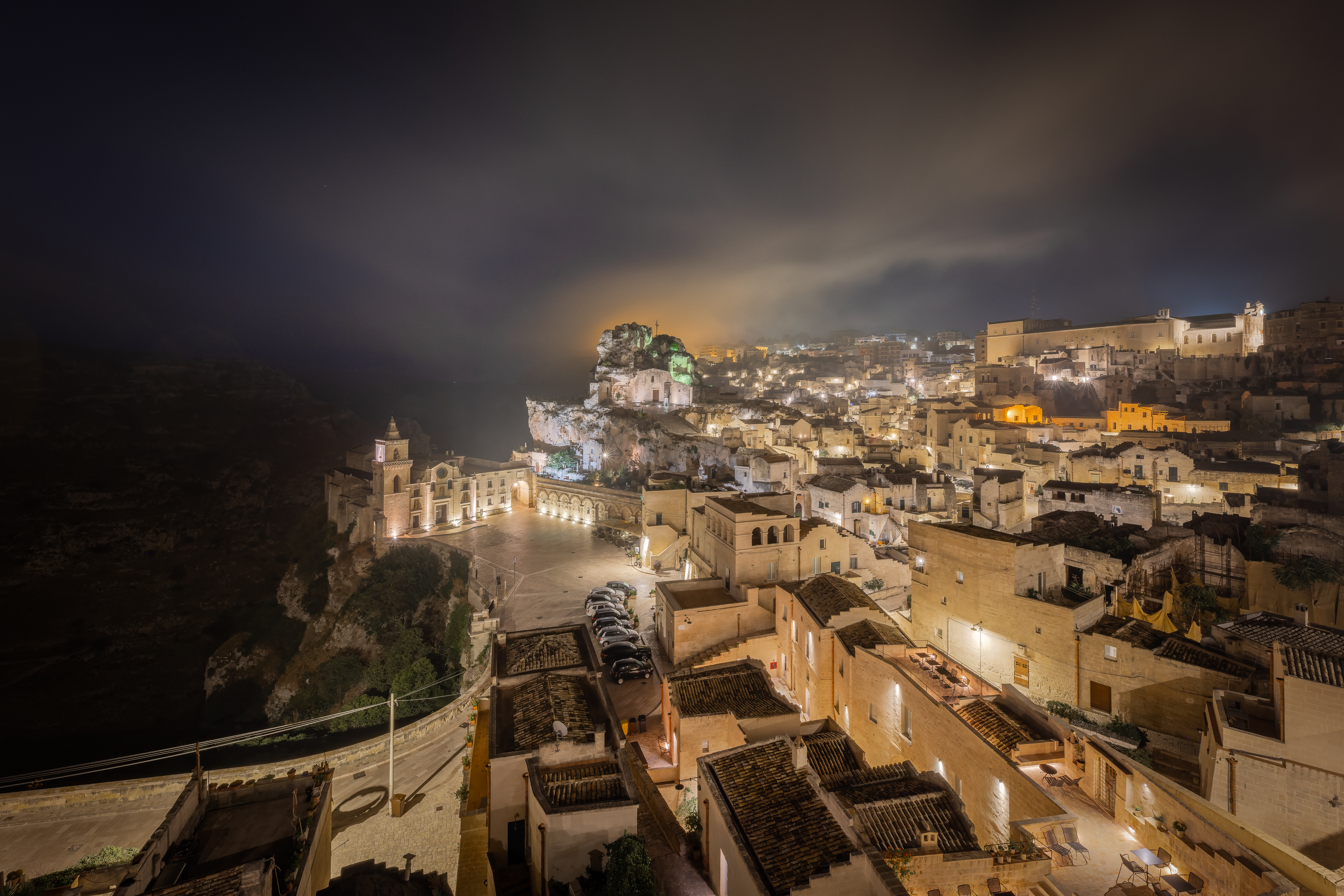
Gironzolando, arriviamo all’ora del tramonto, e la città comincia a manifestarsi in tutto il suo splendore. Il cielo comincia a colorare leggermente, le case sono tagliate da squarci di sole, e le ombre si proiettano le une sulle altre, si allungano, e donano ancora più tridimensionalità a questo conglomerato urbano. Man mano che l’oscurità avanza le luci della città si accendono una dopo l’altra, trasformando la città in un piccolo presepe vivente. Di notte Matera ha un fascino ineguagliabile. Le luci color arancio contrastano con le sfumature blu scure del cielo. Fotografarla di notte è un’esperienza incredibile. Andiamo finalmente a dormire, poche preziose ore per affrontare la mattinata successiva.

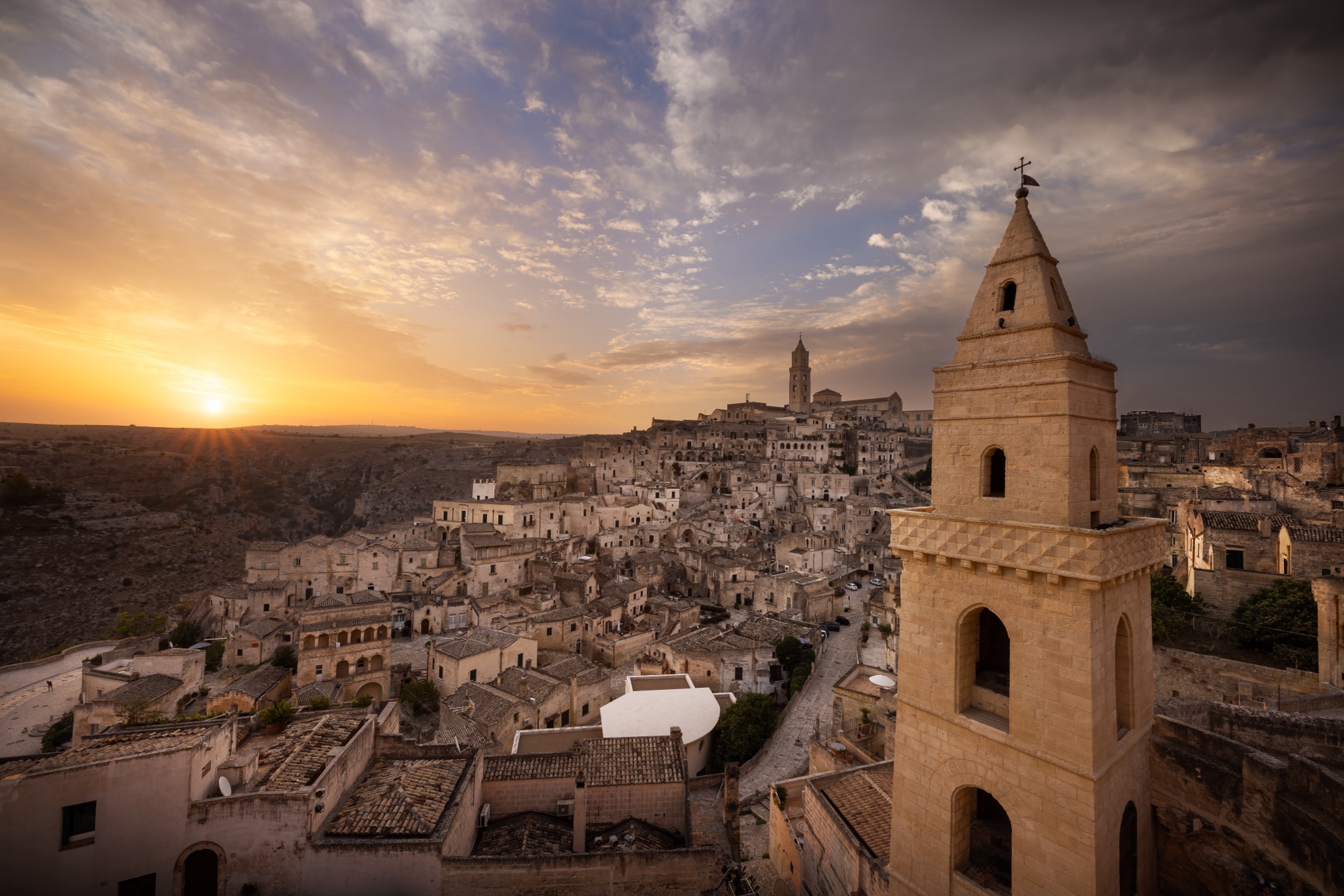
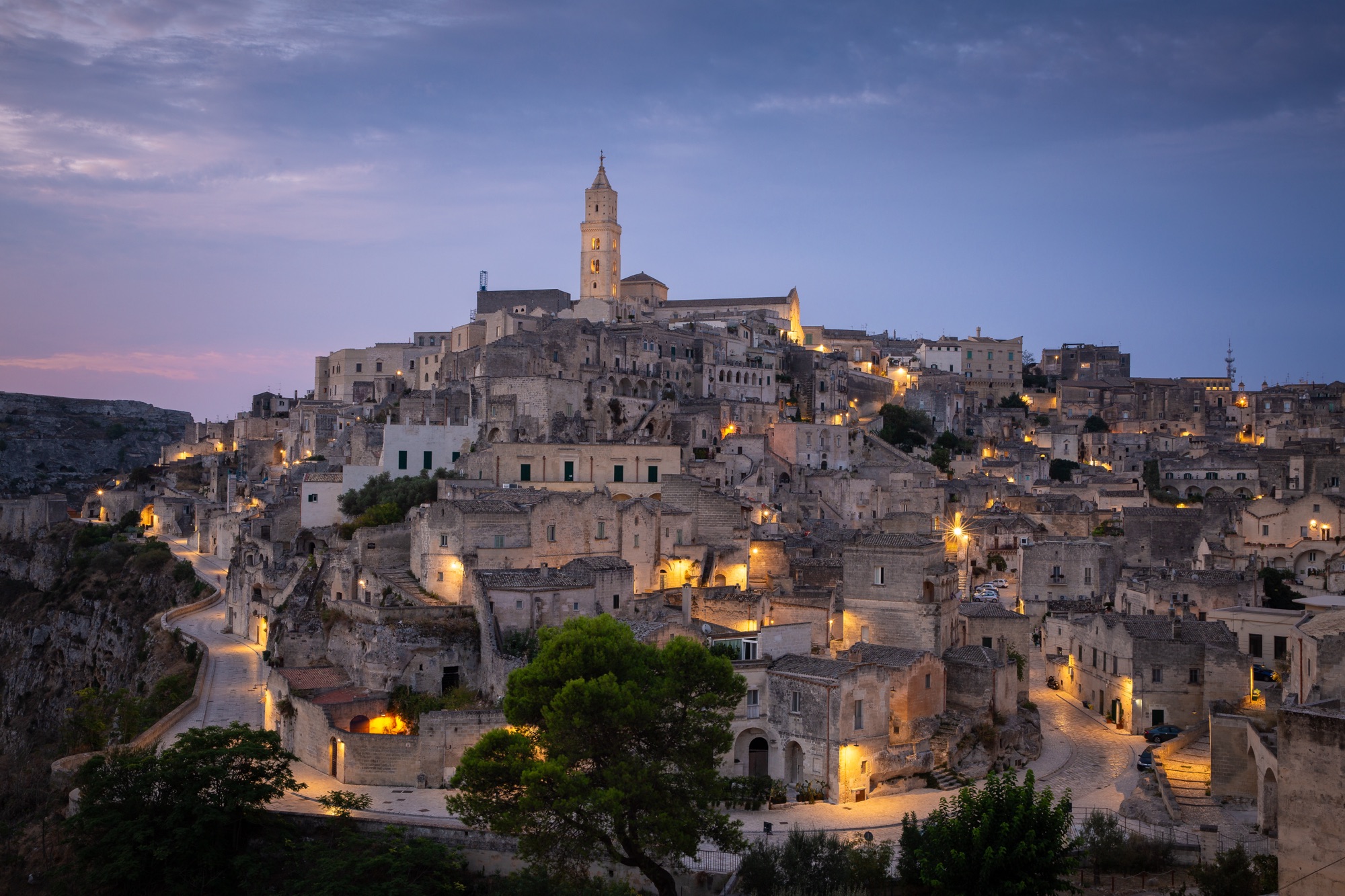
Ore 4:00. Suona la sveglia. Come di consueto mi alzo, stanco ma speranzoso di trovare delle condizioni ottimali. Passeggio in solitaria per il Sasso Barisano in cerca dei migliori scorci per immortalare la mia prima alba a Matera. Una delle prime foto che scatto, è dalla terrazza della chiesa di Sant’Agostino. Da questo punto, ho una visuale su tutto il Sasso Barisano. Il cielo mi assiste e mi regala una luce mozzafiato, con un cielo che si colora di mille sfumature diverse, dal giallo al viola, passando da un arancio ed un rosso intenso. Cambio postazione e cerco una composizione con entrambi i campanili. Anche questo scatto, subito dopo il sorgere del sole è da pelle d’oca. Continuo a girare e vedo composizioni interessanti ad ogni passo. Sono solo. Gli unici rumori che sento è il suono dei miei passi. Sembra che il tempo si sia fermato. La città ci mette un po’ a svegliarsi. E di questo ne approfitto per fotografare il posto, senza alcuna contaminazione umana.

Intorno alle nove di mattina decido di rientrare alla base. Sono pronto ad affrontare la classica giornata da turista con la famiglia. Durante le ore diurne, ne approfitto per visitare la città, i musei, le chiese. Cerco ispirazione e nuovi scorci da fotografare durante la notte e la mattina successiva. Nel tardo pomeriggio assistiamo ad un tramonto memorabile. Ci troviamo nella piazza di fronte alla cattedrale. Guardando ad ovest verso il Sasso Barisano, il cielo si tinge di mille colori. Quando il sole va giù, le luci delle case prendono vita ed affrontano una nuova oscurità, mentre, sopra i tetti, il cielo prende letteralmente fuoco. È un’emozione difficile da descrivere. Sono stato fortunato a poter immortalare questo momento.

Andiamo a cena. Anche il lato gastronomico ha il suo perché. Salumi, crostoni col pane di Matera, peperoni cruschi, la Cialledda, gli aperitivi. Tutto spettacolare. I sapori lucani sono davvero molto interessanti, decisi, croccanti. Dopo cena mi concedo qualche altro veloce scatto notturno durante la via del rientro. Posso coricarmi e riposare qualche ora. La sveglia è pronta a svegliarmi nuovamente alle 4 della mattina successiva.

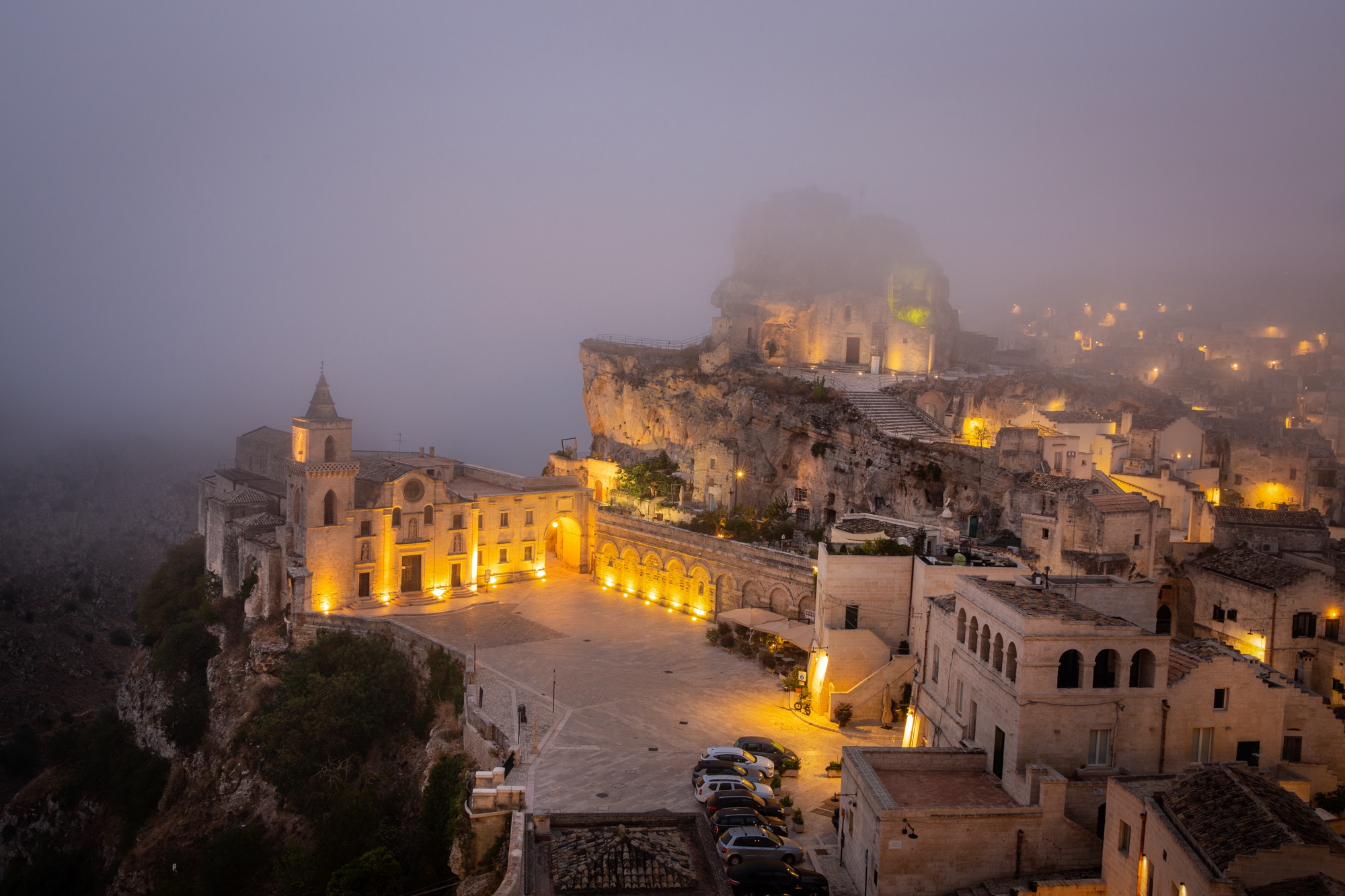
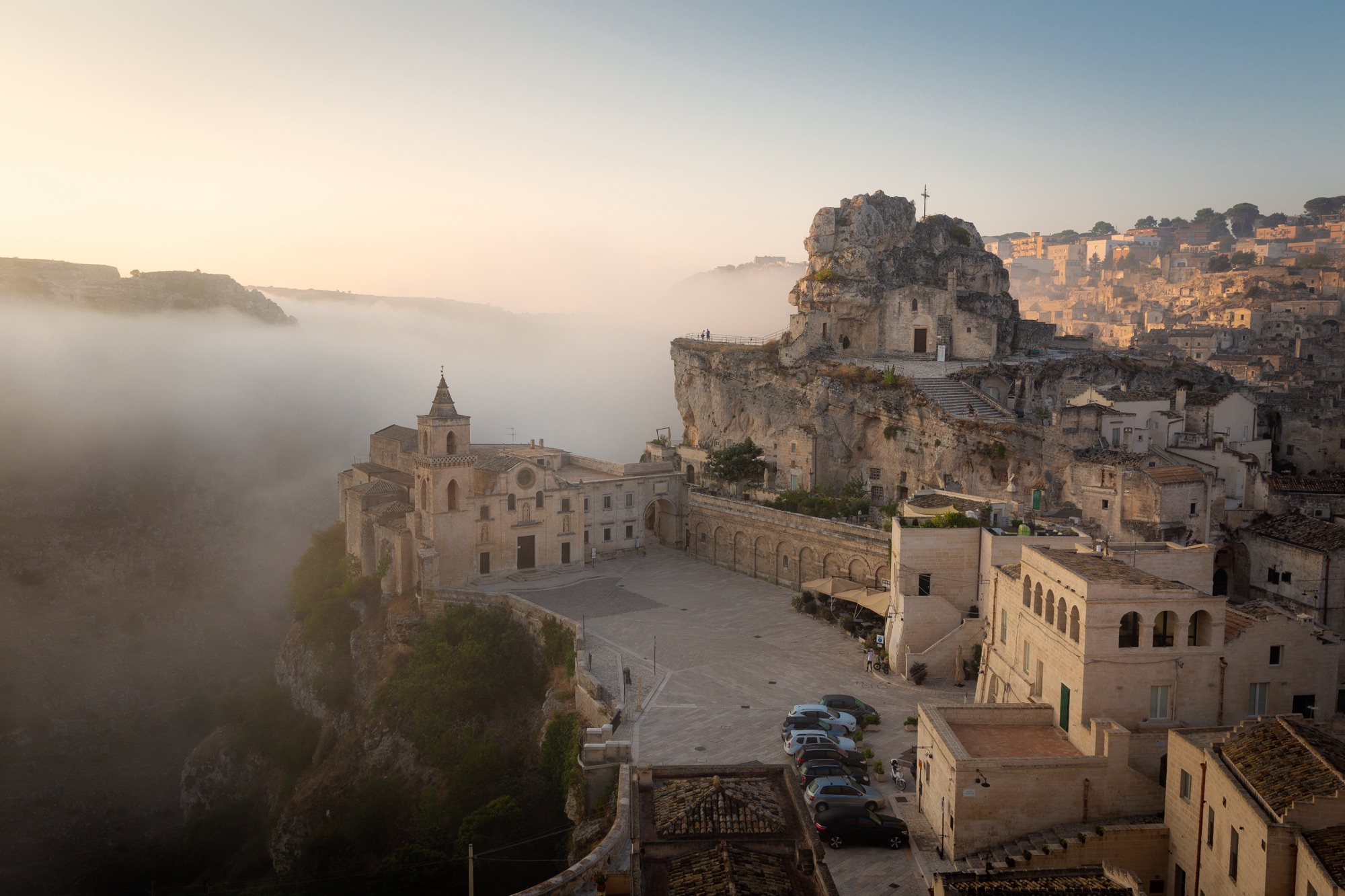
Drinnn… ci siamo. Ancora in piedi. Stavolta l’intenzione è esplorare il Sasso Caveoso, la parte più antica e più misteriosa di Matera. Il punto focale è senza dubbio la chiesa rupestre di Santa Maria di Idris. È un edificio scavato nella roccia, che si erge nella parte alta del Monterrone, una rupe calcarea che domina il Sasso Caveoso. Gironzolo senza sosta, cercando il punto più interessante da dove scattare. Aspetto con ansia il sorgere del sole, che illuminerà questo posto. Ma oggi il meteo mi fa un regalo enorme: la nebbia!!! Il primo chiarore del cielo si ovatta completamente. Questa nube biancastra rende tutto così etereo e così incredibilmente magico. Posiziono tutti gli attrezzi del mestiere. Ho due fotocamere, ed una videocamera per un bel time-lapse. Anche stamani sono solo. Soltanto più tardi, un gruppo di giapponesi mi si affianca, cercando di copiare i miei scatti, incuriositi dalle fotocamere appostate. Ciò che ho davanti è difficile da spiegare. La nebbia va e viene. Avvolge tutto e a volte rivela qualche dettaglio, che emerge timido davanti agli occhi. Quando nasce il sole sulla mia sinistra, il calore comincia ad asciugare l’umidità dell’aria, abbassando il muro di nebbia, che pian piano svanisce come un sogno, rivelando il paesaggio sotto i tenui raggi di sole, che illuminano i Sassi. Una meraviglia infinita. Non mi sarei nemmeno mai sognato di trovare queste condizioni. Mi sento davvero baciato dalla fortuna. Ringrazio e continuo il mio giro, cercando gli ultimi scorci prima di rientrare alla base.

Stamani è il giorno della partenza. Devo lasciare Matera. La mia vacanza prosegue, in direzione Puglia. A malincuore devo salutare questa meravigliosa città. Consapevole che un giorno tornerò a vederla e a fotografarla. Tornerò a fare scatti probabilmente con occhi diversi, a questo posto che invece, rimarrà immutato, come un piccolo mondo a sé, dove il tempo sembra essersi fermato da tanto. Matera… ti porterò sempre nel mio cuore. Arrivederci.

If you only knew how much I’ve wanted to see this city… I’ve been thinking about it for years. Too far. Too challenging. And yet here I am… I have finally realized a little dream that has been kept in my heart for a long time: visiting and photographing Matera.

Matera, the city of stones, certainly needs no introduction. It represents one of the oldest still inhabited cities in the world. Since 1993 it has been part of the UNESCO world heritage site.

Matera is the first destination of this summer’s trip/holiday. We leave at night, to let the children rest. The journey is quite demanding: it takes around 7 and a half hours. All in all it runs well though. Little traffic. Good weather conditions. Everything as planned. We arrive in the center of Matera at 8:00 sharp in the morning. The city has recently woken up. We park to reach the center and have breakfast. The first thing that catches my attention is the smell of freshly baked bread and desserts. From the bakeries, a strong aroma of freshly baked bread wafts through the ancient streets of the city.

Before having breakfast, we enter the historic center, looking out from the viewpoint of Piazzetta Pascoli. The view of the entire Sasso Caveoso opens before our eyes with incredible charm. Although the light is quite harsh, it is fascinating. I am already looking at some views to photograph during the peak hours, at dawn and at night.

We have a coffee, to recover from the long journey, and, still a little groggy, we head to our accommodation to tidy up and rest a little, before exploring the city in depth.

In the afternoon we enter the narrow streets of the historic center. We literally get lost in the alleys of the oldest neighborhood: Sasso Caveoso. We cross alleys that wind between the very ancient houses/caves, dug into the tuff. The atmosphere is incredible. Thinking about how old this town can be is unbelievable. We go up and down stairs and steps. Each ravine connects to a road that takes us towards the center. The city is made up of two basin-shaped districts, Sasso Caveoso and Sasso Barisano. They are divided from each other by a rocky spur, the Civita, where the cathedral and the noble palaces stand out.

Wandering around, we arrive at sunset, and the city begins to reveal itself in all its splendor. The sky begins to color slightly, the houses are cut by glimpses of sun, and the shadows are projected onto each other, lengthen, and give even more three-dimensionality to this urban conglomerate. As darkness advances, the city lights come on one after the other, transforming the city into a small living nativity scene. At night Matera has an unparalleled charm. The orange lights contrast with the dark blue shades of the sky. Photographing it at night is an incredible experience. We finally go to sleep, a few precious hours to face the next morning.

4:00 am. The alarm rings. As usual I get up, tired but hopeful of finding optimal conditions. I walk alone through Sasso Barisano in search of the best views to immortalize my first sunrise in Matera. One of the first photos I take is from the terrace of the church of Sant’Agostino. From this point, I have a view of the entire Sasso Barisano. The sky assists me and gives me a breathtaking light, with a sky that is colored with a thousand different shades, from yellow to purple, passing through orange and intense red. I change location and look for a composition with both bell towers. This shot, immediately after sunrise, also gives you goosebumps. I keep turning and see interesting compositions at every step. I’m alone. The only noises I hear are the sound of my footsteps. It seems that time has stopped. It takes a while for the city to wake up. And I take advantage of this to photograph the place, without any human contamination.

Around nine in the morning I decide to return to base. I’m ready to face the classic tourist day with my family. During the daytime, I take the opportunity to visit the city, the museums, the churches. I look for inspiration and new views to photograph during the night and the next morning. In the late afternoon we witness a memorable sunset. We are in the square in front of the cathedral. Looking west towards Sasso Barisano, the sky is tinged with a thousand colours. When the sun goes down, the lights of the houses come to life and face a new darkness, while, above the roofs, the sky literally catches fire. It’s a difficult emotion to describe. I was lucky to be able to capture this moment.

Let’s go to dinner. The gastronomic side also has its reasons. Cured meats, crostoni with Matera bread, bran peppers, Cialledda, aperitifs. Everything spectacular. The Lucanian flavors are really very interesting, decisive, crunchy. After dinner I treat myself to a few more quick night shots on the way back. I can lie down and rest for a few hours. The alarm is ready to wake me up again at 4am the next morning.

Drinnn… here we go. Still standing. This time the intention is to explore Sasso Caveoso, the oldest and most mysterious part of Matera. The focal point is undoubtedly the rock church of Santa Maria di Idris. It is a building carved into the rock, which stands in the upper part of Monterrone, a limestone cliff that dominates Sasso Caveoso. I wander around non-stop, looking for the most interesting point from which to shoot. I anxiously await the sunrise, which will illuminate this place. But today the weather gives me a huge gift: the fog!!! The first light of the sky is completely muffled. This whitish cloud makes everything so ethereal and so incredibly magical. I place all the tools of the trade. I have two cameras, and a video camera for a nice time-lapse. Even this morning I’m alone. Only later, a group of Japanese came alongside me, trying to copy my shots, intrigued by the cameras stationed there. What I have before me is difficult to explain. The fog comes and goes. It envelops everything and sometimes reveals some details, which emerge shyly before the eyes. When the sun rises on my left, the heat begins to dry the humidity in the air, lowering the wall of fog, which slowly vanishes like a dream, revealing the landscape under the soft rays of the sun, which illuminate the Sassi. An infinite wonder. I never even dreamed of finding these conditions. I feel truly blessed. I thank you and continue my tour, looking for the last glimpses before returning to base.

This morning is the day of departure. I have to leave Matera. My holiday continues, towards Puglia. Reluctantly I have to say goodbye to this wonderful city. Aware that one day I will return to see it and photograph it. I will probably return to take shots with different eyes, of this place which, however, will remain unchanged, like a small world in itself, where time seems to have stopped for a long time. Matera… I will always carry you in my heart. Until we meet again.

4:00 am. The alarm rings. As usual I get up, tired but hopeful of finding optimal conditions. I walk alone through Sasso Barisano in search of the best views to immortalize my first sunrise in Matera. One of the first photos I take is from the terrace of the church of Sant’Agostino. From this point, I have a view of the entire Sasso Barisano. The sky assists me and gives me a breathtaking light, with a sky that is colored with a thousand different shades, from yellow to purple, passing through orange and intense red. I change location and look for a composition with both bell towers. This shot, immediately after sunrise, also gives you goosebumps. I keep turning and see interesting compositions at every step. I’m alone. The only noises I hear are the sound of my footsteps. It seems that time has stopped. It takes a while for the city to wake up. And I take advantage of this to photograph the place, without any human contamination.

Around nine in the morning I decide to return to base. I’m ready to face the classic tourist day with my family. During the daytime, I take the opportunity to visit the city, the museums, the churches. I look for inspiration and new views to photograph during the night and the next morning. In the late afternoon we witness a memorable sunset. We are in the square in front of the cathedral. Looking west towards Sasso Barisano, the sky is tinged with a thousand colours. When the sun goes down, the lights of the houses come to life and face a new darkness, while, above the roofs, the sky literally catches fire. It’s a difficult emotion to describe. I was lucky to be able to capture this moment.

Let’s go to dinner. The gastronomic side also has its reasons. Cured meats, crostoni with Matera bread, bran peppers, Cialledda, aperitifs. Everything spectacular. The Lucanian flavors are really very interesting, decisive, crunchy. After dinner I treat myself to a few more quick night shots on the way back. I can lie down and rest for a few hours. The alarm is ready to wake me up again at 4am the next morning.

The Day After

Spesso, le uscite improvvisate sono quelle che ti gratificano di più. Spesso, sono proprio queste uscite che ti regalano degli scatti mozzafiato. Sarebbe il caso di assistere a queste condizioni… più spesso!!

Dato il peggioramento meteo preannunciato ne weekend, con un fronte temporalesco più o meno importante, mi è balenata per la testa la possibilità di andare a fotografare l’arrivo della tempesta, sperando di fotografare qualche fulmine. L’idea è stata talmente allettante che, anche il mio amico Cristiano non ha saputo resistere dalla tentazione di venire a scattare.

Non sono un grande esperto di meteo, ma, seppur ignorante in materia, stavolta tutte le previsione erano state abbastanza chiare. C’erano ottime condizioni per assistere ad un notevole evento temporalesco, con fulmini e nuvole abbondanti. All’ultimo minuto ci siamo organizzati, e, alle 2 di notte, siamo partiti in direzione Versilia.

La prima meta è stata il pontile di Lido di Camaiore. In effetti, appena arrivati, il cielo era abbastanza limpido, e, solo all’orizzonte, un ammasso di nuvole, con qualche lampo sporadico, si stava pian piano avvicinando. Condizioni super. Dopo poco che stavamo scattando, però, ci siamo resi conto che il “pian piano” si è trasformato in “veloce veloce”. In un attimo ha cominciato a piovere. Nemmeno il tempo di smontare l’attrezzatura e trovare riparo, che è venuto giù il mondo.

Ci siamo riparati alla meglio sotto al pontile, ma la pioggia battente, il vento, la sabbia, ha reso tutto molto complicato. Era praticamente impossibile muoversi e tornare alla macchina. Abbiamo dovuto attendere che si placasse un poco la pioggia, col rammarico di aver potuto scattare soltanto una fotografia al pontile.

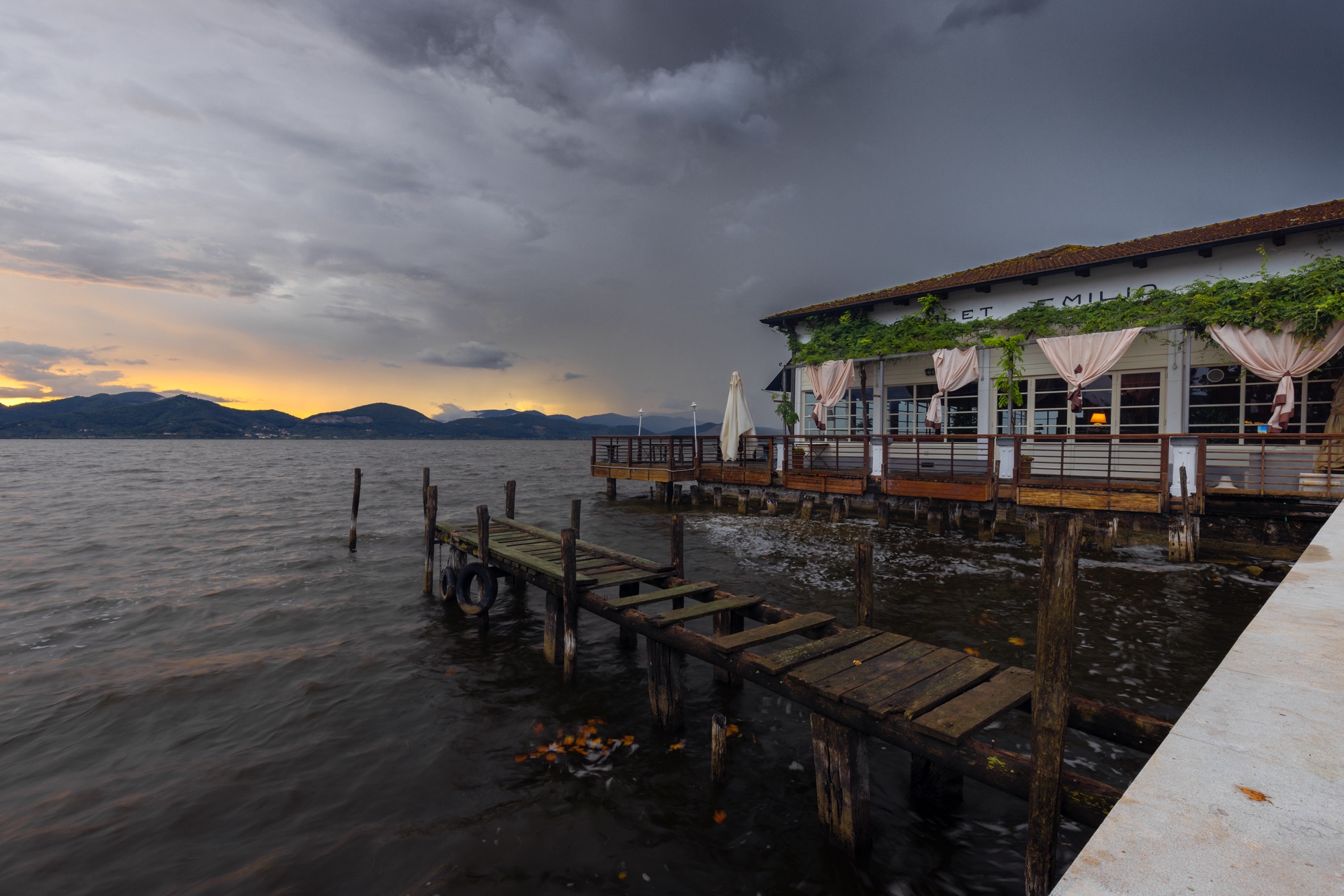
Appena possibile, siamo rientrati alla macchina ed abbiamo cambiato location, nella speranza di poter scattare al temporale senza essere nel punto esatto dove pioveva. Abbiamo scelto di dirigerci verso Torre del Lago Puccini, uno dei posti a cui sono più legato. Mi ha sempre regalato grandi scatti, ma stavolta non avevo aspettative cosi alte. Ed invece…

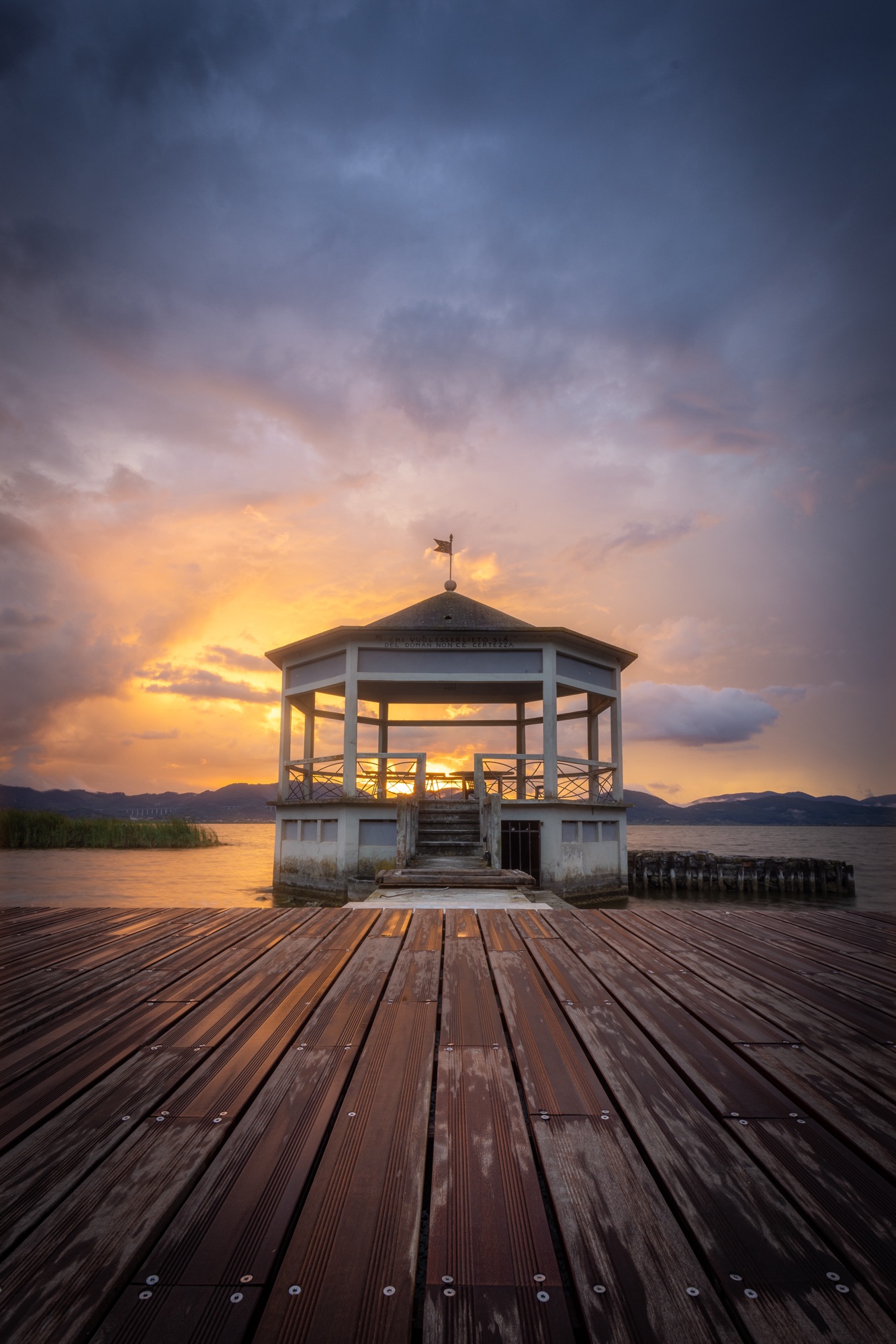
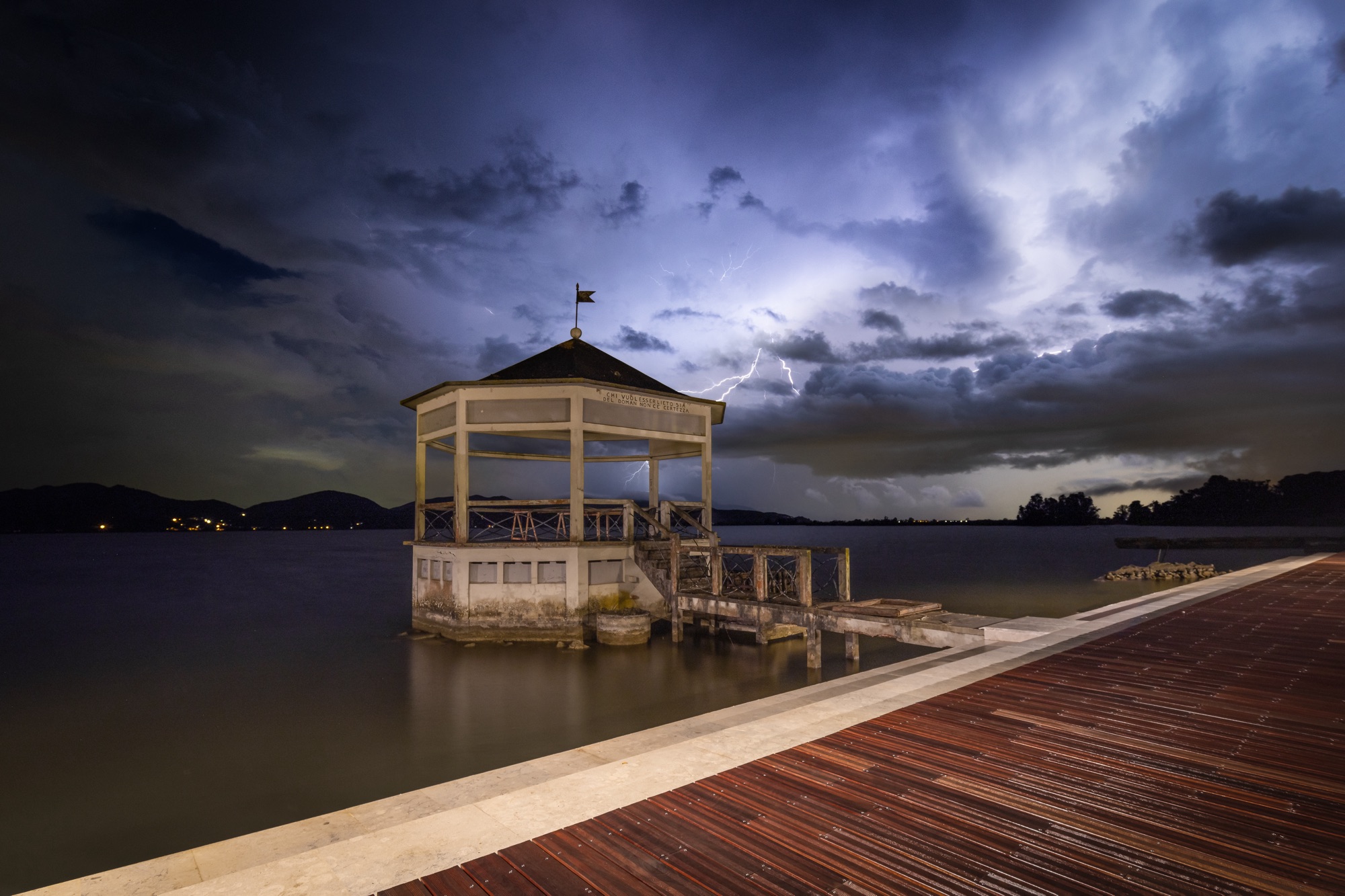
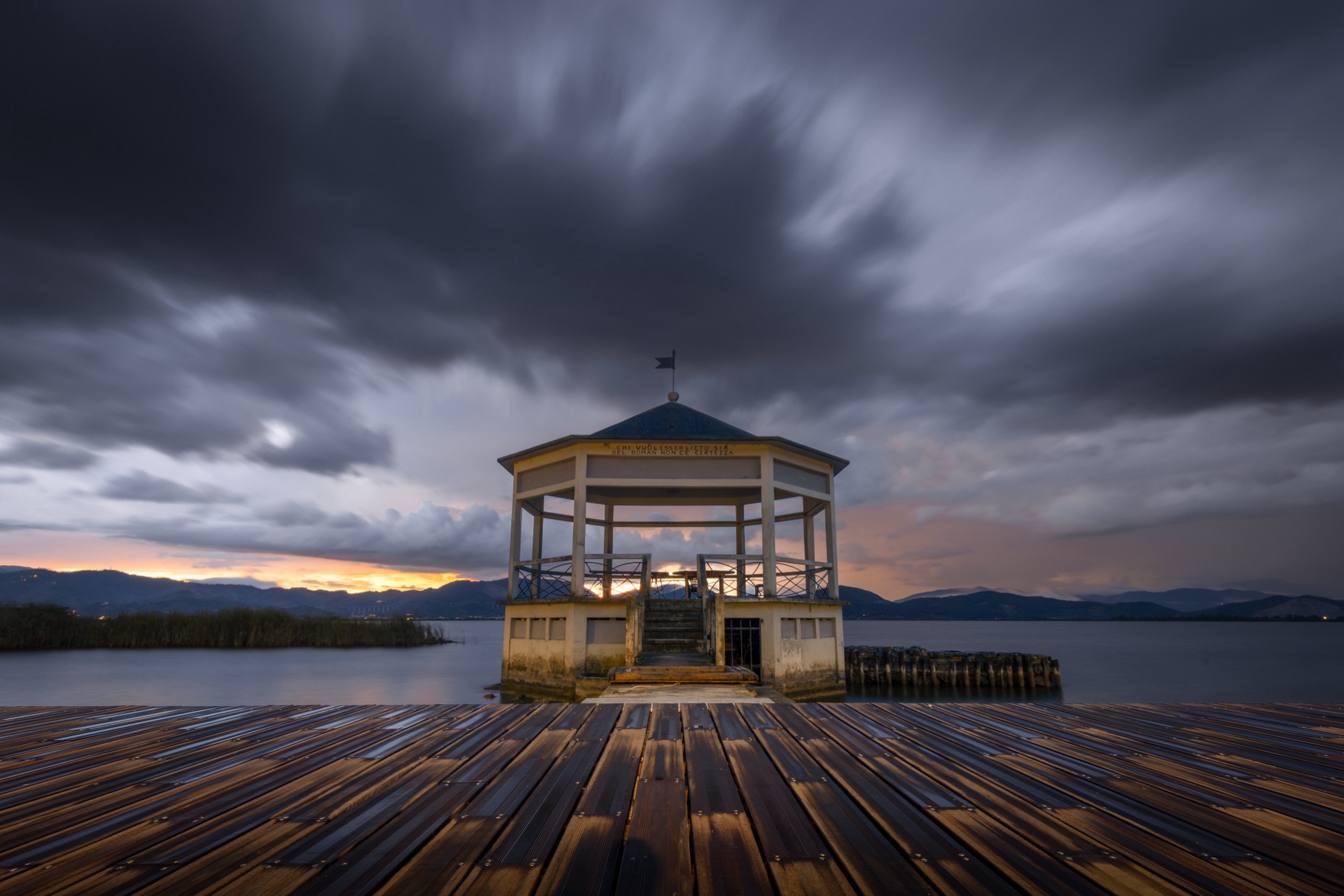
Arrivati in terrazza abbiamo capito subito che eravamo nel posto giusto, al momento giusto. I fulmini colpivano la parte a sud, e si stavano spostando man mano verso nord. Abbiamo piazzato la fotocamera lateralmente al “gazebo degli artisti”, e siamo riusciti ad immortalare qualche lampo. Le nubi si illuminavano da dietro, come un grande flash che davano luce sulla scena. Il viola e l’azzurro esplodevano nel cielo sopra le nostre teste trafitti da lingue luminose. Non eravamo affatto impauriti. Eravamo estasiati da cotanta potenza.

La parte più incredibile doveva ancora venire. Man mano che il tempo trascorreva ed il cielo si illuminava, ad est stava cominciando lentamente a schiarire. Ovviamente, già che eravamo li, abbiamo deciso di aspettare il sole, per vedere se, nonostante le nubi molto pesanti nel cielo, fosse sorto. Altroché!! Il cielo ha cominciato letteralmente a dipingersi di mille sfumature. Un arancio infuocato cangiava dai toni del giallo, al rosso fino alle velature violacee delle nuvole, a contrasto col bluastro del cielo che passava inesorabile dalla notte al giorno. Un vero tripudio di colori!

Trascorsi questi attimi fugaci, ma tuttora stampati nei nostri occhi e nel cuore, la pioggia ha ripreso copiosa la sua attività, facendoci letteralmente correre via lungo la via del ritorno. Una nottata indimenticabile. Credo di poter affermare che si tratti dell’alba più bella a cui abbia mai assistito.

Buona visione a tutti voi, cari lettori.

Often, impromptu outings are the ones that reward you the most. Often, it is precisely these outings that give you breathtaking shots. It would be time to witness these conditions… more often!!

Given the worsening weather forecast for the weekend, with a more or less significant storm front, the possibility of going and photographing the arrival of the storm, hoping to photograph some lightning, flashed through my mind. The idea was so tempting that even my friend Cristiano couldn’t resist the temptation to come and shoot.

I’m not a great weather expert, but, despite being ignorant on the subject, this time all the forecasts were quite clear. There were excellent conditions to witness a notable storm event, with lightning and abundant clouds. At the last minute we organized ourselves, and, at 2 am, we left towards Versilia.

The first destination was the pier of Lido di Camaiore. In fact, as soon as we arrived, the sky was quite clear, and, only on the horizon, a mass of clouds, with some sporadic lightning, was slowly approaching. Super condition. After a short time we were shooting, however, we realized that “slowly” turned into “fast fast”. In an instant it started raining. Not even time to dismantle the equipment and find shelter, before the world came crashing down.

We took shelter as best we could under the pier, but the pouring rain, the wind, the sand made everything very complicated. It was virtually impossible to move and get back to the car. We had to wait for the rain to subside a little, with the regret of having only been able to take one photograph of the pier.

As soon as possible, we returned to the car and changed location, in the hope of being able to shoot the storm without being in the exact spot where it was raining. We chose to head towards Torre del Lago Puccini, one of the places I am most attached to. He has always given me great shots, but this time I didn’t have such high expectations. And instead…

Once we arrived on the terrace we immediately understood that we were in the right place, at the right time. The lightning was hitting the southern part, and was gradually moving north. We placed the camera sideways to the “artists’ gazebo”, and managed to capture some flashes. The clouds lit up from behind, like a large flash that shed light on the scene. Purple and blue exploded in the sky above our heads pierced by luminous tongues. We weren’t scared at all. We were enraptured by such power.

The most incredible part was yet to come. As time passed and the sky brightened, it was slowly starting to lighten in the east. Obviously, while we were there, we decided to wait for the sun, to see if, despite the very heavy clouds in the sky, it had risen. Of course!! The sky literally began to be painted in a thousand shades. A fiery orange changed from shades of yellow to red up to the violet veils of the clouds, in contrast with the bluish of the sky which passed inexorably from night to day. A true riot of colours!

Once these fleeting moments had passed, but still imprinted in our eyes and hearts, the rain resumed its abundant activity, literally making us run away along the way back. An unforgettable night. I think I can say that it is the most beautiful sunrise I have ever witnessed.

Good vision to all of you, dear readers.

Le prime luci di San Gimignano

Era già un po’ che non facevo un’uscita fotografica così emozionante. San Gimignano rappresenta una delle mete più gettonate per chi adora volare con il drone. Si tratta di una dei pochi posti veramente spettacolari dove non ci sono limitazioni al volo.

L’idea è nata dal mio grande amico Claudio. Non era la prima volta che mi accennava del suo desiderio di andare a volare tra le torri di questo splendido borgo. Finalmente, una domenica mattina di questa estate, ci siamo decisi a partire, per affrontare con tutti i buoni propositi questa esperienza. Abbiamo chiamato Cristiano, che, come sempre, non ha saputo resistere alla tentazione di questa avventura e si è aggregato alla compagnia.

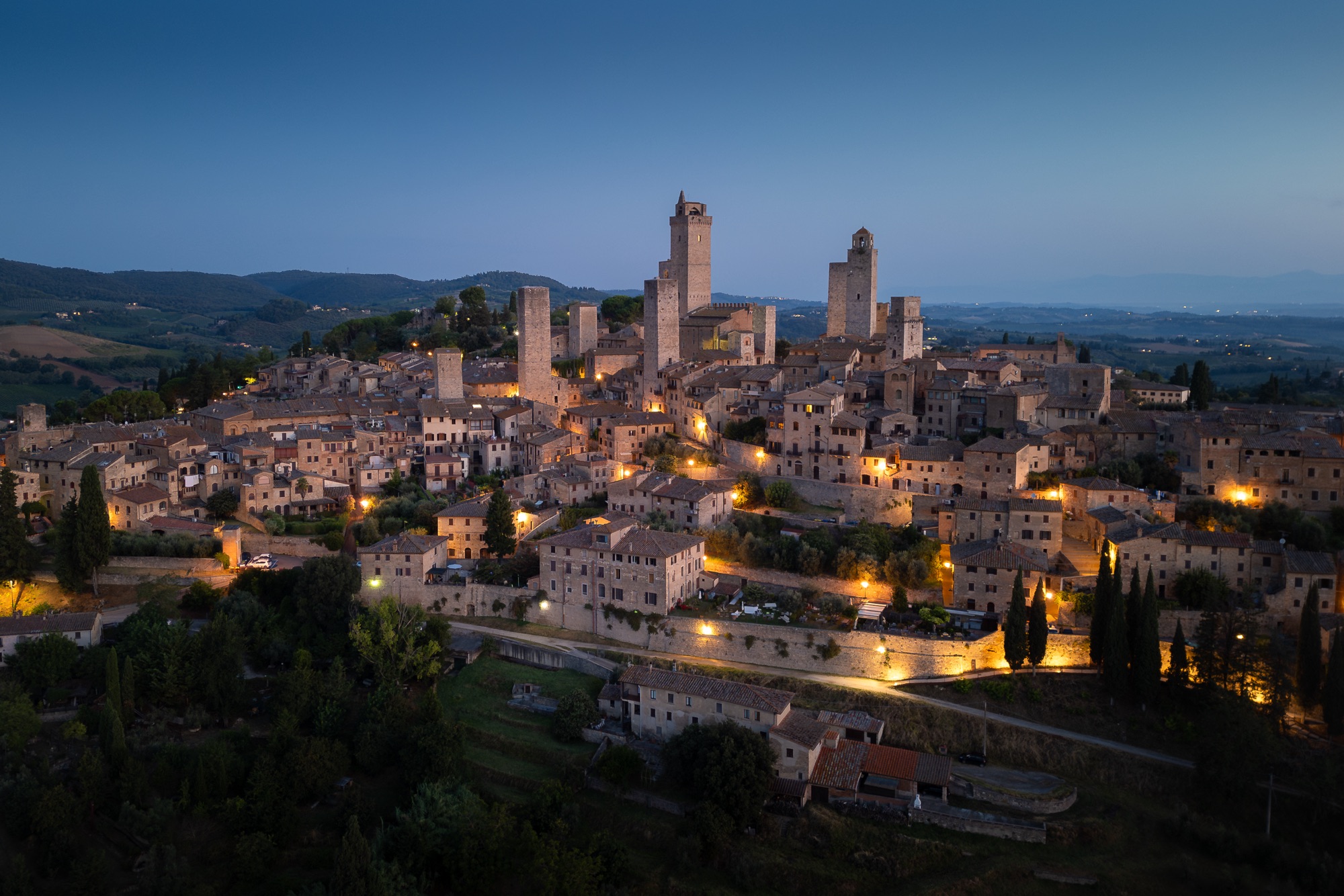
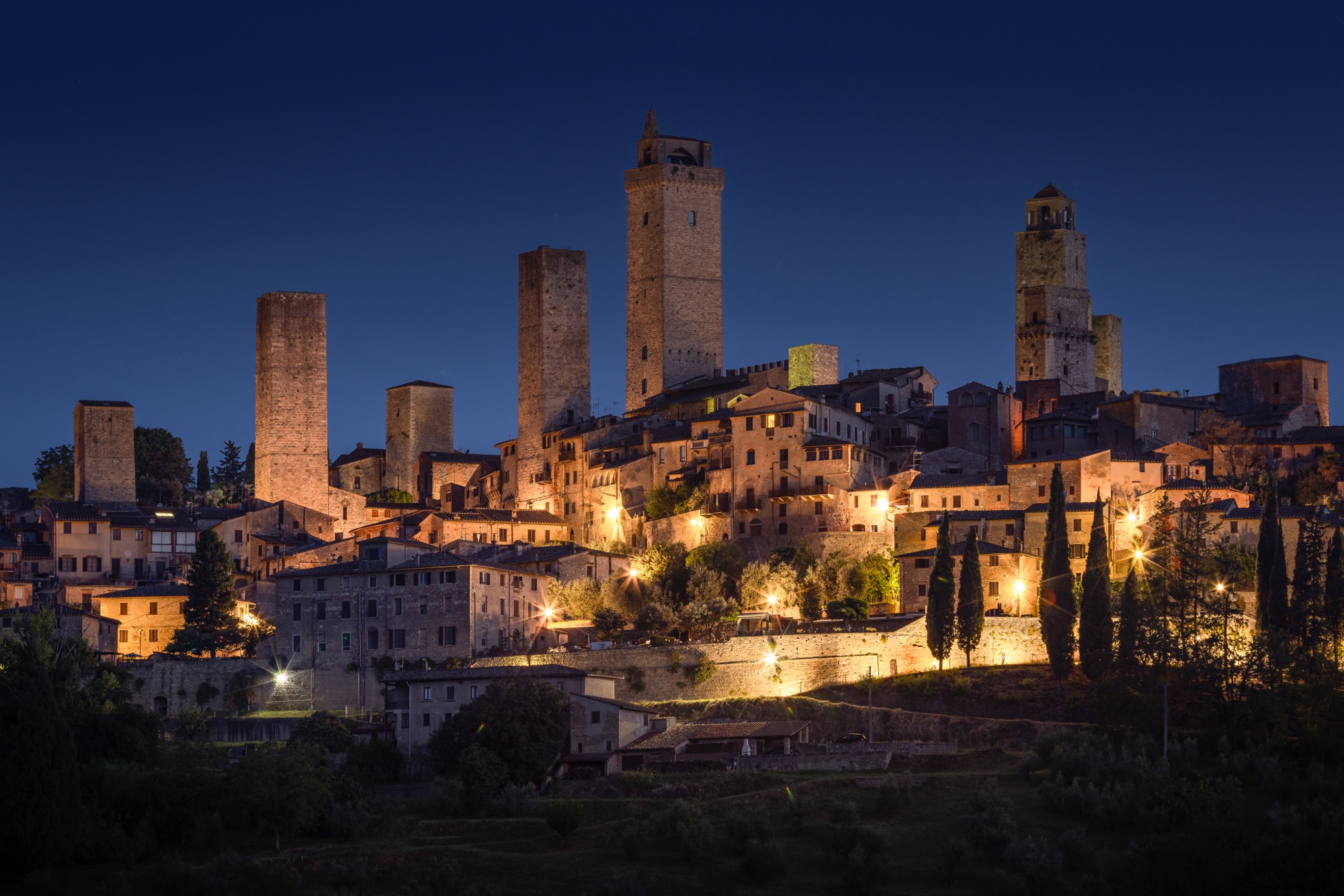
La partenza è stata un po’ rocambolesca, dato che, d’estate, l’orario in cui spunta il sole è la mattina presto. Per essere sul luogo circa un’ora prima dell’alba siamo partiti alle 3:00 di notte. Appena arrivati sul posto, abbiamo cercato un punto rialzato vicino al borgo, per riprendere le case e le torri illuminate dalle luci arancioni, a contrasto col cielo notturno sempre bluastro. abbiamo scattato delle immagini veramente evocative.

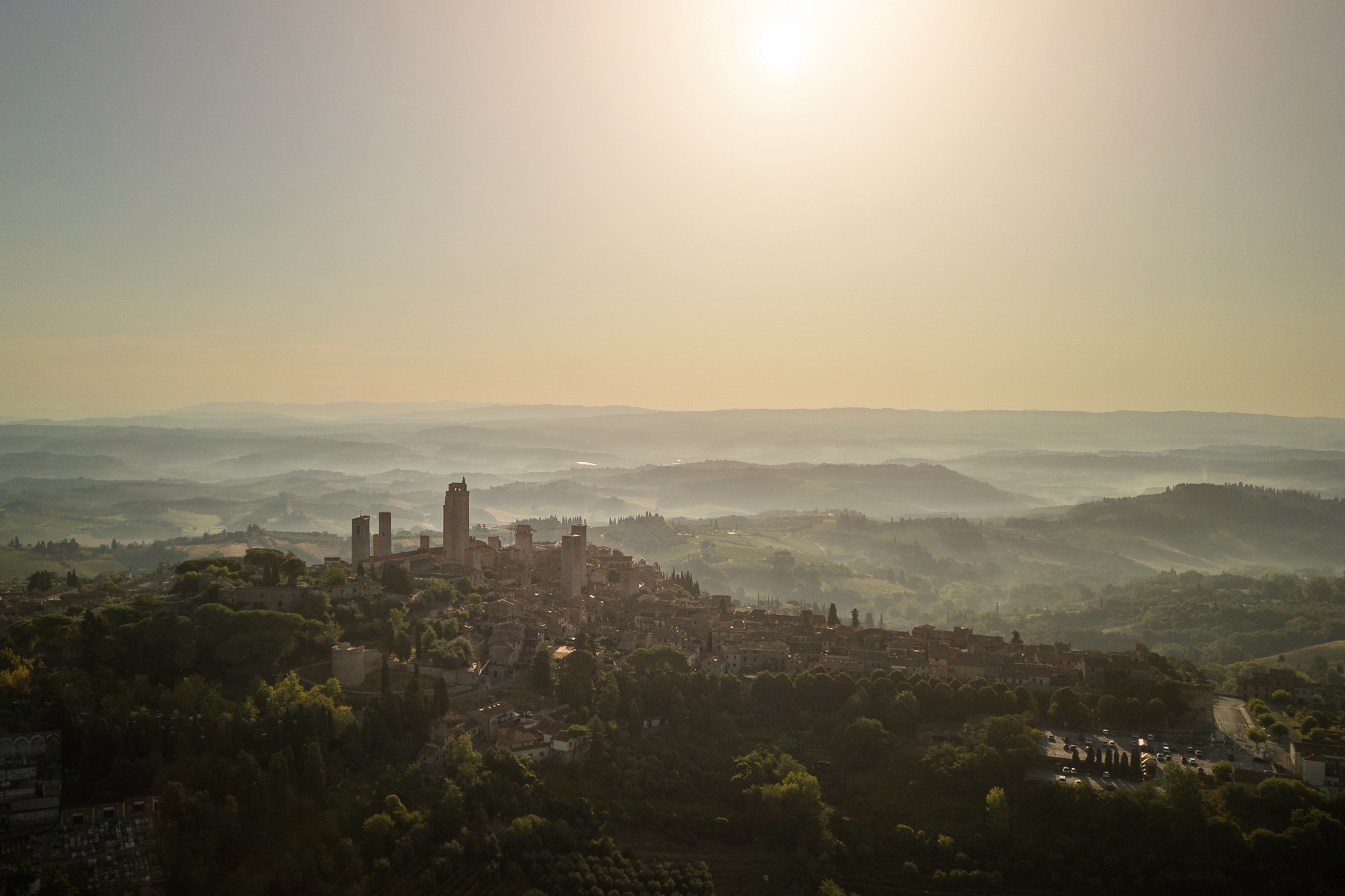
Quando poi abbiamo alzato il drone, sorvolando la cittadina, è stato praticamente magico. Uno spettacolo naturale a cielo aperto, Il borgo non è molto grande, e volarci intorno ci ha aprerto prospettive fotografiche diverse. Le luci calde a contrasto con le ombre, scure e fredde, non aspettavano altro di essere scacciate dalla luce del sole. Non c’era anima viva in giro a quell’ora. Tutto completamente deserto. Nessun rumore, se non il canto isolato di qualche civetta.

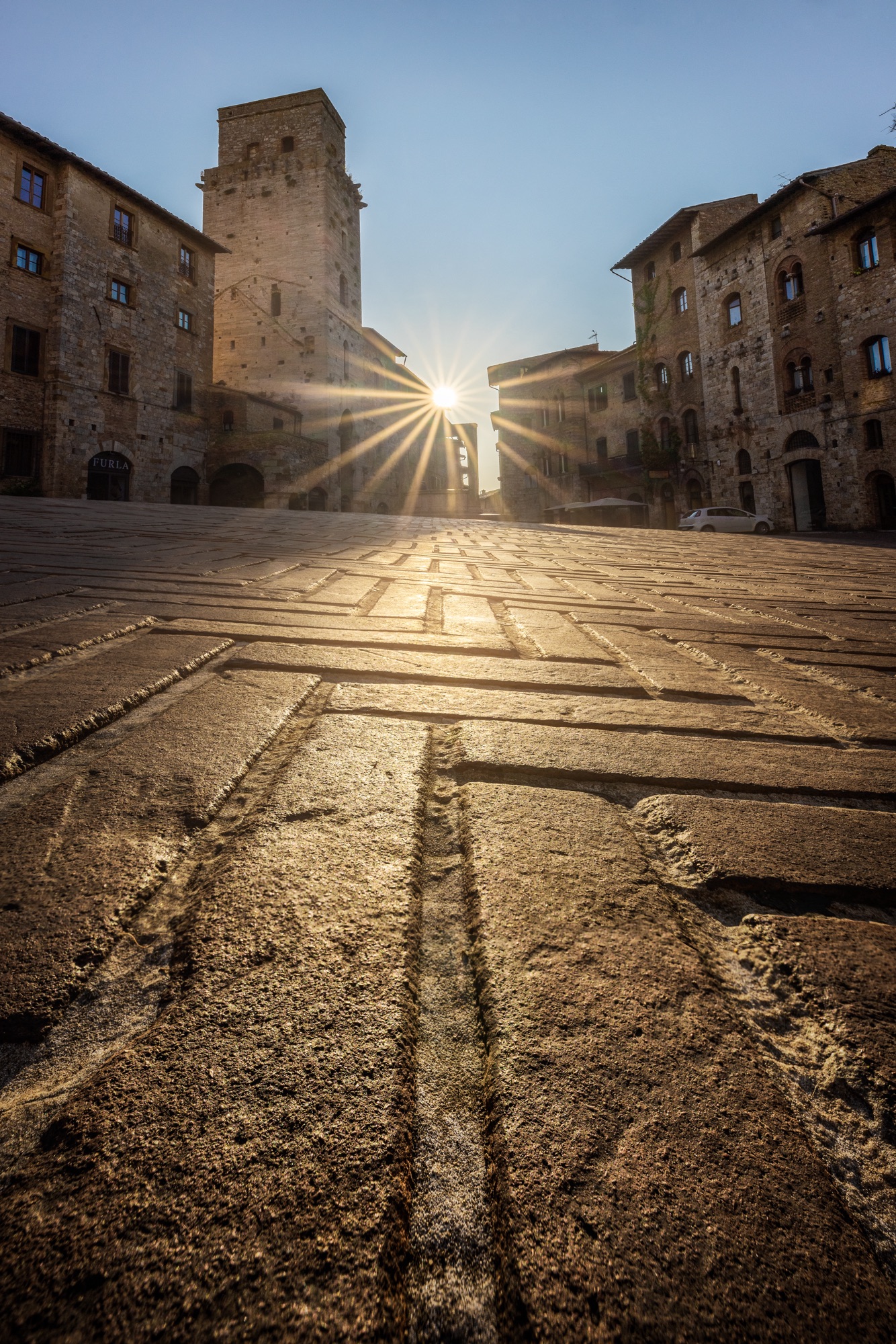
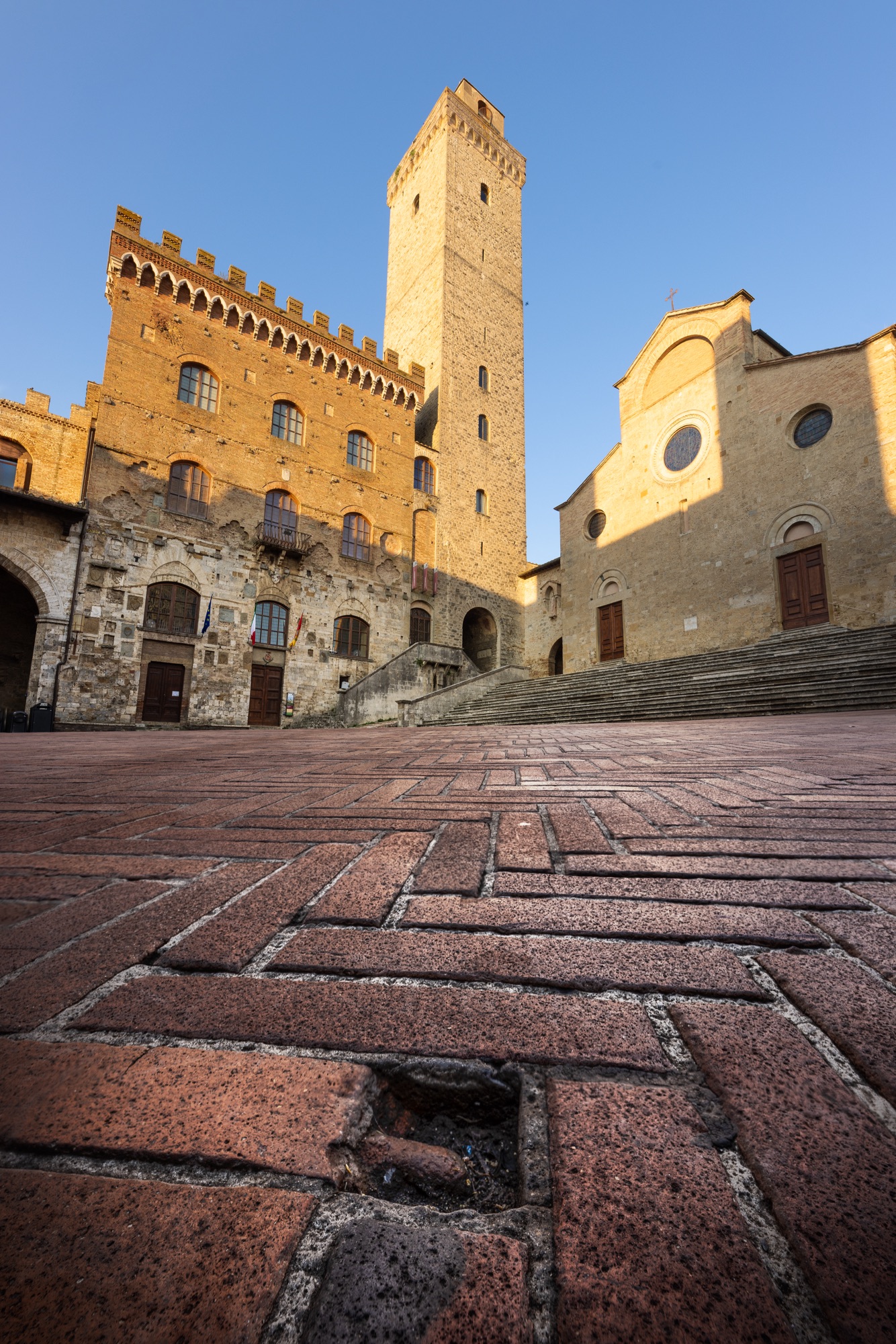
Abbiamo deciso di spostarci all’interno del paese, per poter ammirare le viuzze e le piazze ancora vuote. Il sole stava quasi per sorgere all’orizzonte, ed i primi raggi cominciavano ad illuminare le cime delle torri. Quando, da dentro il paese, abbiamo deciso di alzare nuovamente il drone in aria, il sole ha fatto capolino, e, quando i suoi raggi sono andati a colpire il lato est degli edifici, si sono creati giochi di luci ed ombre, con prospettive e profondità inimmaginabili. All’orizzonte una flebile nebbia tra le colline accarezzava il paesaggio tipico della Toscana, creando un contesto meravigliosamente armonico.

Abbiamo continuato ad ubriacare la nostra mente con questa pace estremamente appagante. Man mano che i minuti trascorrevano, i primi turisti sono comparsi sulla scena, e la loro stridula meraviglia riecheggiava tra i vicoli. Come piccoli ed inutili vampiri, siamo scomparsi subito dopo i primi attimi di luce. Quello che volevamo lo abbiamo ampiamente visto ed immortalato. Sono grato alla vita per questi piccoli, fugaci momenti. Sono grato alla mia terra, che ogni giorno svela le sue bellezze, come una giovane e tenera amante. Sono grato a chi, come i miei amici, amano condividere insieme questi attimi spensierati.

It’s been a while since I’ve done such an exciting photographic outing. San Gimignano represents one of the most popular destinations for those who love flying with a drone. It is one of the few truly spectacular places where there are no flight restrictions.

The idea came from my great friend Claudio. It wasn’t the first time he mentioned his desire to go flying among the towers of this splendid village. Finally, one Sunday morning this summer, we decided to leave, to face this experience with all good intentions. We called Cristiano, who, as always, was unable to resist the temptation of this adventure and joined the company.

The departure was a bit daring, given that, in summer, the sun comes out early in the morning. To be there about an hour before dawn we left at 3:00 am. As soon as we arrived on site, we looked for a raised point near the village, to shoot the houses and towers illuminated by orange lights, in contrast with the always bluish night sky. we took some truly evocative images.

Then when we raised the drone, flying over the town, it was practically magical. A natural spectacle in the open air. The village is not very large, and flying around it opened up different photographic perspectives for us. The warm lights contrasting with the shadows, dark and cold, were just waiting to be chased away by the sunlight. There wasn’t a soul around at that hour. All completely deserted. No noise, except the isolated song of a few owls.

We decided to move inside the town, to be able to admire the still empty streets and squares. The sun was almost about to rise over the horizon, and the first rays were beginning to illuminate the tops of the towers. When, from inside the town, we decided to raise the drone into the air again, the sun peeked out, and, when its rays hit the east side of the buildings, plays of light and shadow were created, with and unimaginable depths. On the horizon, a faint fog between the hills caressed the typical Tuscan landscape, creating a wonderfully harmonious context.

We continued to intoxicate our minds with this extremely satisfying peace. As the minutes passed, the first tourists appeared on the scene, their shrill wonder echoing through the alleys. Like small and useless vampires, we disappeared immediately after the first moments of light. We have widely seen and immortalized what we wanted. I am grateful to life for these small, fleeting moments. I am grateful to my land, which reveals its beauties every day, like a young and tender lover. I am grateful to those who, like my friends, love sharing these carefree moments together.

Baratti e populonia

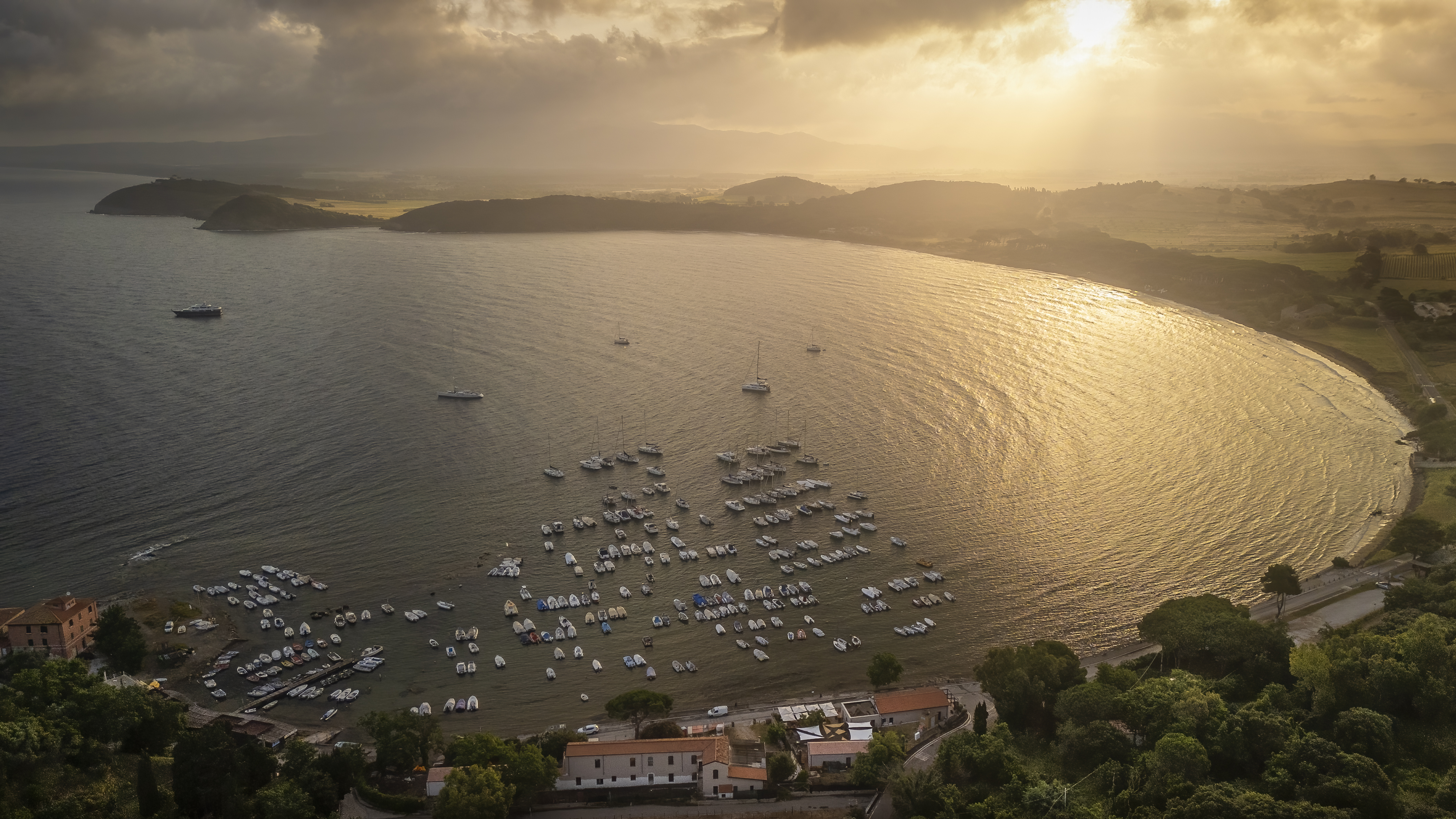
Sono già venuto due anni fa a scattare all’alba a Baratti. Questo golfo è uno dei pochi posti in Toscana dove si può ammirare il sole che sorge sul mare.

Stamattina sono partito carico di aspettative. Appena arrivato, do uno sguardo al cielo carico di nuvole, e sono praticamente in estasi. Si preannuncia un’alba veramente interessante, con un cielo molto intenso, carico di colori caldi e nuvole che prendono vita minuto dopo minuto. Ahimè, l’entusiasmo si spenge appena apro la borsa. Ho dimenticato la piastra per agganciare la fotocamera al cavalletto. Penso sia la prima volta che mi succede. E sicuramente sarà anche l’ultima.

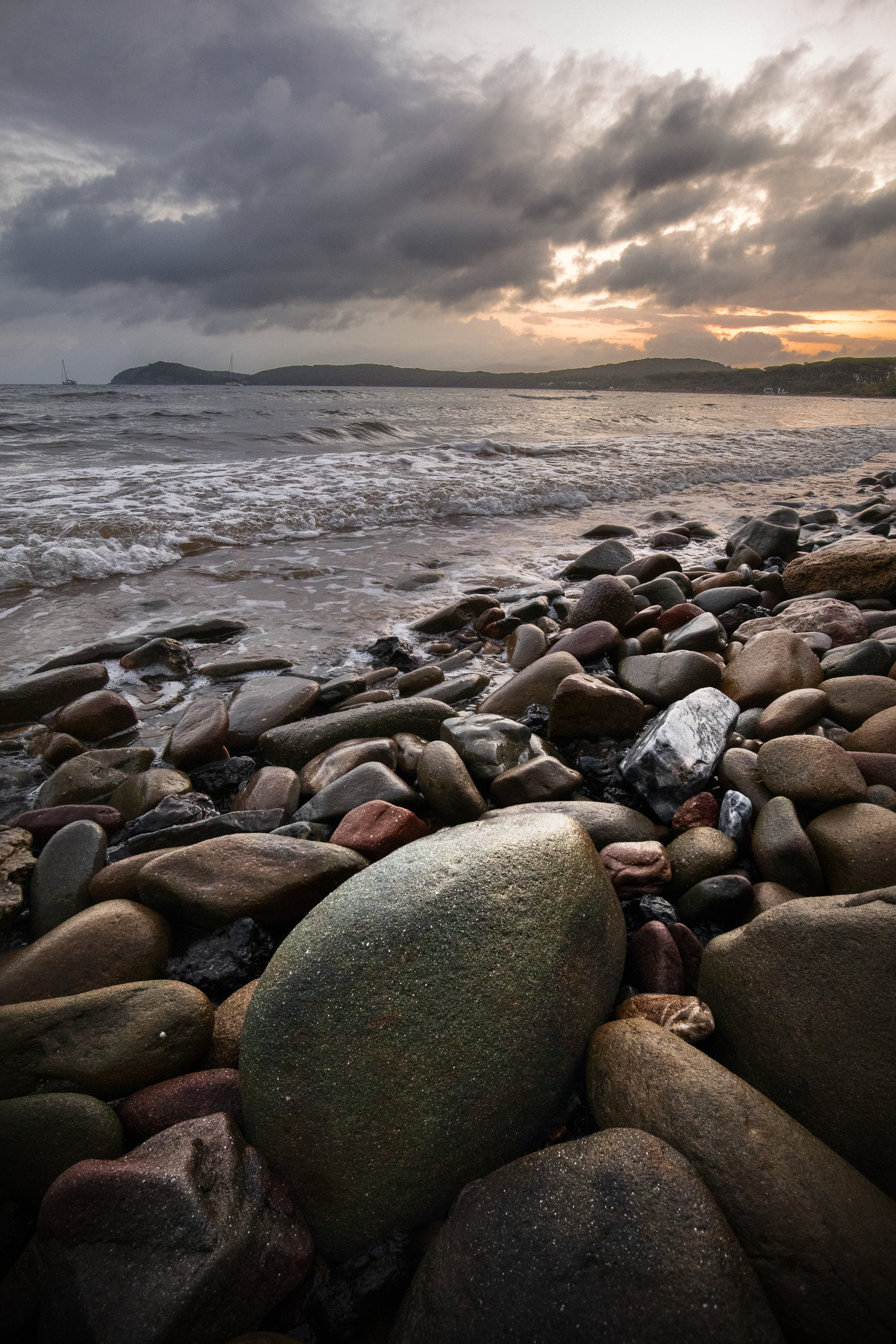
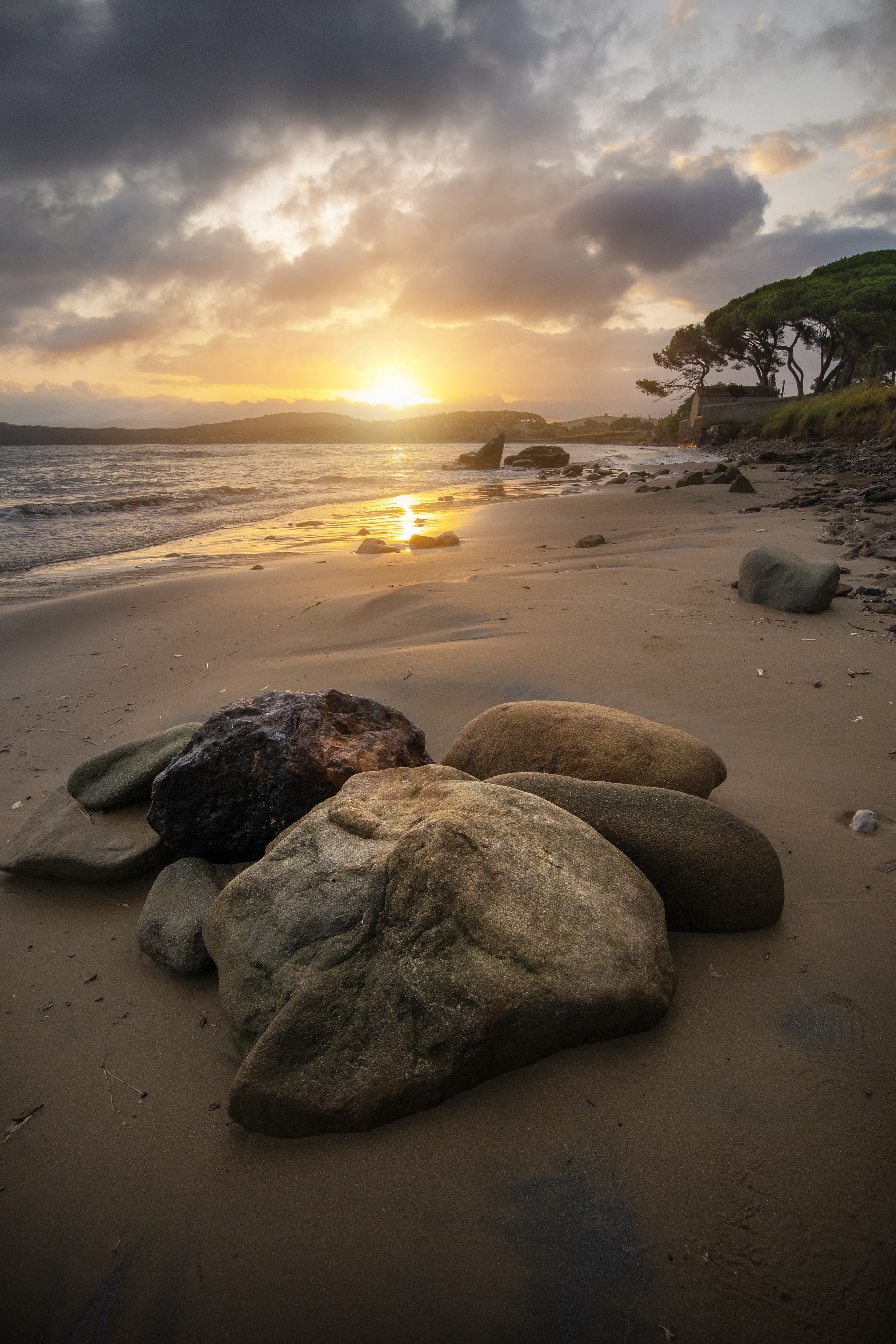
Un po sconfortato, scendo in spiaggia. La luce è ancora bassa, e comincio a cercare qualche composizione per non farmi cogliere impreparato appena spunta il sole. Purtroppo non è una cosa facile senza cavalletto. Adoro scattare con la tecnica del focus-stacking, senza poter tenere immobile la fotocamera, questa tecnica è praticamente quasi impossibile. Ma qua sulla spiaggia non puoi non provarci. I sassi che sono disseminati lungo la battigia sono meravigliosi, ed offrono composizioni veramente interessanti. Quindi, mi faccio coraggio e provo ad inventarmi qualcosa a mano libera, sperando di poter sistemare tutto, un po’ alla meglio, in fase di post-produzione.

Il sole sta sorgendo, ed è meraviglioso. Finalmente un cielo incredibile. Bello. Ricco di nuvole e colori. Il sole fa capolino all’orizzonte illuminando tutto. L’arancio ed il giallo esplodono in un’armonia incredibile. Faccio diversi scatti con primi piani differenti. Rocce e legni compongono i primi scatti.

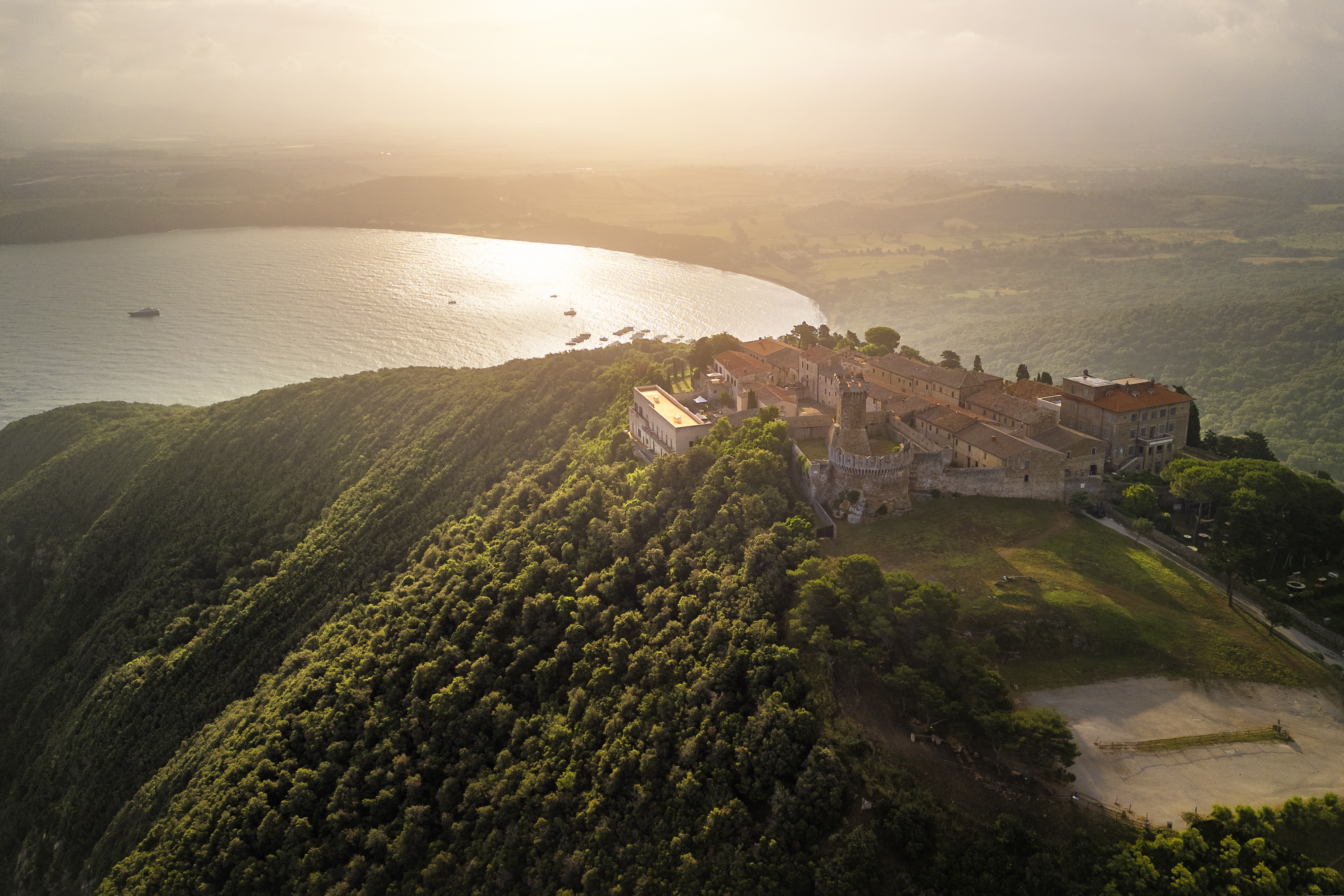
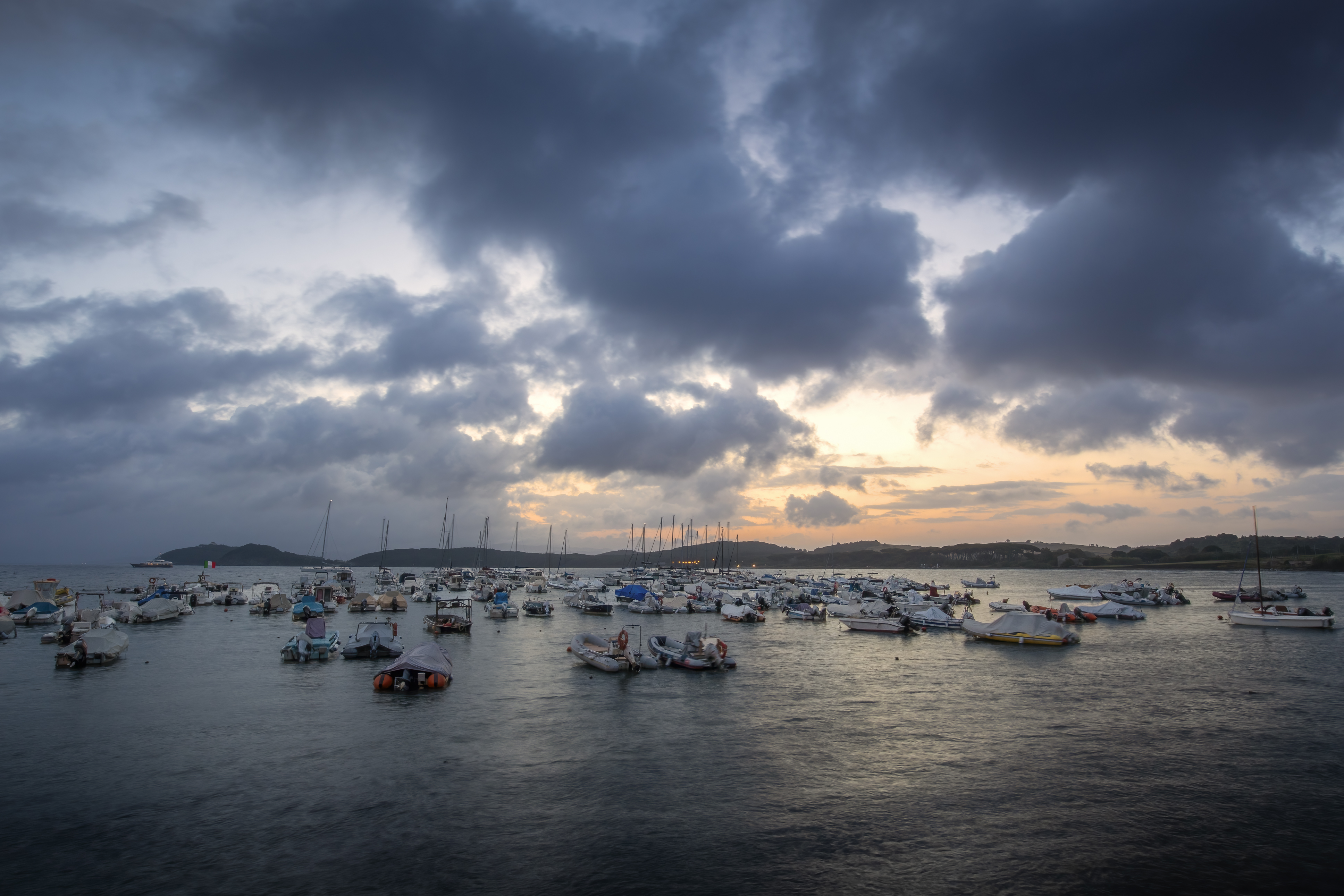
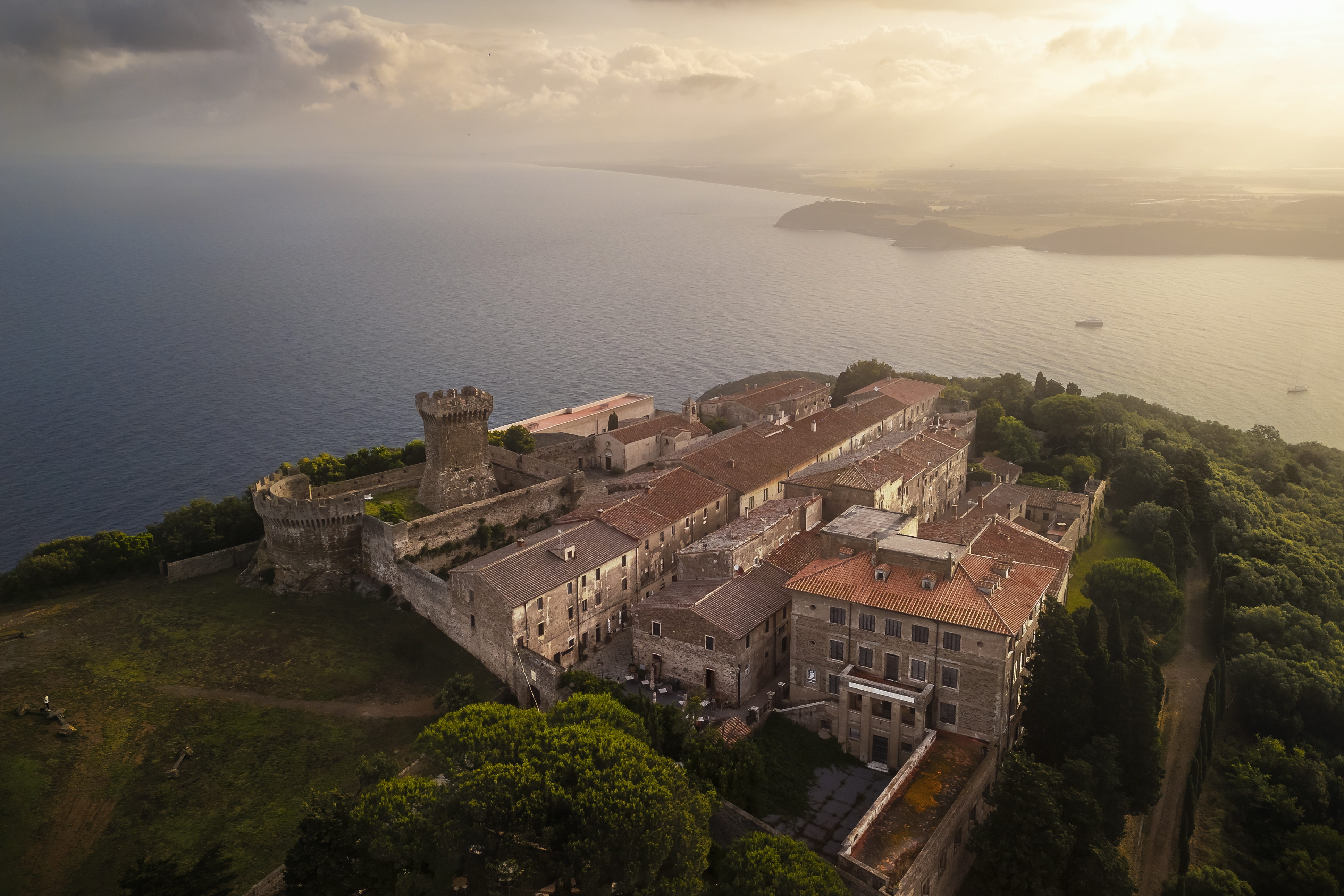
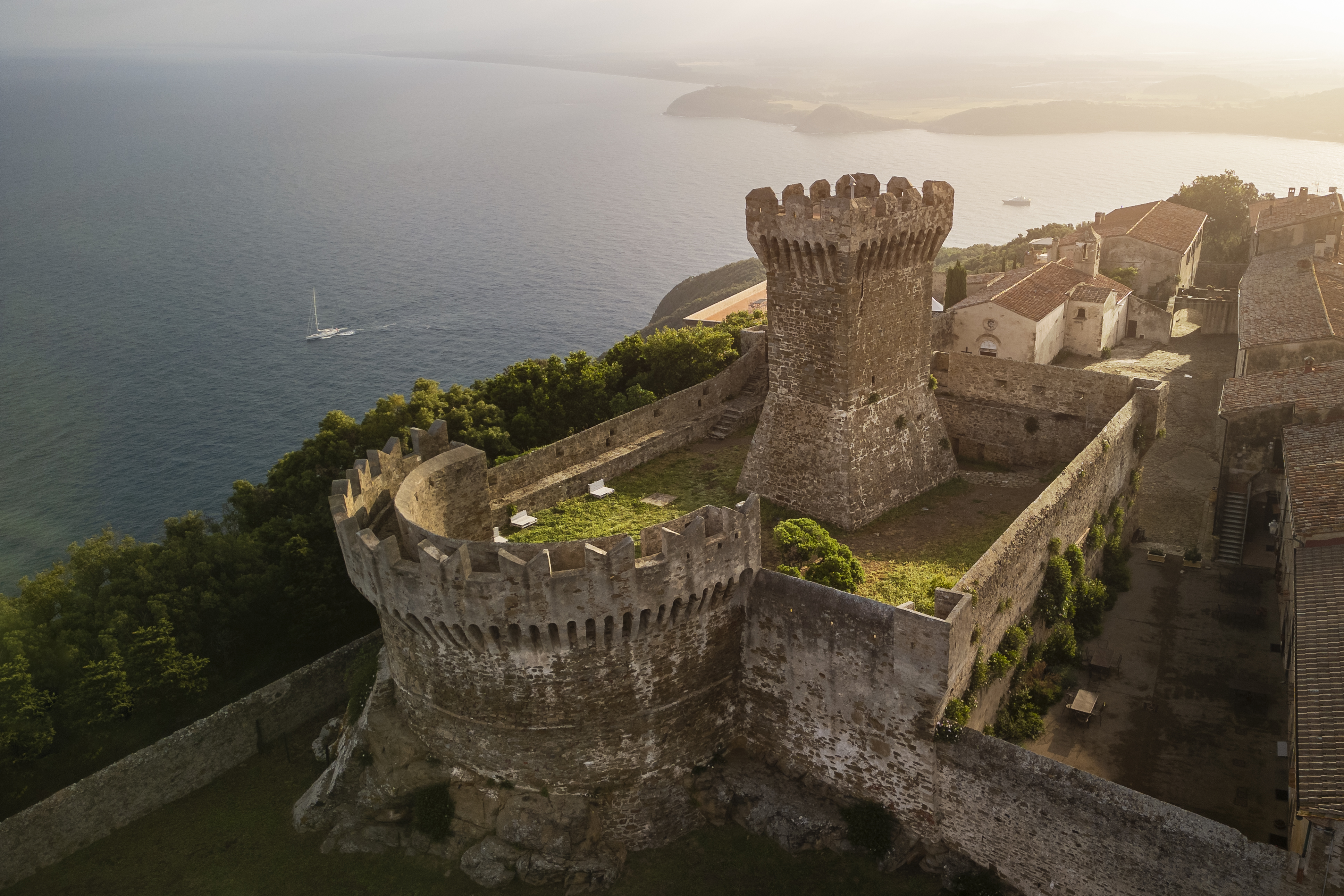
Decido di spostarmi. Mi attira la rocca su in cima a Populonia. Ci sono già stato lo scorso anno, ma non ho avuto il coraggio di volare col drone a causa dei numerosi gabbiani, un vero incubo quando si vola col drone. Stamani la situazione sembra migliore. Tantissime rondini curiose svolazzano intorno, e appena il drone si alza, volano a vedere di cosa si tratta. Un po’ di tensione c’è, ma almeno di gabbiani nemmeno l’ombra al momento. Mi alzo e comincio a riprendere il castello che sovrasta il golfo. La luce è perfetta. Calda. Leggermente velata all’orizzonte. L’atmosfera è eterea, ed è perfettamente in mood col castello. Sembra pura poesia. Anche qua, sono solo. Non c’è anima viva. Sembra di visitare una roccaforte abbandonata dopo una battaglia. Scatto qualche foto e riprendo qualche video per documentare il posto. Dall’alto è bellissimo. Sotto di me il Golfo di Baratti, che culla le barche col suo dolce abbraccio.

Questi sono gli attimi di tempo che ho immortalato e che porto con me nel mio piccolo bagaglio di emozioni. Che questi lieti momenti siano ristoro per i vostri occhi.

I already came two years ago to shoot at dawn in Baratti. This gulf is one of the few places in Tuscany where you can admire the sun rising over the sea.

This morning I left full of expectations. As soon as I arrive, I take a look at the cloud-filled sky, and I’m practically in ecstasy. It promises to be a truly interesting sunrise, with a very intense sky, full of warm colors and clouds that come to life minute after minute. Alas, the enthusiasm dies as soon as I open the bag. I forgot the plate to attach the camera to the tripod. I think this is the first time this has happened to me. And it will certainly be the last.

A little disheartened, I go down to the beach. The light is still low, and I start looking for some compositions so as not to be caught unprepared as soon as the sun comes out. Unfortunately this is not an easy thing to do without a tripod. I love shooting with the focus-stacking technique, without being able to keep the camera still, this technique is practically almost impossible. But here on the beach you can’t help but try. The stones that are scattered along the shoreline are wonderful, and offer truly interesting compositions. So, I take courage and try to invent something freehand, hoping to be able to fix everything, a bit as best I can, in the post-production phase.

The sun is rising, and it’s beautiful. Finally an incredible sky. Handsome. Rich in clouds and colors. The sun peeks over the horizon, illuminating everything. Orange and yellow explode in incredible harmony. I take several shots with different close-ups. Rocks and wood make up the first shots.

I decide to move. The fortress on top of Populonia attracts me. I have already been there last year, but I didn’t have the courage to fly with the drone due to the numerous seagulls, a real nightmare when flying with a drone. This morning the situation seems better. Lots of curious swallows flutter around, and as soon as the drone rises, they fly to see what it’s all about. There is a bit of tension, but at least not even a sign of seagulls at the moment. I get up and start to take a look at the castle overlooking the gulf. The light is perfect. Hot. Slightly veiled on the horizon. The atmosphere is ethereal, and is perfectly in mood with the castle. It seems like pure poetry. Even here, I’m alone. There isn’t a living soul. It feels like visiting an abandoned fortress after a battle. I take some photos and shoot some videos to document the place. From above it is beautiful. Below me the Gulf of Baratti, which cradles the boats with its sweet embrace.

These are the moments of time that I have immortalized and that I carry with me in my small baggage of emotions. May these happy moments be refreshing for your eyes.

Una nuova fioritura

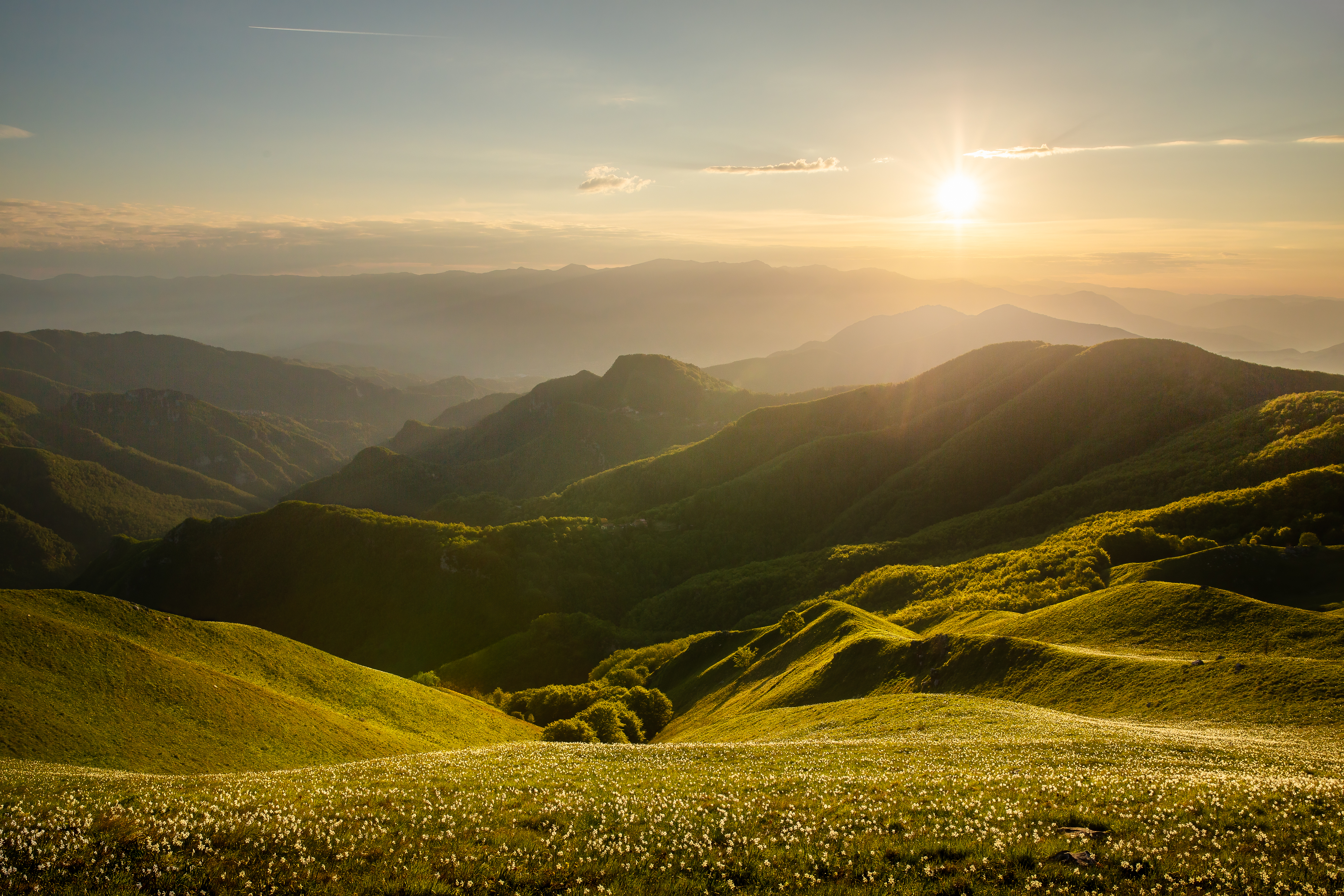
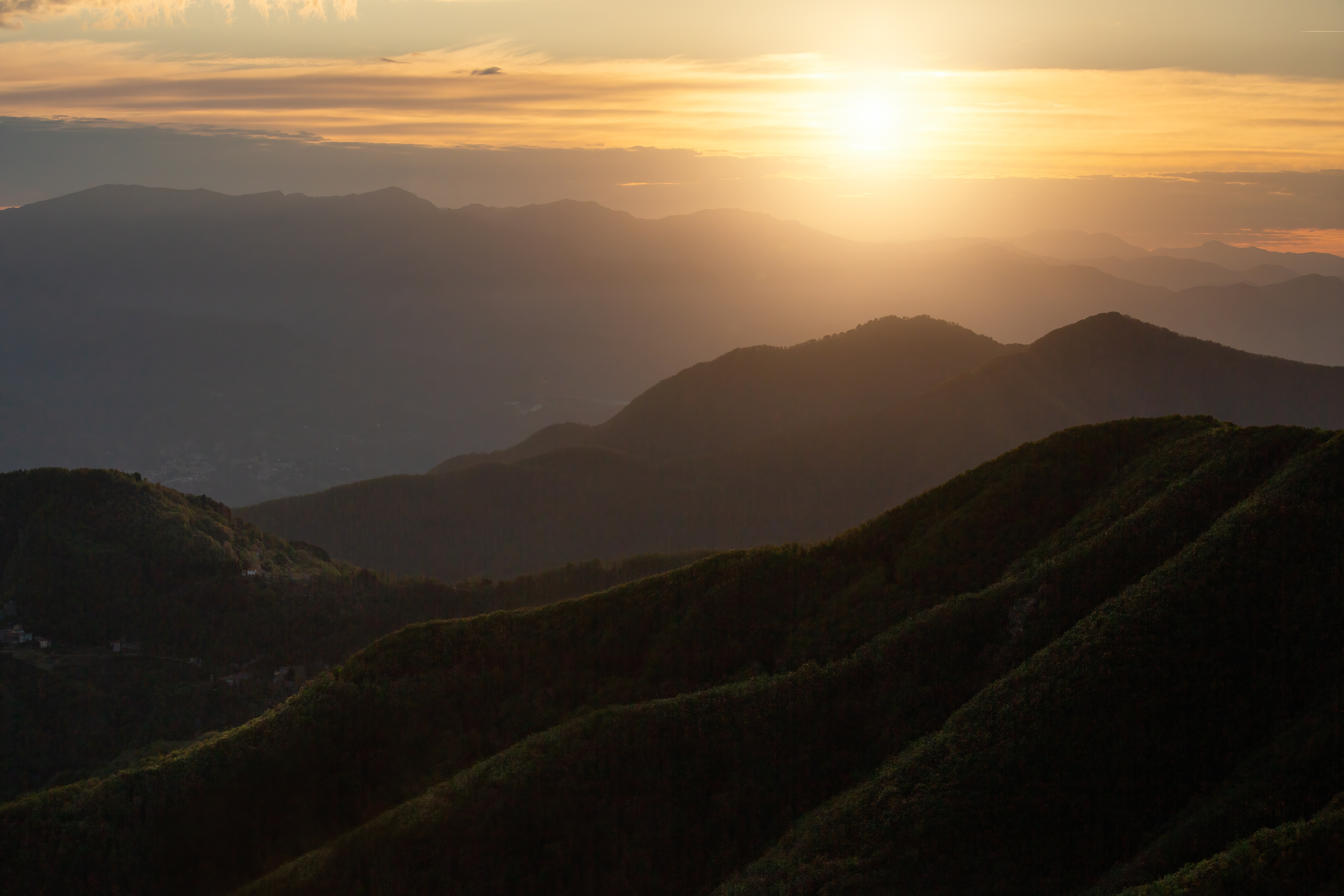
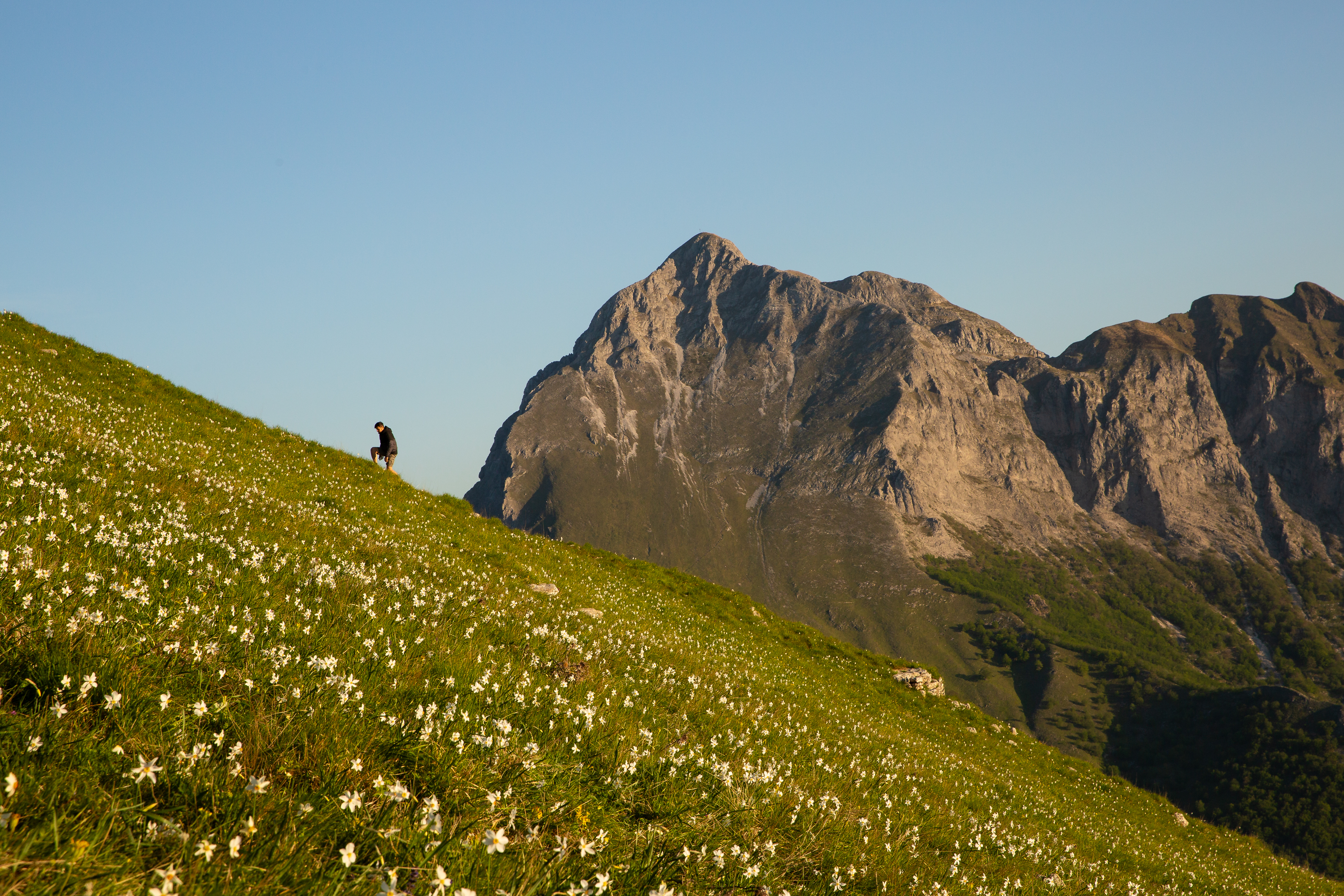
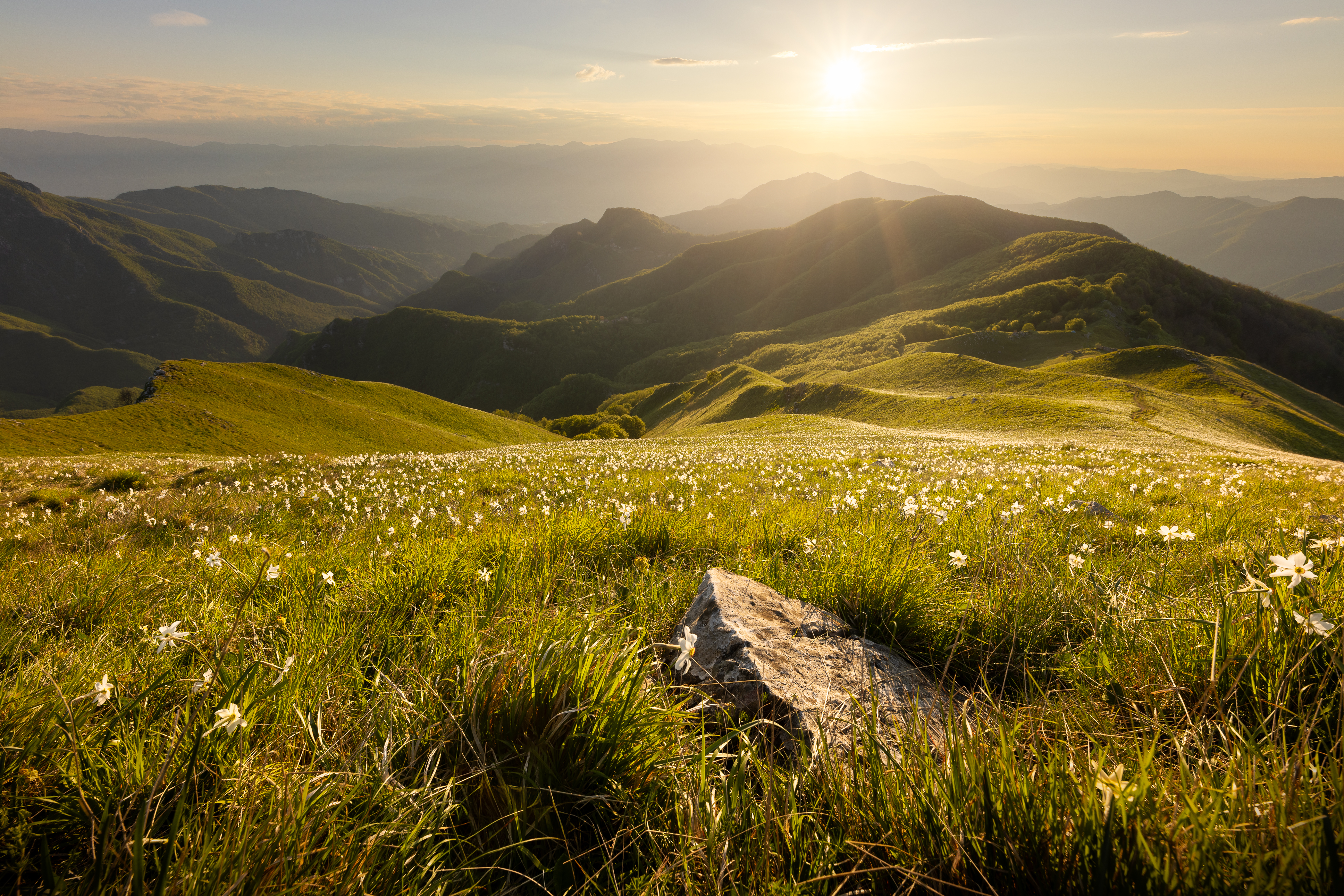
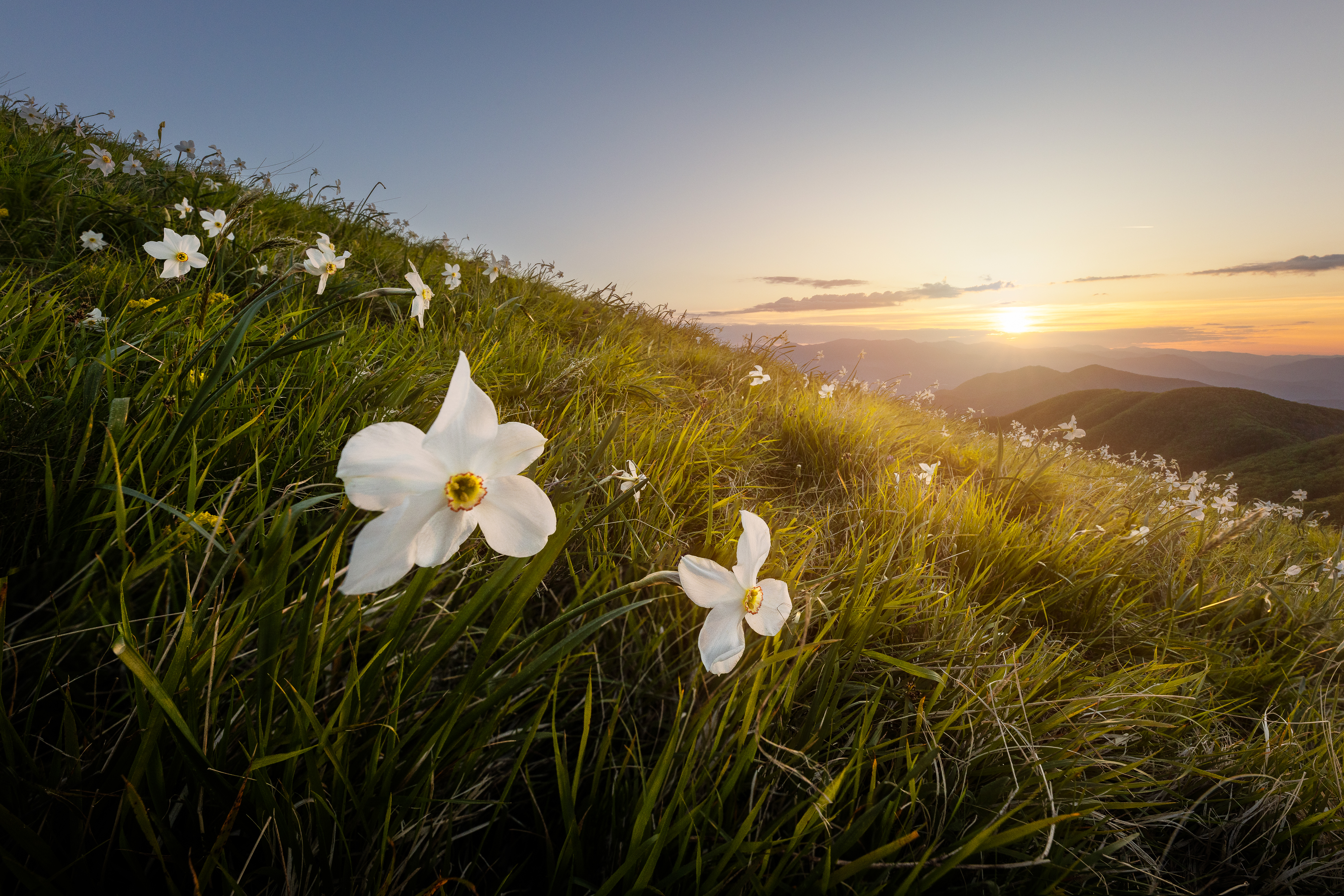
Arrivati a maggio, l’appuntamento con la fioritura delle giunchiglie risuona puntuale, come la sveglia che ti dice di alzarsi per andare a lavoro. Quest’anno, questo evento è stato incredibilmente seguito da una moltitudine di persone inaspettata. Complice anche il fenomeno della tempesta geomagnetica del 10 maggio, che ha smosso un numero di fotografi spropositato, per fotografare l’aurora, che è stata visibile dopo tantissimi anni anche alle nostre latitudini. Molti fotografi hanno provato a fotografarla nei posti più bui, e, anche io, pur non essendo riuscito a vederla la notte del 10 maggio, ci ho provato la notte successiva, salendo proprio sul Monte Croce.

Ovviamente ero molto più ansioso per la fatidica alba la mattina successiva, in quanto ero sicuro che l’aurora non si sarebbe sicuramente fatta vedere una seconda volta. Ma ci ho provato lo stesso, e, nonostante non sia accaduto niente, sia la notturna che l’alba, ci hanno regalato qualche scatto e qualche momento indimenticabile.

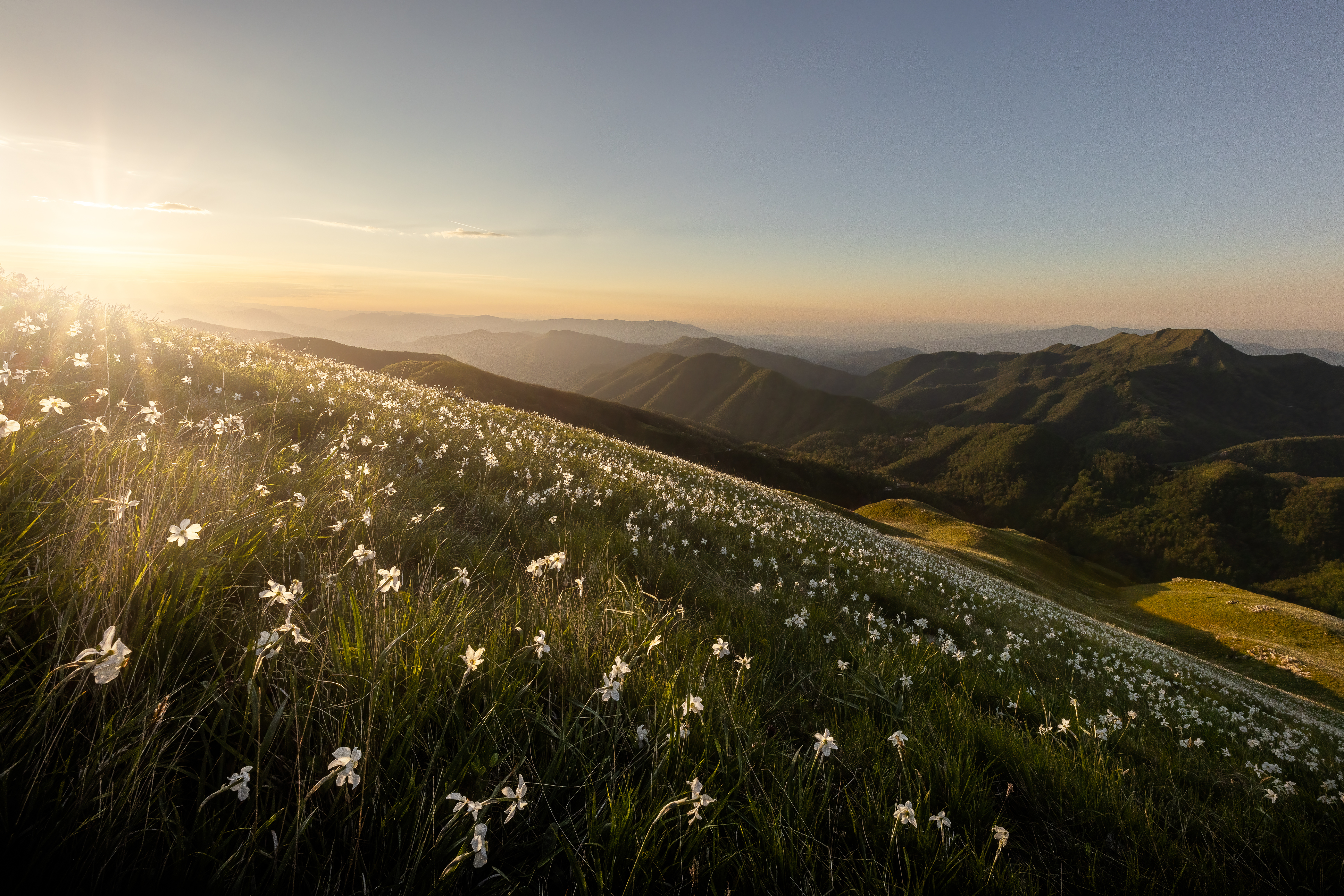
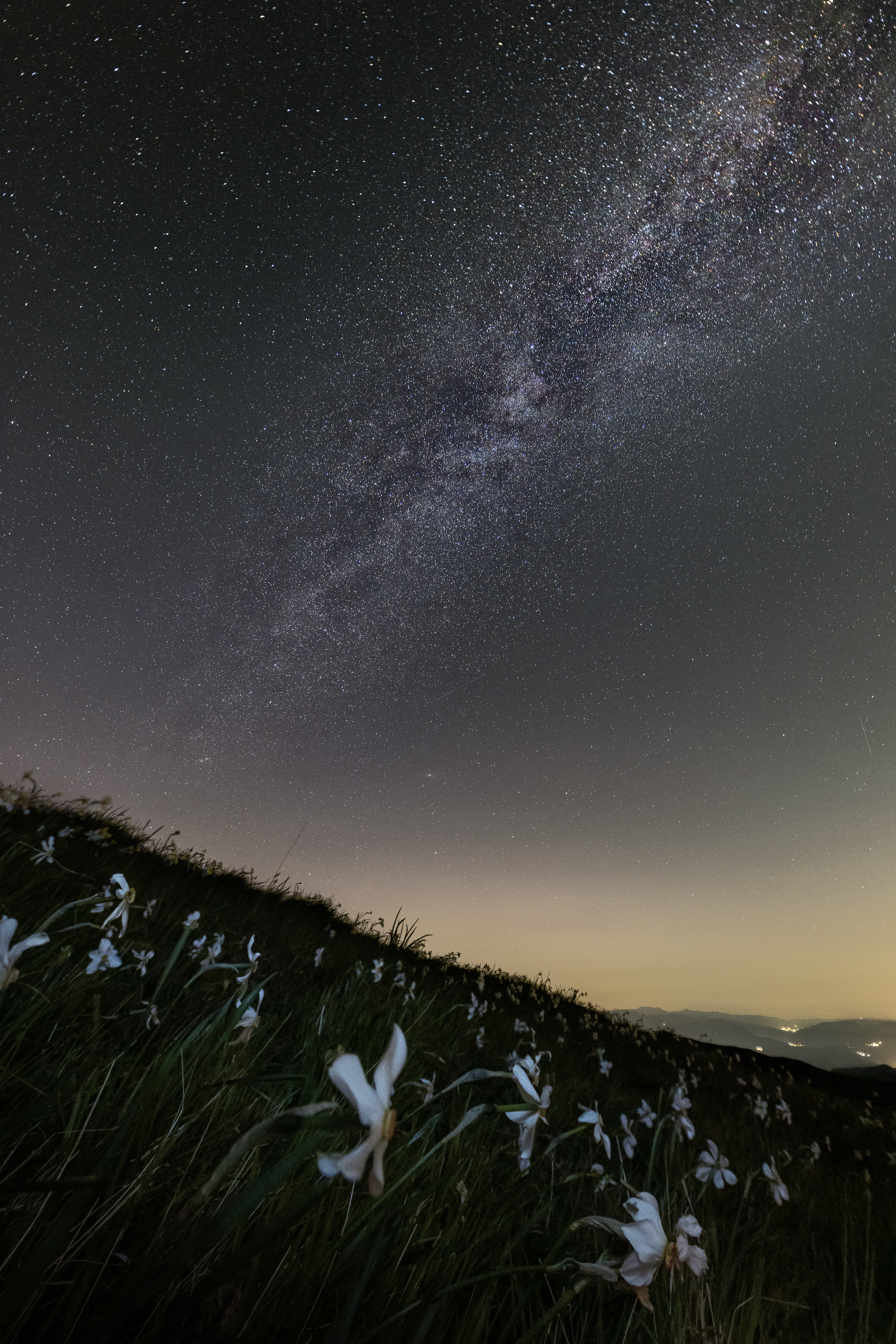
Questa eras la seconda volta che andavo a vedere la fioritura dei narcisi sul Monte Croce. Anche questa volta mi ha lasciato letteralmente senta fiato. Siamo partiti sabato sera a mezzanotte, Il tragitto impiega circa 45 minuti di passeggiata, tutta rigorosamente in salita. Una bella fatica, al buio, con uno zaino da 15kg alle spalle. Ma la determinazione e la passione non sono riuscite a fermarci. Saliamo a passo spedito, per essere in vetta alle 2:30 circa di notte. Questo ci ha permesso di scattare alle stelle, che, con poco inquinamento luminoso, erano davvero ben visibili.

Via Lattea e Star-Trail sono stati gli scatti più ricercarti. Il lieve alito di vento che era presente sul crinale ci ha dato un bel filo da torcere. Con i tempi di scatto lunghi, un primo piano in movimento rappresenta davvero una difficoltà allucinante. Purtroppo, nessuna traccia dell’aurora. Ma nessun problema. Le nostre forze si sono concentrate per lo più per l’alba. Il pendio avvolto dalla fioritura, infatti, con lo spuntare del sole, ha preso letteralmente vita.

Quest’anno, di vita ce n’era anche troppa invece. Gruppi di persone arrivavano a flotte, man mano che il sole cominciava ad illuminare tutta la scena. Anche scattare non era affatto facile, senza inquadrare involontariamente qualcuno. Ogni volta che trovavo una composizione, qualcuno appariva sempre di fronte al mio obbiettivo, costringendomi a cambiare spesso inquadratura.

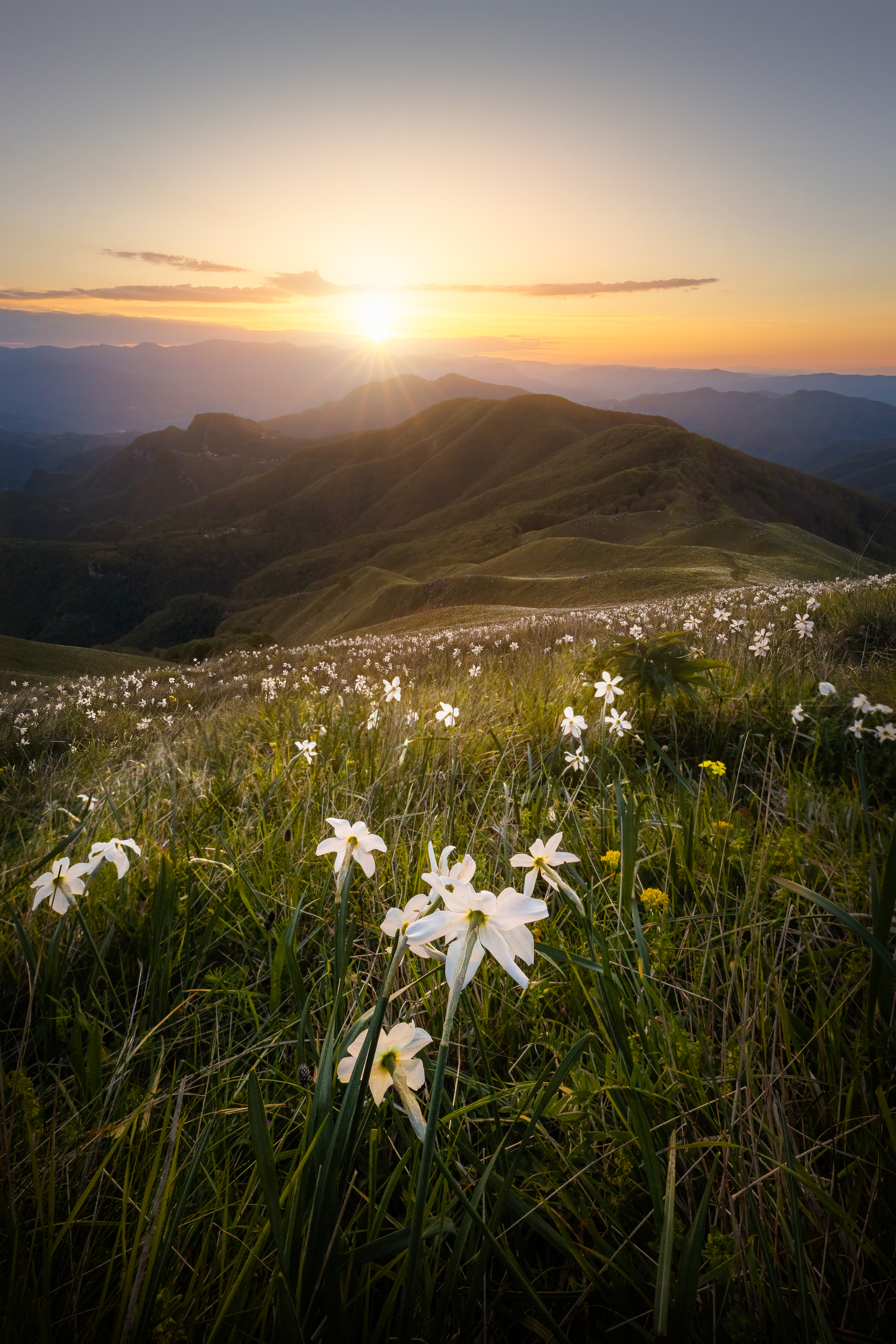
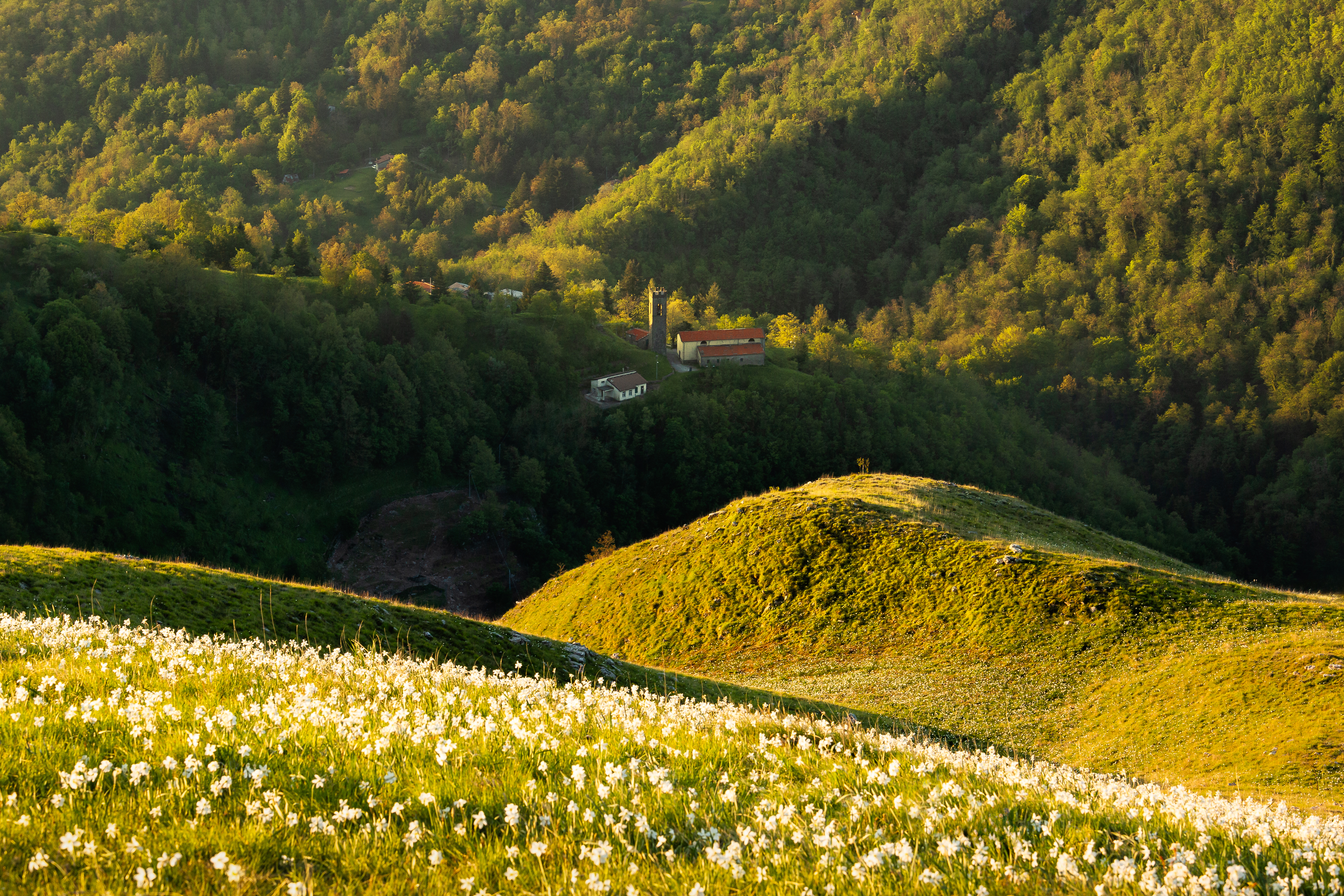
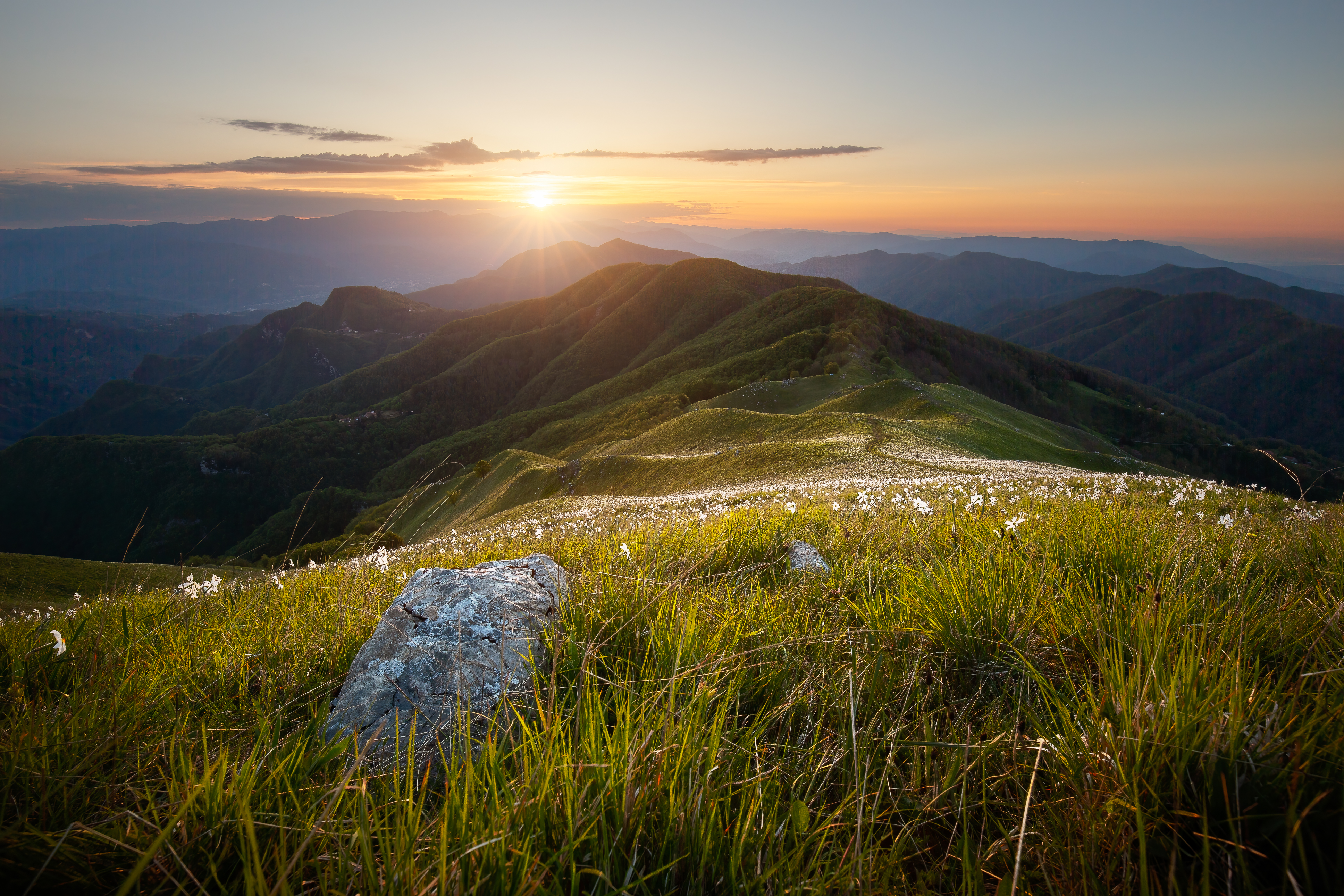
Una volta apparso il sole, ci siamo dedicati a scattare il più possibile a composizioni con i fiori in primissimo piano, Gli spot erano innumerevoli, e, nonostante la folla, abbiamo portato a casa diverse immagini veramente fantastiche. Ecco a voi gli scatti di questa bella uscita. Intensa e molto faticosa, ma anche quest’anno ci ha regalato forti emozioni. Buona visione a tutti voi.

Once we arrive in May, the appointment with the flowering of the daffodils rings punctually, like the alarm clock telling you to get up to go to work. This year, this event was incredibly followed by an unexpected multitude of people. Also thanks to the phenomenon of the geomagnetic storm of May 10th, which moved a disproportionate number of photographers to photograph the aurora, which was visible after many years even at our latitudes. Many photographers have tried to photograph it in the darkest places, and even I, despite not being able to see it on the night of May 10th, tried the following night, climbing up Monte Croce itself.

Obviously I was much more anxious for the fateful sunrise the next morning, as I was sure that the aurora would definitely not show up a second time. But I tried anyway, and, although nothing happened, both the night and the dawn gave us some shots and some unforgettable moments.

This was the second time I went to see the daffodils blooming on Monte Croce. This time too it literally left me breathless. We left on Saturday evening at midnight. The journey takes about 45 minutes of walking, all strictly uphill. A lot of effort, in the dark, with a 15kg backpack behind me. But determination and passion couldn’t stop us. We climb at a brisk pace, to be at the summit at around 2.30 am. This allowed us to shoot at the stars, which, with little light pollution, were really clearly visible.

Milky Way and Star-Trail were the most sought after shots. The light breath of wind that was present on the ridge gave us a hard time. With slow shutter speeds, a moving close-up really represents an incredible difficulty. Unfortunately, no sign of the aurora. But no problem. Our forces were mostly concentrated for dawn. The slope surrounded by flowers, in fact, literally came to life with the rising of the sun.

This year, there was too much life instead. Groups of people arrived in droves as the sun began to illuminate the entire scene. Even shooting wasn’t easy at all, without accidentally framing someone. Every time I found a composition, someone always appeared in front of my lens, forcing me to change shots often.

Once the sun appeared, we dedicated ourselves to shooting as many compositions as possible with flowers in the foreground. The spots were countless, and, despite the crowd, we took home several truly fantastic images. Here are the shots of this beautiful outing. Intense and very tiring, but this year too it has given us strong emotions. Good vision to all of you.

L’essenza della mia terra

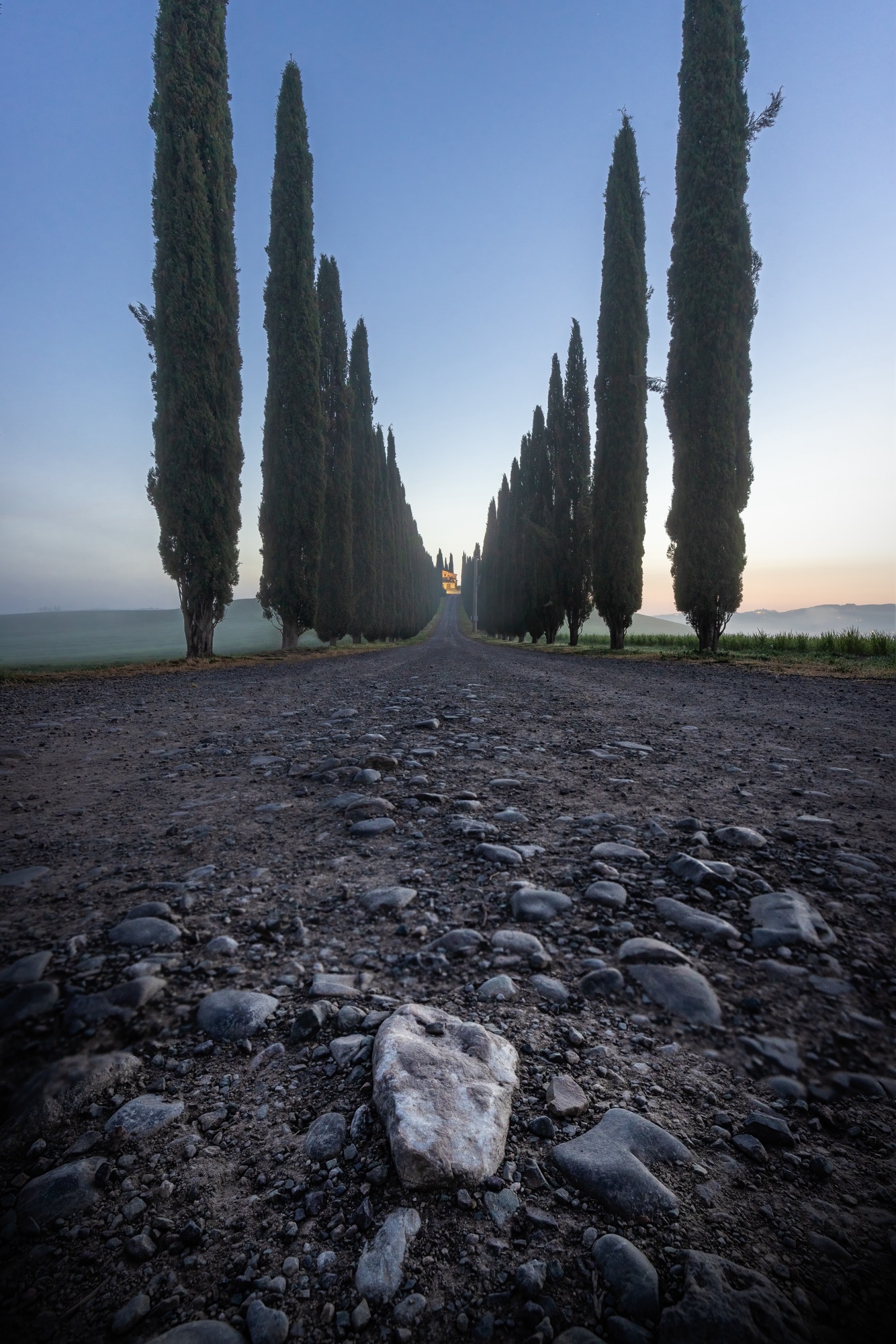
Credo che, per un toscano purosangue, specie se si parla di un fotografo, una terra più bella di questa regione semplicemente non possa esistere. Quando qualcuno mi chiede dove abito rispondo sempre con orgoglio: “ in Toscana!!”.

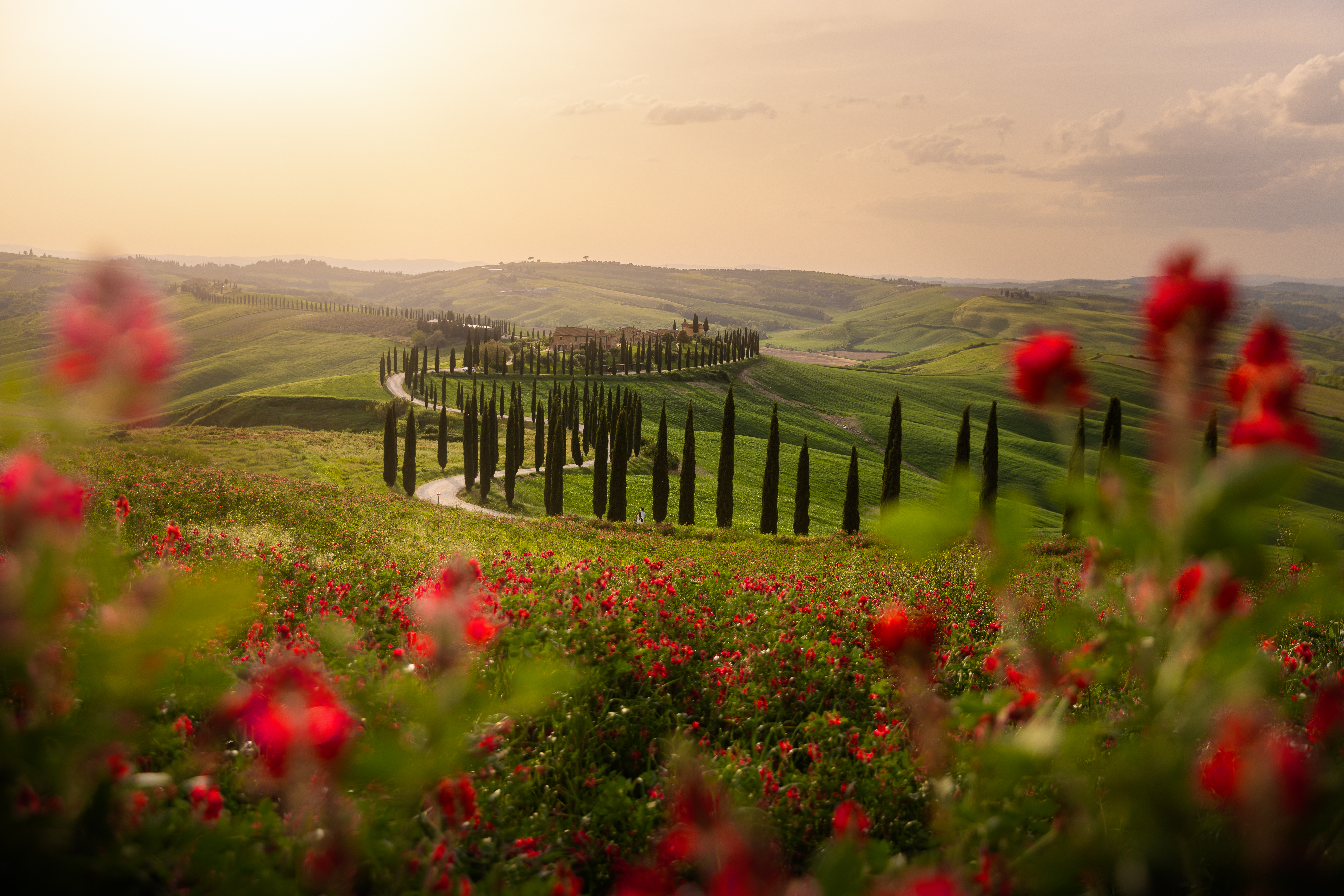
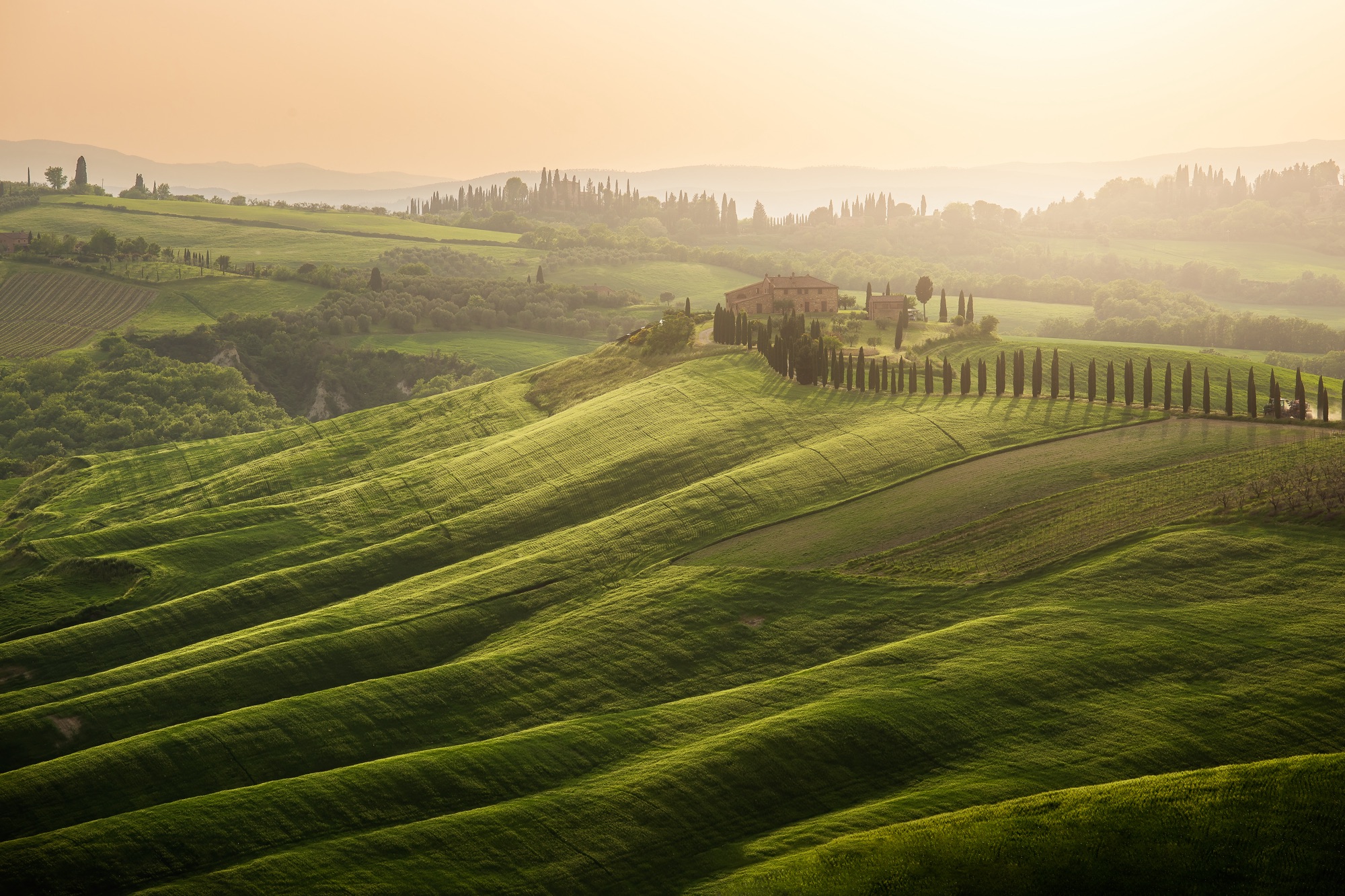
La Val d’Orcia e tutta la valle delle Crete Senesi rappresentano il cuore pulsante del paesaggio toscano per antonomasia. Parliamo di natura, di colline, di casolari, di prati coltivati a vista d’occhio. Spenderò poche parole per descrivere questo posto, perché le immagini che ho scattato lasciano sicuramente più spazio alle parole.

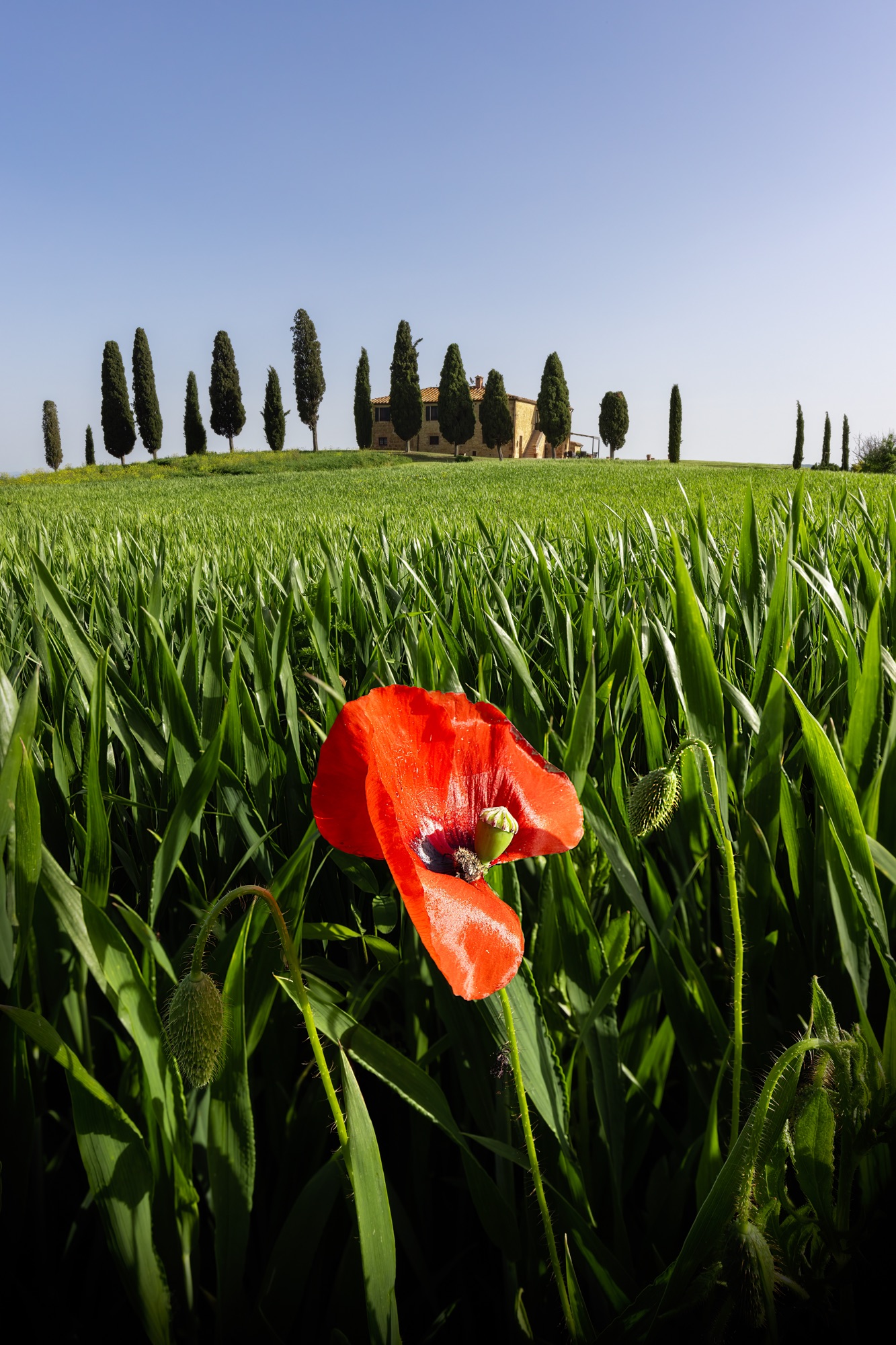
La Val d’Orcia, a primavera, è, senza dubbio, uno dei posti più belli dove trascorrere un weekend a contatto con la natura. Ovviamente non solo a primavera, ma, a mio parere, è in questa stagione che il paesaggio regala veramente il massimo. Appena arrivati in zona di San Quirico e Pienza, l’unico colore che si apre davanti agli occhi è il verde. Di mille sfumature, grazie alle pennellate gialle e rosse dei fiori di colza e summa, che si intersecano col verde del grano in crescita. Si tratta di una zona ricca di agricoltura e turismo, che ha saputo ben coniugare questi due elementi, con un terzo aspetto fondamentale… il cibo.

Chi viene in Toscana assapora un paesaggio autentico, vini e prodotti alimentari tipici, come formaggi, salumi, pasta fatta in casa e selvaggina… ed una buona dose di pura semplicità delle persone, semplici ed ospitali. Insomma… non manca proprio niente.

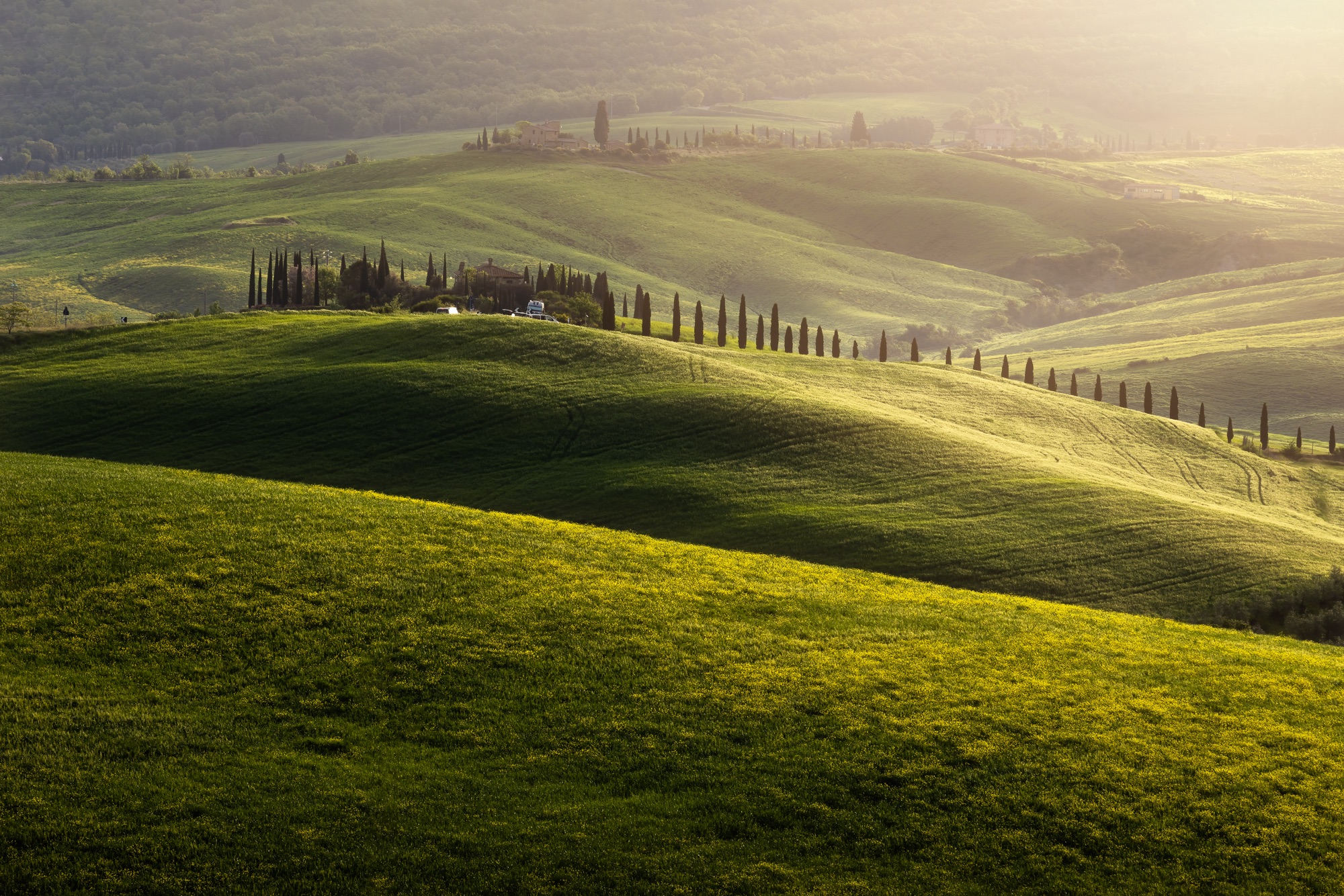
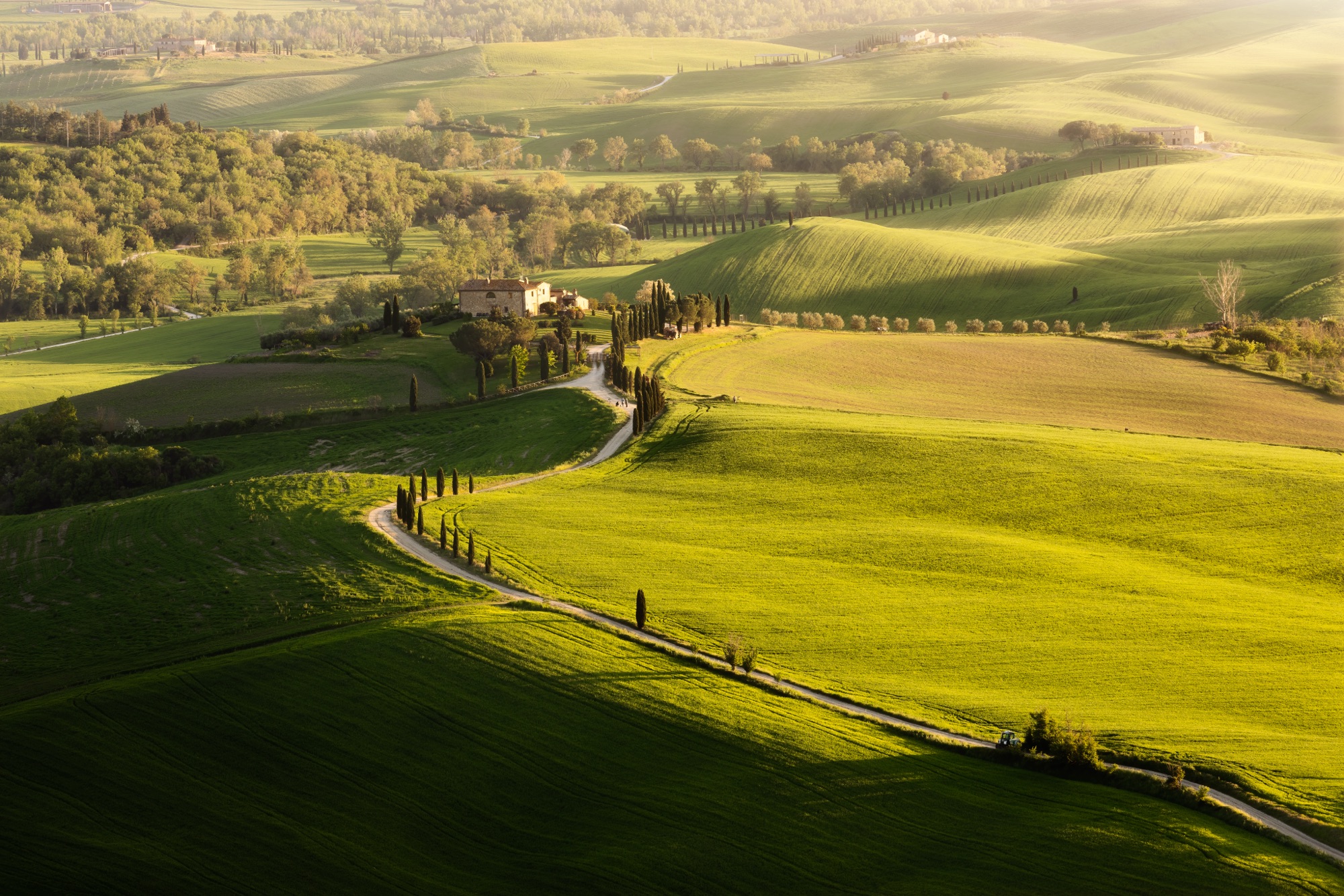
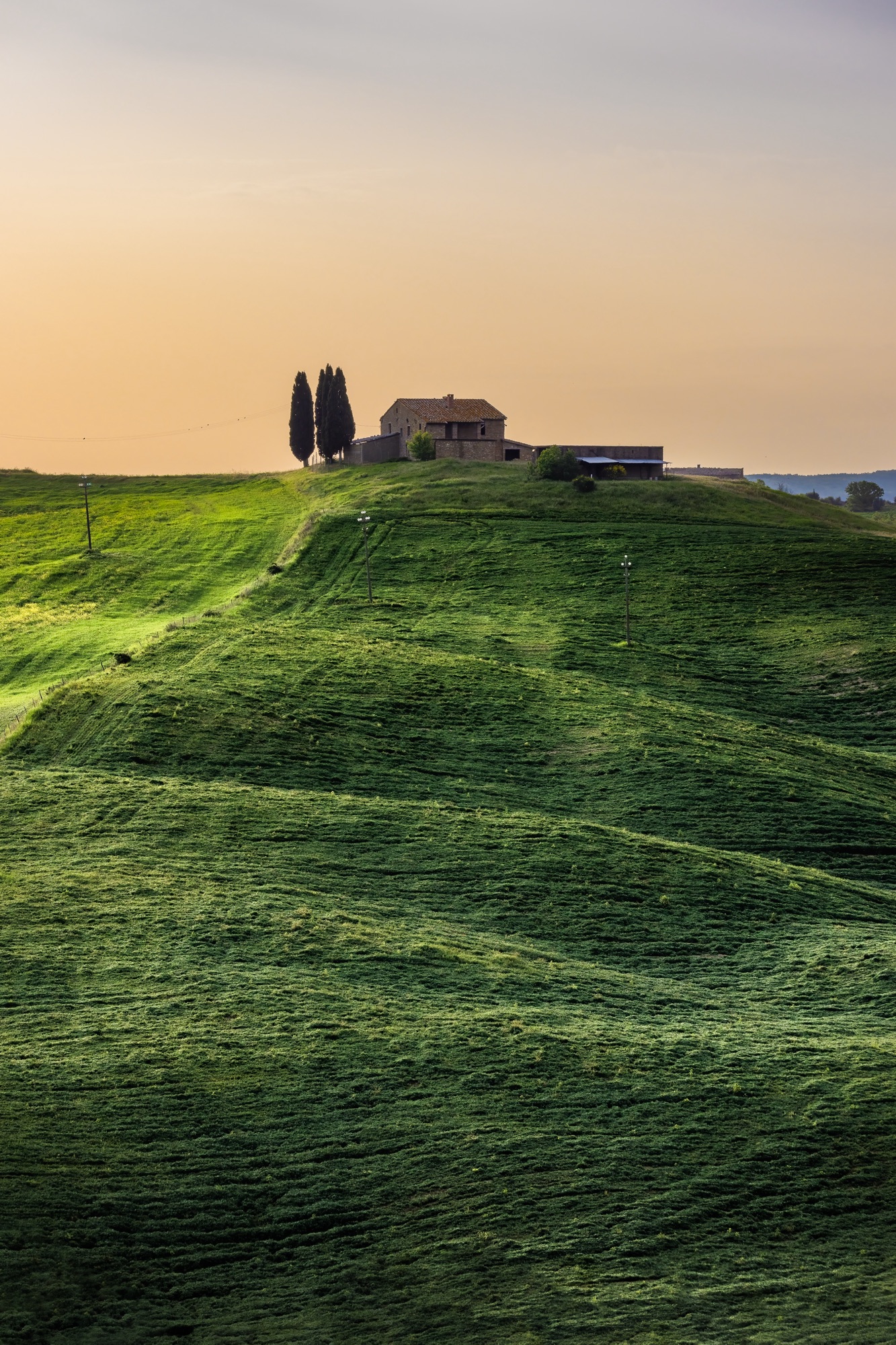
Fotograficamente parlando, il posto è una delle pietre miliari del fotografo paesaggista. Alcuni scatti classici non possono e non devono mancare nel portfolio del fotografo. Inseguire la luce che accarezza queste dolci colline è il vero segreto di questo paradiso. Con la luce giusta, il paesaggio si trasforma letteralmente. La luce sfiora i crinali delle colline verdeggianti, pennellandole di giallo con la sua bella luce calda. Le ombre scuriscono in un verde profondo. I casolari sparsi qua e là, come minuscole macchie di vino rosse su una tovaglia verde, richiamano l’attenzione della fotocamera, con un fare silenzioso e delicato.

Possiamo dire che proprio quando il sole sorge al di sopra di Pienza, lo spettacolo ha inizio. Circa un’ora di tempo per avere una luce spettacolare, la buona luce. Dove punti la fotocamera ha poco importanza, tanto ci sono spot da fotografare ad ogni angolo. Le focali preferite sono, data la vastità del posto, le focali medio lunghe. Il mio 70-200 ha fatto veramente un ottimo lavoro stavolta.

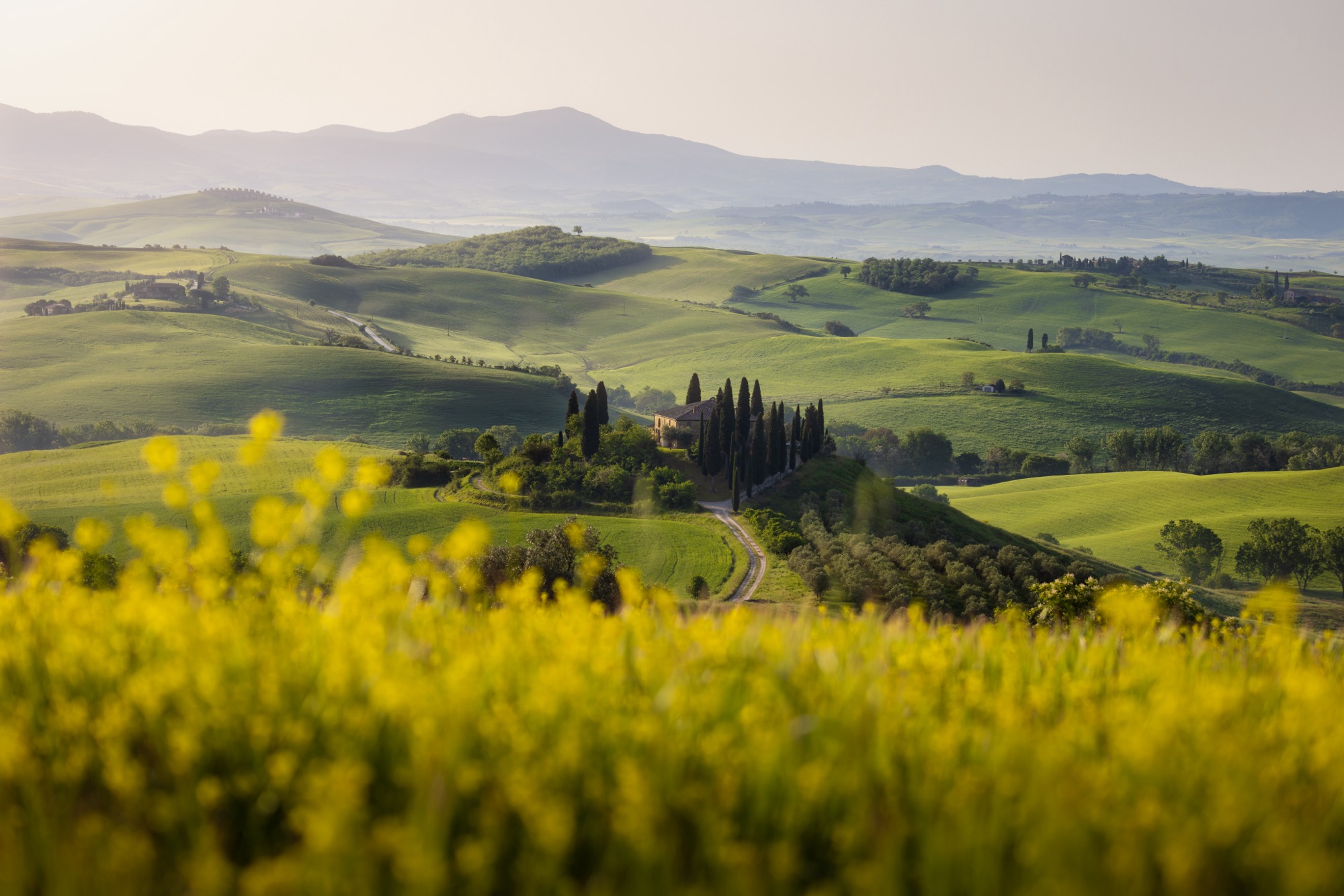
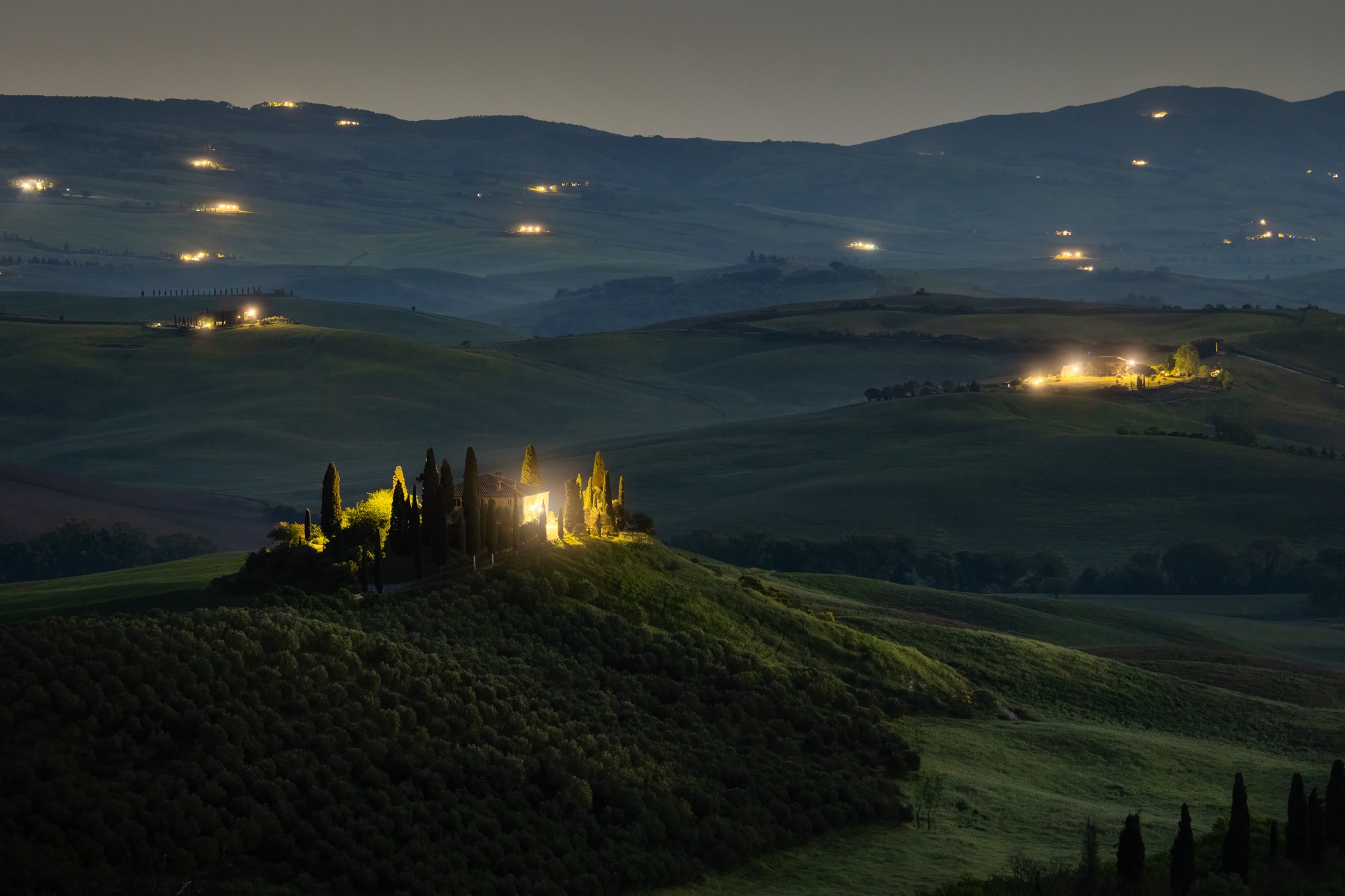
Ecco a voi gli scatti di questa uscita di due giorni. Spaziamo dai grandi classici, come l’alba al Podere Belvedere, la nebbia a Poggio Covili, fino al tramonto a Baccoleno… il posto più fotografato di queste terre. Altri scorci sono sicuramente meno conosciuti ma, non per questo, meno affascinanti.

Porto veramente questo posto nel mio cuore, ed ogni volta che torno a trovarlo, mi regala sempre cose nuove. Buona visione a tutti voi dalla Toscana… dalla mia terra.

I believe that, for a full-blooded Tuscan, especially if we are talking about a photographer, a more beautiful land than this region simply cannot exist. When someone asks me where I live I always answer with pride: “in Tuscany!!”.

The Val d’Orcia and the entire Crete Senesi valley represent the beating heart of the Tuscan landscape par excellence. We talk about nature, hills, farmhouses, cultivated meadows as far as the eye can see. I will spend few words to describe this place, because the images I took certainly leave more room for words.

Val d’Orcia, in spring, is, without a doubt, one of the most beautiful places to spend a weekend in contact with nature. Obviously not only in spring, but, in my opinion, it is in this season that the landscape truly offers its best. As soon as you arrive in the San Quirico and Pienza area, the only color that appears before your eyes is green. Of a thousand shades, thanks to the yellow and red brushstrokes of the rapeseed and summa flowers, which intersect with the green of the growing wheat. It is an area rich in agriculture and tourism, which has been able to combine these two elements well, with a third fundamental aspect… food.

Those who come to Tuscany savor an authentic landscape, wines and typical food products, such as cheeses, cured meats, homemade pasta and game… and a good dose of the pure simplicity of the people, simple and hospitable. In short… nothing is missing.

Photographically speaking, the place is one of the milestones of the landscape photographer. Some classic shots cannot and must not be missing from the photographer’s portfolio. Chasing the light that caresses these rolling hills is the true secret of this paradise. With the right light, the landscape literally transforms. The light touches the ridges of the green hills, brushing them yellow with its beautiful warm light. Shadows darken to a deep green. The farmhouses scattered here and there, like tiny red wine stains on a green tablecloth, attract the attention of the camera, with a silent and delicate manner.

We can say that just when the sun rises above Pienza, the show begins. About an hour to have spectacular light, good light. Where you point the camera doesn’t matter much, as there are spots to photograph at every corner. Given the vastness of the place, the preferred focal lengths are medium-long focal lengths. My 70-200 really did a great job this time.

Here are the shots of this two-day outing. We range from the great classics, such as the sunrise at Podere Belvedere, the fog at Poggio Covili, up to the sunset at Baccoleno… the most photographed place in these lands. Other views are certainly less known but, no less fascinating.

I truly carry this place in my heart, and every time I return to visit it, it always gives me new things. Good vision to all of you from Tuscany… from my land.

La prima luce di Orciano Pisano

Ci sono alcune mattine che alzarsi presto è veramente difficile. Ci sono mattine in cui non sei motivato, anzi, sei già stanco prima di partire, e poi ti devi alzare prima del solito perché il viaggio è più lungo del normale, e sei completamente da solo. Nemmeno le previsioni del meteo ti fanno sperare in qualcosa di buono.

Eppure trovi lo stesso il coraggio di svegliarti a notte fonda, di prepararti con gli occhi sempre impastati dal sonno, di accendere la macchina e via.

Conosco Orciano Pisano come le mie tasche ormai. Sono anni che ci vado. Ci ho finito la strada praticamente. Conosco perfettamente ogni scorcio, ogni strada, ogni angolo. Eppure continuo ad andare in questo posto magico, ed ogni volta riesce a regalarmi qualcosa di nuovo. Ad ogni uscita porto con me un bagaglio di immagini diverse ed inaspettate.

Ricordo benissimo la prima volta che ci sono stato. Ho dovuto pagare un carro attrezzi per far togliere l’auto da un campo infangato. Un’esperienza allucinante. Ma ho continuato ancora e ancora a perdermi per tutte le strade bianche disseminate in queste meravigliose colline.

Orciano è così…. Ti stupisce sempre… Devo tanto a questo posto, mi ha regalato sin dalla prima volta attimi incredibili, che ho avuto la fortuna di averli fermati nel tempo con la mia fotocamera.

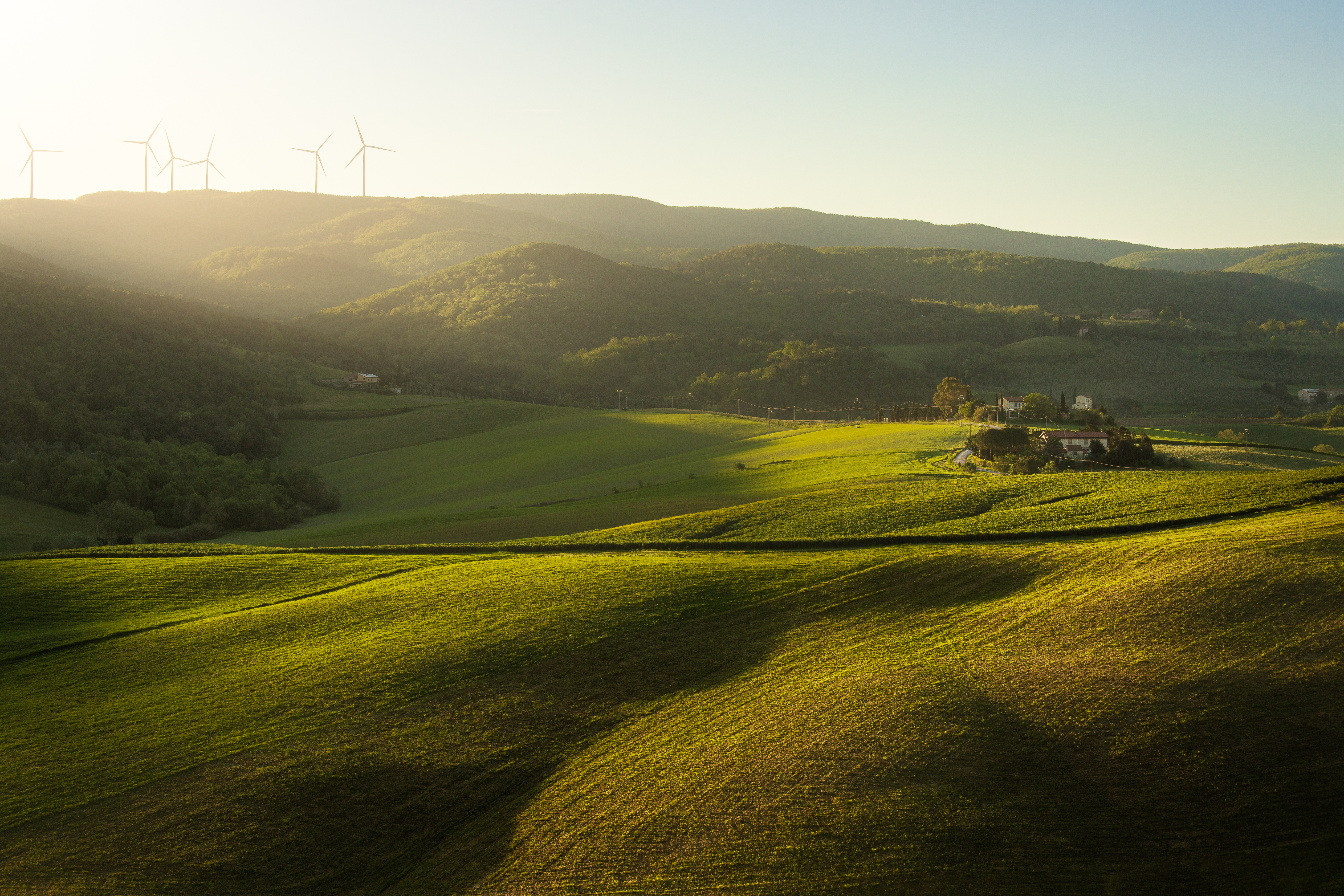
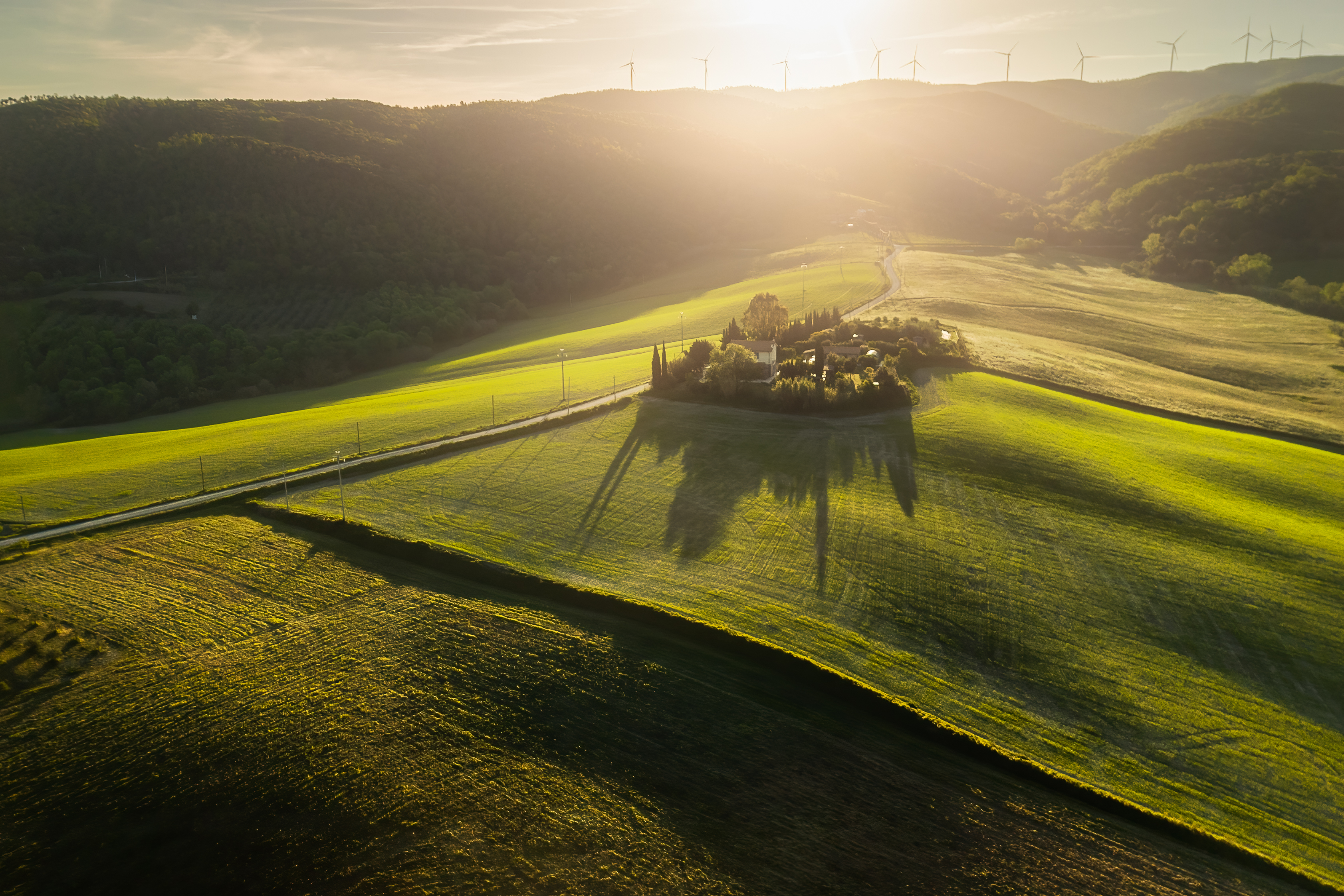
Credo che nel mio portfolio, le immagini più belle siano senza dubbio quelle che ritraggono questo posto. Foto in cui la luce dipinge il paesaggio, in una maniera talmente onirica e surreale che non sembra vero. I casolari immersi nel verde del grano svettano come piccole sentinelle, a guardia di questa natura incontaminata. I trattori escono la mattina presto e solcano i campi disegnando trame geometriche come un arazzo in perenne lavorazione.

La bellezza di Orciano sta nella sua semplicità, nella sua quotidianità. Nel suo legame con la terra, con i prodotti tipici come il grano, il vino e la lavanda (anche se, ahimè, sono abbastanza inorridito su come sia stato organizzato questa specie di circo mediatico provenzale).

Questi scatti sono soltanto un’altra piccola parte di ciò che amo raccontare di questa terra. Sono gli scatti di questa prima uscita primaverile del 2024 ad Orciano. Immagini che si andranno ad aggiungere a tutto il mio piccolo, ma genuino repertorio delle colline pisane.

There are mornings that getting up early is really difficult. There are mornings when you are not motivated, you are already tired before leaving, and then you have to get up earlier than usual because the journey is longer than normal, and you are completely alone. Not even the weather forecast gives you hope for anything good.

Yet you still find the courage to wake up in the middle of the night, to get ready with your eyes still clouded with sleep, to turn on the car and off you go.

I know Orciano Pisano like the back of my hand by now. I’ve been going there for years. I practically finished the road there. I know every view perfectly, every street, every corner. Yet I continue to go to this magical place, and every time it manages to give me something new. With every outing I bring with me a wealth of different and unexpected images.

I remember the first time I was there. I payed a lot to renove my car from a muddy field. A terrifying experience. But again and again I kept getting lost on all the dirt roads dotted across these beautiful hills.

Orciano is like this…. It always amazes you… I owe so much to this place, it has given me incredible moments right from the first time, that I am lucky enough to have frozen them in time with my camera.

I believe that in my portfolio, the most beautiful images are undoubtedly those that portray this place. Photos in which the light paints the landscape, in such a dreamlike and surreal way that it doesn’t seem real. The farmhouses immersed in the green of the wheat stand out like small sentinels, guarding this uncontaminated nature. The tractors go out early in the morning and plow the fields, drawing geometric patterns like a tapestry in constant progress.

The beauty of Orciano lies in its simplicity, in its everyday life. In its connection with the land, with typical products such as wheat, wine and lavender (although, alas, I am quite horrified at how this sort of Provençal media circus was organised).

These shots are just another small part of what I love to tell about this land. These are the shots of this first spring outing of 2024 in Orciano. Images that will be added to my entire small but genuine repertoire of the Pisan hills.

Un altro giorno sorge al sacrario

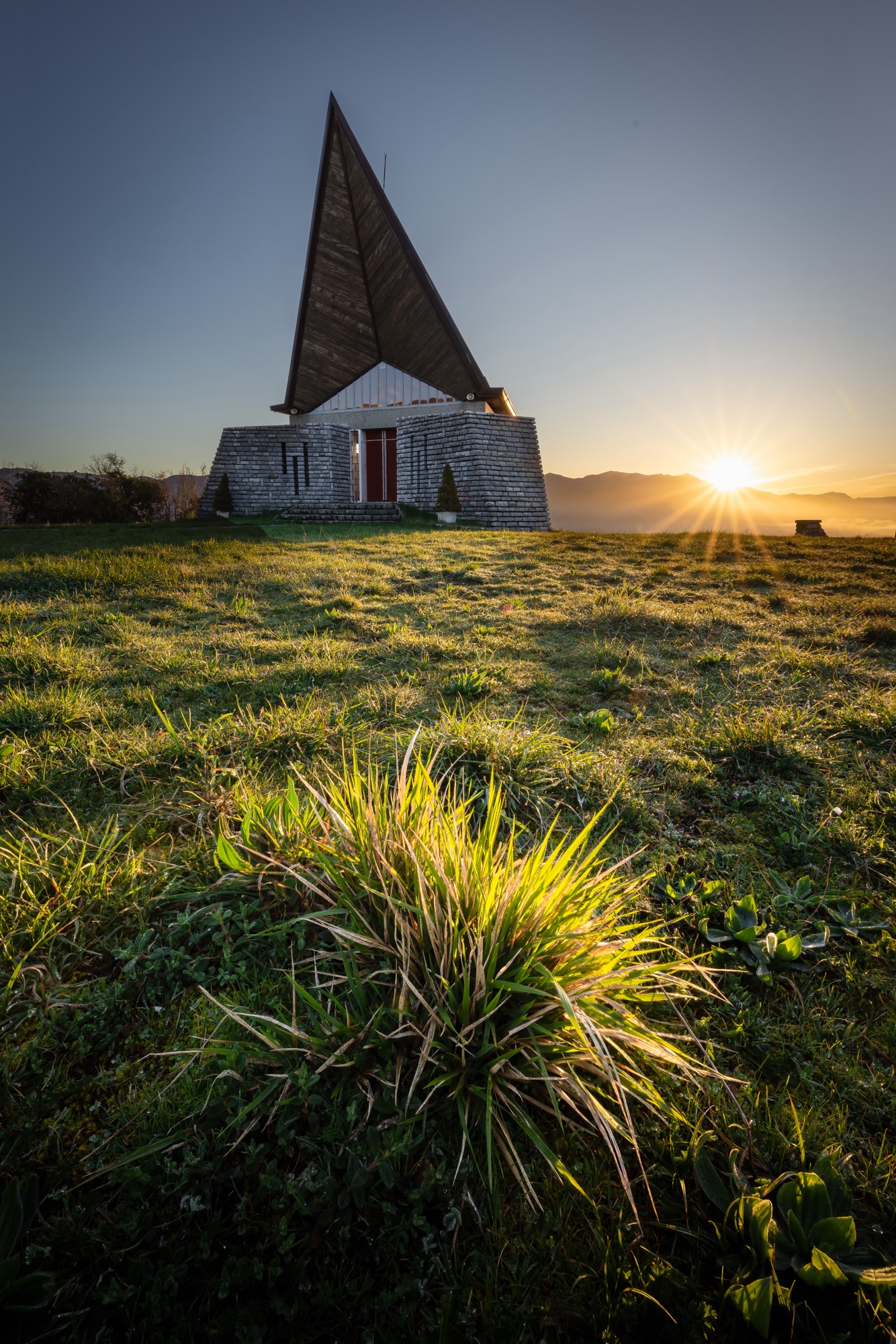
Stamani un’uscita senza pretese. Questa è la seconda volta che vado al Sacrario ai Caduti della Garfagnana. L’ultima uscita fu lo scorso anno, da solo, in una mattina freddissima e con un cielo nuvolosissimo. Stavolta il meteo è molto più sereno, e le aspettative per una buona luce sono molto alte.

Arrivato il mio caro amico Cristiano, fedele compagno delle mie avventure fotografiche, partiamo in direzione di Castelnuovo. Saliamo ancora in direzione della piccola località di Piola, dove sorge il Sacrario.

Il progetto della costruzione del Sacrario venne approvato alla fine degli anni 50. Doveva essere una costruzione semplice, che ricordasse alle generazioni future il tributo di vite che la gente della Garfagnana aveva pagato durante le guerre combattute nel Novecento.

Fu deciso di erigerlo su un picco nella frazione di Croce di Stazzana, a circa 885 metri sul livello del mare, capace di mozzare il fiato al visitatore: salendo la scalinata in pietra che conduce alla chiesa, è come affacciarsi su una terrazza che si apre sulle vallate della Garfagnana e delle sue Alpi, che circondano come in un abbraccio chi diede la vita venendo strappato alla sua terra. Progettato da due architetti fiorentini, Giorgio Merlini e Luigi De Filla, il Sacrario venne inaugurato il 3 luglio 1966, alla presenza delle più alte cariche civili, militari e religiose della Garfagnana e del Governo.

Arrivati, scendiamo e scarichiamo l’attrezzatura. Il cielo promette veramente bene. Nuvole basse aspettano la luce per colorarsi e prendere vita. Cerchiamo i punti migliori per posizionare la fotocamera, in attesa che sorga il sole proprio dietro il monumento.

Alzo il drone. Dall’alto è semplicemente tutto un altro vedere. Incredibile quanto ci si senta piccoli e inermi, di fronte ad un paesaggio così vasto e silenzioso. Il sole comincia a dipingere la sua magia intorno noi. Illumina lateralmente la chiesa e gli alberi, creando delle ombre lunghe che danzano attorno a noi. Spettacolo puro.

Trascorriamo praticamente tre ore in questo posto meraviglioso. Anche Cristiano, che è la prima volta che visita questo luogo, cambia angolatura alla ricerca della foto perfetta. Ci siamo veramente rilassati e goduti a pieno questa uscita. Ecco gli scatti che abbiamo portato a casa, ed il video di questo affascinante scorcio di Garfagnana. Buona visione.

An unpretentious outing this morning. This is the second time I go to the Garfagnana War Memorial. The last outing was last year, alone, on a very cold morning and with a very cloudy sky. This time the weather is much clearer, and the expectations for good light are very high.
Once my dear friend Cristiano arrived, faithful companion of my photographic adventures, we set off in the direction of Castelnuovo. We go up again in the direction of the small town of Piola, where the Shrine stands.

The project for the construction of the Shrine was approved at the end of the 1950s. It had to be a simple construction, which would remind future generations of the tribute of lives that the people of Garfagnana had paid during the wars fought in the twentieth century.

It was decided to build it on a peak in the hamlet of Croce di Stazzana, about 885 meters above sea level, capable of taking the visitor’s breath away: climbing the stone staircase that leads to the church, it is like looking out onto a terrace that opens up on the valleys of Garfagnana and its Alps, which surround as if in an embrace those who gave their lives by being torn from their land. Designed by two Florentine architects, Giorgio Merlini and Luigi De Filla, the Shrine was inaugurated on 3 July 1966, in the presence of the highest civil, military and religious officials of Garfagnana and the Government.

Once we arrive, we go down and unload the equipment. The sky promises really well. Low clouds wait for the light to color and come to life. We look for the best points to position the camera, waiting for the sun to rise just behind the monument.

I raise the drone. From above it is simply a completely different view. Incredible how small and helpless one feels, faced with such a vast and silent landscape. The sun begins to paint its magic around us. It illuminates the church and trees from the side, creating long shadows that dance around us. Pure entertainment.

We spend practically three hours in this wonderful place. Even Cristiano, who is visiting this place for the first time, changes angles in search of the perfect photo. We really relaxed and thoroughly enjoyed this outing. Here are the shots we took home, and the video of this fascinating glimpse of Garfagnana. Good vision.

Il pontile di lido di camaiore

Lido di Camaiore una volta non era cosi… viveva, diciamo, nell’ombra rispetto a Viareggio e Forte dei Marmi. Pur trovandosi in mezzo a queste, era di gran lunga meno conosciuto di queste due ben note località.

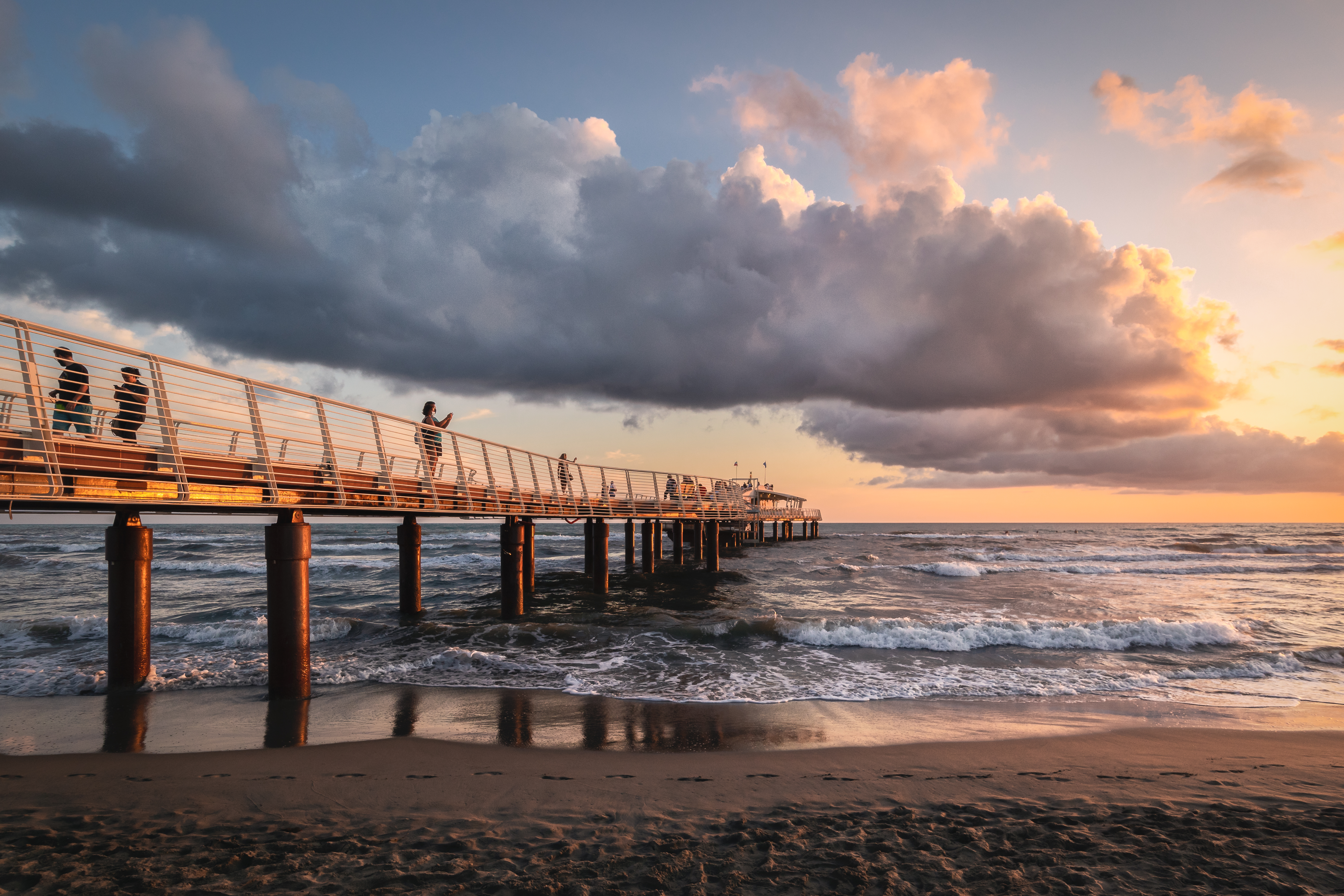
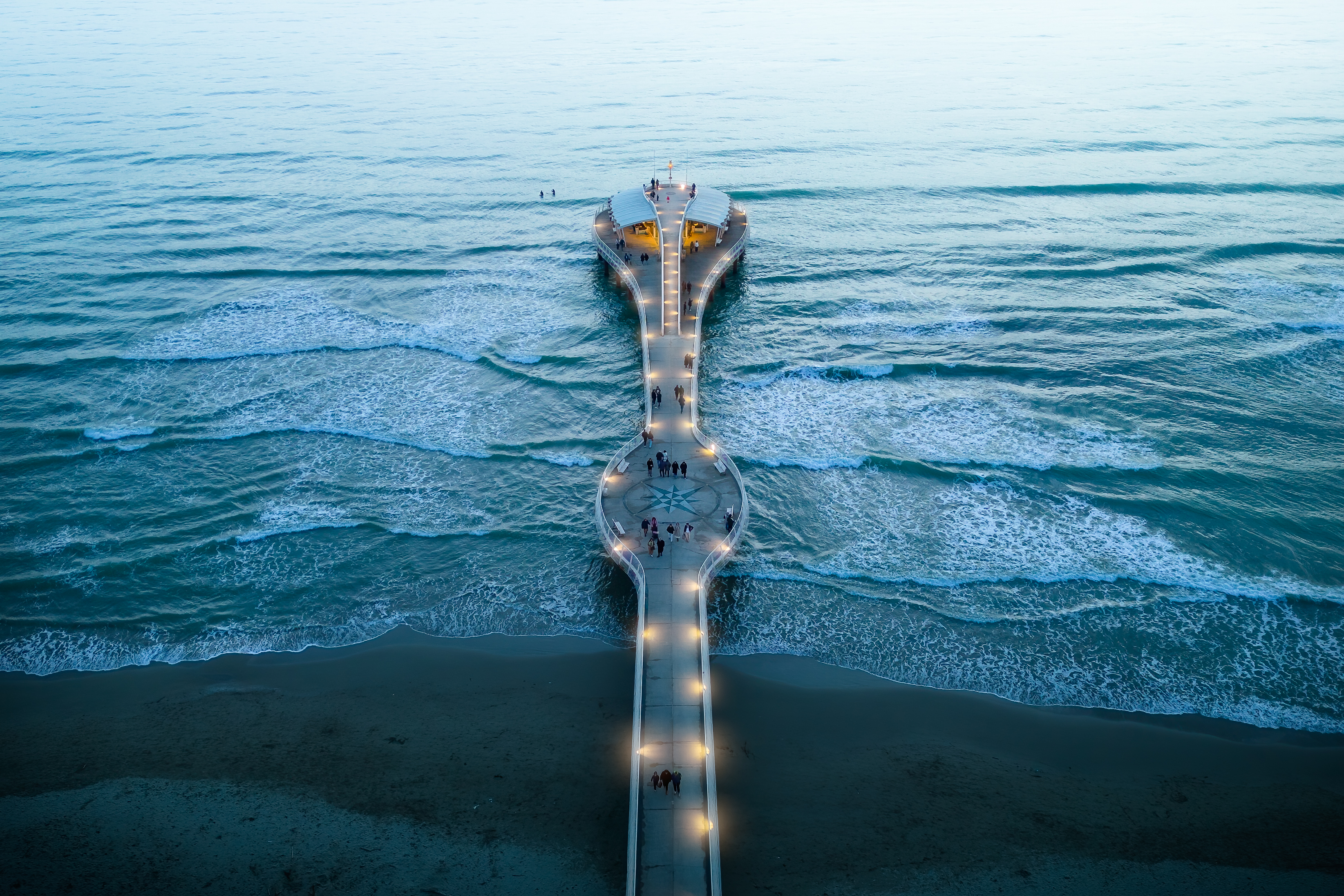
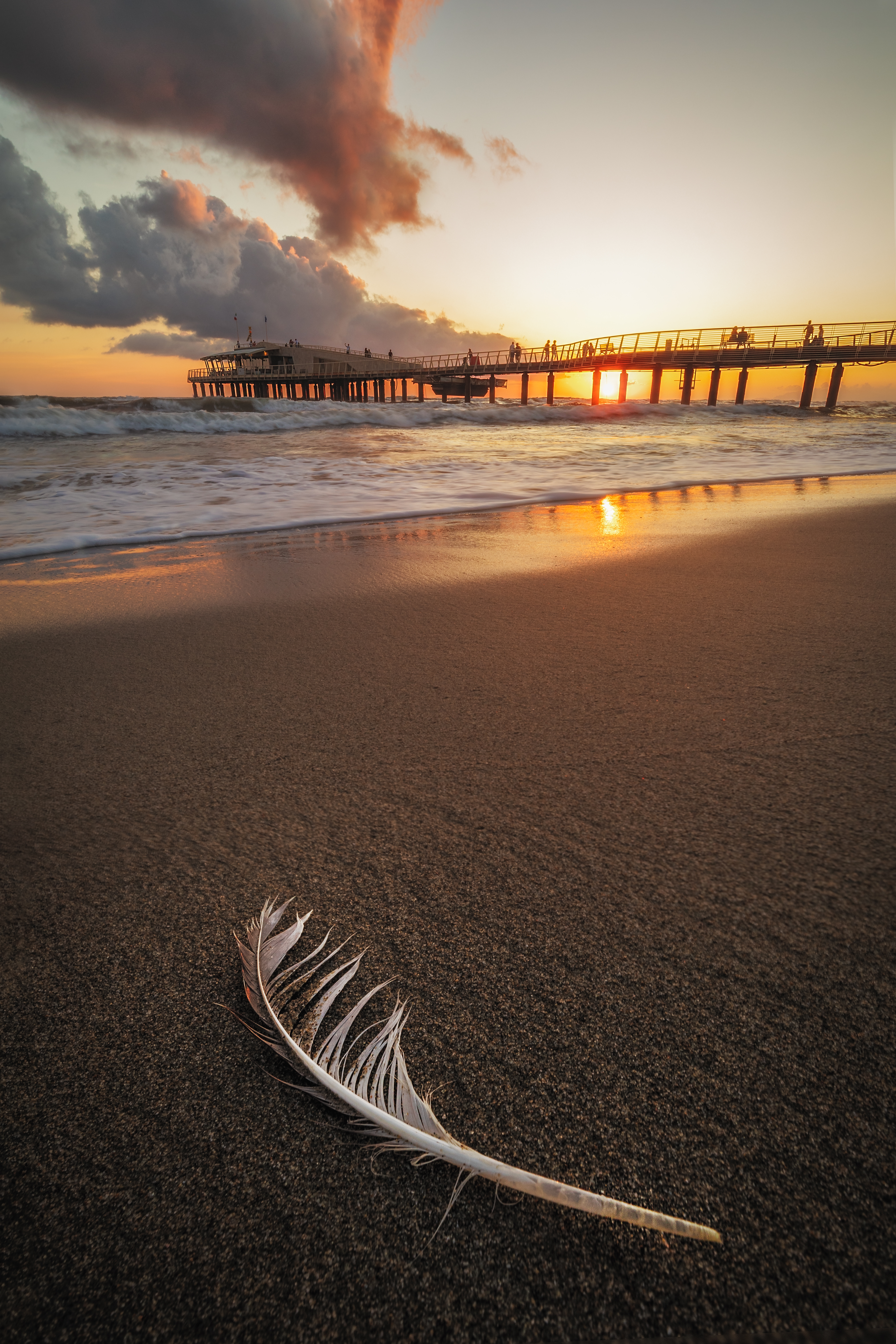
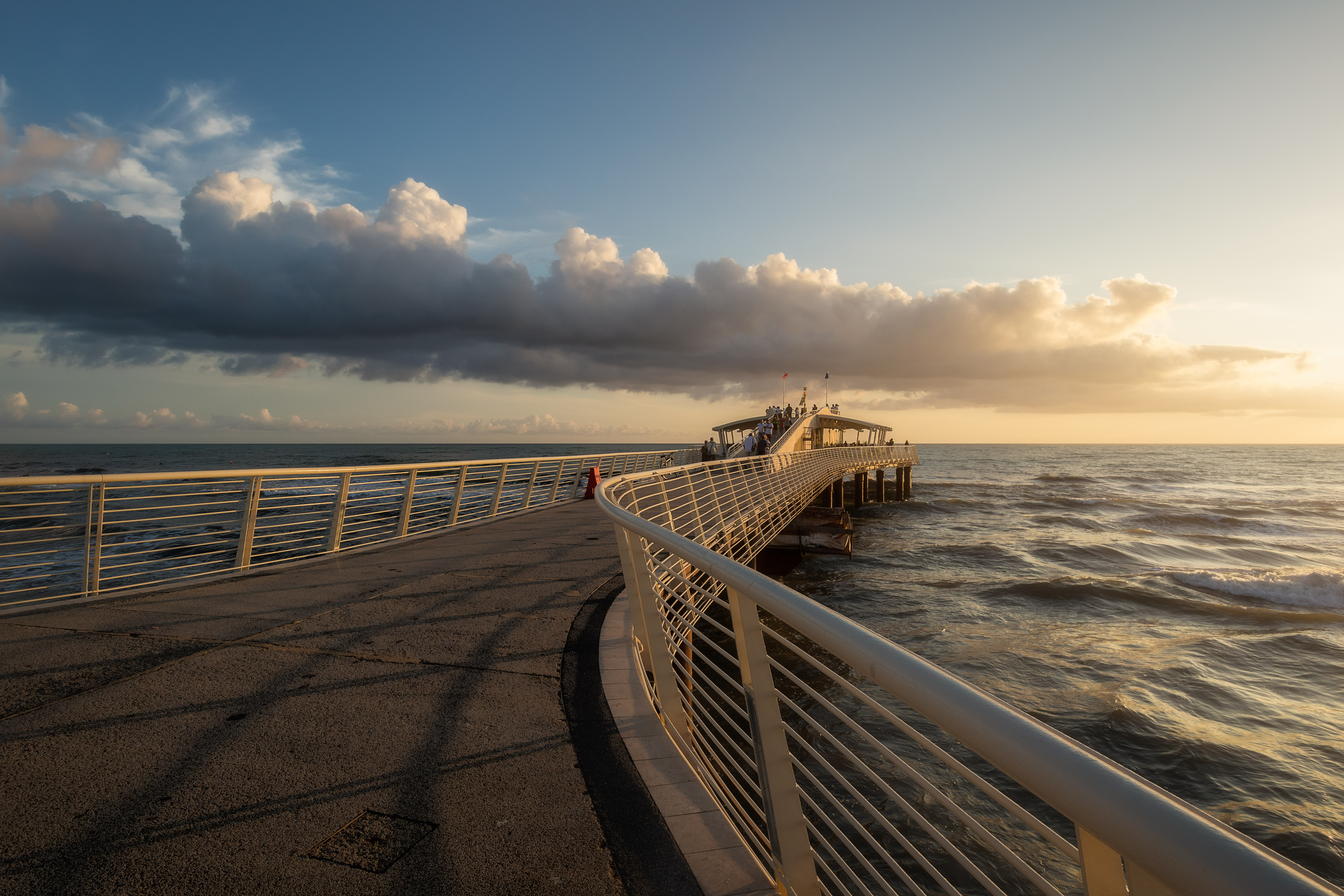
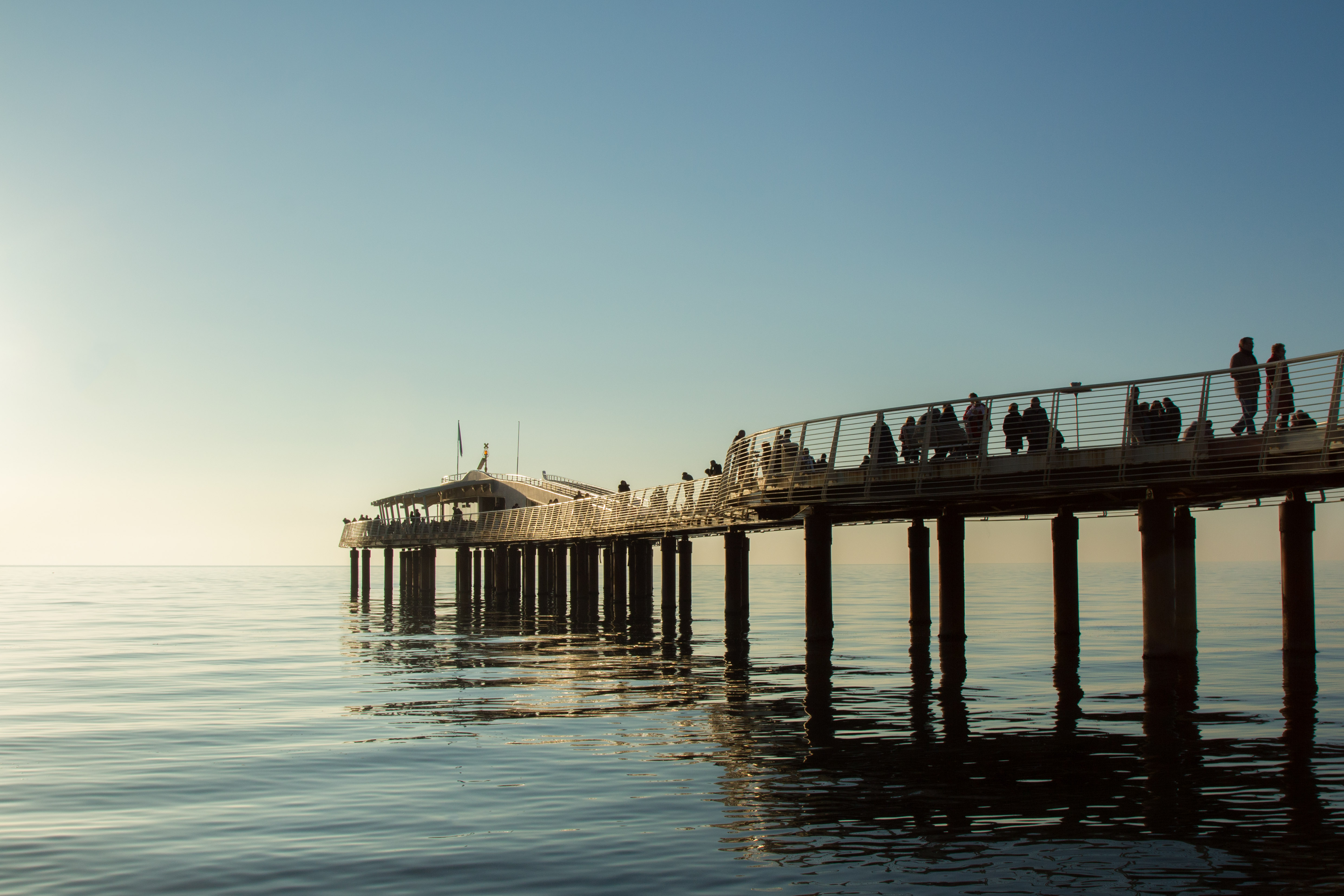
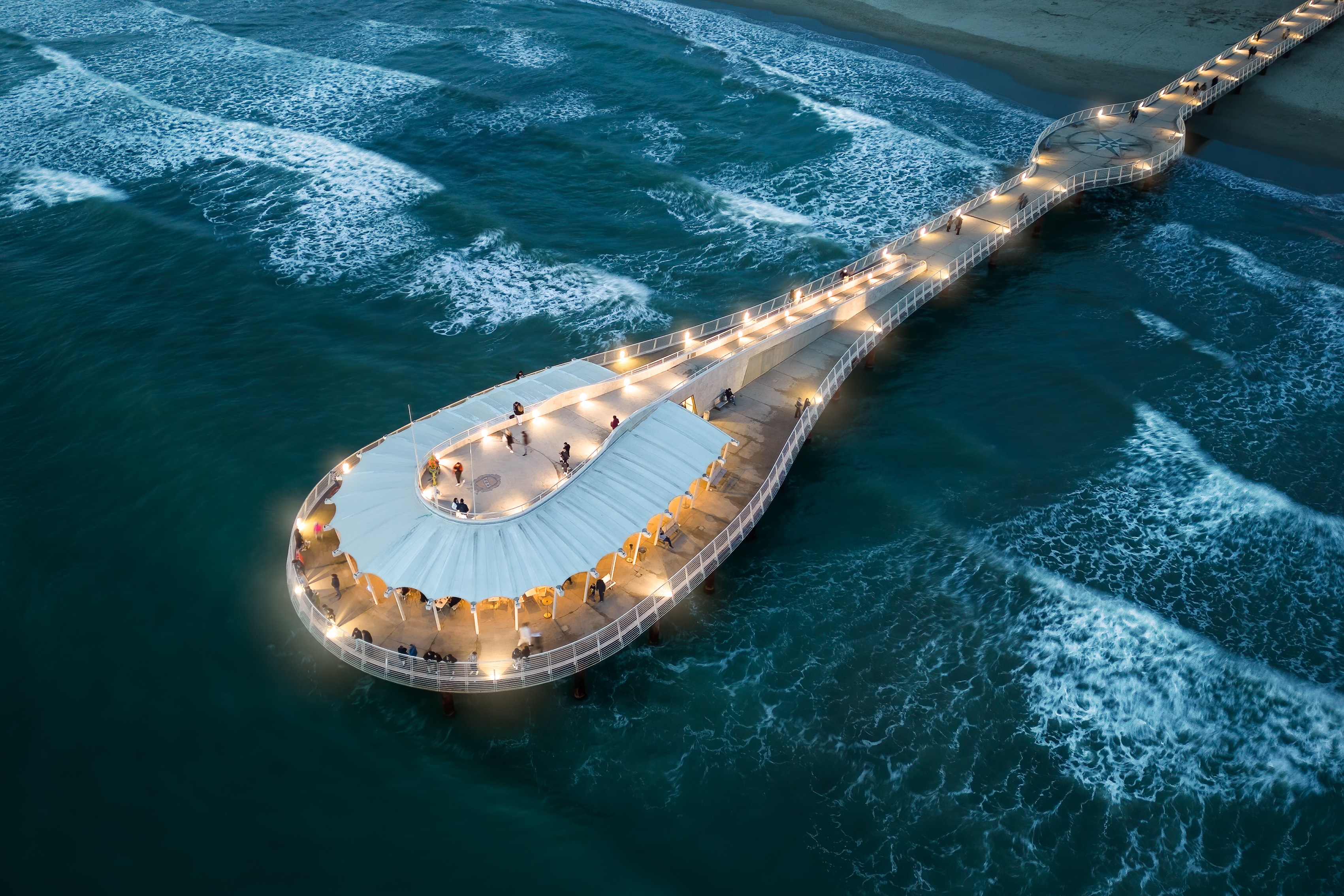
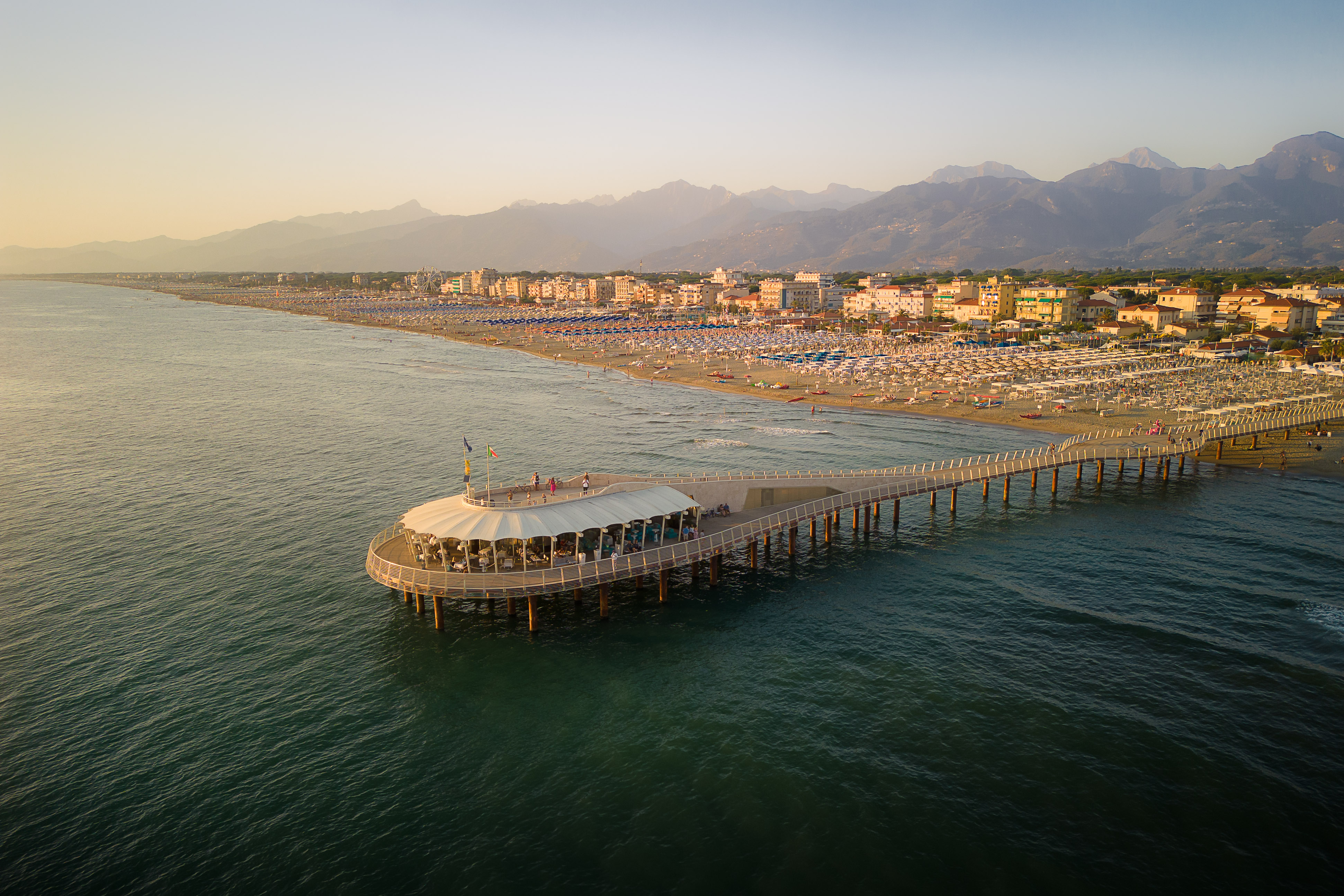
Con la riqualificazione del paese, e la costruzione di un suo pontile, le cose sono nettamente cambiate. Oserei quasi dire che si sono ribaltate. Costruito in anni recenti, il pontile di Lido di Camaiore è diventato fin da subito l’icona della località. Si trova a circa metà della passeggiata lungomare, e si estende per circa 200 metri. Al termine, si trova un bar-ristorante dove godersi un aperitivo al tramonto, e una meravigliosa terrazza panoramica. Passeggiare su e giù per il pontile del Lido è davvero imperdibile!

Anche la spiaggia è uno dei punti di forza del posto. Pulitissima e curata nei minimi dettagli, è completamente attrezzata. Gli stabilimenti balneari si susseguono senza soluzione di continuità, uno dopo l’altro, dall’inizio alla fine del territorio comunale.

Vado spesso a fotografare a Lido. In genere mi ci trovo spesso con la mia famiglia a passeggio, e quindi sfrutto l’occasione per qualche scatto al volo. Spesso parto proprio con l’intenzione di fotografare il pontile, luogo iconico per ogni fotografo che si rispetti, sperando in un tramonto mozzafiato.

Anche volare col drone qui molto rilassante. Ovviamente occorre avere un occhio di riguardo alle persone, dato che, in caso di affollamento, il volo non è consentito. Ma, quando al tramonto le condizioni sono perfette, volare in questo posto è semplicemente meraviglioso.

Uno scatto fatto dal drone al pontile mi ha anche consentito di vincere in concorso fotografico proprio lì in Versilia, il Versilia Photo Contest. Questi sono gli scatti più belli del pontile di Lido di Camaiore, Quegli scatti e quei video che riesco ancora ad assaporarne il gusto appena rivedo le immagini. Spero vi piacciano.

Lido di Camaiore wasn’t like this once… it lived, let’s say, in the shadow compared to Viareggio and Forte dei Marmi. Despite being in the middle of these, it was far less known than these two well-known locations.

With the redevelopment of the town, and the construction of its pier, things have clearly changed. I would almost dare say that they have overturned. Built in recent years, the pier in Lido di Camaiore immediately became the icon of the town. It is located approximately halfway along the seafront promenade, and extends for approximately 200 metres. At the end, there is a bar-restaurant where you can enjoy an aperitif at sunset, and a wonderful panoramic terrace. Walking up and down the Lido pier is truly unmissable!

The beach is also one of the strong points of the place. Spotlessly clean and with attention to the smallest details, it is fully equipped. The bathing establishments follow one another without interruption, one after the other, from the beginning to the end of the municipal territory.

I often go to photograph in Lido. Generally I often find myself there with my family for a walk, and therefore I take advantage of the opportunity to take some quick shots. I often set out with the intention of photographing the pier, an iconic place for any self-respecting photographer, hoping for a breathtaking sunset.

Flying with the drone here is also very relaxing. Obviously you need to pay attention to people, given that, in case of crowding, flying is not permitted. But, when the conditions are perfect at sunset, flying in this place is simply wonderful.

A shot taken by the drone at the pier also allowed me to win a photography competition right there in Versilia, the Versilia Photo Contest. These are the most beautiful shots of the Lido di Camaiore pier, those shots and videos that I can still savor the taste of as soon as I see the images again. I hope you enjoy them.

Una notturna in liguria

Dalle mie parti si dice che “Nella botte piccola ci sta il vino buono”. Infatti, in Liguria, una delle regioni più piccole del bel Paese, ci stanno degli spunti fotografici mozzafiato. La conformazione del territorio di questa regione ha dato vita a preziosissimi borghi arroccati a picco sul mare, che si dislocano in tutta la sua lunghezza, ed in tutta la sua bellezza. Per citarne qualcuno, si passa da Portovenere, alle Cinque Terre, da Portofino, fino a Sestri Levante, Boccadasse e Camogli. Ma ce ne sono ancora molti altri.

Sabato sera, il mio caro amico Cristiano mi ha chiamato proponendo una notturna. Quelle uscite di notte con la “N” maiuscola. Di fronte a queste proposte, non importa se hai 12 ore di lavoro alle spalle. Carpe Diem… zaino in spalla e via a fotografare. In queste pazzie la fatica non riesco proprio a sentirla. Avendo solo una notte a disposizione, ci siamo concentrati principalmente sulla zona vicino La Spezia, toccando i primi borghi più entusiasmanti di questa zona. In particolare modo abbiamo concentrato le nostre poche ore a Riomaggiore e Manarola, le prime due delle Cinque terre, in previsione di fare, con un’altra uscita, le successive.

Camminare in inverno, di sabato notte, in questi borghi, è come attraversare un piccolo paese fantasma. Gli unici rumori che senti sono le onde del mare che si infrangono sugli scogli, e i click dei fotografi che, temerari come noi, si rilassano scattando fotografie nel buio e nel silenzio.

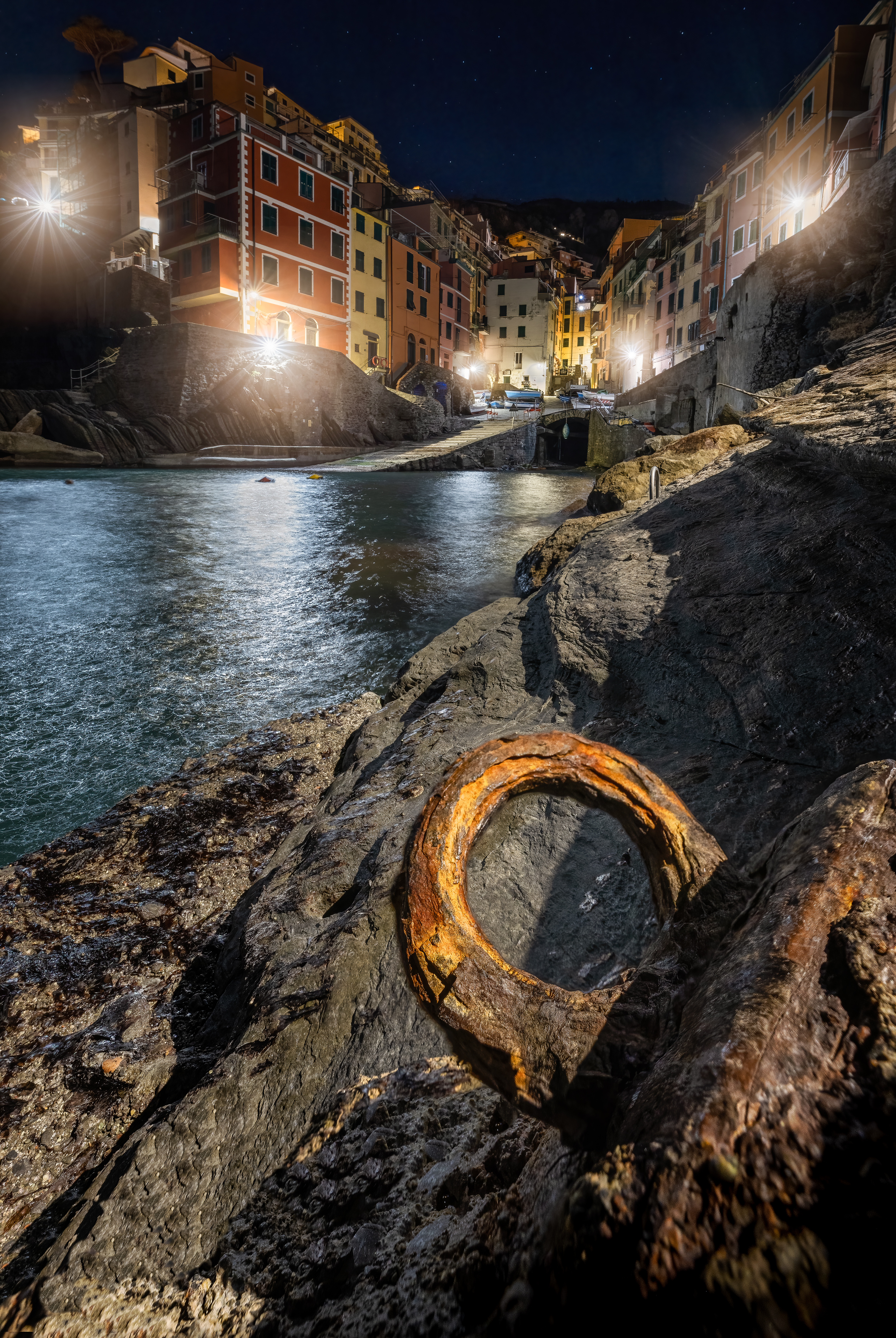
Riomaggiore è meravigliosa. Un piccolo gioiello a ridosso sul mare. Era la prima volta che la fotografavo. Di notte ha un fascino veramente irresistibile. Lo so che sono scatti classici, visti e stravisti, ma posso assicurarvi che quando inquadrate e premete il tasto della fotocamera per scattare, è un’emozione davvero potente. Ci sarà pure un motivo per cui tutti vanno a fotografare qui. La sfida più grande è, ovviamente, trovare una composizione innovativa e personale.

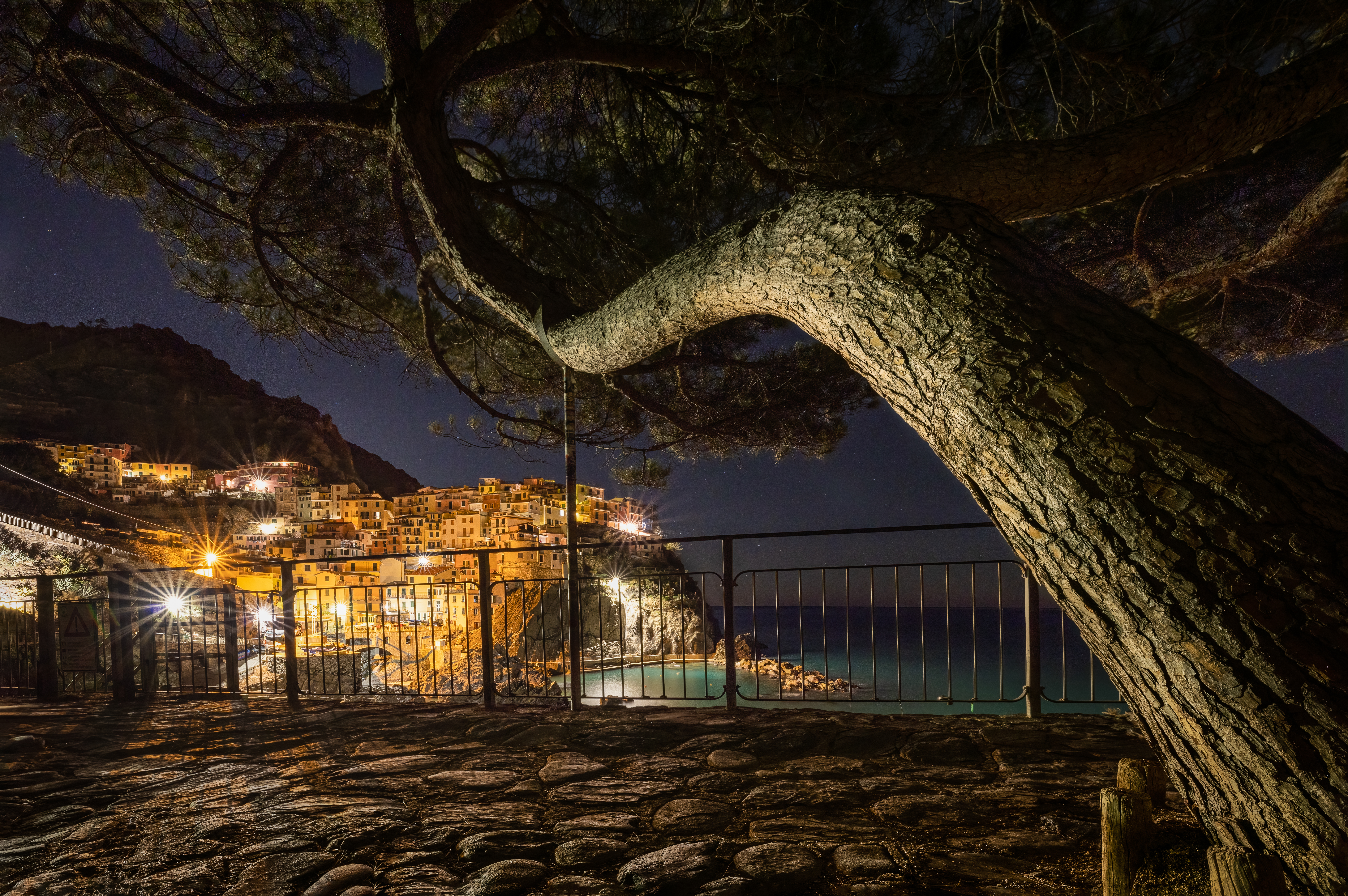
Abbiamo fotografato dall’alto, dove bellissime piante di agave fanno da contorno alla scena. Poi siamo scesi, alla ricerca di qualche inquadratura particolare, utilizzando il Focus-stacking per avere maggiore profondità di campo. Il borgo conte sue luci è particolarmente impegnativo da fotografare. La gamma dinamica è ampia, ed occorrono più esposizioni per fare una foto ben eseguita. C’è tanto lavoro di post-produzione qui. L’idea era di fare un bello Star-trail qui, ma non eravamo soli, ed abbiamo preferito fare scatti meno impegnativi per lasciare spazio anche ad altri fotografi.


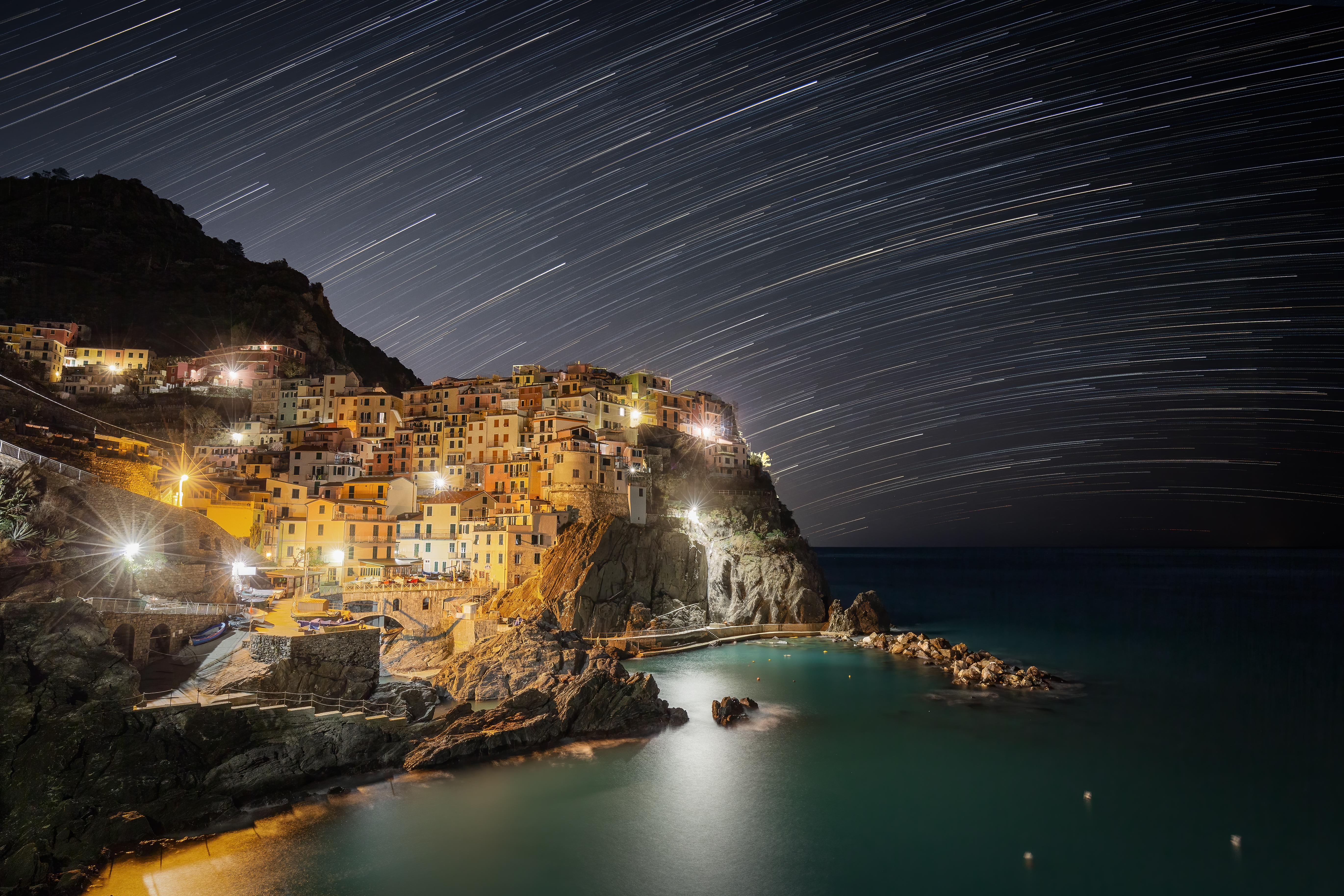
Poi abbiamo deciso di cambiare meta. Dopo una scarpinata allucinante, tutta in salita, siamo ripartiti in auto verso Manarola. Anche qua ci abbiamo fatto una discreta camminata, ma appena arrivati sul mare, eravamo davvero soli. Perfetto per fare qua uno Star-trail. Dopo aver posizionato la fotocamera su cavalletto ed inquadrato la scena, abbiamo avviato la sequenza di scatti per il cielo. Nel frattempo, abbiamo impieghiamo il nostro tempo per fare altri scatti con la seconda fotocamera. Difficile trovare uno scatto originale, ma, spostandomi vicinissimo all’acqua, e rischiando un clamoroso tuffo in mare, ho trovato una composizione assai personale, che non avevo ancora mai visto. Le condizioni di scatto erano veramente incerte, a causa delle onde che, seppur leggere, mi venivano addosso e mi facevano muovere la fotocamera.

Manarola è semplicemente incredibile. Fotogenico e pratico. Grazie alla lunga passerella lungo la scogliera, si può fotografare il borgo in tutta tranquillità. Le case sono disposte una sull’altra come un piccolo feudo, e le luci disseminate qua e là creano un’atmosfera indescrivibile. L’acqua è un verde/azzurro intenso, che contrasta col blu scuro intenso del cielo. E’ un mix di colori veramente affascinante, che in fotografia si amalgamano insieme con un gusto emozionante. Ma il movimento to dell’acqua in primo piano che fa da soggetto sotto al borgo solitario di Manarola sotto le stelle, beh… ne è valsa la pena.

Arrivati quasi all’alba, abbiamo deciso di rientrare. Siamo stati fino quasi alle 6 del mattino a scattare. Abbiamo un bel materiale su cui lavorare per raccontare questa serata. Vi lascio in visone questi scatti, con la speranza che l’emozione che abbiamo provato in. quel momento riempia i vostri occhi. Buona visione.

Where I come from they say that “good wine comes in small packages”. In fact, in Liguria, one of the smallest regions of the beautiful country, there are some breathtaking photographic opportunities. The conformation of the territory of this region has given rise to precious villages perched overlooking the sea, which are spread along its entire length and in all its beauty. To name a few, we pass from Portovenere, to the Cinque Terre, from Portofino, to Sestri Levante, Boccadasse and Camogli. But there are still many more.

Saturday evening, my dear friend Cristiano called me proposing a night out. Those who go out at night with a capital “N”. Faced with these proposals, it doesn’t matter if you have 12 hours of work behind you. Carpe Diem… backpack on and off to take photographs. In these madnesses I really can’t feel the fatigue. Having only one night available, we focused mainly on the area near La Spezia, touching the first most exciting villages in this area. In particular, we concentrated our few hours in Riomaggiore and Manarola, the first two of the Cinque Terre, in anticipation of doing the following ones with another outing.

Walking in winter, on a Saturday night, in these villages is like walking through a small ghost town. The only noises you hear are the waves of the sea crashing on the rocks, and the clicks of the photographers who, daredevils like us, relax by taking photographs in the darkness and silence.

Riomaggiore is wonderful. A little jewel close to the sea. It was the first time I photographed her. At night it has a truly irresistible charm. I know that they are classic shots, seen and admired, but I can assure you that when you frame the frame and press the camera button to shoot, it is a truly powerful emotion. There must also be a reason why everyone goes to take photographs here. The biggest challenge is, obviously, finding an innovative and personal composition.

We photographed from above, where beautiful agave plants surround the scene. Then we went down, looking for some particular shots, using focus-stacking to have greater depth of field. The village with its lights is particularly challenging to photograph. The dynamic range is wide, and it takes multiple exposures to make a well-executed photo. There’s a lot of post-production work here. The idea was to make a nice Star-trail here, but we were not alone, and we preferred to take less demanding shots to leave room for other photographers too.

Then we decided to change destination. After a terrifying hike, all uphill, we set off by car towards Manarola. Here too we had a decent walk, but as soon as we reached the sea, we were really alone. Perfect for doing a Star-trail here. After placing the camera on a tripod and framing the scene, we started the sequence of shots for the sky. In the meantime, we spent our time taking more shots with the second camera. It’s difficult to find an original shot, but, moving very close to the water, and risking a sensational dive into the sea, I found a very personal composition, which I had never seen before. The shooting conditions were really uncertain, due to the waves which, although light, came at me and made the camera move.

Manarola is simply incredible. Photogenic and practical. Thanks to the long walkway along the cliff, you can photograph the village in complete tranquility. The houses are arranged one on top of the other like a small fiefdom, and the lights scattered here and there create an indescribable atmosphere. The water is an intense green/blue, which contrasts with the intense dark blue of the sky. It is a truly fascinating mix of colours, which blend together in photography with an exciting taste. But the movement of the water in the foreground which acts as a subject under the solitary village of Manarola under the stars, well… it was worth it.

Arriving almost at dawn, we decided to return. We stayed up until almost 6 in the morning shooting. We have some great material to work with to talk about this evening. I leave you with these shots, with the hope that the emotion we felt in. may that moment fill your eyes. Good vision.